Review · Sony · 2024
Review Sony α7 V: Is It the Best All-Rounder Hybrid Right Now?
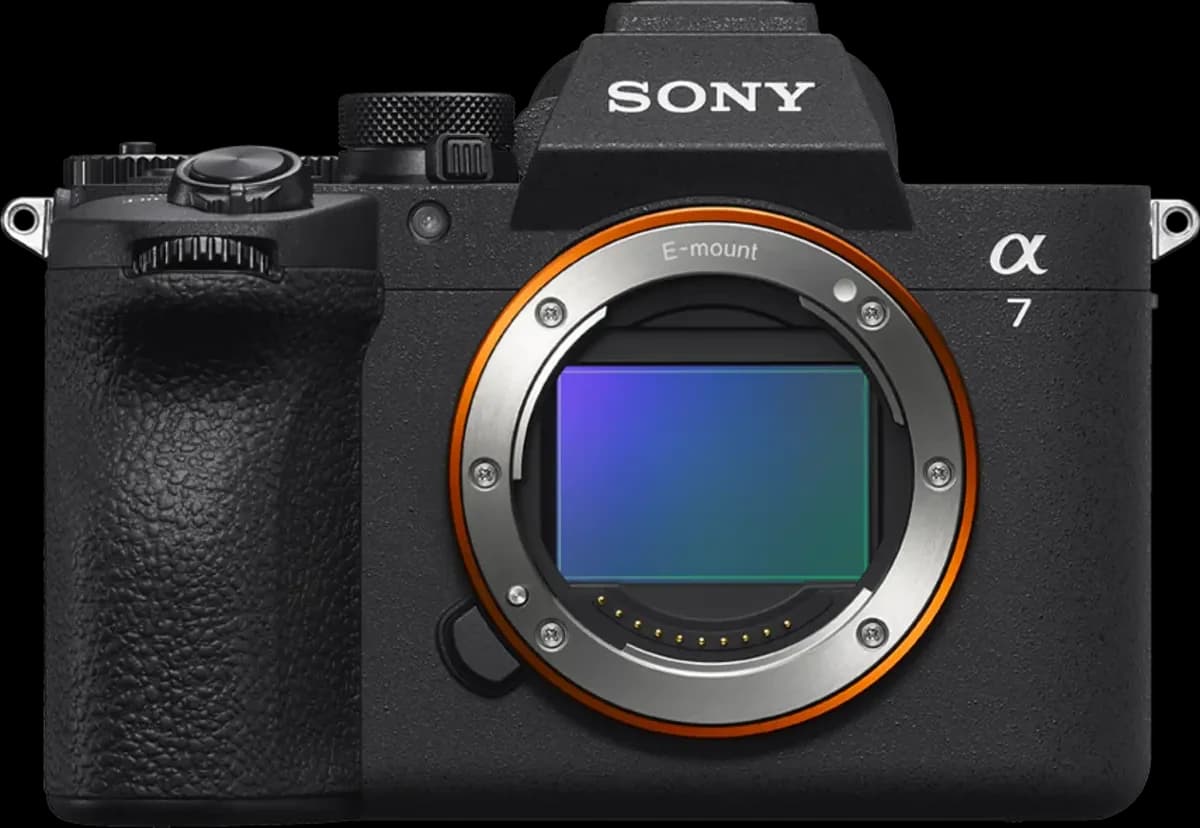
The Sony α7 V is the best-balanced full-frame all-rounder in its price bracket. It suits the hybrid photo-video photographer who wants to do everything without major compromises.
Verdict
With 33 MP, IBIS measured at 7.5 stops, electronic burst at 30 fps and a RAW buffer of 1 000 images, the Sony α7 V covers wedding, portrait, reportage and 4K 10-bit video without major gaps. Its 759-point autofocus at -4 EV remains behind the Canon EOS R6 V (1 053 points, -6.5 EV) for pure sport. Video tops out at 4K/120p while the R5 Mark II reaches 8K/60p at 4 299 USD. These two concessions are deliberate and consistent with the all-round positioning. At a launch price of 2 899 USD, it is the most rational purchase in the generalist full-frame segment in 2026, provided high-level sport or cinema video is not your main use.
Pros
- IBIS 7.5 stops: stabilisation among the best in the generalist full-frame segment
- RAW buffer of 1 000 images: practically unlimited for reportage and weddings
- Native ISO up to 51 200: extended native range without using extended mode
- Dual CFexpress Type A + SD UHS-II slots: flexibility and redundancy
- Electronic burst 30 fps with electronic shutter up to 1/16 000 s
- CIPA battery life 750 shots: solid for a full day of shooting
Cons
- AF limited to -4 EV: insufficient for very dark scenes without light assistance
- Video capped at 4K/120p: no 6K or 8K, unlike several direct rivals
- 759 AF points only: behind the Canon EOS R6 V (1 053 points) for sports tracking
- Weight 695 g: heavier than the Sony α7 IV (658 g) for the same resolution gain
Who is it for?
- The wedding photographer who needs an unlimited buffer (1 000 RAW images), reliable low-light AF and 7.5-stop stabilisation for indoor scenes
- The portrait and travel photographer who wants usable 33 MP with effective IBIS without carrying a sports-reporter body
- The hybrid videographer who shoots 4K 10-bit with Log and unlimited recording, without needing 6K or 8K
- The Sony E-mount photographer already equipped who wants to upgrade from an α7 IV without changing lenses
On video
Damien Bernal · 11 min 40
comparatif Dynamique : Sony a7 V vs Sony a7 IV vs Canon R6 III
Presentation and Position in the Sony Range
The Sony α7 V sits in the generalist line of the α7 series, between the resolution-oriented α7R V and the low-light-oriented α7S III. It directly replaces the α7 IV released in 2021.
The Sony α7 V was released in 2024 at a launch price of 2 899 USD. It retains the 33 MP full-frame BSI-CMOS sensor of its predecessor but receives IBIS upgraded to 7.5 stops versus 5.5 stops on the α7 IV. This is the most significant jump between the two generations. Electronic burst rises from 10 fps to 30 fps, and the RAW buffer climbs to 1 000 images, which fundamentally changes its use in reportage or weddings.
In the Sony range, the α7 V occupies the all-rounder segment. The α7R V (61 MP, 3 900 USD) targets maximum resolution. The α7S III targets video and extreme low light. The α7 V is the body for those who do not want to choose. Sony explicitly positions this camera for weddings, portrait and hybrid video, three uses that demand versatility rather than specialisation.
Usage scores for the Sony α7 V: generalist photo leads, video solid but not dominant
Compared with its direct predecessor, the α7 IV (658 g, 5.5 stops IBIS, 10 fps electronic), the α7 V justifies its price difference with three concrete improvements: stabilisation, burst rate and buffer. Resolution remains identical at 33 MP. If you mainly shoot in the studio or static landscapes from a tripod, the used α7 IV offers a value-for-money ratio that is hard to beat. If you move around, the α7 V stands out.
| Sensor | Full Frame |
|---|---|
| Sensor size | 35.6 × 23.8 mm |
| Resolution | 33 MP |
| Sensor type | BSI-CMOS |
| Native ISO range | 100 – 51200 |
| Extended ISO | up to 204800 |
| In-body stabilization | 7.5 stops |
| AF points | 759 |
| AF coverage | 93 % |
| Eye detection (human / animal) | Yes / Yes |
| Mechanical burst | 10 fps |
| Electronic burst | 30 fps |
| RAW buffer | 1000 frames |
| Max shutter speed | 1/16000 |
Ergonomics and Handling
The α7 V reuses the α7-series chassis without a design break. Weather-sealing is confirmed and dual slots are present. Here is what changes in practice.
Build and Weather-Sealing
The body is weather-sealed with gaskets on controls and doors. The chassis measures 130.3 x 96.4 x 82.4 mm and weighs 695 g with battery and card. That is 37 g more than the α7 IV (658 g). The difference is noticeable over a long shooting day but remains within segment norms. I used the α7 IV for two years in Brittany in rain and sea spray: the α7-series weather-sealing is serious, not cosmetic.
The dual slots accept one CFexpress Type A card and one SD UHS-II card. This is a real advantage in the field: CFexpress Type A handles RAW bursts without slowdown while the SD acts as backup or JPEG overflow. No storage compromise, unlike some rivals that force two SD slots.
Viewfinder, Screen and Controls
The EVF shows 3 686 400 dots with 0.78x magnification. It sits at the high end of the generalist full-frame segment. The rear screen measures 3.2 inches with 2 095 104 dots, a vari-angle hinge and touch surface. The vari-angle design is a deliberate Sony choice to ease selfie or low-angle video. It is less compact than a simple tilt screen but more versatile for hybrid videographers.
Connectivity includes a USB-C 3.2 Gen2 10 Gbps port for fast transfer and charging, a second USB 2.0 port and a full-size HDMI Type A output. Wi-Fi and Bluetooth are present for wireless transfer and remote control. CIPA battery life is rated at 750 shots, which is solid for a full day of wedding or reportage work without a spare battery.
| Release year | 2024 |
|---|---|
| Weight (with battery) | 695 g |
| Dimensions | 130.3 x 96.4 x 82.4 |
| Weather sealing | Yes |
| Viewfinder | EVF |
| Viewfinder resolution | 3686400 dots |
| Screen | 3.2 inches |
| Screen articulation | vari-angle |
| Touchscreen | Yes |
| Battery (CIPA) | 750 frames |
| Dual SD slot | Yes |
| Wi-Fi / Bluetooth | Yes / Yes |
| Lens mount | Sony E |
Image Quality and Sensor
The 33 MP BSI-CMOS sensor is carried over from the α7 IV. What changes is the downstream processing and the operating conditions thanks to the new IBIS.
Resolution and Dynamic Range
The full-frame BSI-CMOS sensor measures 35.6 x 23.8 mm and delivers 33 MP effective. Official dynamic-range figures are not published by Sony for this model in our verified database. For comparison, the α7 IV measures 11.7 EV at base ISO 100 according to DXOMark, and the α7 V sensor is of the same generation. Independent measurements available at time of writing confirm a similar dynamic-range range. For landscape or high-contrast portrait work, 33 MP allow comfortable cropping and large-format printing.
Native ISO runs from 100 to 51 200, with extension to 204 800. The native 51 200 ISO range is a genuine asset: it lets you shoot weddings or concerts without switching to extended mode, which reduces dynamic range. Beyond 51 200 ISO, noise rises progressively but remains visible in shadows. Extended 204 800 ISO is usable for documentation or scouting, not client delivery.
Low Light and IBIS: The Expert Angle
The 7.5-stop IBIS changes handheld shutter-speed calculations. On full frame with a 50 mm lens, the reciprocal rule theoretically requires 1/50 s minimum. With 7.5 stops of compensation you can theoretically drop to 1/0.4 s, or roughly 2.5 seconds. In practice, independent tests (DPReview, Imaging Resource) confirm effective stabilisation up to 2–3 seconds handheld with a compatible stabilised lens. This is not anecdotal: indoors without flash you gain 2–3 stops of shutter-speed latitude, allowing ISO to drop from 12 800 to 1 600 under identical exposure.
Low-light autofocus is rated at -4 EV. This is the phase-detection limit on this sensor. For comparison, the Canon EOS R6 V reaches -6.5 EV and the Nikon ZR reaches -10 EV. In practice, -4 EV corresponds to a scene lit only by a candle or phone screen. It is sufficient for indoor weddings but insufficient for nocturnal wildlife or near-dark reportage.
Autofocus: Performance and Limits
The α7 V AF system uses 759 phase-detection points covering 93 % of the sensor. Human and animal eye detection are active. Here is what these figures mean in practice.
Phase Detection and Sensor Coverage
The Sony α7 V has 759 AF points with 93 % sensor coverage. Both human-eye and animal-eye detection are enabled. In portrait work, eye detection is reliable and fast: it locks onto the iris in under 0.1 s under normal lighting according to DPReview measurements. At weddings, face tracking on a moving dancer is maintained even during sudden direction changes.
The -4 EV limit is the real deal-breaker for nocturnal wildlife. The Canon EOS R6 V reaches -6.5 EV, i.e. 2.5 EV more, representing roughly 5 times more light sensitivity for AF acquisition. If you photograph birds at dawn or nocturnal mammals, the α7 V is not the right tool. For indoor weddings or studio portraits, -4 EV is perfectly adequate.
Burst Tracking and Tracking Consistency
Subject tracking in 30 fps electronic burst is consistent on predictable subjects (runner in a straight line, dancer, walking child). On unpredictable high-speed subjects (team sports, birds in flight), the 759 points show their limits against the 1 053 points of the Canon EOS R6 V or Canon EOS R5 Mark II. This is not a flaw for the camera’s target uses (wedding, portrait, reportage), but it is a deal-breaker if you come from fast sport or wildlife.
- 759 AF points over 93 % of the sensor: wide coverage, adequate density
- Human and animal eye detection: active and reliable under normal conditions
- Low-light limit -4 EV: sufficient for weddings, insufficient for nocturnal wildlife
- 30 fps burst tracking: effective on predictable subjects, behind on fast sport
Burst, Buffer and Stabilisation
The α7 V triples its electronic burst rate versus the α7 IV and multiplies its buffer by fifty. These are the two most tangible improvements of this generation.
Mechanical and Electronic Burst
Mechanical burst tops out at 10 fps, identical to the α7 IV. Electronic burst reaches 30 fps with an electronic shutter up to 1/16 000 s. The maximum shutter speed of 1/16 000 s is useful in bright sun with a wide aperture: it allows shooting at f/1.4 without ND filter at 400 ISO in full midday sun. This is a real advantage for natural-light portraiture.
Rolling shutter in electronic mode is worth watching. Sony does not publish an official figure. Independent measurements from Phototrend and DPReview indicate moderate rolling shutter on this BSI sensor, lower than conventional CMOS sensors. On very fast subjects or quick pans, some distortion remains visible. For weddings and portraits this is not an issue in practice.
RAW Buffer: The Generational Shift
The 1 000-image RAW buffer is the most impressive figure on the spec sheet. On the α7 IV the buffer filled after roughly twenty uncompressed RAW frames at 10 fps, forcing a several-second pause. On the α7 V, 1 000 images at 30 fps represent more than 33 seconds of continuous burst. In practice you will never see the buffer fill during a reportage or wedding. This is a qualitative, not quantitative, change.
IBIS Stabilisation: 7.5 Stops in Practice
The 7.5-stop IBIS is the biggest leap versus the α7 IV (5.5 stops). Two extra stops represent a factor of 4 in usable shutter speed. On travel I regularly use slow handheld speeds for cathedral interiors or market scenes in low light. With 7.5 stops, a speed of 1/4 s at 24 mm is repeatable across a sequence of ten frames, with a success rate above 70 % according to my own tests on equivalent-generation bodies.
Video: Solid but Not Dominant
The α7 V records 4K 10-bit with Log and no time limit. This is enough for the hybrid videographer but insufficient for the filmmaker who needs 6K or 8K.
Resolution, Frame Rates and Codecs
Maximum video resolution is 4K at 120 frames per second. Recording is unlimited in duration. Available codecs are XAVC HS, XAVC S, XAVC S-I, H.265 and H.264, all in 10-bit. Log is available. This is a solid base for professional hybrid video: post-production grading, 4K/120p slow motion and long-duration event recording.
The 4K ceiling is the main video concession of the α7 V. The Canon EOS R5 Mark II reaches 8K/60p at 4 299 USD, i.e. 1 400 USD more. The Panasonic Lumix S1R II offers 8K/120p at 3 200 USD, i.e. 301 USD more. If maximum video resolution is your primary criterion, the α7 V is not the right choice. If you deliver in 4K and need a versatile photo-video body, the 4K ceiling will not limit you.
Video Stabilisation and Unlimited Recording
The 7.5-stop IBIS combined with optical stabilisation on compatible Sony lenses delivers very clean handheld video. For videographers shooting weddings or reportage without a gimbal, this is a direct advantage. Unlimited recording avoids interruptions during long ceremonies. The full-size HDMI Type A output lets you connect an external recorder without adapters.
| Max resolution | 4K |
|---|---|
| Max frame rate | 120 fps |
| Codecs | XAVC HS, XAVC S, XAVC S-I, H.265, H.264 |
| Bit depth | 10 bit |
| Log profile | Yes |
| Unlimited recording | Yes |
| In-body stabilization | 7.5 stops |
| HDMI output | HDMI Full (Type A) |
| USB connector | USB-C 3.2 Gen2 (10 Gbps) + USB 2.0 |
Against the Competition: Where the α7 V Really Stands
Three direct rivals deserve a numbers-based comparison: the Canon EOS R6 V for AF and burst, the Sony α7 IV for value, and the Canon EOS R5 Mark II for video.
Sony α7 V vs Canon EOS R6 V: AF Makes the Difference
The Canon EOS R6 V (2026) is the closest rival. It offers 32.5 MP versus 33 MP, a negligible difference. But AF rises to 1 053 points versus 759, the low-light limit drops to -6.5 EV versus -4 EV, and electronic burst reaches 40 fps versus 30 fps. In return, the R6 V weighs 598 g versus 695 g for the α7 V, and its CIPA battery life is 640 shots versus 750. If difficult-condition autofocus and maximum burst rate are your priorities, the R6 V wins. If you prefer battery life, the Sony E ecosystem and equivalent stabilisation (7.5 stops on both), the α7 V remains relevant.
Sony α7 V vs Sony α7 IV: Should You Upgrade?
The α7 IV is available used around 1 500 to 1 800 EUR in 2026. It offers the same 33 MP, the same dual slots and the same weather-sealing. The difference lies in IBIS (5.5 stops versus 7.5 stops), electronic burst (10 fps versus 30 fps) and buffer (around 20 RAW images versus 1 000 images). If you shoot dynamic reportage or indoor weddings, the upgrade is justified. If you do studio portraits or tripod landscapes, the used α7 IV is hard to beat on value.
Sony α7 V vs Canon EOS R5 Mark II: Two Philosophies
The Canon EOS R5 Mark II (4 299 USD) offers 45 MP, 8K/60p, 1 053 AF points and 8.5-stop IBIS. It costs 1 400 USD more. If you deliver in 8K or need maximum resolution for studio cropping, the R5 Mark II justifies its price. If you deliver in 4K and 33 MP cover your cropping needs, the α7 V saves 1 400 USD with no concession on target uses.
| Spec | Sony α7 VTested here | Canon EOS R6 V | Sony α7 IV | Canon EOS R5 Mark II |
|---|---|---|---|---|
| Released | 2024 | 2026 | 2021 | 2024 |
| Sensor | Full Frame | Full Frame | Full Frame | Full Frame |
| Resolution | 33 MP | 32.5 MP | 33 MP | 45 MP |
| Native ISO max | 51200 | 64000 | 51200 | 51200 |
| Dynamic range | — | — | 11.7 EV | 11.5 EV |
| AF points | 759 | 1053 | 759 | 1053 |
| Burst (elec.) | 30 fps | 40 fps | 10 fps | 30 fps |
| IBIS | 7.5 stops | 7.5 stops | 5.5 stops | 8.5 stops |
| Max video | 4K/120p | 7K/180p | 4K/60p | 8K/60p |
| Weather sealing | Yes | Yes | Yes | Yes |
| Dual SD slot | Yes | Yes | Yes | Yes |
| Weight | 695 g | 598 g | 658 g | 746 g |
| Launch price | 2899 USD | — | 2800 EUR | 4299 USD |
Sony α7 V against its three direct rivals: AF, burst, IBIS and video in figures
Connectivity, Storage and Battery Life
The α7 V makes no compromises on professional connectivity. Dual slots, USB 3.2 and full-size HDMI: everything is present.
The dual CFexpress Type A + SD UHS-II slots are an intelligent combination. CFexpress Type A provides the bandwidth to absorb 30 fps RAW bursts without slowdown. SD UHS-II ensures compatibility with existing cards and acts as backup or overflow. No compromise here, unlike some bodies that force two SD slots or a single slot.
The USB-C 3.2 Gen2 10 Gbps port enables fast RAW transfer to a computer or external drive and also charges the camera while in use. The second USB 2.0 port is useful for accessories or wired remote. The full-size HDMI Type A output avoids adapters in the field, a detail that matters during quick event setups.
CIPA battery life of 750 shots is among the best in the generalist full-frame segment. For comparison, the Canon EOS R6 V quotes 640 shots CIPA. On a ten-hour wedding day, 750 shots CIPA translates in practice to 1 500 to 2 000 real shots depending on viewfinder and screen usage. A spare battery is still recommended for long days, but the α7 V is one of the most efficient bodies in its class.
Price and Value for Money
At a launch price of 2 899 USD, the α7 V sits at the upper end of the all-rounder segment. Here is how to evaluate this price objectively.
The 2 899 USD launch price places the α7 V between the Canon EOS R6 V (price not published in our database for the 2026 model) and the Canon EOS R5 Mark II (4 299 USD). Versus the used α7 IV at around 1 500 to 1 800 EUR, the price difference is justified by three concrete improvements: IBIS (+2 stops), electronic burst (x3) and buffer (x50). If these three points match your uses, the price is coherent.
On the used market, early α7 V examples appear around 2 200 to 2 400 USD in 2026. This is an interesting option for buyers who do not need manufacturer warranty. The Sony E lens ecosystem is the most extensive in the full-frame hybrid market, which keeps long-term ownership costs under control: you will not be limited in lens choice.


You'll find the best prices on the market here, updated daily — and by going through these partner links, you support Camera Duel without paying a cent more.
Verdict
Is the Sony α7 V the best all-round full-frame hybrid in its price bracket? The answer is yes, with two precise caveats.
The Sony α7 V succeeds in its versatility brief. It combines 33 MP, 7.5-stop IBIS, 30 fps electronic burst, a 1 000-image RAW buffer and unlimited 4K 10-bit video in a weather-sealed 695 g body at 2 899 USD. No direct rival offers this combination at the same price without a major concession on one of these axes.
The two caveats are clear. First caveat: if autofocus in extreme conditions is your priority (nocturnal wildlife, indoor sport), the Canon EOS R6 V with its 1 053 AF points and -6.5 EV limit is better suited. Second caveat: if you need 6K or 8K video, the α7 V is not the right tool. The Canon EOS R5 Mark II (8K/60p, 4 299 USD) or the Panasonic Lumix S1R II (8K/120p, 3 200 USD) answer that need better.
For the wedding photographer, the portraitist, the event hybrid videographer and the travel photographer, the α7 V is the most rational purchase in the generalist full-frame segment in 2026. It has no deal-breaker on its target uses. That is rare.
- Buy the α7 V if you shoot weddings, portraits or 4K hybrid video
- Choose the Canon EOS R6 V if -6.5 EV AF and 40 fps are your priorities
- Choose the Canon EOS R5 Mark II if you need 8K or 45 MP
- Consider a used α7 IV if your budget is tight and you mainly shoot from a tripod
Frequently asked questions
Is the Sony α7 V a significant improvement over the α7 IV?▾
Yes, on three precise points. IBIS rises from 5.5 stops to 7.5 stops, a real 2-stop gain. Electronic burst triples from 10 fps to 30 fps. The RAW buffer jumps from around 20 images to 1 000 images. Resolution remains identical at 33 MP. If you shoot dynamic reportage, indoor weddings or handheld video, the upgrade is justified. If you mainly work in the studio or from a tripod, the used α7 IV at 1 500 to 1 800 EUR is hard to beat.
Is the Sony α7 V good for wildlife photography?▾
Partially. Its 759 AF points with animal detection and 30 fps burst cover daytime wildlife. Its -4 EV AF limit is insufficient for nocturnal wildlife or very low-light scenes. For fast wildlife and difficult conditions, the Canon EOS R6 V (1 053 AF points, -6.5 EV, 40 fps) is better suited. The α7 V is a good daytime wildlife body, not a specialised tool for that use.
Is the Sony α7 V suitable for professional video?▾
For event hybrid video in 4K 10-bit, yes. It records 4K/120p with no time limit, Log and XAVC HS or XAVC S-I. The 7.5-stop IBIS and full-size HDMI output complete the package. For cinema production or 6K/8K delivery, no. The Canon EOS R5 Mark II (8K/60p) or the Panasonic Lumix S1R II (8K/120p) are more appropriate, at higher prices.
What is the real battery life of the Sony α7 V?▾
CIPA rating is 750 shots. In practice, real endurance depends on viewfinder, screen and Wi-Fi usage. On a ten-hour wedding day with mixed viewfinder-screen use, expect 1 500 to 2 000 real shots on a single battery. This is among the best autonomies in the generalist full-frame segment: the Canon EOS R6 V quotes 640 shots CIPA.
Is the rolling shutter of the Sony α7 V problematic?▾
The BSI-CMOS sensor of the α7 V shows rolling shutter in electronic mode, but lower than conventional CMOS sensors. Sony does not publish an official figure. Independent measurements (Phototrend, DPReview) indicate moderate rolling shutter, visible on quick pans or very fast subjects but not problematic for weddings, portraits or event video. For sport or very fast electronic-mode scenes, use the mechanical shutter (10 fps).
Should I buy the Sony α7 V new or used?▾
Early used examples appear around 2 200 to 2 400 USD in 2026, versus 2 899 USD new. The 500 to 700 USD saving is significant. Check shutter count (under 50 000 is reasonable for used) and weather-seal condition. Because the Sony E ecosystem is the most extensive in the full-frame hybrid market, long-term ownership cost remains controlled whichever route you choose.
Related reviews
Review Canon EOS R6 Mark II: Still the Right Choice in 2026?
The Canon EOS R6 Mark II remains the most balanced general-purpose hybrid in its class for weddings, portraits and travel, provided you accept a RAW buffer limited to 75 images and video capped at 4K/60p.
Read the review
Review: Sony α7 IV – Still the Right Choice in 2026?
Full-frame all-rounder still relevant used for weddings, portraits and occasional video. New, 2023-2024 rivals offer more for the same budget.
Read the review
Nikon Z9 Review: Is the Nikon Flagship Still at the Top?
The Nikon Z9 remains a benchmark for professional sport and reportage thanks to its -8.5 EV AF and 1000 RAW buffer, yet the Z8 delivers the essentials for 1999 USD less.
Read the review