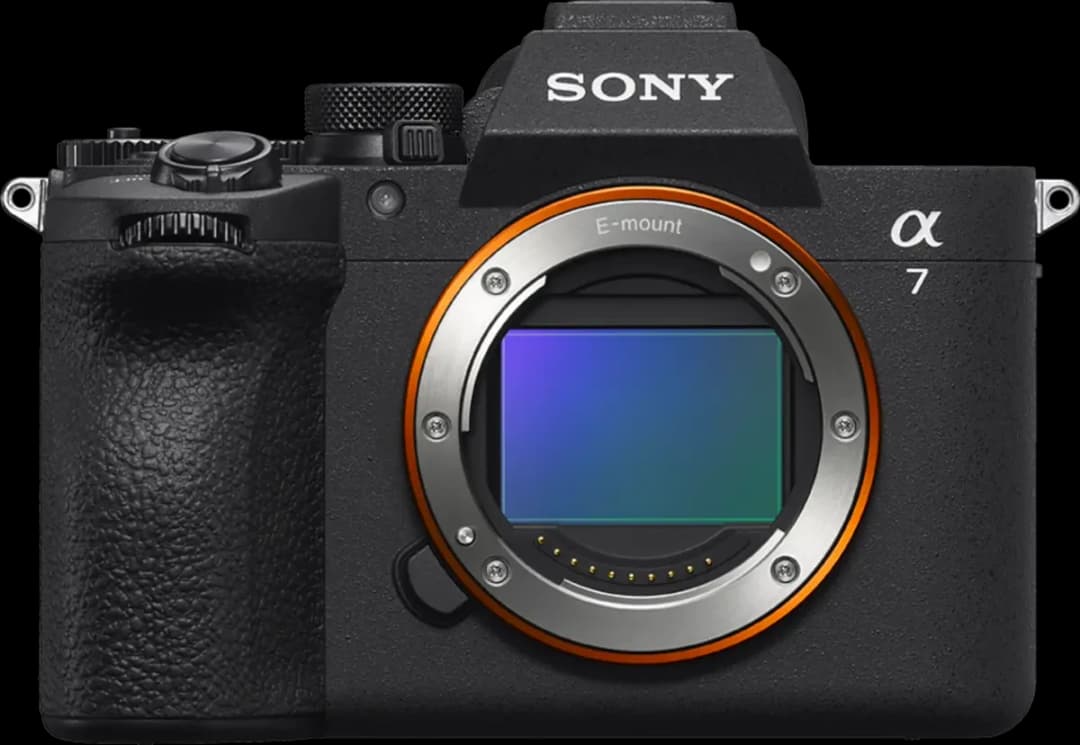
Sony
α7 V
2024
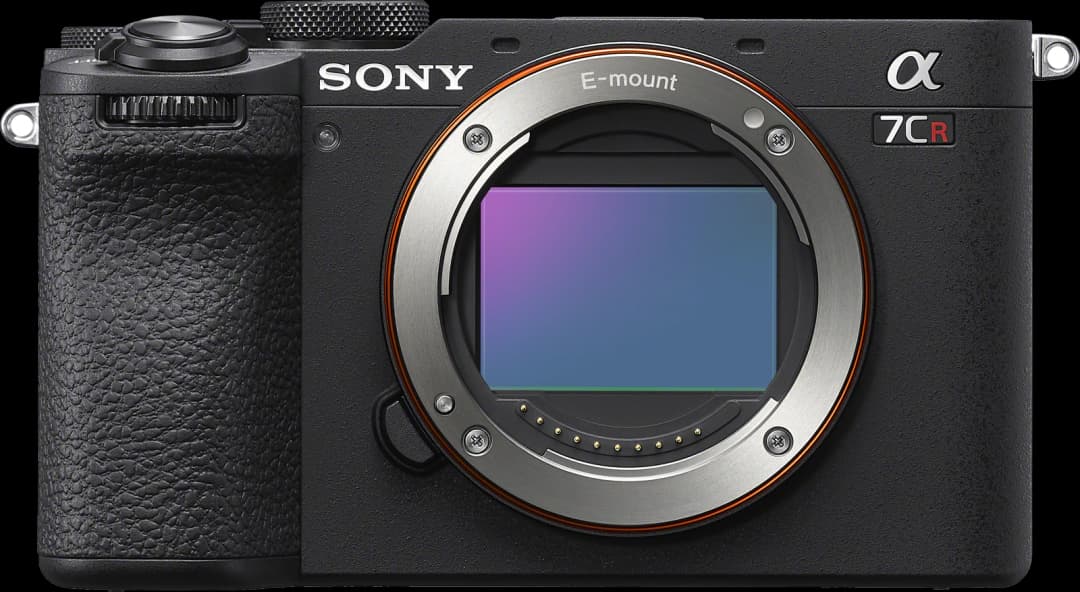
Sony
α7CR
2023
Sony α7 V vs Sony α7CR: Which One Prioritises Versatility, Which One Prioritises Resolution?
Visual summary
— Reads in 5 seconds
Sony
α7 V
Sony
α7CR
Where to buy
— Live merchant price comparator


Sony α7CR

Sony Unisex a7CR Mirrorless Camera Body in Silver in Black - P-9df78474-0a4f-481a-8e9d-890cccf69e90
2 599 GBP · Sony UK
You'll find the best prices on the market here, updated daily — and by going through these partner links, you support Camera Duel without paying a cent more.
The arbitration in brief
The α7 V is the rational choice for the majority of hybrid photographers; the α7CR is only justified if 61 MP and compactness are absolute priorities.
Sony has positioned these two bodies at very different points in its full-frame range, despite near-identical launch prices. The α7 V was released at the end of 2024 at 2 899 USD. It is the direct successor to the α7 IV, repositioned as the brand’s reference versatile hybrid. The α7CR, launched in 2023 at 3 000 USD (or 3 700 EUR at European launch), is a compact, high-resolution variant of the α7C series. It packs the 61 MP sensor from the α7R V into a body weighing 515 g.
Both share the E-mount, weather-sealing, S-Log3 profile, and human/animal eye AF down to -4 EV. On paper, the similarities end there. The α7 V reaches 30 fps electronically with a 1 000-image RAW buffer. The α7CR tops out at 8 fps with a 76-image buffer. This is not a minor detail: it reflects opposing design philosophies.
This comparison settles a genuine purchase dilemma. On one side, a photographer who wants a single body capable of covering everything from weddings to sports reportage without swapping cameras. On the other, a photographer who prioritises maximum resolution and a discreet form factor, and is willing to sacrifice speed to achieve it. The value proposition of each, their respective deal-breakers, and their positioning against Nikon and Canon competition in 2026: that is what you will find here.
Standout strengths
— Where each camera shines
Sony
α7 V
Top advantages
- 204 800Extended ISO max2× vs Sony α7CR
- 1000RAW buffer13,2× vs Sony α7CR
- 51 200Native ISO max1,6× vs Sony α7CR
- 30 fpsElectronic burst3,8× vs Sony α7CR
Sony
α7CR
Top advantages
- 61 MPMegapixels1,8× vs Sony α7 V
- 515 gWeight+35 % vs Sony α7 V
- 14.4 EVDynamic range (EV)Absent sur Sony α7 V
Detailed spec-by-spec
— Round by round, the eight categories
Sensor
Autofocus
Speed & burst
Video
Stabilisation
Build
Ergonomics & screen
Connectivity & battery
Detailed analysis analysis
— Strengths, trade-offs and ideal user
Sony α7 V: what it does well, what it concedes
The α7 V carries a BSI-CMOS 33 MP sensor with a native ISO range of 100 to 51 200, expandable to 204 800. The 33 MP resolution is sufficient for A1 prints without interpolation. Native ISO up to 51 200 exceeds that of the α7CR by almost half a stop in raw terms. In practice, this translates to extra headroom in low light before switching to extended modes. Dynamic range is not published by Sony for this model in currently available data, unlike the α7CR whose DXOMark measurement is 14,4 EV. This point should be monitored in independent tests.
Where the α7 V pulls decisively ahead is speed:
- 30 fps electronically versus 8 fps on the α7CR.
- RAW buffer of 1 000 images versus 76 images.
- Mechanical shutter to 1/16 000 s versus 1/8 000 s.
- IBIS rated at 7,5 stops versus 7 stops.
A 1 000-image RAW buffer fundamentally changes how you approach burst shooting. You no longer have to manage buffer saturation on a long sequence. This matters for weddings (ceremony, first look), reportage, or any situation where timing is outside your control.
Ergonomics are also superior. The EVF shows 3 686 400 dots with 0,78x magnification, against 2 359 296 dots and 0,70x on the α7CR. The rear screen reaches 2 095 104 dots versus 1 036 800. Dual CFexpress Type A and SD UHS-II slots are a meaningful safety net for professional work. CIPA battery life reaches 750 shots versus 530. The α7 V also supports XLR via adapter and offers waveform, vectorscope and false colour in video, features absent on the α7CR.
For whom
The α7 V suits the hybrid photographer who wants one body for varied work. The wedding photographer who must cover the ceremony in bursts, low-light portraits and speech video without swapping bodies. The semi-pro videographer who needs 4K 120 fps, S-Log3 and full video monitoring with scopes. The reportage photographer who cannot afford to miss a sequence because the buffer fills. On the road, the 695 g weight is higher than the α7CR, but dual slots and superior battery life compensate on long assignments.
Sony α7CR: what it does well, what it concedes
The α7CR is built around a BSI-CMOS 61 MP sensor measured at 14,4 EV dynamic range by DXOMark. This figure places the sensor among the best measured in full frame. In practice, 14,4 EV means very wide latitude for recovery in post, especially useful in high-contrast landscapes or studio portraits with deep shadows. Cropping is also possible without visible loss up to very large print sizes.
The compromises are real and quantifiable:
- 8 fps mechanical and electronic, with no difference between modes.
- RAW buffer limited to 76 images, roughly 9,5 seconds at full speed before saturation.
- Mechanical shutter capped at 1/8 000 s, insufficient to freeze some subjects in bright light at wide apertures.
- Single SD UHS-II card slot, no redundancy.
The single slot is a deal-breaker for any professional photographer working without a safety net. On weddings or reportage, losing a card without simultaneous backup is an unacceptable risk. This point alone removes the α7CR from many pro workflows.
On the positive side, the form factor is an objective advantage. 515 g and 124,0 x 71,1 x 63,4 mm: it is the most compact full-frame body in the current Sony range at this resolution level. For long-haul travel or discreet street photography, the 180 g saving versus the α7 V is noticeable over a full day. The 7-stop IBIS remains effective for slow handheld exposures.
For whom
The α7CR suits the landscape, travel or portrait photographer who prioritises resolution and compactness above all else. They work mainly from a tripod or in controlled conditions. They have no need for sustained bursts. They accept the single slot because they back up cards at the end of the day and do not work under professional stress. The travel photographer who wants a discreet full-frame camera in a light backpack will find a combination here that is hard to match in the Sony ecosystem.
Our verdict
Which one to buy, and why
The α7 V wins this comparison on the criteria that matter to the greatest number of users. The 30 fps burst, 1 000-image RAW buffer, 1/16 000 s shutter, dual slots and 750-shot battery life form a coherent package for demanding professional or semi-professional use. The 3 686 400-dot, 0,78x viewfinder is objectively better. XLR support and full video scopes (waveform, vectorscope, false colour) reinforce its position as a complete hybrid tool. At 2 899 USD, it is also cheaper than the α7CR at launch.
The α7CR has one strong argument and only one: 61 MP with 14,4 EV measured dynamic range in a 515 g body. For large-format landscape, studio portraiture or minimalist travel, this is a genuine advantage. But the single slot remains a non-negotiable deal-breaker for any professional use. And at a 3 000 USD launch price, it costs more for less versatility.
The tipping points are as follows:
- Choose the α7 V if you cover events, sport, weddings or hybrid video.
- Choose the α7CR if you shoot mainly landscape or tripod-based portraiture with no need for bursts.
- The α7CR is eliminated outright if you work professionally without redundant backup in the field.
On the used market in 2026, the α7CR appears at prices well below its launch figure, which may tilt the decision if your usage matches its profile exactly. The α7 V, being newer, remains closer to its original price on the secondary market.
My clear recommendation: take the α7 V. It covers more situations, protects your files better with dual slots, and costs less. The α7CR is an excellent body for a very specific use case. Outside that narrow niche, the α7 V is the rational choice.
Frequently asked questions
Before you buy, the questions we get
Which one should I choose for wedding photography?
The α7 V without hesitation. The 1 000-image RAW buffer at 30 fps lets you cover long sequences without saturation. Dual CFexpress Type A and SD UHS-II slots provide file redundancy, essential in a professional context. The α7CR with its 76-image buffer and single slot represents a real operational risk. Battery life of 750 shots versus 530 on the α7CR is also a tangible advantage on a 10-hour wedding day.
Does the resolution gap between 33 MP and 61 MP matter in practice?
For most uses, no. 33 MP allows A1 prints (594 x 841 mm) at 150 dpi without interpolation, covering virtually all print needs. The difference becomes relevant in two specific cases: aggressive cropping in post (the α7CR gives you twice the latitude) and very large prints beyond A0. If you do not produce decorative wall prints or crop systematically, 33 MP is sufficient.
Is the α7CR really usable for video?
It is functional but limited. It offers 4K 60 fps, 10-bit, S-Log3 and unlimited recording, which covers basic needs. However, it tops out at 60 fps versus 120 fps on the α7 V, lacks an XLR input, and its video monitoring is limited to histogram and zebras. The α7 V adds waveform, vectorscope and false colour, and supports anamorphic desqueeze at 1,3x, 1,5x, 1,8x and 2,0x versus 1,3x and 2,0x only on the α7CR. For serious video work, the α7 V is clearly superior.
Does the 515 g weight of the α7CR justify its higher price for travel?
The 180 g difference versus the α7 V is real and noticeable over a full day of walking. But at a 3 000 USD launch price versus 2 899 USD for the α7 V, you pay more for fewer features. If compactness is your absolute priority and your use is limited to landscape and travel without professional constraints, the α7CR makes sense. On the used market in 2026, examples are circulating at significantly lower prices, which improves the equation.
Which body will age better over the next five years?
The α7 V has the advantage of being released in 2024, one year after the α7CR (2023). Its commercial lifecycle is therefore longer. Its USB-C 3.2 Gen2 at 10 Gbps versus Gen1 at 5 Gbps on the α7CR is a detail that matters for large file transfers. Dual slots and the 1 000-image buffer also give it broader headroom against evolving workflows. The α7CR will remain relevant for its 61 MP sensor, but its speed and single-slot limitations will become increasingly restrictive as practices evolve.