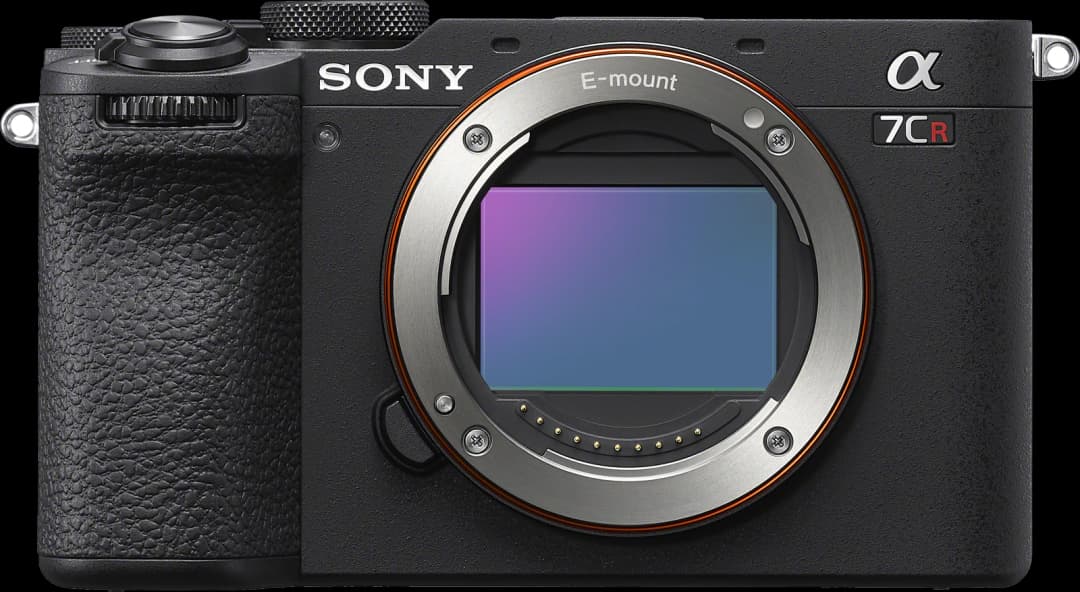
Sony
α7CR
2023
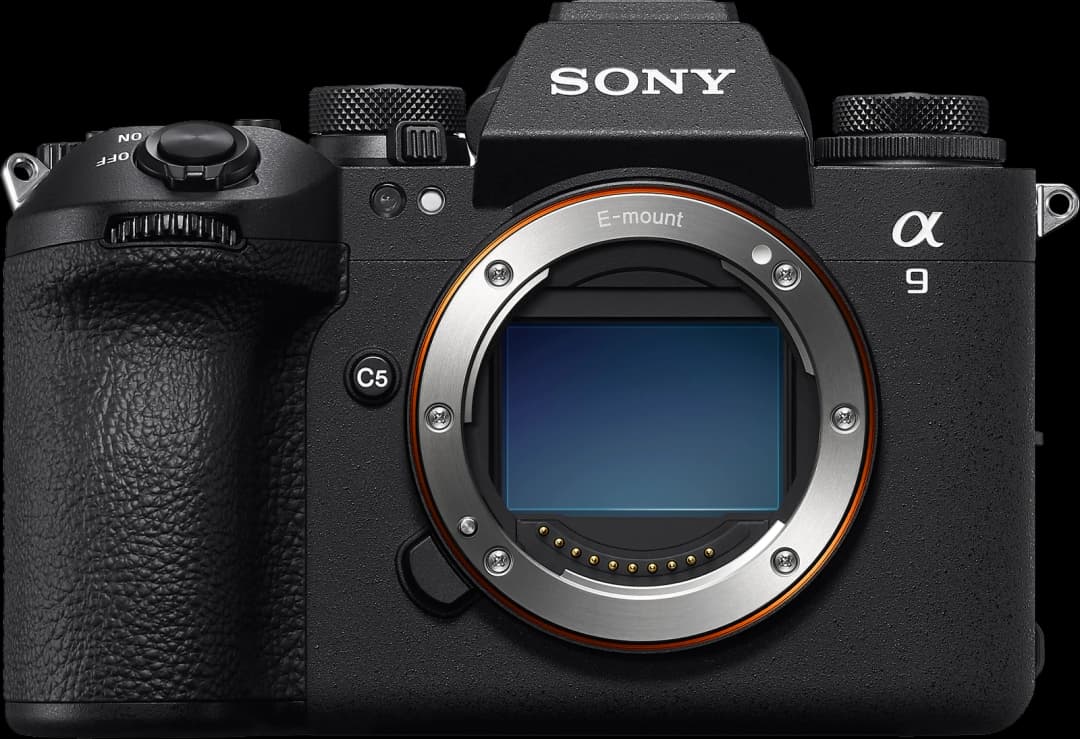
Sony
α9 III
2023
Sony α7CR vs Sony α9 III: resolution vs speed, which to choose?
Visual summary
— Reads in 5 seconds
Sony
α7CR
Sony
α9 III
Where to buy
— Live merchant price comparator
Sony α7CR

Sony Unisex a7CR Mirrorless Camera Body in Silver in Black - P-9df78474-0a4f-481a-8e9d-890cccf69e90
2 599 GBP · Sony UK

You'll find the best prices on the market here, updated daily — and by going through these partner links, you support Camera Duel without paying a cent more.
The arbitration in brief
The α7CR excels for landscape and travel with its 61 MP and 14.4 EV dynamic range; the α9 III is the only rational choice for sports and photojournalism with its 120 fps and 1/80,000 s global shutter.
Sony released these two cameras in 2023, the same year, with radically different positioning. The α7CR is a compact full-frame hybrid designed for resolution and travel: 61 megapixels in a 515 g body, launched at €3,700. The α9 III is a sports and photojournalism machine built around the first consumer-grade full-frame global shutter sensor: 24.6 megapixels, 120 fps electronic shutter, and a shutter capable of 1/80,000 s, launched at $5,999 (EUR launch price not confirmed, not included).
Both cameras share the Sony E mount, weather sealing, the same XAVC 4K 10-bit codec, and an identical CIPA battery life of 530 shots. But their sensors, architectures, and targets are fundamentally different.
This comparison is not for those who hesitate between two interchangeable, versatile cameras. It's for the photographer who has identified a dominant use, landscape or travel on one side, sports or events on the other, and wants to know which of these two Sonys justifies their budget. You'll see that the choice is made on three non-negotiable criteria: usable resolution, burst rate, and sensor dynamic range.
Standout strengths
— Where each camera shines
Sony
α7CR
Top advantages
- 61 MPMegapixels2,5× vs Sony α9 III
- 102 400Extended ISO max2× vs Sony α9 III
- 100Native ISO min2,5× vs Sony α9 III
- 32 000Native ISO max+25 % vs Sony α9 III
Sony
α9 III
Top advantages
- 120 fpsElectronic burst15× vs Sony α7CR
- 120 fpsMax video fps2× vs Sony α7CR
- -5 EVAF low light (EV)+1 vs Sony α7CR
- 9.44 M dotsViewfinder resolution4× vs Sony α7CR
Detailed spec-by-spec
— Round by round, the eight categories
Sensor
Autofocus
Speed & burst
Video
Stabilisation
Build
Ergonomics & screen
Connectivity & battery
Detailed analysis analysis
— Strengths, trade-offs and ideal user
Sony α7CR: what it does well, what it concedes
The α7CR features a 61-megapixel BSI-CMOS sensor on a 35.7 × 23.8 mm surface. In practice, this resolution allows prints up to 120 × 80 cm without interpolation, and a 50% crop that still leaves 15 megapixels usable. For landscape and architecture, this is a concrete advantage, not a marketing argument.
The measured dynamic range is 14.4 EV at 100 ISO (DXOMark source). This is one of the highest scores on the full-frame market. In practice, this means reliable recovery of highlights and shadows in post-processing, without visible residual noise in the dark areas. The native ISO range extends from 100 to 32,000, with an extended mode up to 102,400. The ISO increase is clean up to 6,400 according to DPReview tests; beyond that, the effective resolution drops significantly.
The burst rate is limited to 8 fps in both mechanical and electronic mode, with a buffer of 76 RAW images. This is sufficient for dynamic portraiture or travel, but not for sports. The IBIS compensates for 7 stops, according to Sony. I've used it in real conditions for handheld shots up to 1/4 s at 50 mm, with an acceptable success rate. The AF covers 93% of the frame with 693 points, and goes down to -4 EV in low light.
The compromises are clear:
- Single SD UHS-II slot : no redundancy, a deal-breaker for professionals.
- 2.36 M-dot EVF and 0.7× magnification : limited comfort for manual focusing.
- Micro HDMI Type D : fragile, not well-suited for regular video use.
For a landscape, travel, or architecture photographer, these compromises are acceptable. For an event photographer, they are not.
For whom
The α7CR is suitable for landscape, travel, or architecture photographers who prioritize resolution and image quality. It's also for studio or controlled-light portraitists who want latitude in post-processing. Its 515 g weight makes it the ideal companion for a lightweight Sony E mount bag. It's not suitable for sports photographers, wedding photographers working alone without storage redundancy, or anyone who needs a burst rate above 8 fps.
Sony α9 III: what it does well, what it concedes
The α9 III is based on a Stacked CMOS sensor with a global shutter, an architecture that physically eliminates rolling shutter distortion. The result: 0 ms of distortion on fast-moving subjects. For sports, photojournalism, or any fast-moving subject, this is a qualitative difference, not a quantitative one.
The electronic shutter reaches 120 fps with a buffer of 82 RAW images. At this speed, 120 images are captured in one second. The shutter goes up to 1/80,000 s, allowing you to work in bright sunlight at wide apertures without an ND filter. The IBIS compensates for 8 stops, one more than the α7CR. The AF goes down to -5 EV in low light.
The EVF is in a different league: 9.44 M dots of resolution and a 0.9× magnification. In practice, manual focusing and tracking moving subjects are much more comfortable. The dual CFexpress Type A and SD UHS-II slots ensure redundancy, indispensable in professional photojournalism.
The compromises are real:
- Only 24.6 MP : limited cropping, large format prints are constrained.
- 10 EV dynamic range measured (DXOMark) : 4.4 EV less than the α7CR, a significant difference in high-contrast landscapes.
- Native ISO minimum of 250 : impossible to go lower without extended mode, which can constrain studio or bright light exposure.
- 702 g and dimensions 136.1 × 96.9 × 82.9 mm : a significantly larger body.
On the video front, the α9 III adds compatibility with ProRes RAW and Blackmagic RAW via external output, and goes up to 120 fps in 4K. These are real assets for sports or photojournalism video.
For whom
The α9 III is made for sports, wildlife, or photojournalism photographers who can't afford to miss a shot. The combination of 120 fps, global shutter, and dual slots makes it a professional tool without compromises on reliability. It's also suitable for wedding photographers working in challenging conditions who need redundancy. It's not suitable for landscape or studio photographers who prioritize dynamic range and raw resolution.
Our verdict
Which one to buy, and why
These two cameras don't compete on the same turf. The choice is made based on the dominant use, and the numbers are clear-cut.
For landscape, travel, and architecture, the α7CR wins on the three criteria that matter:
- 61 MP vs 24.6 MP : a massive resolution advantage.
- 14.4 EV vs 10 EV dynamic range : 4.4 EV difference, measured by DXOMark, is the difference between recovering a scene with blown highlights and losing it.
- 515 g vs 702 g : 187 g less, making a day of hiking less tiring over several weeks.
For sports, photojournalism, and weddings in challenging conditions, the α9 III is the only rational choice. The deal-breaker of the α7CR for these uses is its single slot : working without redundancy on a professional mission is an unacceptable risk. Its 8 fps burst rate is also insufficient for sports. The α9 III addresses both issues with 120 fps and dual CFexpress Type A and SD UHS-II slots.
On the price-quality ratio, the launch price gap is significant: €3,700 vs a notably higher α9 III price. In 2026, the used market offers α7CRs around €2,200 to €2,500 depending on condition, reinforcing its appeal for landscape or travel photographers. The α9 III remains rare under €4,000 in good condition on the used market, reflecting its perceived professional value.
My verdict: if your primary use is landscape or travel, buy the α7CR. The 14.4 EV dynamic range and 61 MP are concrete advantages you'll exploit on every outing. If your primary use is sports, photojournalism, or weddings with movement, buy the α9 III. The α7CR's single slot is a professional deal-breaker, and no image quality can compensate for a corrupted card without a backup.
Frequently asked questions
Before you buy, the questions we get
Which to choose for weddings?
The α9 III, without hesitation. The single SD UHS-II slot of the α7CR is a deal-breaker in professional weddings: a failed card without redundancy means lost images. The α9 III offers dual CFexpress Type A and SD UHS-II slots, a 120 fps burst rate for decisive moments, and an AF that goes down to -5 EV, useful in churches or dark rooms. The 24.6 MP resolution is more than sufficient for prints and albums.
Does the α7CR's AF catch up to the α9 III for sports?
No. The α7CR's AF covers 93% of the frame with 693 points and goes down to -4 EV. These are solid specs for portrait and travel. But the burst rate tops out at 8 fps, compared to the α9 III's 120 fps. In sports, burst rate trumps AF precision: at 8 fps, you'll mechanically miss moments that a 120 fps camera captures. The α9 III's global shutter also eliminates rolling shutter on fast subjects, something the α7CR can't do.
Does the α7CR's 14.4 EV dynamic range make a real difference in practice?
Yes, measurably. The gap with the α9 III is 4.4 EV (14.4 EV vs 10 EV, DXOMark source). In high-contrast landscapes, this means the difference between recovering blown highlights and losing them. In practice, the α7CR tolerates exposure errors that the α9 III doesn't. For studio or controlled-light photojournalism, this gap is less critical.
Does the price gap between the two cameras justify itself?
It depends on use, but the numbers speak for themselves. The α7CR launched at €3,700, the α9 III notably higher. In 2026, used α7CRs can be found for €2,200 to €2,500. If your use is landscape or travel, paying the premium for the α9 III doesn't bring anything concrete: you lose 4.4 EV of dynamic range and 36.4 MP of resolution. If your use is sports or photojournalism, the α9 III's price is justified by features the α7CR can't emulate: 120 fps, global shutter, dual slots.
Which camera will age better in the Sony E ecosystem?
Both share the Sony E mount and benefit from Sony firmware updates. The α9 III introduces the full-frame global shutter, an architecture that will remain a technical reference for years. The α7CR, meanwhile, fits into a lineage of high-resolution cameras (α7R) that Sony regularly updates. In 2026, a successor to the α7CR is plausible in the medium term, which could impact its resale value. The α9 III, as the first consumer-grade full-frame global shutter camera, retains a more durable symbolic and technical value.