Gear
Which Lens for Landscape Photography: Focal Lengths, Apertures and System Choices
Ultra-wide-angle or versatile zoom? Prime or zoom? This guide breaks down each parameter and helps you choose the right lens for your landscape practice, system by system.
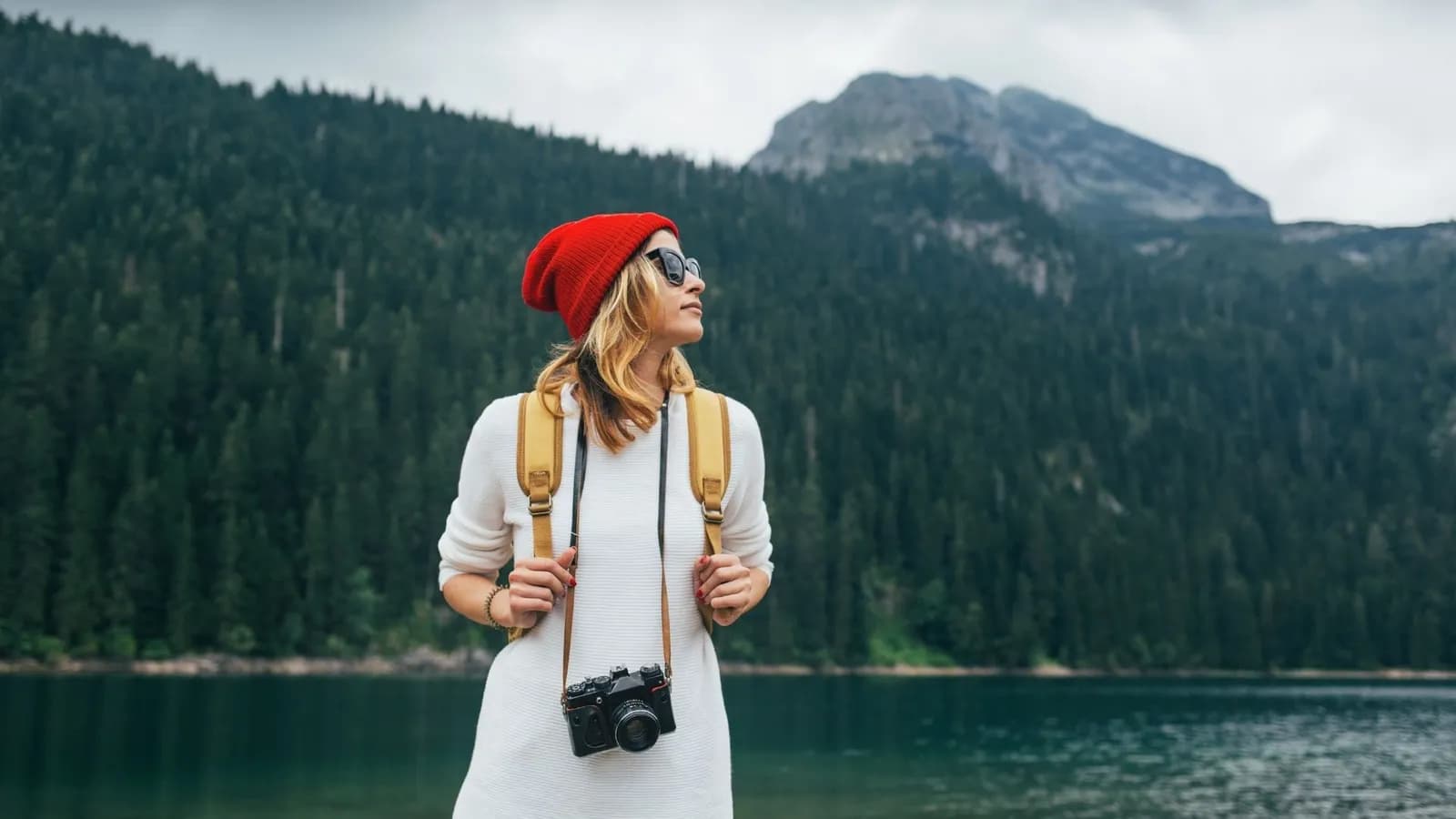
Why focal length radically changes a landscape photograph
Before comparing lenses, you need to understand what focal length does to your image. It is not just a question of field of view.
Focal length determines three things simultaneously: angle of view, compression of planes and the relationship between foreground and background. A 14 mm covers a field of approximately 114°. A 70 mm drops to 34°. This is not merely cropping: the geometry of the scene changes entirely.
In landscape photography, this geometry is often more important than resolution or aperture. A 24 mm lens placed close to a foreground rock exaggerates the size of that rock relative to the mountains behind. The same framing at 70 mm from further away compresses the planes and visually brings distant elements closer. Both approaches are valid. They do not produce the same result.
Focal lengths from 10 mm to 200 mm: what they deliver in the field
Each focal range has its strengths and limits in landscape photography. Here is an honest assessment, without marketing.
10-17 mm: ultra-wide-angle, power and risks
Below 17 mm on full-frame, you enter ultra-wide-angle territory. The field is spectacular. So are the geometric distortions at the edges. These focal lengths work well for canyon interiors, starry skies with a close foreground, or scenes where you want a strong immersive effect. They forgive little: a slightly tilted horizon becomes immediately visible, and straight lines at the periphery curve if distortion correction is not applied.
20-28 mm: the reference range for classic landscape
Between 20 mm and 28 mm, you find the most widely used balance in landscape photography. The field remains wide, distortion is manageable, and the foreground/background relationship stays natural. This is the range in which the majority of professional landscape photographers work. A 24 mm is often cited as the reference focal length: wide enough to include a dramatic sky, tight enough to avoid distorted edges.
35-50 mm: the human eye view, useful for intimate landscapes
The 35 mm approaches peripheral human vision. It suits landscapes where you are not trying to exaggerate depth but to render a natural atmosphere. The 50 mm accentuates this neutrality even further. These focal lengths are underestimated in landscape photography. They produce less spectacular images but often more readable ones, with proportions faithful to what the eye perceives on site.
70-200 mm: compression and distant details
The telephoto lens serves two distinct uses in landscape photography. First, isolating a detail: a snowy summit, a lighthouse in mist, a lone tree on a ridge. Second, compressing planes to visually bring a distant background closer to a foreground. This compression creates images very different from wide-angle, often more graphic and less narrative. I use it regularly in Brittany to compress layers of light on the sea at sunrise: the result is radically different from a wide-angle, and often stronger.
Wide-angle (14-28 mm)
For wide scenes and strong foregrounds
- Wide field, immersive feel
- Exaggerates depth and foregrounds
- Sensitive to geometric distortion
- Ideal: open landscapes, astro, canyon interiors
Standard (35-70 mm)
For intimate landscapes and balanced compositions
- Natural rendering of proportions
- Less spectacular, more readable
- Versatile: landscape and travel portrait
- Ideal: forests, villages, human scenes
Telephoto (70-200 mm)
For compression and distant details
- Very pronounced plane compression
- Isolates a subject in a vast landscape
- Requires a stabiliser or tripod
- Ideal: mountains, mist, sunsets
Aperture and depth of field: what really matters in landscape
The maximum aperture of a lens is often oversold for landscape photography. Here is why, and in which cases it becomes genuinely useful.
In daytime landscape photography, you rarely work at full aperture. Most photographers stop down between f/8 and f/11 to maximise depth of field and reach the optimum sharpness of their lens. At these values, an f/2.8 and an f/4 deliver identical results. A large maximum aperture therefore does not by itself justify a significant price premium.
There are two cases where maximum aperture becomes a decisive criterion in landscape photography. The first: night photography and astrophotography. An f/1.4 or f/1.8 allows shorter exposure times to avoid star trails, or lower ISO to reduce noise. The second: low-light conditions without a tripod, typically fast-moving sunrises or scenes under trees on overcast days.
For classic daytime landscape photography, an f/4 is sufficient in virtually all situations. An f/2.8 provides headroom in fading light. An f/1.4 or f/1.8 is reserved for astro or very specific situations. Do not pay the aperture premium if your practice does not justify it.
Zoom or prime: the real trade-off for landscape photography
The competition between zooms and primes is often presented as a quality debate. It is more nuanced than that.
Modern high-end zooms have largely closed the sharpness gap with primes. An RF 15-35mm f/2.8L IS USM at 840 g produces images that the vast majority of photographers will not distinguish from a 24 mm prime under normal conditions. The real advantage of a zoom is not quality: it is the flexibility of framing without changing lenses.
Primes retain several concrete advantages. They are generally lighter for an equivalent aperture. They can offer a larger maximum aperture (f/1.4 vs f/2.8). They are often cheaper at comparable aperture. And they force you to move to frame the shot, which often improves composition.
| Criterion | Zoom | Prime |
|---|---|---|
| Framing flexibility | High | None (single focal length) |
| Weight at f/2.8 aperture | High (700-900 g) | Moderate (335-515 g) |
| Maximum aperture available | f/2.8 typical | f/1.4 or f/1.8 |
| Edge sharpness | Good to very good | Excellent |
| Value for money | Medium to high | Often better |
| Ideal for | Travel, versatility | Astro, specialised landscape |
Weather-sealing and filter compatibility: criteria often overlooked
Landscape photography is often practised in hostile conditions. Two technical criteria deserve particular attention before purchase.
Weather-sealing: a deal-breaker in difficult conditions
Photographing by the sea, in rain, fog or mountains exposes the lens to moisture and salt spray. A non-weather-sealed lens in these conditions runs a real risk of internal condensation or water ingress. I regularly photograph the Breton coast in squally weather: weather-sealing is not a luxury, it is insurance. All the lenses in the selection presented here are weather-sealed. This is no coincidence.
Filter compatibility: polariser and ND
In landscape photography, two filters are essential. The polarising filter removes reflections on water and leaves and saturates skies. The ND filter (neutral density) extends exposure times to smooth waterfalls or the sea. These two filters screw onto the front thread of the lens. The filter thread diameter determines the price of the filters.
A lens with an 82 mm filter thread costs significantly more in filters than a 67 mm one. A quality circular polariser (B+W, Hoya HD) costs roughly twice as much in 82 mm as in 67 mm. If you already own filters, check compatibility before buying. Some ultra-wide-angle lenses have a bulbous front element that cannot take screw-in filters: they require special filter holders, which are bulkier and more expensive.
Wide-angle and ultra-wide-angle zooms: the selection
These lenses cover the 12-35 mm range, the most used in landscape photography. Here are the models from the catalogue, analysed for this use.
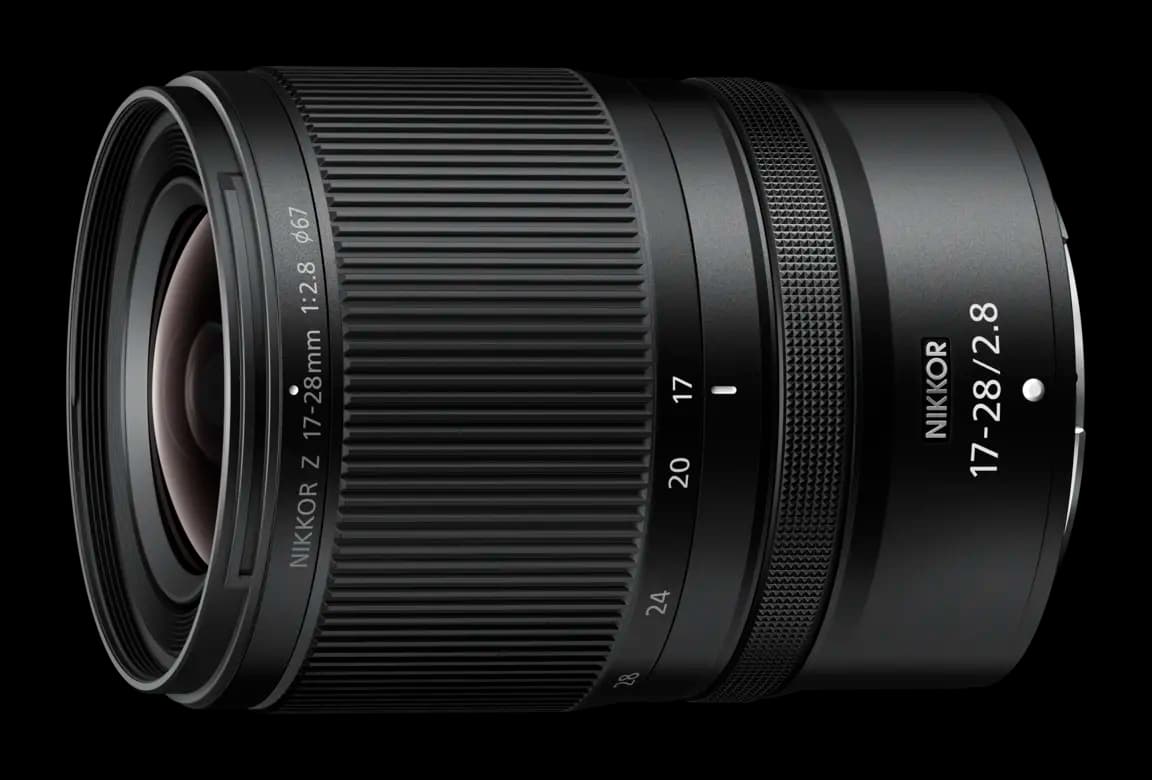
The NIKKOR Z 17-28mm f/2.8 at 450 g and 1 299 € is one of the few full-frame f/2.8 wide-angle zooms under 500 g. This is a strong argument for hiking and travel. Its 17-28 mm range covers the two most used focal lengths in landscape photography. Weather-sealing is present. The 67 mm filter thread makes affordable filters easy to use.
Opposite it, the Canon RF 15-35mm F2.8L IS USM at 840 g reaches down to 15 mm and includes optical stabilisation. It weighs almost twice as much, but offers a wider range and stabilisation useful in fading light. The filter thread is 82 mm.
The Panasonic Lumix S 14-28mm f/4-5.6 Macro at 345 g and 999 € is the lightest in the catalogue. Its variable f/4-5.6 aperture penalises it in low light, but for daytime landscape photography it is a weight/price compromise hard to beat on L-mount.
Wide-angle and ultra-wide-angle zooms for landscape photography


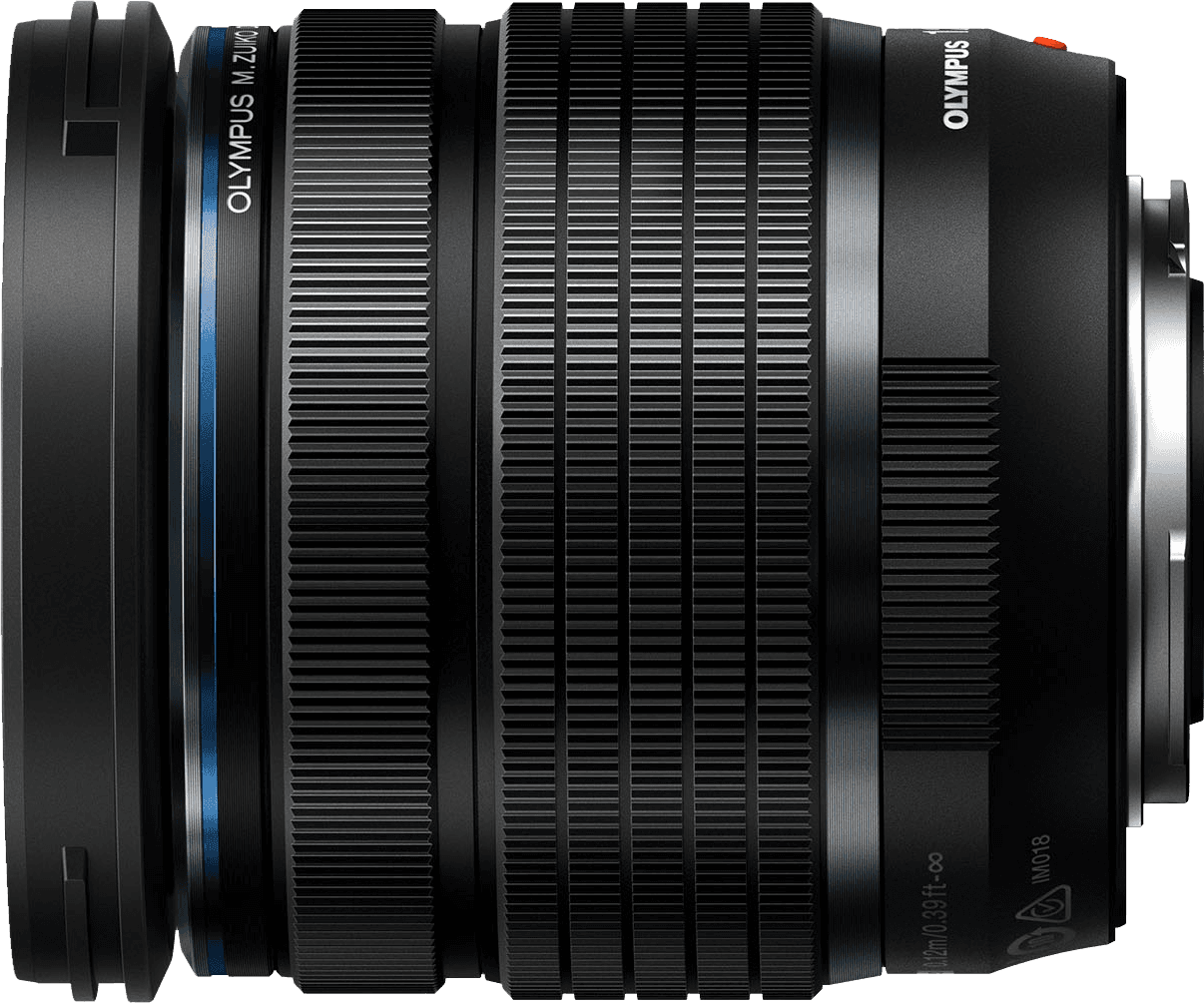
For Micro Four Thirds systems, the Leica DG Summilux 12mm f/1.4 Asph. at 335 g and 1 399 € is a prime equivalent to 24 mm full-frame, with a real f/1.4 aperture. It is the astrophotography option for the MFT system. The OM 12-45mm F4.0 at 254 g is the lightest in the entire selection: 254 g for a range equivalent to 24-90 mm full-frame. Ideal for lightweight travel.
Micro Four Thirds wide-angle lenses

Wide-angle primes: for whom, for what
Primes between 14 mm and 24 mm offer the best low-light and astrophotography performance. Here are the available models.
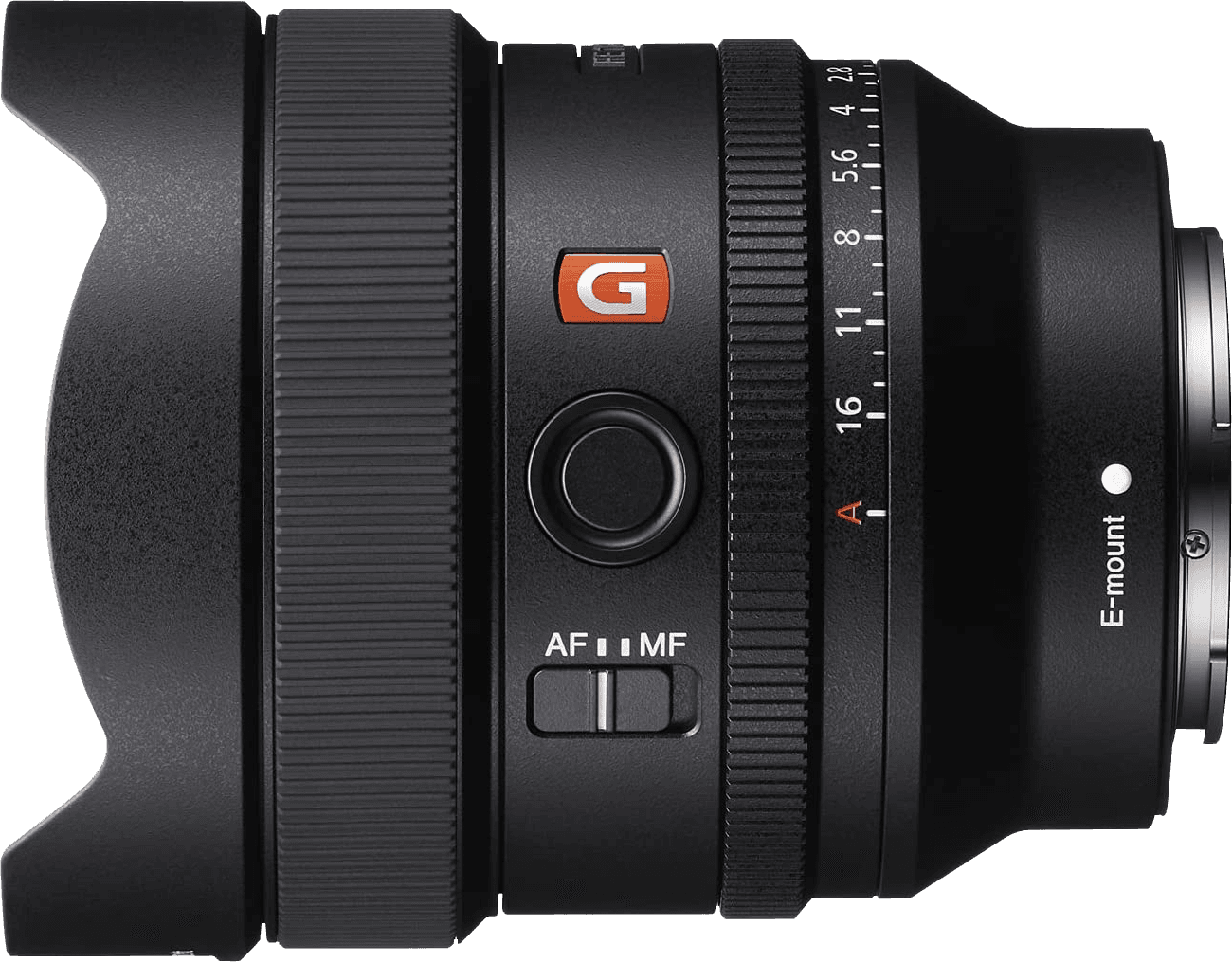
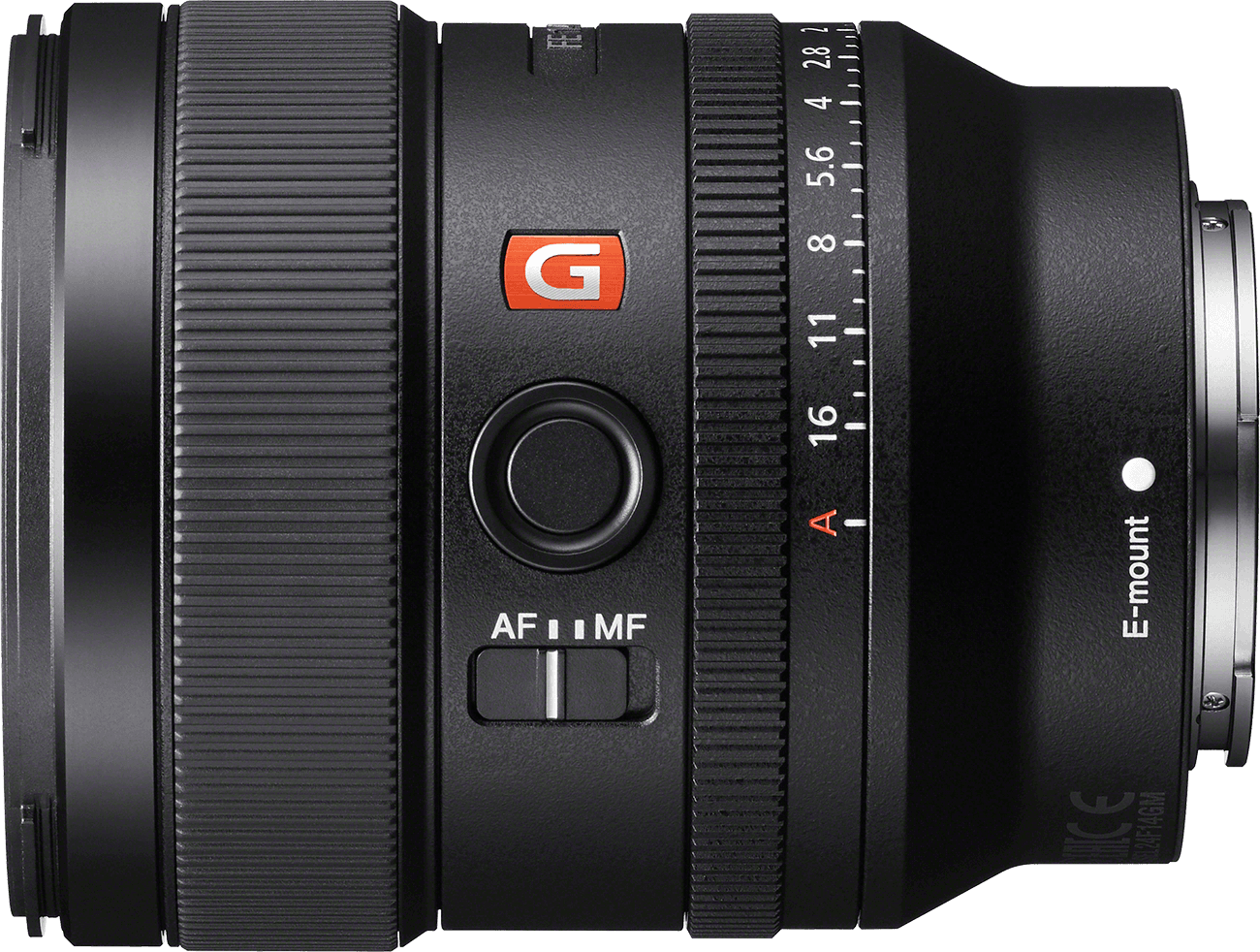
The Sony FE 14mm f/1.8 GM at 460 g is the reference lens for full-frame astrophotography. Its f/1.8 aperture at 14 mm is a rare combination. It is weather-sealed and relatively compact for its performance. It is a highly specialised lens: outside astro and canyon interiors, the 14 mm is difficult to master on a daily basis.
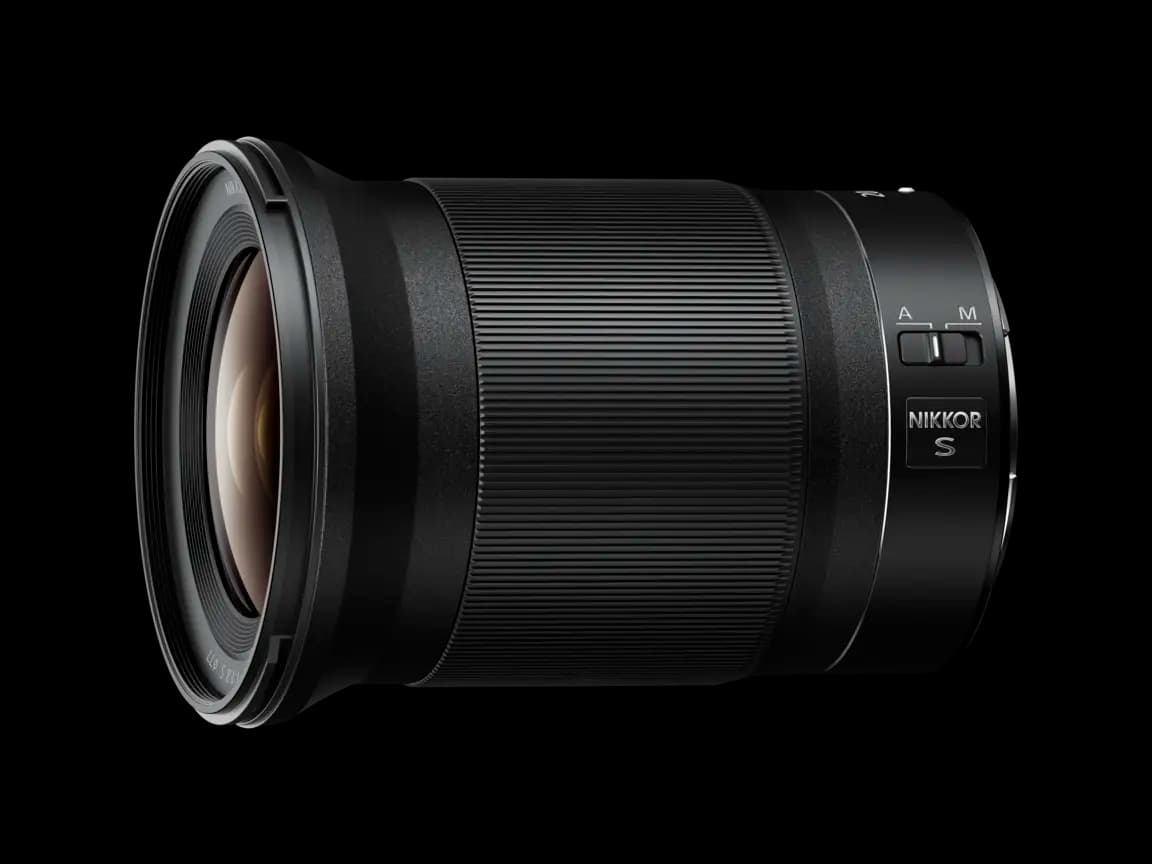
The Nikkor Z 20mm f/1.8 S at 505 g with its 77 mm filter thread offers a more versatile balance. The 20 mm is an easier focal length to use than the 14 mm: less distortion, more natural composition. The Sony FE 24mm f/1.4 GM at 445 g is even more versatile: the 24 mm is the classic landscape focal length, and the f/1.4 aperture opens the door to astrophotography and tripod-free night photography.
The Canon RF 24mm F1.4 L VCM at 515 g is Canon's answer in this segment. Released in 2024, it includes a VCM motor for video, but its stills performance is also at the level expected of a weather-sealed L-series optic.
Full-frame wide-angle primes

High-end L-mount prime
Versatile zooms: the right compromise for travel landscape photography
When you can carry only one lens, standard zooms covering 24-70 mm or 24-105 mm are often the best choice.
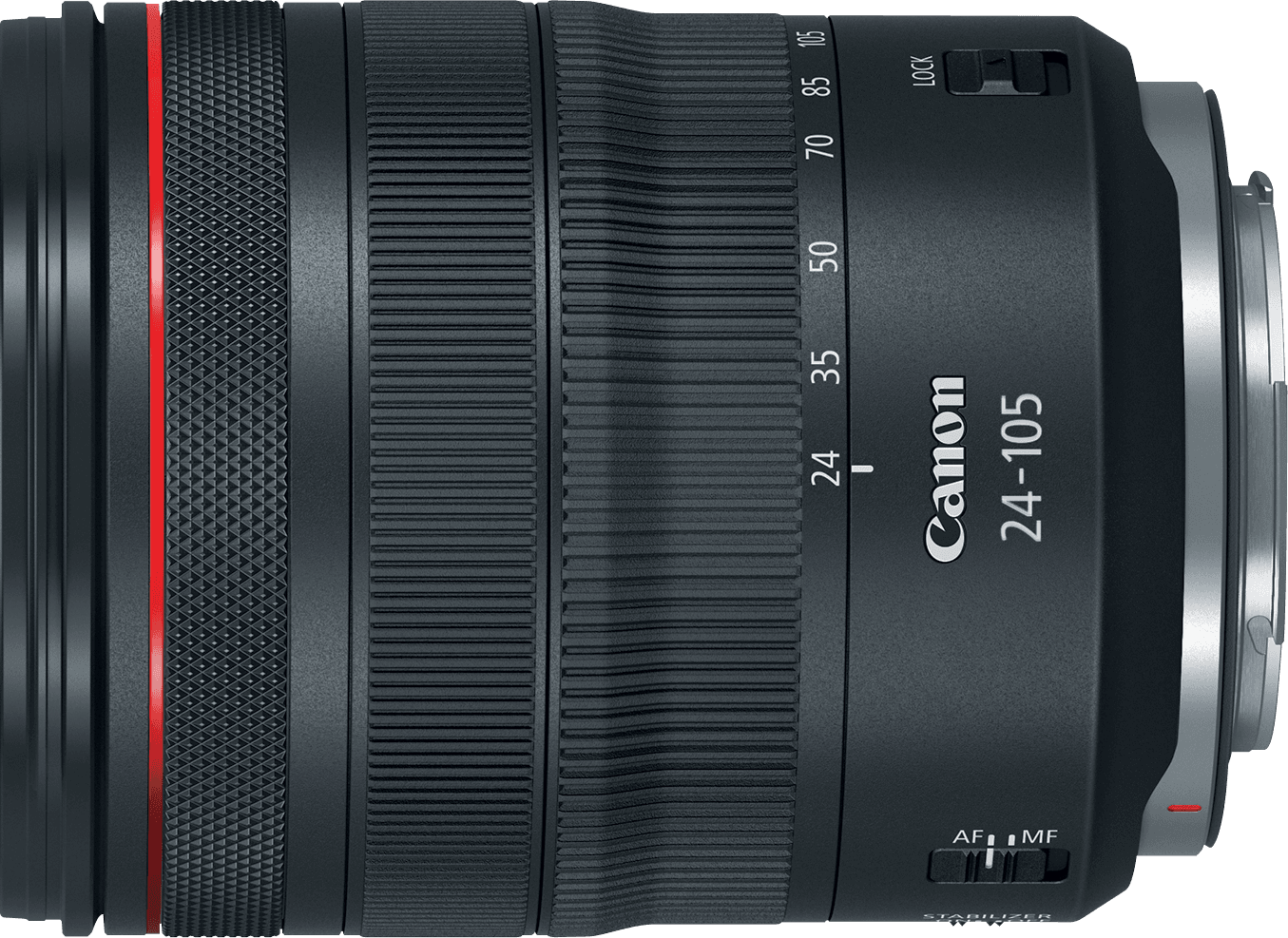
The Canon RF 24-105mm F4L IS USM at 700 g with 5 stops of stabilisation is one of the most complete travel zooms on the market. Its 24-105 mm range covers landscape wide-angle, portrait and moderate telephoto. The constant f/4 is sufficient for daytime landscape photography. Weather-sealing and the 77 mm filter thread complete a very solid profile.
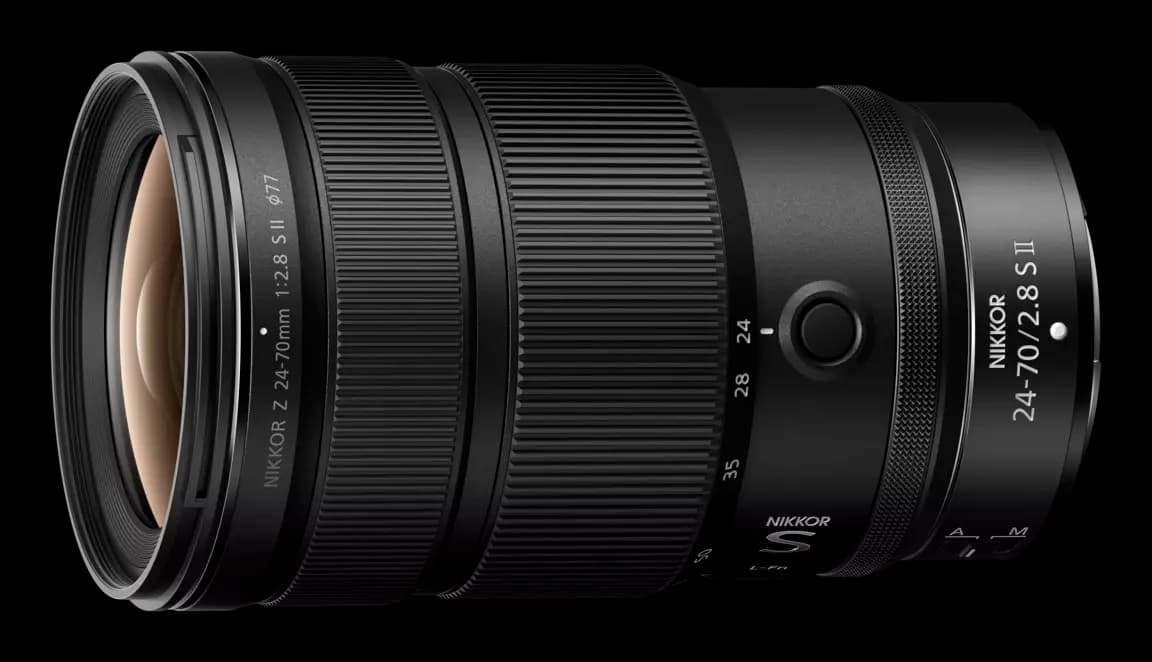
The Nikon NIKKOR Z 24-70mm f/2.8 S II at 715 g and 2 699 € is the reference f/2.8 standard zoom on Z mount. Released in 2025, it includes 5 stops of stabilisation and full weather-sealing. Its constant f/2.8 aperture makes it usable in fading light without a tripod, which the f/4 does not allow as easily. The Sony FE 24-70mm f/2.8 GM and the Panasonic Lumix S PRO 24-70mm f/2.8 at 935 g cover the same segment on their respective mounts.
Versatile 24-70 mm and 24-105 mm zooms
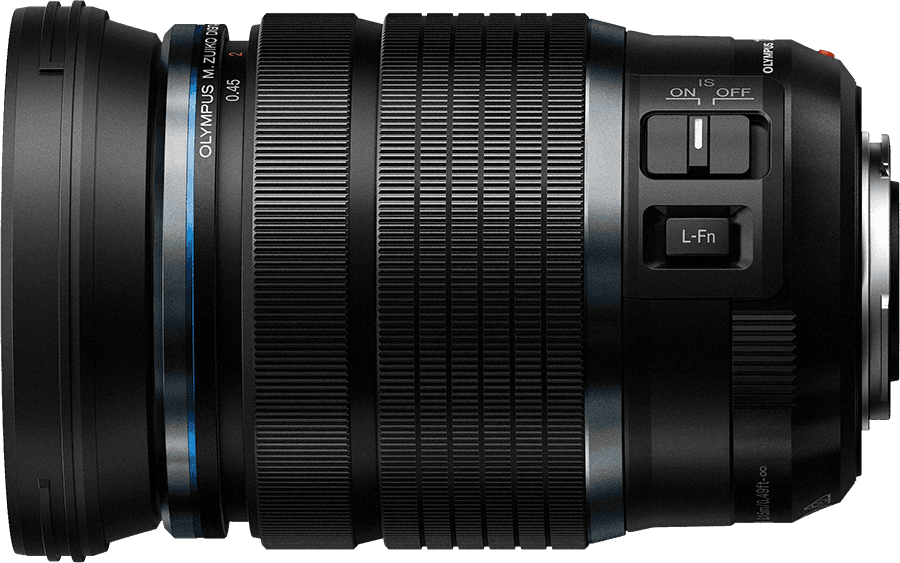
For the Micro Four Thirds system, the M.Zuiko Digital ED 12-100mm f/4.0 IS Pro at 561 g is a remarkable option. Its range equivalent to 24-200 mm full-frame covers virtually all landscape uses in a single lens. Its built-in stabiliser reaches 6,5 stops, allowing long exposures without a tripod in certain conditions. It is the versatile hiking zoom par excellence on MFT.
Versatile Micro Four Thirds zoom
Choosing according to your system: Sony, Canon, Nikon, Panasonic/L, MFT
The ideal lens also depends on your mount. Here is a quick overview by ecosystem.
| System | Wide-angle zoom | Prime | Versatile zoom |
|---|---|---|---|
| Sony FE (full-frame) | – | FE 14mm f/1.8 GM / FE 24mm f/1.4 GM | FE 24-70mm f/2.8 GM |
| Canon RF (full-frame) | RF 15-35mm f/2.8L IS USM | RF 24mm f/1.4 L VCM | RF 24-105mm f/4L IS USM |
| Nikon Z (full-frame) | NIKKOR Z 17-28mm f/2.8 | NIKKOR Z 20mm f/1.8 S | NIKKOR Z 24-70mm f/2.8 S II |
| Panasonic/Leica L | Lumix S 14-28mm f/4-5.6 Macro | Super-APO-Summicron-SL 21mm f/2 | Lumix S PRO 24-70mm f/2.8 |
| Micro Four Thirds | Leica DG Summilux 12mm f/1.4 | – | M.Zuiko 12-100mm f/4 IS Pro / OM 12-45mm f/4 |
Optical stabilisation and IBIS: when the tripod remains indispensable
Stabilisation has progressed, but it does not replace the tripod in every case. Here are the limits to know.
Optical stabilisation (IS, OSS, OIS depending on the manufacturer) compensates for the photographer's micro-movements. It is effective for short exposures in fading light, typically between 1/15 s and 1/2 s. Beyond that, movement of clouds, water or leaves creates subject blur that stabilisation cannot correct. For long exposures in landscape photography (waterfalls, sea, star trails), the tripod remains mandatory.
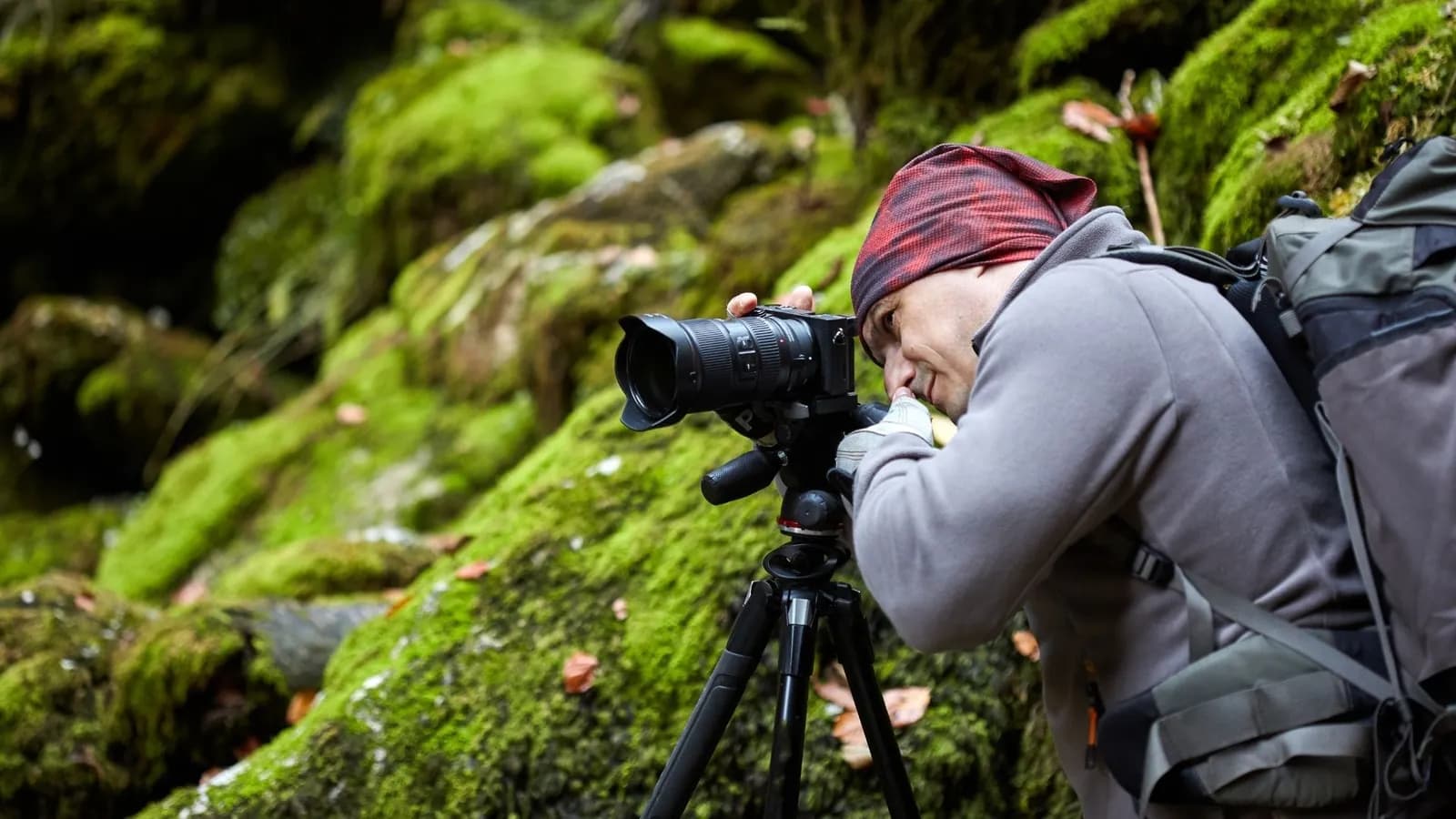
Several lenses in the catalogue include stabilisation. The Canon RF 24-105mm F4L IS USM claims 5 stops of compensation. The M.Zuiko Digital ED 12-100mm f/4.0 IS Pro reaches 6,5 stops in combination with the OM System body stabiliser. The NIKKOR Z 24-70mm f/2.8 S II also claims 5 stops. These values are measured according to the CIPA standard, which corresponds to controlled conditions: in real-world use, expect roughly 2 to 3 stops of real margin in difficult situations.
Common mistakes when buying a landscape lens
These mistakes recur regularly in forums and purchase feedback. They are expensive.
- 1
Buying the widest angle possible
A 10-12 mm is not automatically better than a 17-20 mm in landscape photography. Below 16 mm, distortion and geometric aberrations require real mastery. Start with a 17-24 mm and move down later if you feel the need.
- 2
Neglecting weight over time
An 840 g lens in a hiking pack is 840 g less for water, food or clothing. On an eight-hour day in the mountains, the difference between 450 g and 840 g is physically noticeable.
- 3
Ignoring filter compatibility
Some ultra-wide-angle lenses have a bulbous front element incompatible with screw-in filters. Check before purchase if you intend to use polarising or ND filters. A dedicated filter holder costs between 150 € and 400 € extra.
- 4
Overpaying for an unnecessary aperture
If you photograph only daytime landscape photography with a tripod, an f/4 is sufficient in 95 % of situations. The price premium between f/4 and f/2.8 on a full-frame zoom can exceed 1 000 €. Invest instead in a good tripod or a quality ND filter.
- 5
Forgetting the second-hand market
Landscape lenses see little wear: no intensive AF, no burst shooting, often used on a tripod. The second-hand market (MPB, KEH, authorised dealers) regularly offers optics in excellent condition at 20-35 % below new price. This is particularly relevant for high-end f/2.8 zooms.
Final recommendations by photographer profile
Three typical profiles, three clear recommendations.
The lightweight hiker
Priority on weight, daytime landscape, single lens
- MFT: OM 12-45mm f/4 (254 g) or M.Zuiko 12-100mm f/4 IS Pro (561 g)
- Full-frame: NIKKOR Z 17-28mm f/2.8 (450 g) on Z
- Avoid full-frame f/2.8 zooms above 700 g
The versatile landscape photographer
Landscape, travel, variable light, maximum two lenses
- Wide-angle zoom 17-28 mm or 15-35 mm + standard zoom 24-105 mm
- Canon RF: RF 15-35mm f/2.8L + RF 24-105mm f/4L
- Nikon Z: Z 17-28mm f/2.8 + Z 24-70mm f/2.8 S II
The landscape astrophotographer
Night landscape, Milky Way, starry skies
- Absolute priority: f/1.4 or f/1.8 aperture
- Sony: FE 14mm f/1.8 GM or FE 24mm f/1.4 GM
- Nikon Z: NIKKOR Z 20mm f/1.8 S
- MFT: Leica DG Summilux 12mm f/1.4 (equiv. 24mm)
Choose your camera for landscape photographyThe body determines your lens ecosystem. Choose it before investing in optics.There is no universal lens for landscape photography. There is a lens adapted to your practice, your system and your budget. Start by defining these three parameters before comparing specifications.
Teddy, camera-duel.com
Frequently asked questions
Which focal length is best for landscape photography?▾
There is no single ideal focal length. The 20-28 mm range on full-frame is the most versatile: it offers a wide field without excessive distortion. For scenes with a strong foreground, go down to 14-17 mm. For compression of distant planes (mountains, mist), go up to 70-200 mm. Focal length depends on the scene, not a universal rule.
Do you need a wide-angle lens to photograph landscapes?▾
No, a wide-angle is not obligatory. It is widely used because it allows a strong foreground and a dramatic sky in the same frame. But the telephoto produces very different landscape images, often more graphic, by compressing the planes. Both approaches are valid. The wide-angle is simply more intuitive for beginners in landscape photography.
Which aperture should you choose for a landscape lens?▾
For daytime landscape photography with a tripod, f/4 is sufficient in virtually all situations. You will work between f/8 and f/11 anyway to maximise depth of field. For astrophotography or night landscape photography, f/1.4 or f/1.8 becomes a decisive criterion. Do not pay the aperture premium if your practice does not justify it.
Can you use a zoom for landscape photography or do you need a prime?▾
Both work very well. Modern high-end zooms have largely closed the sharpness gap with primes. The zoom offers framing flexibility without changing lenses, which is practical in the field. The prime is generally lighter at an equivalent aperture and can offer a larger maximum aperture (f/1.4 vs f/2.8). For travel and hiking, a versatile zoom is often more practical.
Is weather-sealing important for a landscape lens?▾
Yes, it is an important criterion if you regularly photograph outdoors. Landscape photography exposes the lens to rain, snow, condensation and sea spray. A non-weather-sealed lens in these conditions risks moisture ingress or internal condensation. Weather-sealing is not a guarantee of total waterproofing, but it offers significant protection against water spray and dust.
Which lens should you choose to photograph the Milky Way and stars?▾
For astrophotography, two criteria take precedence: short focal length (to avoid star trails) and maximum aperture (to reduce exposure time and ISO). The Sony FE 14mm f/1.8 GM is the full-frame reference in this segment. The Nikkor Z 20mm f/1.8 S and the Sony FE 24mm f/1.4 GM are more versatile daily alternatives. On MFT, the Leica DG Summilux 12mm f/1.4 is equivalent to a 24mm f/1.4 on full-frame.
Read next
Best Camera for Vlogging: The Guide to Choosing Without Mistakes in 2026
8 bodies compared on their video score, field strengths and deal-breakers. A factual guide to choosing the right vlogging camera for your real usage.
Best value camera: the guide to choosing without mistakes in 2026
Six bodies, three sensor formats, one goal: find the camera that matches your use without paying for unnecessary specs. Structured comparison, clear verdicts.
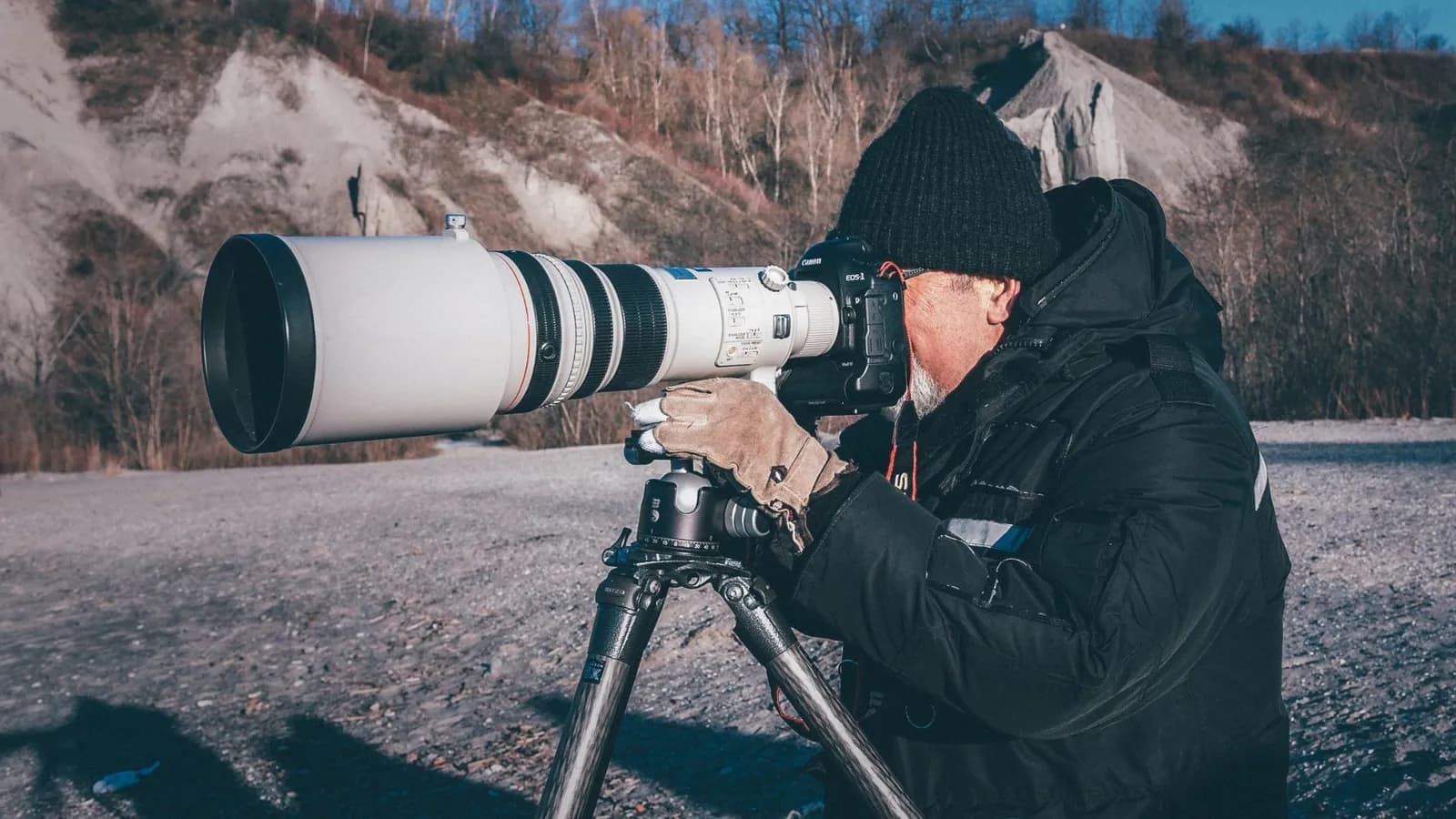
Which Telephoto Lens to Choose for Sports and Wildlife: The Complete Guide
Minimum focal length, aperture, stabilisation and field weight: this guide examines every criterion and compares 16 verified telephoto lenses to help you decide.