Gear
Best Camera for Vlogging: The Guide to Choosing Without Mistakes in 2026
8 bodies compared on their video score, field strengths and deal-breakers. A factual guide to choosing the right vlogging camera for your real usage.
What vlogging really demands from a body
A camera for vlogging is not an ordinary camera used in video mode. Priorities differ, and so do the compromises.
Photography tolerates a heavy body, imperfect autofocus and complex ergonomics. Vlogging does not. You film alone, often moving, sometimes outdoors in wind or crowds. Every second lost to settings is a second of content missed. The criteria that matter are not the same as in stills.
The five criteria that make the difference in vlogging
- 1
Autofocus in video
AF that hunts or pumps ruins a sequence. Look for continuous subject tracking, ideally with eye detection. The video scores in our catalogue include this criterion.
- 2
Stabilisation
IBIS (sensor stabilisation) or built-in digital stabilisation: both have their place depending on use. IBIS preserves the field; digital stabilisation crops. Check which is active in video.
- 3
Articulated screen
A fixed screen or one that only tilts vertically is a deal-breaker for face-to-camera vlogging. An articulated screen or side-hinge is essential.
- 4
Built-in mic and mic input
Sound is half the perceived quality of a video. A decent built-in microphone and a 3.5 mm jack or USB-C audio input are non-negotiable beyond strict beginners.
- 5
Weight and size
A body that is too heavy stays in the bag. Compact format or a light APS-C body remains the norm for daily vlogging.
The video score you will see in this guide is a composite score out of 10 points. It reflects image quality, stabilisation, video autofocus, thermal management and vlogging-specific ergonomics. It is not a stills score. Do not confuse the two.
The 8 vlogging bodies of 2026: overview
Here are the cameras selected for this guide. They cover the full spectrum, from pocket compact to expert APS-C hybrid.
Compacts and pocket cameras dedicated to vlogging
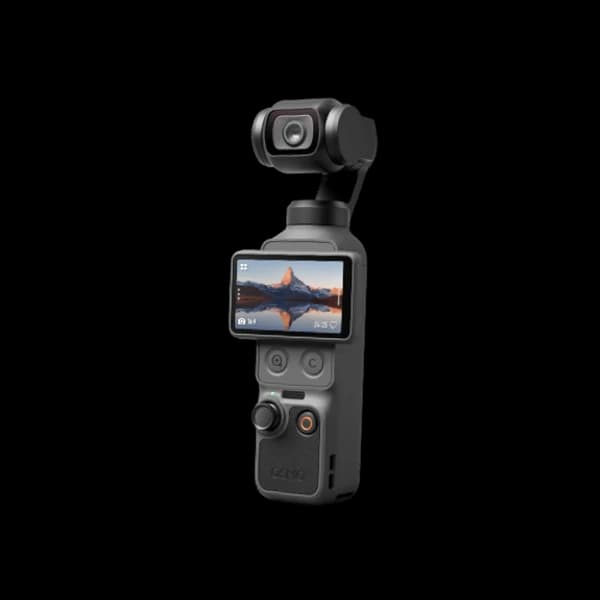
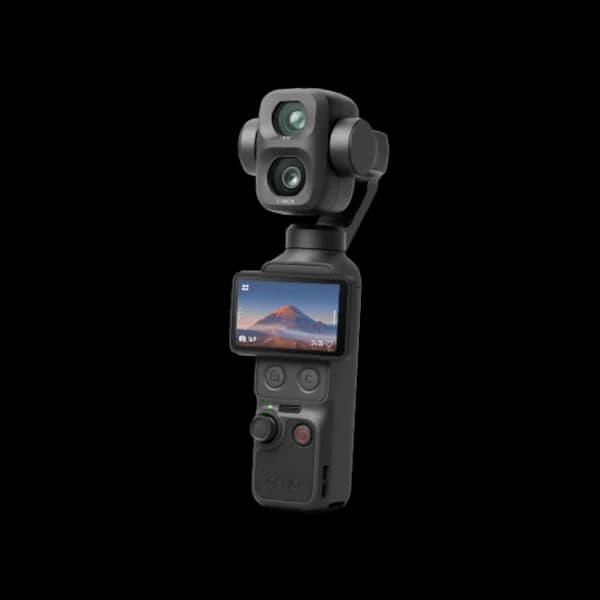
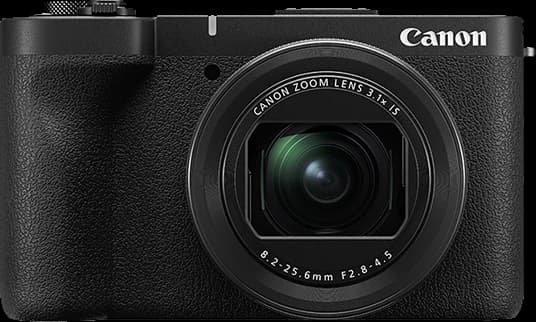
Compacts and pocket cameras aim for maximum portability. The DJI Osmo Pocket 4 and DJI Osmo Pocket 4 Pro are integrated-gimbal cameras, not cameras in the strict sense. Their 1-inch sensor and built-in mechanical stabilisation make them formidable tools for vlogging in motion. Their respective video scores of 4.1/10 and 4.5/10 reflect their limits in low light and depth of field, not a design weakness. The Canon PowerShot V1 uses a 22 MP Stacked CMOS sensor, but its video score of 3.5/10 signals shortcomings in video AF and thermal management, despite a premium positioning.
Entry-level APS-C hybrids for vlogging
Sony
ZV-E10
from 479 £
8 offers

Nikon
Z30
Canon
EOS R50 V
Sony
ZV-E10 II
from 824 £
4 offers
You'll find the best prices on the market here, updated daily — and by going through these partner links, you support Camera Duel without paying a cent more.
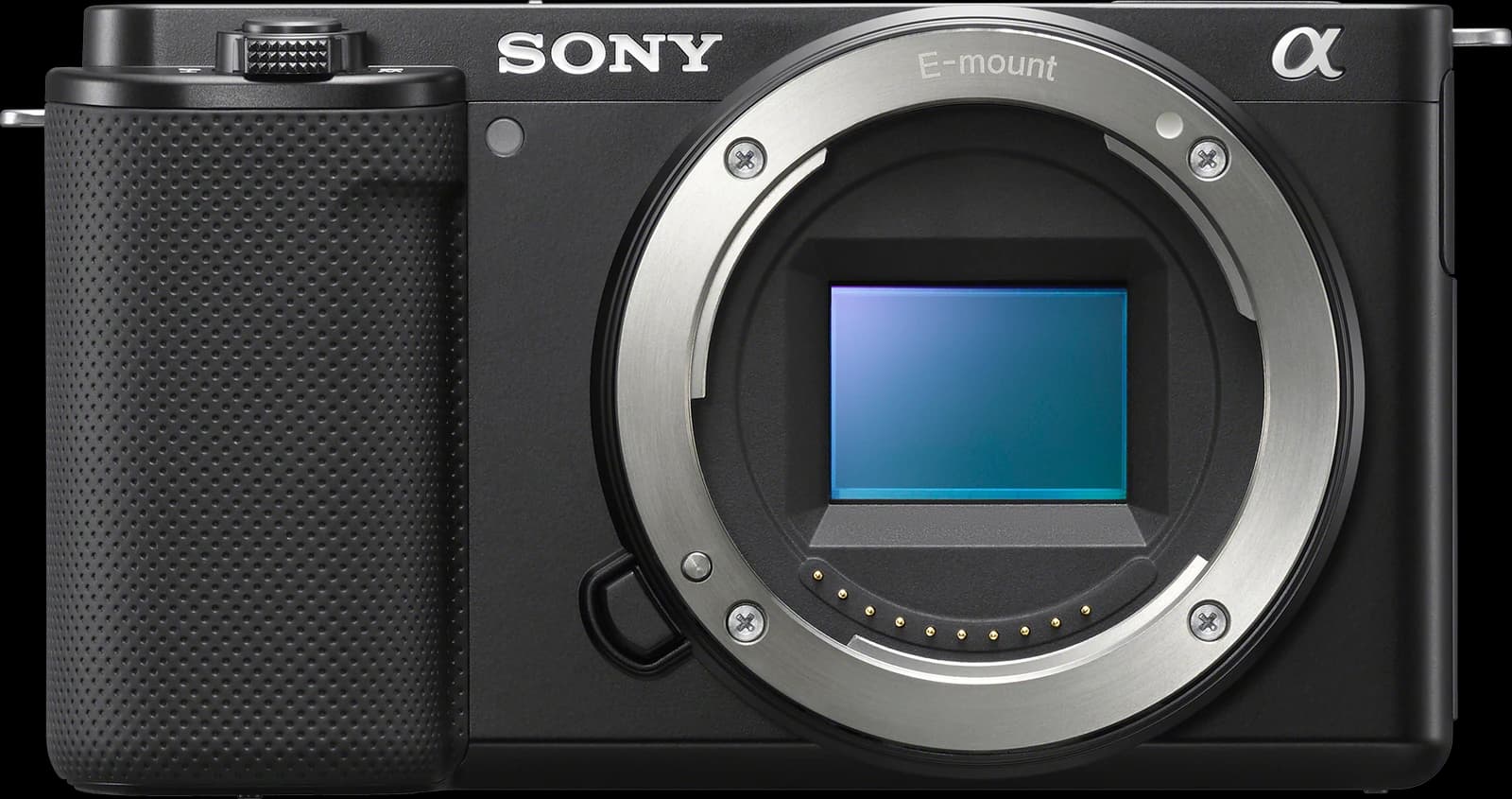
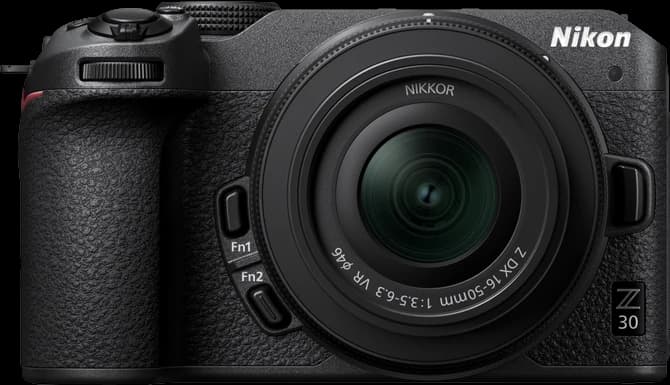
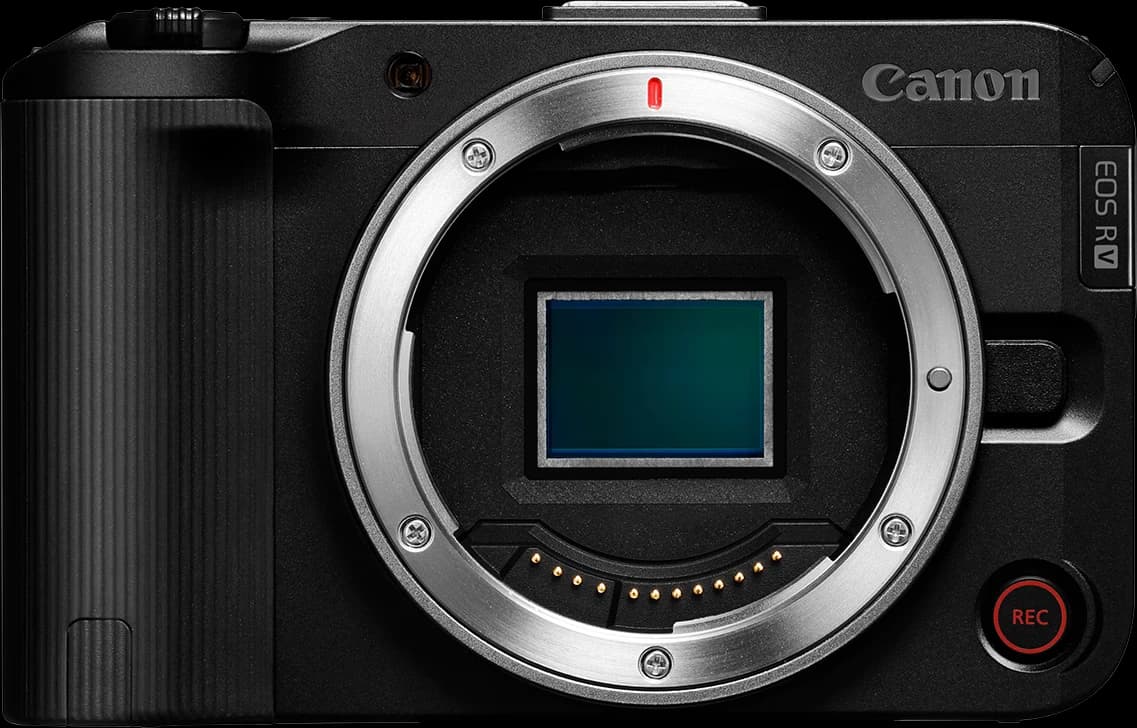
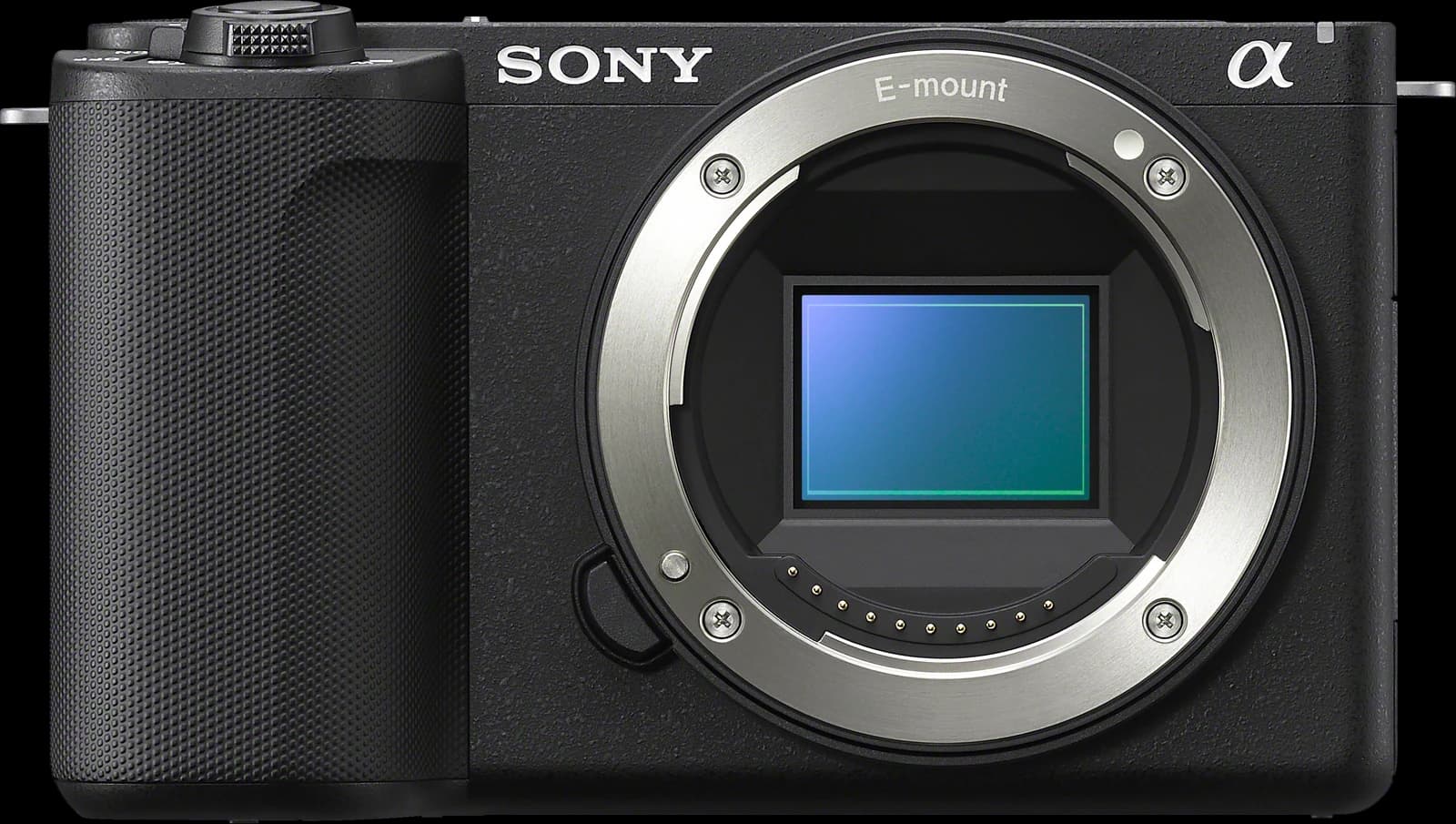
Interchangeable APS-C hybrids offer greater creative control. The Sony ZV-E10 (2021, 4.1/10 video score) remains a functional but dated entry-level option. The Nikon Z30 (2022, 3.5/10) suffers from video AF that lags behind Sony competition. The Sony ZV-E10 II (2024, 5.7/10) corrects its predecessor’s shortcomings with a 26 MP sensor and markedly improved AF. The Canon EOS R50 V (2025, 5.1/10) is Canon’s direct response to the ZV-E10 II, with a 24.2 MP APS-C sensor and a vlogging orientation built in from the start.
Expert APS-C hybrid: the highest video score in the catalogue
Fujifilm
X-S20
from 1 249 £
2 offers
You'll find the best prices on the market here, updated daily — and by going through these partner links, you support Camera Duel without paying a cent more.
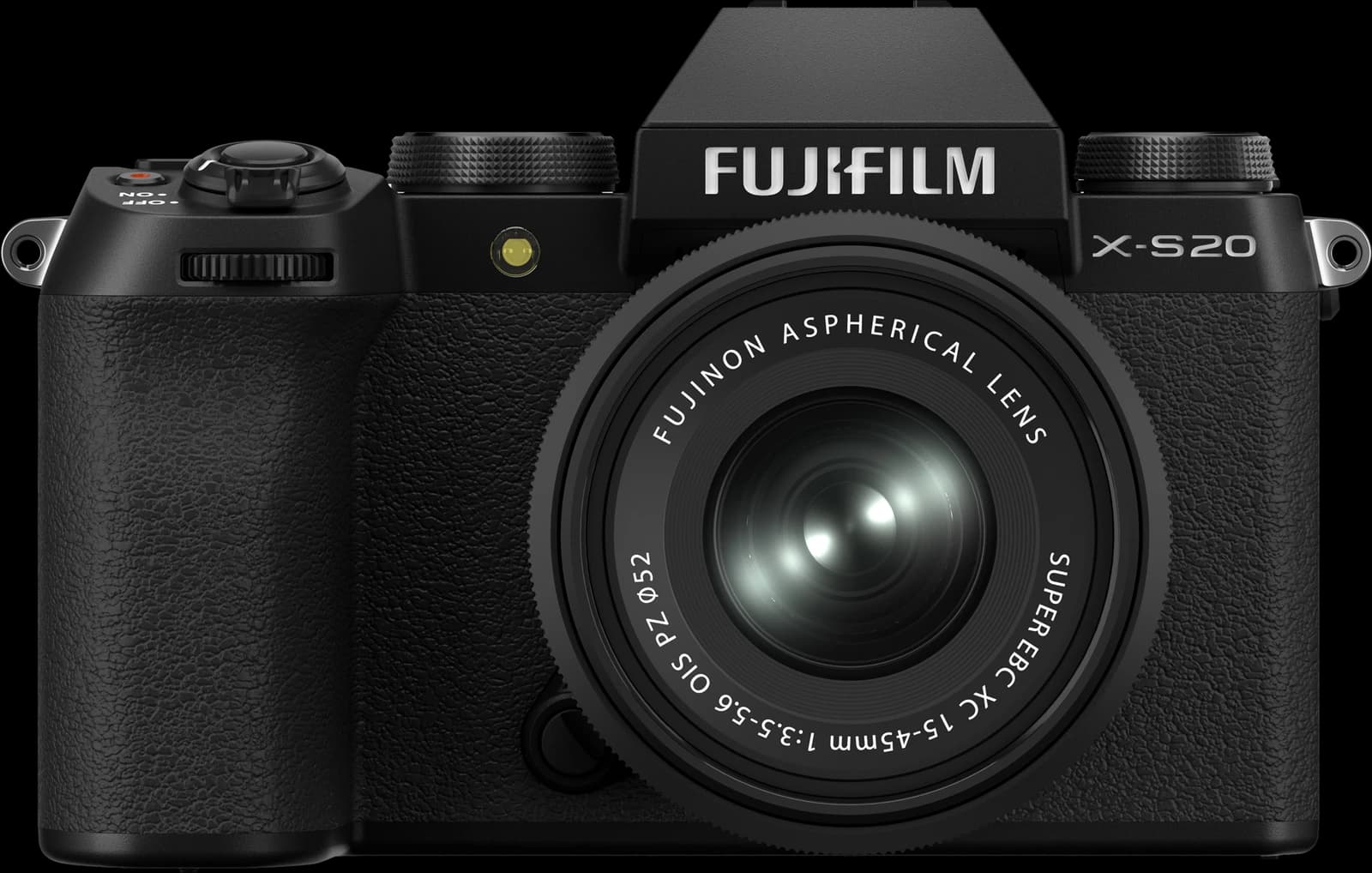
The Fujifilm X-S20 (2023, 7/10 video score) is the highest-rated video body in this catalogue. Its 26.1 MP X-Trans CMOS 4 sensor, built-in IBIS and Fujifilm film simulations make it a complete tool for the creator who wants a stylised image without heavy grading. It is the only body in this guide to exceed 6/10 in video score.
Video score comparison: who really leads?
A synthetic table to place each body before entering the detail.
| Body | Sensor | Year | Video score /10 |
|---|---|---|---|
| Fujifilm X-S20 | APS-C X-Trans, 26.1 MP, IBIS | 2023 | 7.0 |
| Sony ZV-E10 II | APS-C CMOS, 26 MP | 2024 | 5.7 |
| Canon EOS R50 V | APS-C CMOS, 24.2 MP | 2025 | 5.1 |
| DJI Osmo Pocket 4 Pro | 1-inch CMOS | 2026 | 4.5 |
| Sony ZV-E10 | APS-C CMOS, 24.2 MP | 2021 | 4.1 |
| DJI Osmo Pocket 4 | 1-inch CMOS | 2026 | 4.1 |
| Canon PowerShot V1 | 22 MP Stacked CMOS | 2024 | 3.5 |
| Nikon Z30 | APS-C CMOS, 20.9 MP | 2022 | 3.5 |
Fujifilm X-S20: the best vlogging body in the catalogue
With a video score of 7.0/10, the X-S20 stands out unambiguously. Here is why, and for whom.
The Fujifilm X-S20 was released in 2023. It carries a 26.1 MP X-Trans CMOS 4 sensor with IBIS (in-body stabilisation). It is the only body in this guide to offer sensor stabilisation, which radically changes handheld shooting comfort. The video score of 7.0/10 is no accident: it reflects a combination of image quality, solid video AF, acceptable thermal management and a competent internal video codec.
What justifies the 7.0/10 score
- Built-in IBIS: active sensor stabilisation in video, without digital crop.
- Fujifilm film simulations (Eterna, Classic Neg, etc.) applicable directly in video.
- Reliable video autofocus with continuous subject tracking.
- Side-hinge articulated screen, vlogging-compatible for face-to-camera.
- Internal video recording in 6.2K in photo mode or 4K video with F-Log2 options.
The limits to know before buying
The X-S20 is not perfect. The Fujifilm X lens ecosystem is rich, yet dedicated video lenses (smooth focus ring, clickless aperture) remain rare. The body sits a notch above the Sony ZV-E10 II or Canon EOS R50 V in price positioning. If your budget is tight, the 1.3-point gap between the X-S20 and the ZV-E10 II (5.7/10) should be weighed against the price difference.
Compare the Fujifilm X-S20 with another bodyUse our comparator to pit the X-S20 against the Sony ZV-E10 II or Canon EOS R50 V, spec by spec.Sony ZV-E10 II: the best performance-to-accessibility ratio
Video score of 5.7/10, 26 MP sensor, Sony AF: the ZV-E10 II is the benchmark for serious entry-level.
The Sony ZV-E10 II was released in 2024. It succeeds the original ZV-E10 (2021, 4.1/10) with a significant leap: +1.6 points in video score. The sensor rises to 26 MP, AF benefits from Sony subject detection (eyes, animals, vehicles), and thermal management is improved. It is the body that offers the best compromise between accessibility and real-world video performance in this catalogue.
Sony ZV-E10 (2021)
Video score: 4.1/10
- 24.2 MP APS-C CMOS
- Correct video AF but without advanced detection
- No IBIS
- The most affordable of the Sony pair
Sony ZV-E10 II (2024)
Video score: 5.7/10
- 26 MP APS-C CMOS
- AF with subject, eye and animal detection
- No IBIS (active digital stabilisation)
- A notch above in price positioning
The absence of IBIS is the main criticism levelled at the ZV-E10 II. Built-in digital stabilisation compensates partially, but it crops the image. In 4K the crop can be visible depending on the mode chosen. If you mainly shoot indoors or on a tripod, this is not a problem. If you move a lot, the Fujifilm X-S20 and its IBIS take the advantage.
Canon EOS R50 V: Canon’s answer to the hybrid vlog
Video score of 5.1/10. The R50 V is the most recent vlogging body in the Canon catalogue analysed here. It targets creators who want to stay in the Canon ecosystem.
The Canon EOS R50 V was released in 2025. Its 24.2 MP APS-C CMOS sensor matches the resolution of the original ZV-E10, yet the architecture is more recent. The video score of 5.1/10 places it between the ZV-E10 (4.1/10) and the ZV-E10 II (5.7/10). Canon clearly designed this body for vlogging: articulated screen, improved built-in microphone, native vertical mode for short-form platforms (Shorts, Reels).
Vertical mode: a genuine argument in 2026
The R50 V integrates native vertical recording. This means orientation metadata is correctly embedded in the video file, without having to flip the body manually or crop in post-production. For creators who mainly publish on vertical platforms, this is a concrete feature, not marketing.
DJI Osmo Pocket 4 and Pocket 4 Pro: vlogging in motion without compromise
Video scores of 4.1/10 and 4.5/10. These two gimbal cameras are not interchangeable-lens cameras. Their logic is different.
The DJI Osmo Pocket 4 and Pocket 4 Pro were released in 2026. Both carry a 1-inch CMOS sensor with a built-in 3-axis mechanical gimbal. This is not digital stabilisation: it is physical stabilisation of the camera itself. The result in motion is unmatched among the cameras in this guide.
Pocket 4 vs Pocket 4 Pro: what is the difference?
The video score of the Pocket 4 Pro (4.5/10) is slightly higher than that of the Pocket 4 (4.1/10). The difference lies mainly in low-light image quality and advanced recording options (Log, higher bitrates). Both share the same philosophy: a compact, always-ready tool with mechanical stabilisation.
DJI Osmo Pocket 4
Video score: 4.1/10
- 1-inch CMOS sensor
- Integrated 3-axis gimbal
- Ideal for vlogging on the move
- The more affordable of the two Pocket models
DJI Osmo Pocket 4 Pro
Video score: 4.5/10
- Improved 1-inch CMOS sensor
- Better low-light handling
- Log options and higher video bitrates
- A notch above in positioning
For a travel vlogger who prioritises lightness and stability in motion, the Pocket 4 Pro is a serious option despite a video score lower than the ZV-E10 II or X-S20. The video score measures image quality and features, not suitability for a specific use. A 4.5/10 on an integrated gimbal can outperform a 5.7/10 on a handheld hybrid without sensor stabilisation, depending on context.
Nikon Z30 and Canon PowerShot V1: the lowest scores, why?
Video scores of 3.5/10 each. These two bodies deserve an explanation, not an outright condemnation.
The Nikon Z30 (2022, 3.5/10) is a 20.9 MP APS-C hybrid without viewfinder and without IBIS. It was designed for vlogging, yet its video AF lags behind Sony and Canon competition of the same era. In 2026 it remains functional for a beginner who already owns Nikon Z lenses, but there is no reason to choose it over the Sony ZV-E10 II if you are starting from scratch.
The Canon PowerShot V1 (2024, 3.5/10) is a special case. Its 22 MP Stacked CMOS sensor is more recent technology than most competitors. Yet the video score of 3.5/10 reflects shortcomings in video AF under difficult conditions and insufficient thermal management for long sessions. The premium price positioning of this body makes those shortcomings hard to justify against the Sony ZV-E10 II or Canon EOS R50 V.
Which body to choose according to your vlogger profile?
The video score is a ranking tool, not a universal answer. Here is how to decide according to your real usage.
Beginner who wants to start without complications
Choose the Sony ZV-E10 II (5.7/10). Sony AF is reliable, the E lens ecosystem is the most open on the market, and the body is designed for vlogging straight out of the box. If your budget is even tighter, the original Sony ZV-E10 (4.1/10) remains an honest entry, but prepare for its AF limits in video.
Nomadic creator who films in motion
Look at the DJI Osmo Pocket 4 Pro (4.5/10). The integrated mechanical gimbal stabilisation is unbeatable for vlogging while walking, cycling or on transport. Accept the fixed lens as a design constraint, not a flaw.
Demanding creator who wants the best video image
The Fujifilm X-S20 (7.0/10) is the unambiguous choice. IBIS, film simulations, solid AF, F-Log2 codec: it is the most complete body in the catalogue for creative video. It sits a notch above the others, yet the video score gap justifies the investment if image quality is your priority.
Creator in the Canon ecosystem
The Canon EOS R50 V (5.1/10) is the logical answer. Its native vertical mode and assumed vlogging orientation make it the best Canon choice in this catalogue for this use. Check RF-S lens availability within your budget before committing.
| Profile | Recommended body | Video score |
|---|---|---|
| Beginner, accessible budget | Sony ZV-E10 II | 5.7/10 |
| Nomadic, vlogging in motion | DJI Osmo Pocket 4 Pro | 4.5/10 |
| Demanding creator, image priority | Fujifilm X-S20 | 7.0/10 |
| Canon ecosystem | Canon EOS R50 V | 5.1/10 |
| Very tight budget, starting out | Sony ZV-E10 | 4.1/10 |
Sound, stabilisation and accessories: what makes the daily difference
The body is only half the equation. What happens around it counts just as much.
Sound: the most underestimated criterion
A video with acceptable image and mediocre sound will be abandoned by the viewer. A video with average image and clean sound will be watched to the end. This is not opinion: it is documented behaviour on video platforms. Every body in this guide has a built-in microphone. None is sufficient for professional use without an external mic.
- 3.5 mm jack or USB-C audio input: check its presence before buying.
- Wireless lavalier mic (DJI Mic 2 or Rode Wireless GO II): the most versatile solution.
- Shotgun mic on hot shoe: useful outdoors to reduce ambient noise.
- Windshield: essential as soon as you film outdoors.
Stabilisation: IBIS, digital or external gimbal?
Among the bodies in this guide, only the Fujifilm X-S20 has IBIS. The DJI Osmo Pocket 4 and 4 Pro have an integrated mechanical gimbal, which is different. The other bodies (Sony ZV-E10, ZV-E10 II, Nikon Z30, Canon EOS R50 V, Canon PowerShot V1) rely on digital stabilisation that crops the image. If you shoot handheld and in motion, the absence of IBIS or gimbal shows in the footage.
Lighting: the last lever often overlooked
A compact LED panel (Aputure MC, Godox M1) radically changes image quality indoors or in low light. No body compensates for insufficient light. If you film indoors, plan lighting from the start. It is often more effective than upgrading the body.
Classic mistakes to avoid when choosing a vlogging body
Some criteria seem important on paper but change nothing in practice. Others are decisive and often ignored.
- 1
Choosing on advertised video resolution
4K has become standard. What differentiates bodies is the 4K crop, rolling shutter, bitrate and time before overheating. A body that records 4K with a 1.5× crop and overheats after 15 minutes is less useful than a body that records 1080p without time limit.
- 2
Neglecting the articulated screen
A fixed screen or one that only tilts vertically makes face-to-camera vlogging difficult. Check that the screen articulates forward before buying. This is a deal-breaker for solo vlogging.
- 3
Ignoring the weight of the lens ecosystem
The body alone is not enough. If you plan to buy a second lens within six months, check availability and positioning of lenses for the chosen mount. Sony’s E mount is the most open. Canon’s RF-S mount is newer and less supplied at entry level.
- 4
Confusing stills score and video score
A body excellent in stills can be mediocre in video. The two uses demand different functions: codec, continuous AF, thermal management, rolling shutter. In this guide all scores are video scores /10. Do not use them to judge stills quality.
- 5
Buying the newest body without checking video specs
The Canon PowerShot V1 (2024) has a video score of 3.5/10, lower than the Sony ZV-E10 II (2024, 5.7/10). Release year does not guarantee video performance.
Verdict: which camera to choose for vlogging in 2026?
A sharp summary to decide without going in circles.
The Fujifilm X-S20 is the best vlogging body in this catalogue with a video score of 7.0/10. If your budget does not reach it, the Sony ZV-E10 II at 5.7/10 is the best alternative. The other bodies have specific arguments, yet none beats these two references on overall video score.
Teddy, camera-duel.com
The Fujifilm X-S20 (7.0/10) is the main verdict. IBIS, film simulations, reliable video AF, F-Log2 codec: it has no direct competitor in this catalogue. If you are ready to invest a notch above entry level, it is the choice without regret.
The Sony ZV-E10 II (5.7/10) is the main recommendation for an accessible budget. The E ecosystem, Sony AF and improvements over the original ZV-E10 make it the benchmark for serious entry-level.
The DJI Osmo Pocket 4 Pro (4.5/10) is the recommendation for vlogging in motion. Its video score is lower than the two above, yet its integrated mechanical stabilisation is a decisive advantage for nomadic creators.
The Canon EOS R50 V (5.1/10) is the logical choice if you are already in the Canon ecosystem or if native vertical mode is a priority.
Avoid the Nikon Z30 and Canon PowerShot V1 for a new purchase in 2026 if you are starting from zero: their video scores of 3.5/10 are not justified against the competition.
Read the full test of the Fujifilm X-T50If the X-S20 interests you, the X-T50 is an APS-C Fujifilm alternative to consider for mixed photo/video use.Frequently asked questions
What is the difference between a vlogging camera and a traditional camera?▾
A vlogging camera is a hybrid or compact designed to film alone, with a screen that articulates towards the front, continuous autofocus in video and often a built-in microphone. A traditional camera is optimised for long-duration shooting with professional connectors (XLR, SDI). For daily vlogging, an APS-C hybrid or dedicated compact is more suitable than a cinema camera.
Do you need a camera with IBIS for vlogging?▾
IBIS (in-body stabilisation) is a real advantage for handheld vlogging. In this catalogue, only the Fujifilm X-S20 has it. The other bodies use digital stabilisation that crops the image, or an integrated mechanical gimbal (DJI Osmo Pocket 4 and 4 Pro). If you mainly shoot on a tripod or with an external gimbal, the absence of IBIS is not a deal-breaker.
Is the Sony ZV-E10 II better than the Canon EOS R50 V for vlogging?▾
Based on the video scores in this catalogue, yes. The Sony ZV-E10 II scores 5.7/10 against 5.1/10 for the Canon EOS R50 V. The main gap lies in Sony video AF, which is more reliable in difficult conditions. The R50 V does have one specific advantage: its native vertical recording mode for short-form content. If you mainly publish in vertical format, the R50 V deserves consideration.
Can you vlog with a DJI Osmo Pocket 4 without experience?▾
Yes. The DJI Osmo Pocket 4 and 4 Pro are among the most accessible bodies to handle in this catalogue. The integrated mechanical stabilisation forgives sudden movements, and the DJI interface is designed for quick use. The main limit is the fixed lens: you cannot change the lens. For a beginner who wants to film in motion without worrying about stabilisation, it is a serious option.
Which external microphone to choose for vlogging?▾
For solo outdoor vlogging, a wireless lavalier mic (DJI Mic 2, Rode Wireless GO II) is the most versatile solution. It clips to clothing and captures voice at a distance from the body. For indoor or tripod vlogging, a shotgun mic mounted on the hot shoe (Rode VideoMicro II, DJI Mic Mini) is sufficient. Check that your body has a 3.5 mm jack or USB-C audio compatibility before buying.
Is the video score /10 the same as the stills score?▾
No. All scores cited in this guide are video scores /10. They evaluate video image quality, video autofocus, stabilisation, thermal management and shooting ergonomics. A body can have an excellent stills score and a mediocre video score, or the reverse. Do not confuse the two metrics.
Read next
Best value camera: the guide to choosing without mistakes in 2026
Six bodies, three sensor formats, one goal: find the camera that matches your use without paying for unnecessary specs. Structured comparison, clear verdicts.
Which Telephoto Lens to Choose for Sports and Wildlife: The Complete Guide
Minimum focal length, aperture, stabilisation and field weight: this guide examines every criterion and compares 16 verified telephoto lenses to help you decide.

Which Lens for Landscape Photography: Focal Lengths, Apertures and System Choices
Ultra-wide-angle or versatile zoom? Prime or zoom? This guide breaks down each parameter and helps you choose the right lens for your landscape practice, system by system.