Review · Canon · 2025
Review: Canon EOS R50 V – the vlog hybrid that owns its choices
The Canon EOS R50 V is built for content creators and vloggers wanting a compact, lightweight hybrid capable of 4K 10-bit video. At 649 USD it delivers on that promise, provided you accept the lack of IBIS and the RAW buffer limited to 7 frames.
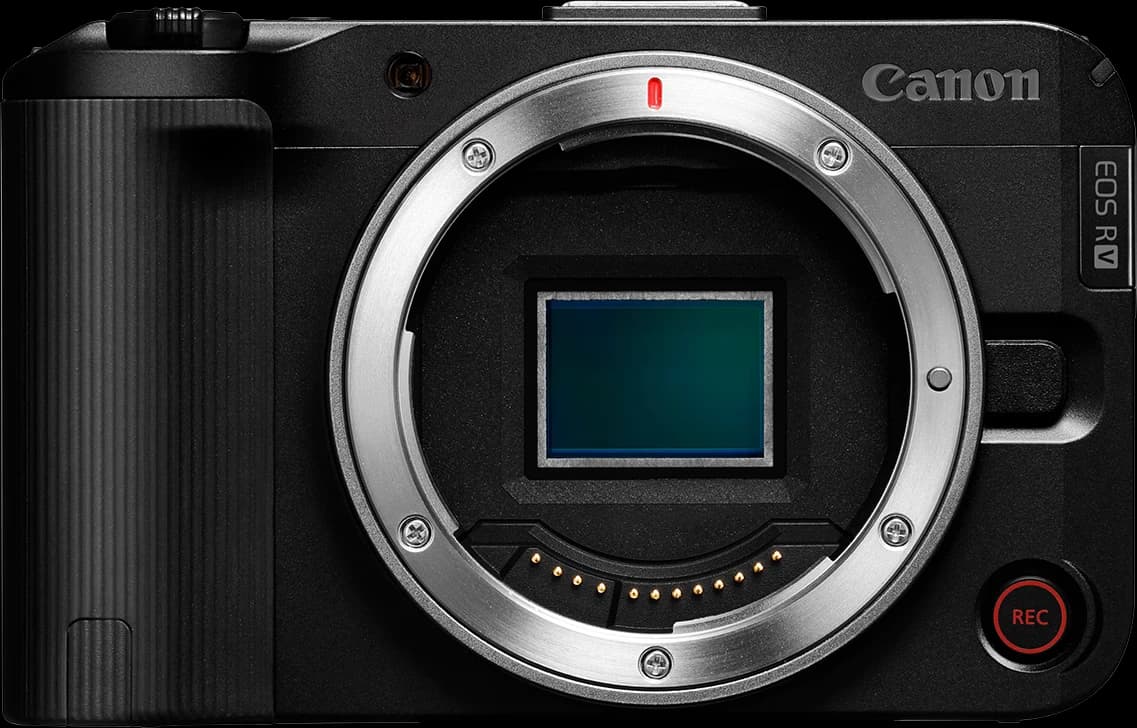
Verdict
The Canon EOS R50 V follows a clear brief: a 370 g APS-C hybrid aimed at content creation, priced at 649 USD. The 24.2 MP sensor with Dual Pixel CMOS AF II, -5 EV autofocus and 4K 60p 10-bit video with Log directly address the needs of vloggers and YouTubers. The compromises are deliberate and consistent with that audience: no IBIS, no viewfinder, single card slot, RAW buffer of only 7 frames. The bigger drawback is the non-unlimited video recording, a genuine deal-breaker for long takes. Against the Sony ZV-E10 II at 999 USD with 4K 120p, the R50 V defends its price through the RF-S ecosystem and Canon’s AF quality. It does not replace a versatile stills body. It performs a precise job for a precise user, and it does it well.
Pros
- 4K 60p 10-bit video with native Log at 649 USD
- Dual Pixel CMOS AF II: human and animal eye detection, 100 % coverage, -5 EV sensitivity
- 370 g body: lightest in the RF-S range with screen viewfinder
- Fully articulated screen, optimised for face-to-camera vlogging
- USB-C 3.2 Gen 2: fast charging and transfer on a single cable
- 651 AF points across 100 % of the sensor, high density for the format
Cons
- Non-unlimited video recording: deal-breaker for long takes
- No IBIS: stabilisation relies entirely on the lens
- RAW buffer limited to 7 frames: 15 fps electronic burst exhausted in under half a second
- Single SD UHS-II slot: no redundancy or backup
- No electronic viewfinder, even as an optional accessory
Who is it for?
- Vloggers or YouTubers seeking a sub-400 g body capable of 4K 10-bit with Log under 700 USD
- Travel photographers who mainly shoot JPEG or video and do not need deep RAW buffering
- Owners of the 2023 Canon EOS R50 who want 4K 60p 10-bit without leaving the RF-S system
- Social content creators working in controlled light who do not require IBIS thanks to a tripod or boom
On video
Andy To · 13 min 44
Canon EOS R50 V + PowerShot V1: Hawaii (My Honest Thoughts)
Introduction: Canon’s V range and the R50 V’s positioning
The Canon EOS R50 V is the first model in Canon’s new V range, a line dedicated to content creators and vloggers. It directly succeeds the R50 launched in 2023, adding substantial video features without changing format or mount.
Canon launched the R50 V in 2025 at 649 USD, 30 USD less than the original R50 at launch. The price difference is marginal. The difference in video specifications is real. The R50 V moves from 4K 30p 10-bit to 4K 60p 10-bit with native Log. This is the central change that justifies the new model.
The positioning is unambiguous. Canon targets content creators, vloggers and travel photographers who want a compact, lightweight, video-capable tool. The body weighs 370 g bare, 5 g less than the original R50. Dimensions of 119.3 x 73.7 x 45.2 mm remain in the same envelope. The fully articulated screen and absence of a viewfinder confirm the orientation: this camera is designed to be filmed facing the user, held at arm’s length or on a boom.
Usage scores for the Canon EOS R50 V: strong in travel and portrait, limited in demanding sports and wildlife.
In the Canon RF-S line-up the R50 V sits below the R7 (1 499 USD, 32.5 MP, 7-stop IBIS, dual slots, weather-sealed) and the R10 (979 USD, 24.2 MP, 23 fps electronic). It sits above the R100 (480 USD, 143 AF points, 4K 25p 8-bit). Its natural rival is not Canon: it is the Sony ZV-E10 II (999 USD) and, to a lesser extent, the Fujifilm X-M5 (799 USD).
| Sensor | APS-C |
|---|---|
| Sensor size | 22.3 × 14.9 mm |
| Resolution | 24.2 MP |
| Sensor type | CMOS |
| Native ISO range | 100 – 32000 |
| Extended ISO | up to 51200 |
| In-body stabilization | No |
| AF points | 651 |
| AF coverage | 100 % |
| Eye detection (human / animal) | Yes / Yes |
| Mechanical burst | 12 fps |
| Electronic burst | 15 fps |
| RAW buffer | 7 frames |
| Max shutter speed | 1/8000 |
Handling and ergonomics: compact by design
The R50 V does not pretend to offer professional-grade ergonomics. It embraces its compactness and optimises every centimetre for mobility and face-to-camera shooting.
Dimensions, weight and build
At 370 g bare and 119.3 x 73.7 x 45.2 mm, the R50 V is one of the most compact RF-S hybrids on the market. The construction is plastic. It is not weather-sealed. This is a deal-breaker for anyone planning regular use in rain or humid conditions. Canon reserves sealing for the R7 and higher models. For normal travel conditions the choice is acceptable. For demanding travel it is not.
The grip is shallow, a direct consequence of the 45.2 mm thickness. With a compact lens such as the RF-S 14-30 mm f/4-6.3 IS STM PZ the combination remains balanced. With a heavier telephoto the handling becomes less comfortable. This body is designed for lightweight optics. That is consistent with its positioning.
Screen, viewfinder and interface
The 3-inch, 1 040 000-dot screen is fully articulated. It flips forward for vlogging, folds flat for protection. Resolution is adequate without being exceptional. Legibility in bright sunlight remains the usual weakness of LCD screens in this price bracket. There is no electronic viewfinder and no hot shoe to add one. The choice is deliberate and consistent with vlogging use. For still photography in difficult light it is a real limitation.
The interface is carried over from the original R50. The mode dial, shortcut buttons and Canon menu are familiar to any R-series user. Controls are laid out for right-hand operation with a minimum of physical buttons. The touchscreen compensates in part for the reduced button count.
| Release year | 2025 |
|---|---|
| Weight (with battery) | 370 g |
| Dimensions | 119.3 x 73.7 x 45.2 |
| Weather sealing | No |
| Viewfinder | None |
| Screen | 3 inches |
| Screen articulation | fully articulated |
| Touchscreen | Yes |
| Battery (CIPA) | 480 frames |
| Dual SD slot | No |
| Wi-Fi / Bluetooth | Yes / Yes |
| Lens mount | Canon RF-S |
Image quality: the 24.2 MP sensor in context
The 24.2 MP APS-C CMOS sensor in the R50 V is essentially the same as that in the original R50 and the R10. The expert angle is to understand what this lineage implies in practice.
Resolution, dynamic range and measured noise
The sensor measures 22.3 x 14.9 mm and delivers 24.2 MP effective. Native ISO runs from 100 to 32 000, with extension to 51 200. These figures are identical to the original R50. The Canon EOS R10 shares the same sensor architecture, with measured dynamic range of 10.5 EV at base ISO 100 according to Photons to Photos. The R50 V has not yet received an independent DXOMark test in our database. Results close to the R10 can reasonably be expected, as the sensor has not been fundamentally revised.
At 100 ISO resolution is sufficient for prints up to A2 without interpolation. Noise remains well controlled up to 3 200 ISO in RAW. Beyond 6 400 ISO degradation becomes visible in fine texture areas. The maximum native ISO of 32 000 is usable in JPEG with noise reduction enabled, but RAW files at this sensitivity require careful processing. The 51 200 extension is reserved for emergencies.
Colour rendering and JPEG processing
Canon retains its usual Picture Styles, including Portrait and Auto, which handle skin tones well. In-camera JPEG processing is among the most refined in the entry-to-mid-range segment. For travel photographers who prefer not to spend time in post-production, the R50 V’s JPEGs are immediately usable. Built-in creative filters (HDR, miniature effect, etc.) suit users wanting a stylised look without software.
RAW format is Canon CR3, compatible with Camera Raw, Lightroom and DPP. 14-bit depth offers adequate latitude within the sensor’s dynamic range limits. Compared with the Sony α6700 (26 MP, BSI-CMOS, 11 EV dynamic range per our database), the R50 V sensor is slightly behind on dynamic range. The difference is noticeable in high-contrast landscapes, less so in portrait or urban travel work.
Autofocus: Dual Pixel CMOS AF II in practice
Autofocus has long been a Canon strength on the R series. The R50 V carries the Dual Pixel CMOS AF II system found on higher R bodies.
Density, coverage and low-light sensitivity
The R50 V has 651 AF points covering 100 % of the sensor. AF sensitivity reaches -5 EV, a notable improvement over the original R50 and R10, both limited to -4 EV. In practice this one-stop gain means the camera locks focus in even lower light, typically candle-lit scenes or dark corridors. For a vlogger filming indoors without artificial light this is a genuine advantage.
100 % sensor coverage is an asset for free framing, especially face-to-camera vlogging. The subject can move anywhere in the frame without the AF losing lock. This is exactly the use case the camera was designed for.
Human and animal eye detection: what works and what drops
Human eye detection is active and reliable under normal conditions. It works in both stills and video. Animal eye detection covers dogs, cats and birds per Canon’s specifications. In practice, on fast-moving or partially obscured subjects the system can lose lock. This is not specific to the R50 V: it is a common limit of AI-based detection systems at this price level.
Against the Nikon Z50 II (906 USD, 209 AF points, -9 EV AF), the R50 V offers markedly higher AF density (651 vs 209 points) but lower low-light sensitivity (-5 EV vs -9 EV). The Nikon locks better in near-total darkness. The Canon covers more of the sensor and offers more sophisticated subject detection. For standard indoor vlogging the R50 V is sufficient. For night photography without assistance the Z50 II performs better.
Video AF: the real playground
Dual Pixel CMOS AF II is recognised for its smoothness in video. Focus transitions are progressive and natural, without visible jerking. For a solo vlogger this is the number-one criterion. On this point the R50 V ranks among the best in its price category. The Sony ZV-E10 II also offers very competent video AF with 759 points, but at 999 USD, 350 USD more.
Burst and buffer: the stills-camera limits
The R50 V quotes attractive frame rates on paper. The reality of the RAW buffer tempers enthusiasm.
Quoted rates and actual buffer
Mechanical burst reaches 12 fps and electronic burst 15 fps. These figures are respectable for this class. The problem is the RAW buffer limited to 7 frames. At 15 fps electronic the buffer fills in under half a second. In practice this means the R50 V is not a camera for serious sports or wildlife work. It can capture a short sequence but not sustained action.
For comparison, the Canon EOS R10 offers 23 fps electronic with a deeper buffer. The R7 reaches 30 fps electronic with an even larger buffer. If burst rate is a priority in your workflow, the R50 V is not the right choice in the Canon RF-S range.
Shutter and maximum speed
Maximum shutter speed is 1/8 000 s mechanical. This is adequate for the vast majority of situations, including natural-light sports with moderate apertures. The electronic shutter allows silent operation at higher speeds, but no published data on the maximum electronic speed is available in our database.
- Mechanical burst: 12 fps, electronic burst: 15 fps
- RAW buffer: 7 frames, exhausted in under 0.5 s at 15 fps
- Maximum shutter speed: 1/8 000 s mechanical
- Serious sports/wildlife use: not recommended; the R7 or R10 are better suited
Video: the heart of the R50 V proposition
Video is the reason the R50 V exists. Canon made precise choices to serve content creators, with equally precise compromises.
4K 60p 10-bit and Log: what it changes in practice
The R50 V records 4K at 60 fps in 10-bit with native Log. This is the biggest leap over the original R50, which was limited to 4K 30p 10-bit. 10-bit Log opens the door to serious colour grading in post-production. For a YouTuber or independent videographer this is the difference between a file ready for export and a malleable file. Available codecs are H.264 and H.265. H.265 offers better compression at equal quality, useful for preserving card space.
Maximum video resolution is stated as 4K. Manufacturer data also mention a 4K 120 fps capability among the camera’s intrinsic strengths. This frame rate enables native slow-motion in 4K, which is rare at this price. By comparison the Sony ZV-E10 II also offers 4K 120p at 999 USD. The R50 V offers the same feature at 649 USD, 350 USD less.
Non-unlimited recording: the deal-breaker for long takes
Video recording is not unlimited. This is the main deal-breaker of the R50 V for professional or semi-professional video use. The exact continuous recording limit is not stated in our database, but the limit exists. For a vlogger shooting 2-to-5-minute clips the limit is rarely reached. For a videographer recording long interviews or events it is a prohibitive constraint.
The absence of IBIS is the second critical point in video. Without sensor stabilisation, image quality in motion depends entirely on the lens’s optical stabilisation. The RF-S 14-30 mm f/4-6.3 IS STM PZ includes optical IS, which partially compensates. But for walking or handheld shooting with a non-stabilised lens the result will be shaky. A boom or gimbal becomes almost mandatory.
Video connectivity and monitoring
The HDMI output is Micro HDMI. This is a fragile connector known for mechanical weakness under intensive use. For external-monitor monitoring during a shoot this is a point to watch. USB-C 3.2 Gen 2 allows fast file transfer and camera charging. This is a genuine practical advantage for a mobile content creator.
| Max resolution | 4K |
|---|---|
| Max frame rate | 60 fps |
| Codecs | H.264, H.265 |
| Bit depth | 10 bit |
| Log profile | Yes |
| Unlimited recording | No |
| In-body stabilization | No |
| HDMI output | HDMI Micro HDMI |
| USB connector | USB-C 3.2 Gen 2 |
Connectivity and battery life: the creator’s daily workflow
The R50 V is equipped for nomadic use. Wireless connectivity and USB-C 3.2 Gen 2 simplify the content creator’s workflow.
Wireless connectivity and transfer
Wi-Fi and Bluetooth are built in. They enable image transfer to a smartphone via the Canon Camera Connect app, remote control of the camera and geolocation via the phone. For a vlogger publishing directly from the field this is an efficient workflow. The single SD UHS-II card slot is sufficient for the transfer speed of 4K 10-bit files. The lack of dual slots is nevertheless a deal-breaker for professionals who require data redundancy.
USB-C 3.2 Gen 2 is the strong point of wired connectivity. It allows in-use charging, fast file transfer to a computer and potentially continuous power for static shoots. This is a concrete advantage over older bodies equipped with Micro-USB.
CIPA battery life and real-world use
Rated endurance is 480 CIPA shots. This is an improvement over the original R50 (440 CIPA shots). In intensive video use real endurance will be lower than the stills-based CIPA figure. For a full day of shooting a spare battery is recommended. USB-C charging allows top-ups on the move with a power bank.
- Wi-Fi and Bluetooth built in, compatible with Canon Camera Connect
- USB-C 3.2 Gen 2: charging, transfer and continuous power
- Micro HDMI: monitoring output, fragile connector under heavy use
- Single SD UHS-II slot: no redundancy; use a reliable card
- CIPA endurance: 480 shots; spare battery recommended for video
Against the competition: R50 V vs Sony ZV-E10 II and Fujifilm X-M5
The R50 V competes in a precise segment: compact APS-C hybrids aimed at content creation under 1 000 USD. Three direct rivals deserve a detailed comparison.
Against the Sony ZV-E10 II: the main duel
The Sony ZV-E10 II (999 USD, 26 MP, BSI-CMOS, 4K 120p 10-bit, 759 AF points, 292 g) is the closest rival. It is 78 g lighter (292 g vs 370 g), offers higher video frame rates (4K 120p vs 4K 60p) and a BSI-CMOS sensor that is potentially stronger in low light. In return it costs 350 USD more. Sony AF is competent, but Canon’s Dual Pixel CMOS AF II is generally regarded as smoother in video transitions. On a tight budget the R50 V wins. For more ambitious video without budget constraints the ZV-E10 II is more complete.
Against the Fujifilm X-M5: the resolution argument
The Fujifilm X-M5 (799 USD, 26.1 MP, X-Trans CMOS 4, 30 fps electronic, 6.2K 240p 10-bit, 355 g) is 15 g lighter and offers significantly higher video resolution (6.2K vs 4K). It costs 150 USD more. Its AF covers 92 % of the sensor versus 100 % on the R50 V. Fujifilm’s film simulations are a strong argument for creators wanting a stylised look without grading. If video resolution and Fujifilm colour rendering are priorities, the X-M5 is the better choice. If AF and the Canon ecosystem matter more, the R50 V holds its ground.
Against the original Canon EOS R50: is an upgrade worthwhile?
The original Canon EOS R50 (679 USD at launch, available used) shares the same 24.2 MP sensor, the same 651 AF points and the same RF-S mount. The main difference is video: 4K 30p 10-bit on the R50 versus 4K 60p 10-bit with Log on the R50 V. AF on the R50 V reaches -5 EV versus -4 EV on the R50. Endurance rises from 440 to 480 CIPA shots. For an R50 user who mainly films in 4K 30p the upgrade is not justified. For a user who wants 4K 60p slow motion or native Log, the R50 V is the right evolution.
| Spec | Canon EOS R50 VTested here | Sony ZV-E10 II | Fujifilm X-M5 | Canon EOS R50 |
|---|---|---|---|---|
| Released | 2025 | 2024 | 2024 | 2023 |
| Sensor | APS-C | APS-C | APS-C | APS-C |
| Resolution | 24.2 MP | 26 MP | 26.1 MP | 24.2 MP |
| Native ISO max | 32000 | 32000 | 12800 | 32000 |
| AF points | 651 | 759 | 425 | 651 |
| Burst (elec.) | 15 fps | 11 fps | 30 fps | 15 fps |
| IBIS | No | No | No | No |
| Max video | 4K/60p | 4K/120p | 6.2K/240p | 4K/30p |
| Weather sealing | No | No | No | No |
| Dual SD slot | No | No | No | No |
| Weight | 370 g | 292 g | 355 g | 375 g |
| Launch price | 649 USD | 999 USD | 799 USD | 679 USD |
R50 V vs ZV-E10 II, X-M5 and original R50 comparison: the R50 V holds its price against the ZV-E10 II, but the X-M5 pushes further in video resolution.
Expert angle: what competitors do not say about the RAW buffer
The 7-frame RAW buffer is the most underestimated spec of the R50 V. A quantified analysis explains why it defines the camera’s real limits.
RAW buffer: the mechanics behind the number
A CR3 RAW file from the R50 V weighs roughly 25–30 MB depending on the scene. At 15 fps electronic the camera must write 375–450 MB/s continuously to maintain the rate. An SD UHS-II card can theoretically reach 312 MB/s read speed, but real write speeds are often lower. The 7-frame buffer is therefore a hardware limit, not an arbitrary choice. It reflects the Digic X processor’s ability to handle the real-time data stream.
In practice, 7 RAW frames at 15 fps means 0.47 seconds of continuous burst before saturation. After saturation the camera slows to empty the buffer. Emptying time depends on card speed. With a fast UHS-II card the buffer clears in a few seconds. With an entry-level card the wait can be frustrating. This point is rarely mentioned in mainstream tests. Yet it is decisive for anyone considering the R50 V for even occasional action photography.
Historical comparison: R50 V vs R10 vs R7 on buffer
The Canon EOS R10 (979 USD) offers 23 fps electronic with a deeper buffer. The Canon EOS R7 (1 499 USD) reaches 30 fps electronic with an even larger buffer. Progression through the Canon RF-S range is consistent: the higher the price, the larger the buffer and the higher the burst rate. The R50 V is deliberately placed at the bottom of this hierarchy. This is not a flaw: it is the price of compactness and affordability. But it must be known before purchase.
Price and value: where the R50 V sits in 2026
At 649 USD on launch the R50 V is positioned in a competitive segment. Value depends on the intended use.
The R50 V launched at 649 USD in the United States. In France the street price typically falls in the usual conversion range, around 700–750 EUR depending on retailer. This is a coherent price for entry-level video-oriented positioning. Against the Sony ZV-E10 II (999 USD) and Fujifilm X-M5 (799 USD), the R50 V is the cheapest of the three. It offers 4K 60p 10-bit with Log and higher-quality AF at this price. It is a solid proposition.
On the used market the original Canon EOS R50 is available around 400–450 EUR in good condition. If your video use is limited to 4K 30p and you do not need native Log, the used R50 represents a saving of 250–300 EUR for very similar performance. The new R50 V is justified primarily by 4K 60p, native Log and the one-stop AF low-light gain.
Canon EOS R50 V

Canon EOS R50 V APS-C Mirrorless Camera - Camera Only with Additional
821,68 GBP · PcNova.co.uk

You'll find the best prices on the market here, updated daily — and by going through these partner links, you support Camera Duel without paying a cent more.
Verdict: for whom, why, and at what price
The Canon EOS R50 V is an honest camera that keeps its promises within its area of competence. It fails where it never claimed to excel.
What the R50 V gets right
The R50 V delivers 4K 60p 10-bit with native Log at 649 USD. This is the central promise and it is kept. Dual Pixel CMOS AF II with eye detection and -5 EV sensitivity ranks among the best in its price category. The 370 g weight and compact dimensions make it a genuine travel companion. The fully articulated screen is well thought out for vlogging. USB-C 3.2 Gen 2 simplifies the nomadic workflow.
What the R50 V does not get right
Non-unlimited video recording is the main shortcoming for a camera presented as video-oriented. The lack of IBIS imposes dependence on lens stabilisation. The 7-frame RAW buffer rules out serious action stills work. The absence of weather-sealing limits operating conditions. The single SD UHS-II slot removes any data redundancy. These five points are not flaws for a vlogger shooting short indoor clips. They are deal-breakers for any other profile.
The 7.2/10 score reflects a camera that succeeds in its primary mission with coherent compromises. It is not scored higher because non-unlimited recording is a serious limitation for a video-sold body, and because the 7-frame RAW buffer is a real brake even for travel stills use. It is not scored lower because these limits are acknowledged and the value proposition at 649 USD is defensible for the target user.
Frequently asked questions
Does the Canon EOS R50 V have an electronic viewfinder?▾
No. The R50 V has no electronic viewfinder and no hot shoe to add one. Framing is done exclusively via the fully articulated 3-inch LCD screen. This choice is consistent with vlogging use but limiting for still photography in bright sunlight where screen legibility drops. If a viewfinder is essential, look at the Canon EOS R7 or R10.
Is the Canon EOS R50 V weather-sealed?▾
No. The R50 V is not weather-sealed. It offers no protection against rain, water splashes or dust. For outdoor use in wet weather a protective cover is recommended. Weather-sealing in the Canon RF-S range begins with the R7 (1 499 USD). This is a deal-breaker for travel photographers who regularly work in difficult conditions.
What is the difference between the Canon EOS R50 and the R50 V?▾
The main differences are in video. The R50 V adds 4K 60p 10-bit with native Log versus 4K 30p 10-bit without Log on the original R50. AF on the R50 V reaches -5 EV versus -4 EV on the R50. Endurance rises from 440 to 480 CIPA shots. The sensor (24.2 MP), 651 AF points, RF-S mount and weight (370 g vs 375 g) remain virtually identical. For an R50 user who mainly films in 4K 30p the upgrade is not justified. For a user who wants 4K 60p or native Log, the R50 V is the right evolution.
Can the Canon EOS R50 V record video without time limits?▾
No. Video recording is not unlimited on the R50 V. The exact maximum continuous recording time is not stated by Canon, but the limit exists. This is the main shortcoming of the camera for professional or semi-professional video use. For vloggers shooting 2-to-5-minute clips the limit is rarely reached. For long-form recording (interviews, events, conferences) consider the Sony ZV-E10 II or Sony α6700 instead.
Is the Canon EOS R50 V compatible with full-frame Canon RF lenses?▾
Yes. The RF-S mount on the R50 V is physically compatible with all Canon RF lenses, including full-frame optics. Mounting a full-frame RF lens on the R50 V gives a 1.6× crop factor equivalent focal length. A 50 mm f/1.8 becomes the equivalent of an 80 mm. RF-S lenses are designed specifically for APS-C sensors and are generally more compact and less expensive. The RF-S ecosystem includes several optics suited to this body, including the RF-S 14-30 mm f/4-6.3 IS STM PZ often sold in kits.
Should I choose the Canon EOS R50 V or the Sony ZV-E10 II?▾
It depends on your budget and video priorities. The R50 V (649 USD) is 350 USD cheaper, offers Dual Pixel CMOS AF II recognised for video smoothness and covers 100 % of the sensor with 651 AF points. The Sony ZV-E10 II (999 USD) is lighter (292 g vs 370 g), offers 4K 120p versus 4K 60p and carries a BSI-CMOS sensor that is potentially stronger in low light. If budget is the main constraint, the R50 V is the better choice. If you want 4K 120p slow motion and budget allows, the ZV-E10 II is more complete.
Related reviews
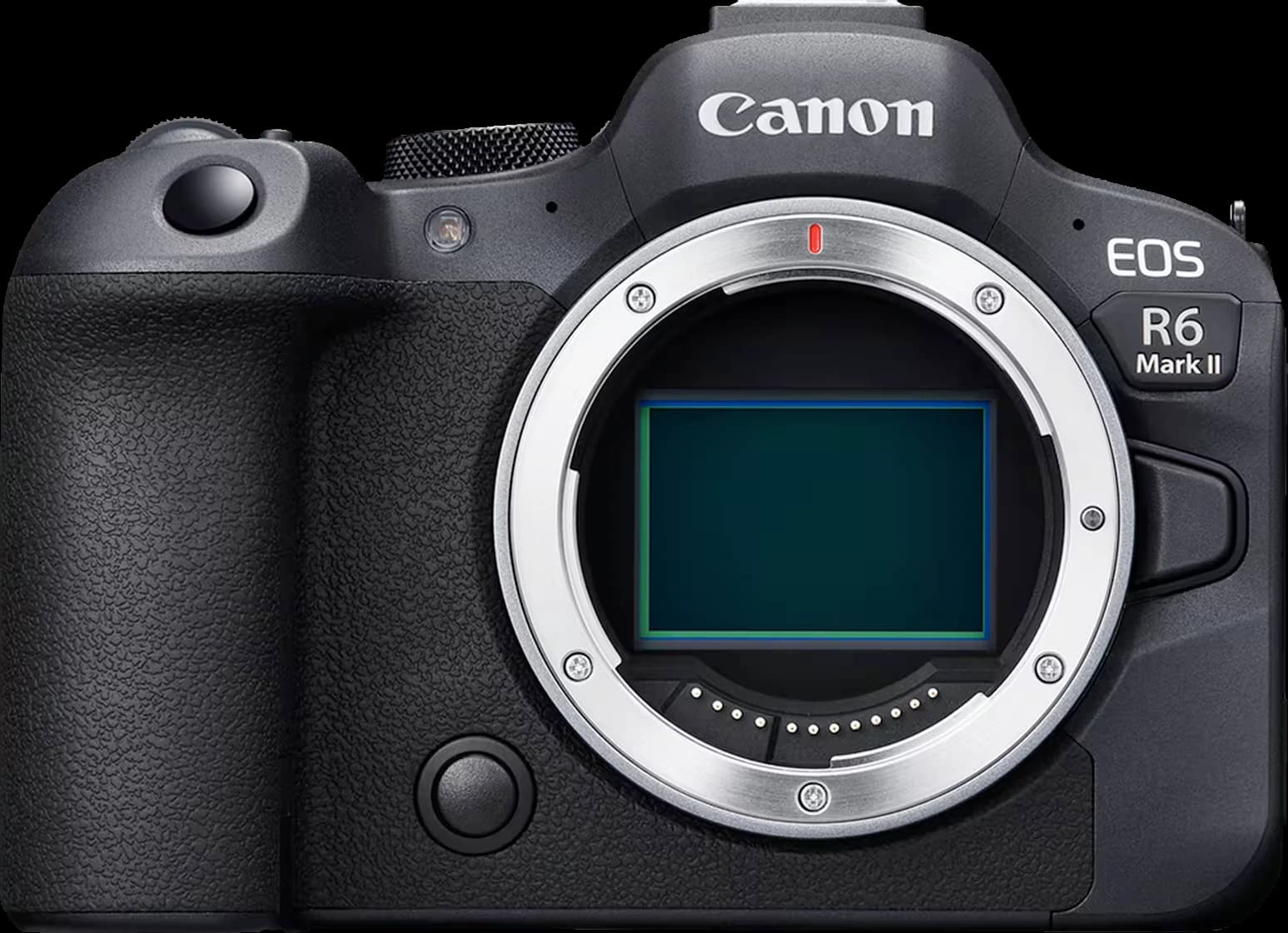
Review Canon EOS R6 Mark II: Still the Right Choice in 2026?
The Canon EOS R6 Mark II remains the most balanced general-purpose hybrid in its class for weddings, portraits and travel, provided you accept a RAW buffer limited to 75 images and video capped at 4K/60p.
Read the review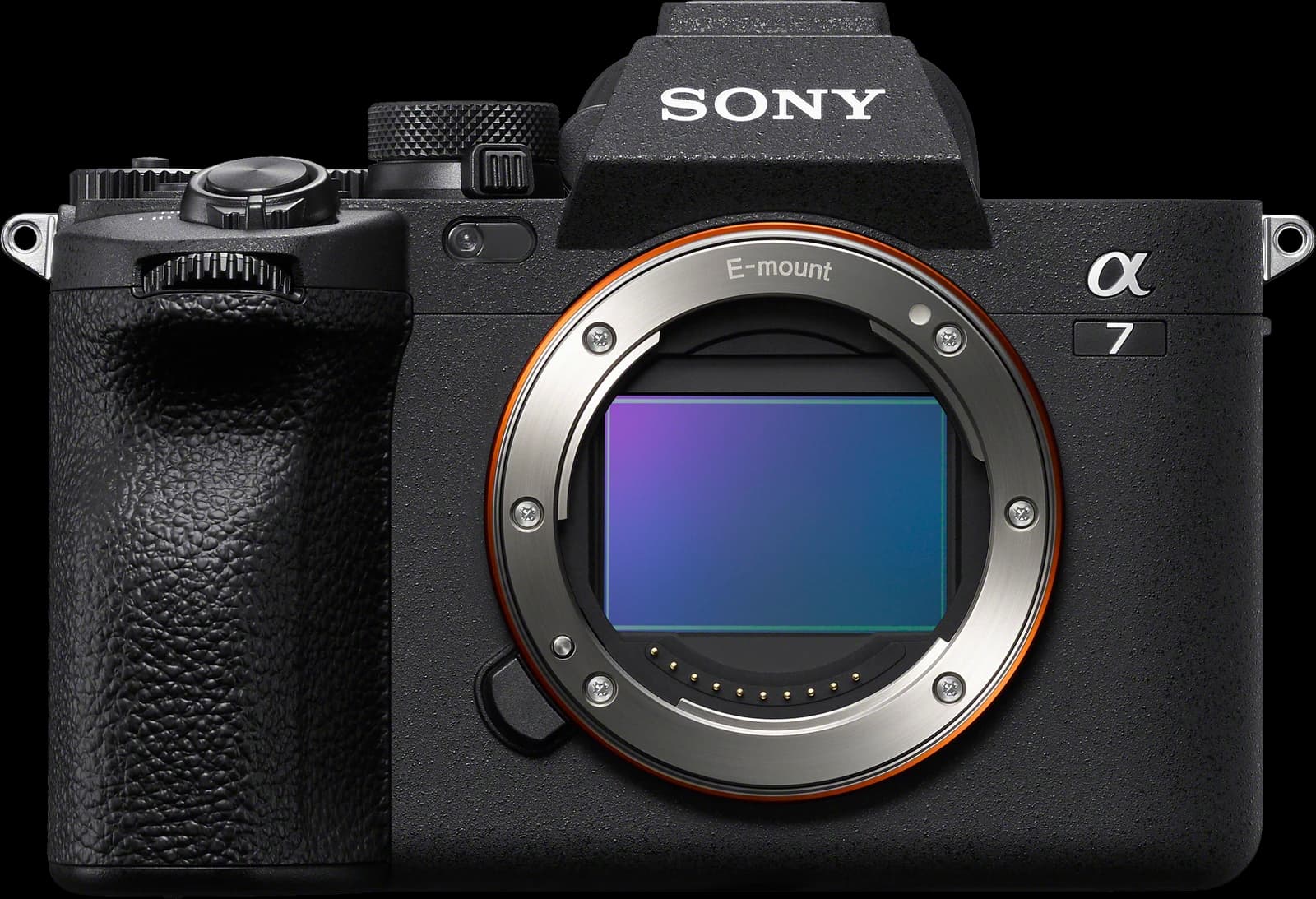
Review: Sony α7 IV – Still the Right Choice in 2026?
Full-frame all-rounder still relevant used for weddings, portraits and occasional video. New, 2023-2024 rivals offer more for the same budget.
Read the review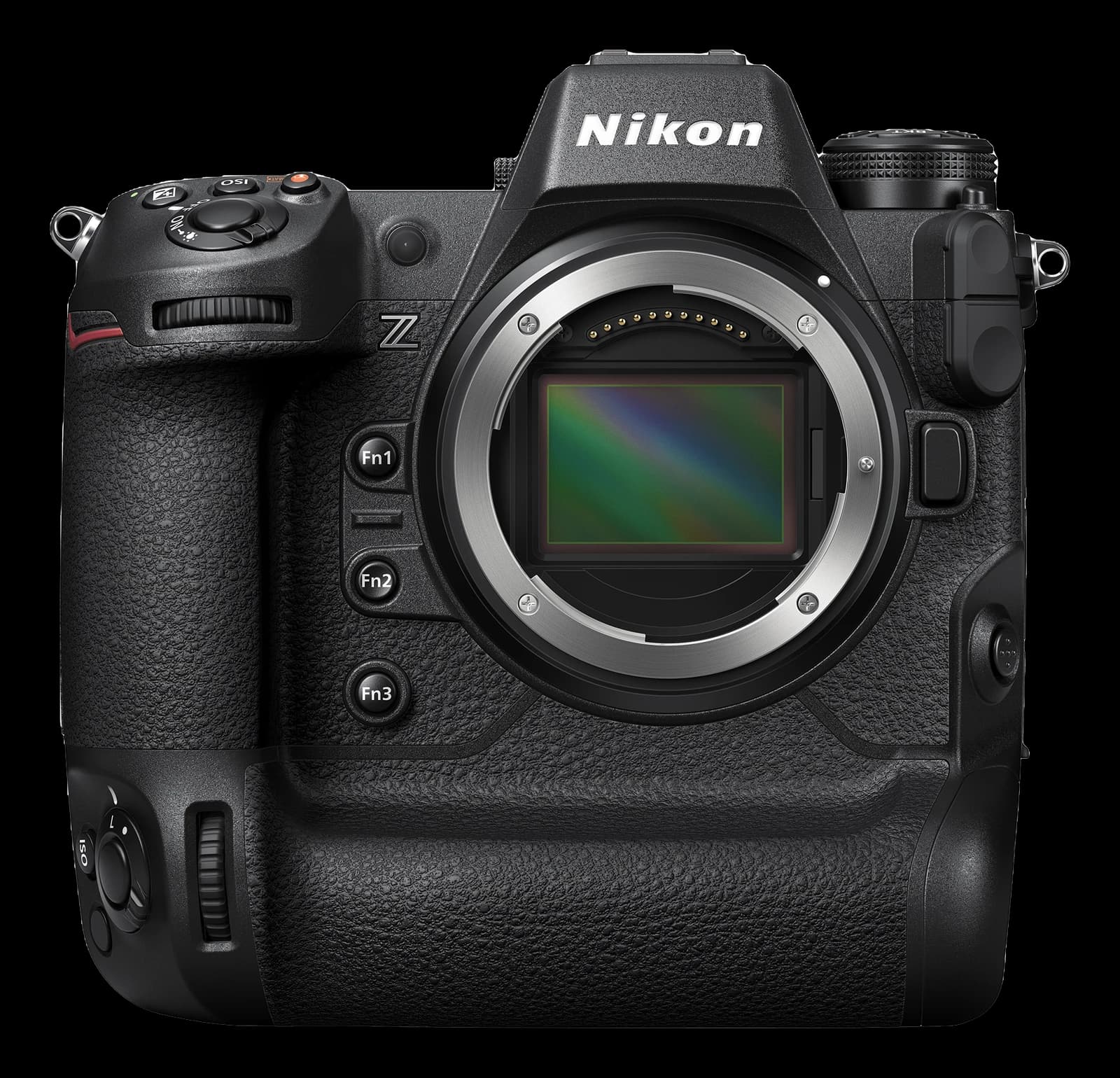
Nikon Z9 Review: Is the Nikon Flagship Still at the Top?
The Nikon Z9 remains a benchmark for professional sport and reportage thanks to its -8.5 EV AF and 1000 RAW buffer, yet the Z8 delivers the essentials for 1999 USD less.
Read the review