Gear
Which Telephoto Lens to Choose for Sports and Wildlife: The Complete Guide
Minimum focal length, aperture, stabilisation and field weight: this guide examines every criterion and compares 16 verified telephoto lenses to help you decide.
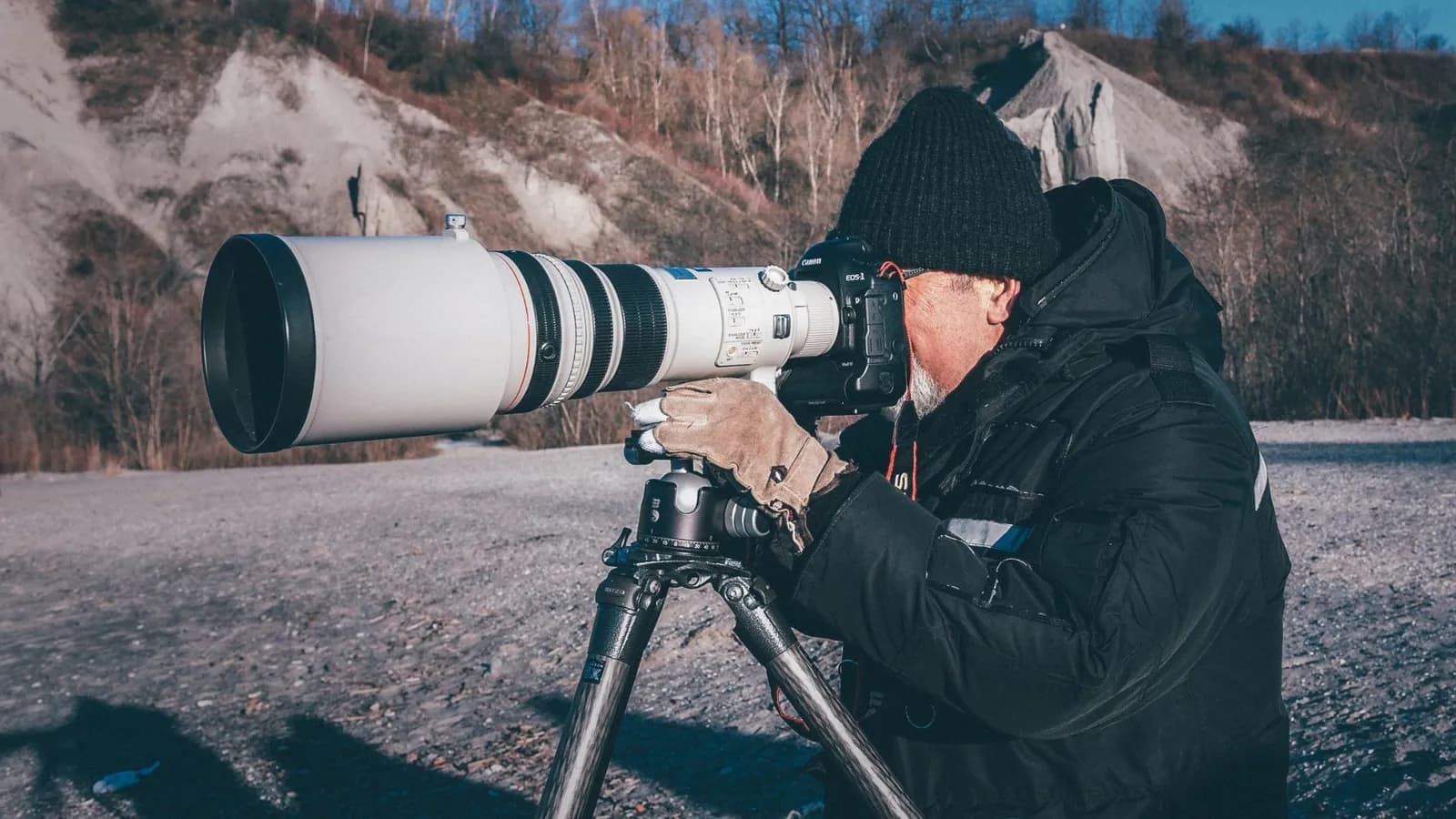
Why Choosing the Telephoto Lens Matters More Than the Body
In sports and wildlife photography, the lens determines working distance, achievable shutter speed and subject-background separation. The body amplifies these qualities; it does not create them.
A recent body can compensate for imperfect focus using AI. It cannot compensate for a focal length that is too short, an aperture that is too small or the absence of a stabiliser. These three parameters are fixed in the glass of the lens. That is why the budget should go to the optic first, not the body.
Sports and wildlife share two fundamental constraints: the subject moves quickly and is often distant. These constraints impose precise requirements on focal length (working distance), aperture (accessible shutter speed) and stabilisation (sharpness handheld at long, heavy focal lengths). This guide covers these three axes and then applies them to sixteen lenses from our verified catalogue.
Focal Length and Working Distance: What the Numbers Really Mean
Focal length determines magnification, but it interacts with sensor format. A 400 mm lens on APS-C is not the same as a 400 mm lens on full frame.
Focal length equivalence by sensor format
On a full-frame sensor (24 × 36 mm), the focal length marked on the lens is the actual focal length. On an APS-C sensor (1.5× crop factor for Nikon and Sony, 1.6× for Canon), the equivalent focal length is longer. A 400 mm lens on a Sony APS-C body is equivalent to 600 mm on full frame. This is a considerable advantage for wildlife: you gain magnification without changing lenses.
This advantage comes at a cost: depth of field increases, bokeh is less pronounced, and the sensor surface captures less light at the same aperture. For sports in difficult light, full frame remains superior. For wildlife in bright daylight, APS-C often offers the best balance of magnification and budget.
| Real focal length | Full-frame equivalent on APS-C 1.5× | Typical use |
|---|---|---|
| 70-200 mm | 105-300 mm | Indoor sports, sports portraiture, close wildlife |
| 100-400 mm | 150-600 mm | Wildlife, safari, stadium sports |
| 180-600 mm | 270-900 mm | Wildlife, birds in flight, extreme distance |
| 400 mm prime | 600 mm | Professional wildlife, sports press |
| 600 mm prime | 900 mm | Ornithology, distant wild fauna |
Which minimum focal length for your use?
- 1
Indoor sports (basketball, handball, swimming)
70-200 mm f/2.8 is sufficient in the great majority of cases. Subject-to-photographer distance is short and artificial light is weak: the f/2.8 aperture is essential.
- 2
Outdoor sports (football, athletics, cycling)
100-400 mm or 100-500 mm covers the variable distances on a pitch. The zoom range is more useful here than maximum brightness.
- 3
Wildlife in national parks or on safari
400 mm minimum, ideally 500-600 mm. Animals are rarely closer than 20 metres. On a vehicle safari, a 100-400 mm on APS-C (equivalent to 600 mm) is a good mobility/reach compromise.
- 4
Ornithology and birds in flight
500-600 mm minimum on full frame. On APS-C, a 400 mm (equivalent to 600 mm) is usable. Continuous autofocus and burst rate of the body then become as critical as focal length.
Aperture, Shutter Speed and ISO: The Triangle That Governs Everything
The maximum aperture of the lens sets the ceiling for shutter speed at a given ISO. Understanding this relationship prevents unpleasant surprises in the field.
To freeze a bird in flight you need at least 1/1000 s, often 1/2000 s or more. For a sprinter, 1/500 s to 1/1000 s depending on the direction of movement. These speeds require a minimum amount of light. If the aperture is f/6.3 instead of f/2.8, you lose 3 stops of light, equivalent to raising ISO from 100 to 800 at the same shutter speed.
Narrow aperture: sharp from front to back.
Slow shutter: motion turns into blur.
Low ISO: clean image, little noise.
Open the aperture and you must speed up the shutter or lower the ISO to keep the same exposure. That is the triangle's reciprocity.
What a variable aperture really costs
Variable-aperture zooms (f/4.5-6.3, f/5.6-6.3) are lighter and cheaper. However, their aperture closes as you zoom. A 100-400 mm f/4.5-5.6 loses 1 stop between 100 mm and 400 mm. In practice you often work at 400 mm, therefore at f/5.6 or f/6.3. This factor must be included in the ISO calculation.
Constant f/2.8
Bright 70-200 mm
- ISO 400 sufficient at 1/1000 s in indoor light
- Pronounced bokeh, clear subject-background separation
- Weight: 1115 to 1480 g depending on model
- Price: from £1599
Variable f/5.6-6.3
100-400 mm or 180-600 mm
- ISO 3200 to 6400 required at 1/1000 s in indoor light
- Less pronounced bokeh at long focal lengths
- Weight: 985 to 1955 g depending on model
- Price: from £1199
Optical Stabilisation and IBIS: What the Stops Actually Mean
Stabilisation compensates for photographer shake. It does not compensate for subject movement. The two types of blur are often confused.
Optical stabilisation (OIS, IS, VR depending on brand) acts on movement of the lens itself. IBIS (In-Body Image Stabilization) acts on the sensor. The two can be combined. A lens advertised with 7.5 stops of stabilisation (such as the Sigma 70-200 mm f/2.8 DG DN OS Sports) does not mean you can photograph a bird in flight at 1/10 s: it means you can hold the lens handheld at very slow speeds without camera shake. The subject will still move.
For sports and wildlife, stabilisation is useful in two specific situations. First, when panning a subject (intentionally slow shutter speed for motion blur). Second, during pauses between bursts while waiting for action: holding a 600 mm handheld for ten minutes without stabilisation is tiring and introduces micro-tremors.
Reading manufacturer claims critically
Stop values published by manufacturers are measured in the laboratory, on a tripod, with a static subject, often at mid-range focal length. In the field, at full focal length, while tracking a moving subject, real-world performance is lower. Independent tests by DPReview and Imaging Resource regularly show a gap of 1 to 2 stops between published figures and field results. Treat manufacturer numbers as a relative indicator, not an absolute value.
| Lens | Published stabilisation | Recommended use |
|---|---|---|
| Sigma 70-200 mm f/2.8 DG DN OS Sports | 7.5 stops | Sports, panning, difficult light |
| Nikkor Z 70-200 mm f/2.8 VR S II | 6 stops | Sports, wildlife, versatility |
| Panasonic Lumix S 70-300 mm f/4.5-5.6 | 6.5 stops | Wildlife, light travel |
| Nikkor Z 180-600 mm f/5.6-6.3 VR | 5.5 stops | Wildlife, safari |
| Canon RF 70-200 mm f/2.8 L IS USM Z | 5.5 stops | Sports, reportage |
| Sony FE 70-200 mm f/2.8 GM OSS | Yes (value not published) | Sports, wildlife |
Weight, Ergonomics and Field Conditions: Criteria Hidden by Spec Sheets
A 3 kg lens can be perfect for a fixed hide and unusable on a five-day trek. Weight is both a technical specification and a physical constraint.
Sports and wildlife telephoto lenses range from 725 g (Nikkor Z 28-400 mm f/4-8 VR) to 3140 g (Canon RF 800 mm f/5.6 L IS USM). This difference of 2415 g is not trivial over a day in the field. It determines the type of support used (monopod, tripod, handheld), end-of-day fatigue and ease of transport by air or on a hike.
Weather sealing: a non-negotiable criterion in difficult conditions
All lenses in the catalogue presented in this guide are weather-sealed. This is an important common point. Weather sealing protects against rain, sea spray and dust. It does not guarantee total waterproofing, but it allows work in light rain without constantly covering the lens. In wildlife photography, weather conditions are rarely chosen: the animal does not pose in fine weather.
I have used several weather-sealed telephoto lenses on outings in Brittany in strong wind and light rain. Weather sealing does not replace basic care (wiping the lens, protecting the body), but it provides real margin for manoeuvre in the field. A non-sealed lens in these conditions is a genuine risk to equipment.
Filter diameter: a detail that costs money
Filter diameter determines the price of accessories. A 95 mm polarising filter (Nikkor Z 180-600 mm) costs significantly more than a standard 77 mm filter. A 112 mm filter (Canon RF 100-300 mm f/2.8 L) is a rare and expensive item. If you use filters for wildlife (polariser to reduce reflections on water, ND for panning), check the diameter before purchase.
Teleconverters: Gain in Focal Length, Loss of Aperture
A teleconverter multiplies focal length. It also reduces aperture and can degrade autofocus. The equation should be considered before purchase.
A 1.4× teleconverter multiplies focal length by 1.4 and reduces aperture by 1 stop. A 2× teleconverter multiplies focal length by 2 and reduces aperture by 2 stops. On a 400 mm f/2.8 with a 1.4× converter you obtain 560 mm f/4. On a 400 mm f/5.6 with a 1.4× converter you obtain 560 mm f/8: autofocus on many bodies then becomes unreliable.
The Nikkor Z 400 mm f/2.8 TC VR S integrates a 1.4× teleconverter directly inside the lens. This allows you to switch from 400 mm f/2.8 to 560 mm f/4 without additional accessories, without risk of dust during the change, and without loss of AF compatibility. It is an elegant solution for photographers who regularly work at both focal lengths.
Rental is a serious alternative for teleconverters and super-telephoto lenses. A 600 mm f/4 at £12 999 or an 800 mm f/5.6 at £19 999 represent investments that few amateur photographers can justify. Renting for an occasional safari or sporting event is often more rational than buying.
70-200 mm f/2.8 Zooms: The Reference for Indoor Sports
The 70-200 mm f/2.8 is the most versatile sports lens available. Four major versions are offered in 2026, with significant differences in weight and price.
The 70-200 mm f/2.8 covers the majority of indoor sports situations: basketball, handball, boxing, swimming, martial arts. At f/2.8 it allows work at ISO 1600 with a shutter speed of 1/1000 s in adequately lit gyms. It is also usable for wildlife subjects at close range (forest mammals, large birds at short distance).
The four models in the catalogue cover a wide price and weight range. The Canon RF 70-200 mm f/2.8 L IS USM Z is the lightest at 1115 g, which is remarkable for this category. The Sony FE 70-200 mm f/2.8 GM OSS is the heaviest at 1480 g and also the oldest (2016). The Sigma 70-200 mm f/2.8 DG DN OS Sports at £1599 is the least expensive and offers the highest stabilisation in the group at 7.5 stops.
70-200 mm f/2.8 zooms: the four references
RF 70-200mm f/2.8 L IS USM Z
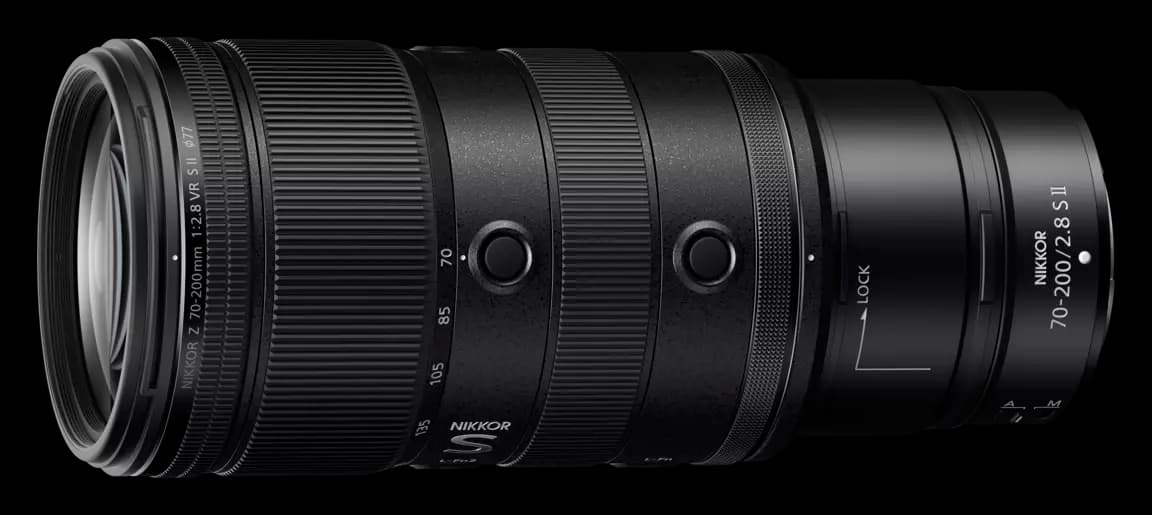
NIKKOR Z 70-200mm f/2.8 VR S II
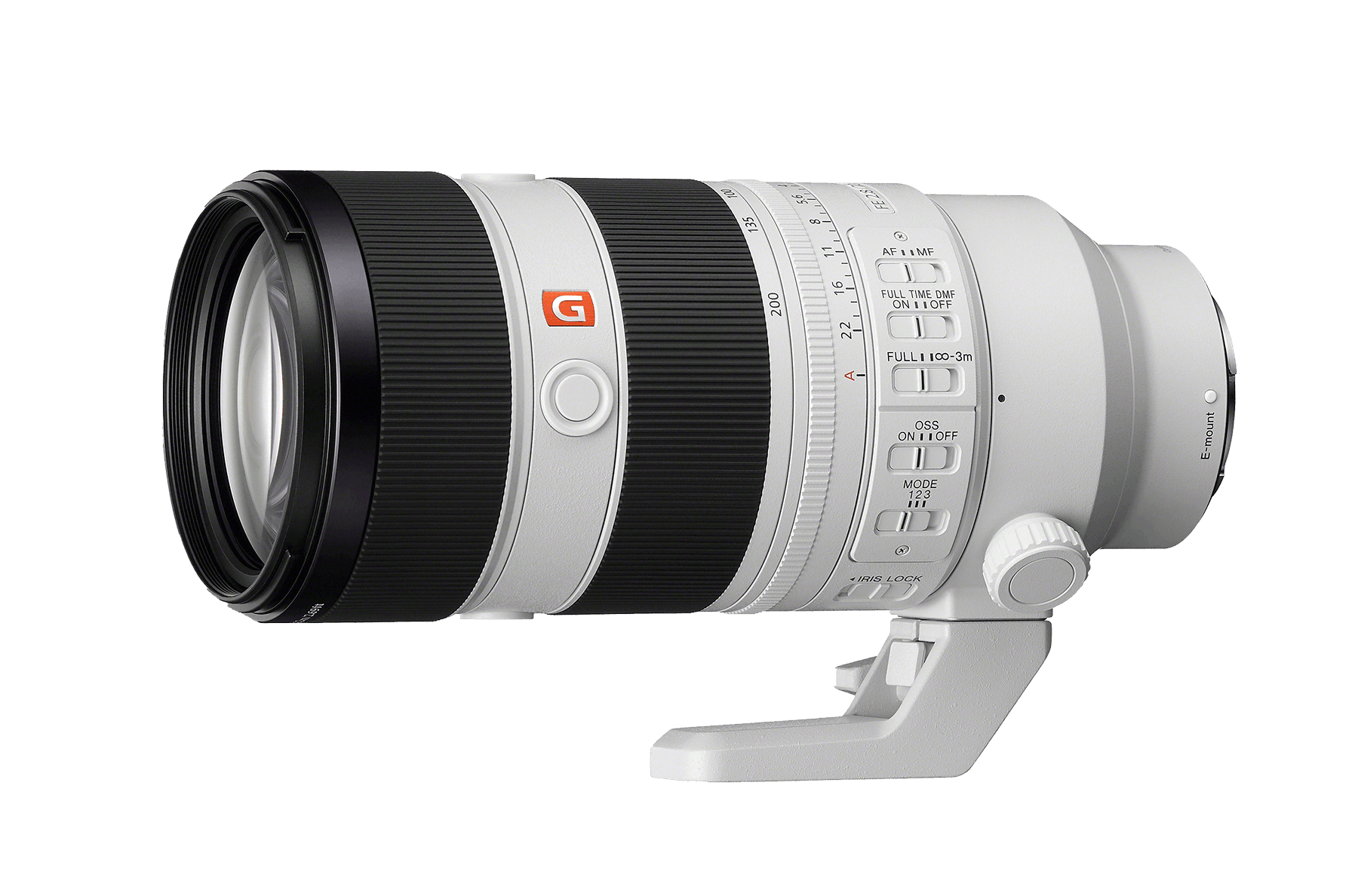
FE 70-200mm f/2.8 GM OSS
70-200mm F2.8 DG DN OS | Sports
Which 70-200 mm f/2.8 should you choose?
The answer depends on your mount. The Sigma is available in Sony E and Leica L mounts: it is the obvious choice for Sony users who want to save money without sacrificing performance. The Canon RF Z is the logical choice on Canon RF, with a real weight advantage. The Nikkor Z VR S II is the most recent (2025) and benefits from Nikon’s latest advances in AF and stabilisation.
100-400 mm and 100-500 mm Zooms: Versatility for Sports and Wildlife
This category is the most popular for a simple reason: it covers both outdoor sports and close-range wildlife with a single lens.
A 100-400 mm or 100-500 mm zoom lets you move from a wide view (100 mm to contextualise the scene) to a tight frame (400-500 mm to isolate the subject) without changing lenses. This is a decisive advantage in wildlife, where the subject can approach or retreat in seconds. In stadium sports, the zoom range covers both near and distant action from a fixed position.
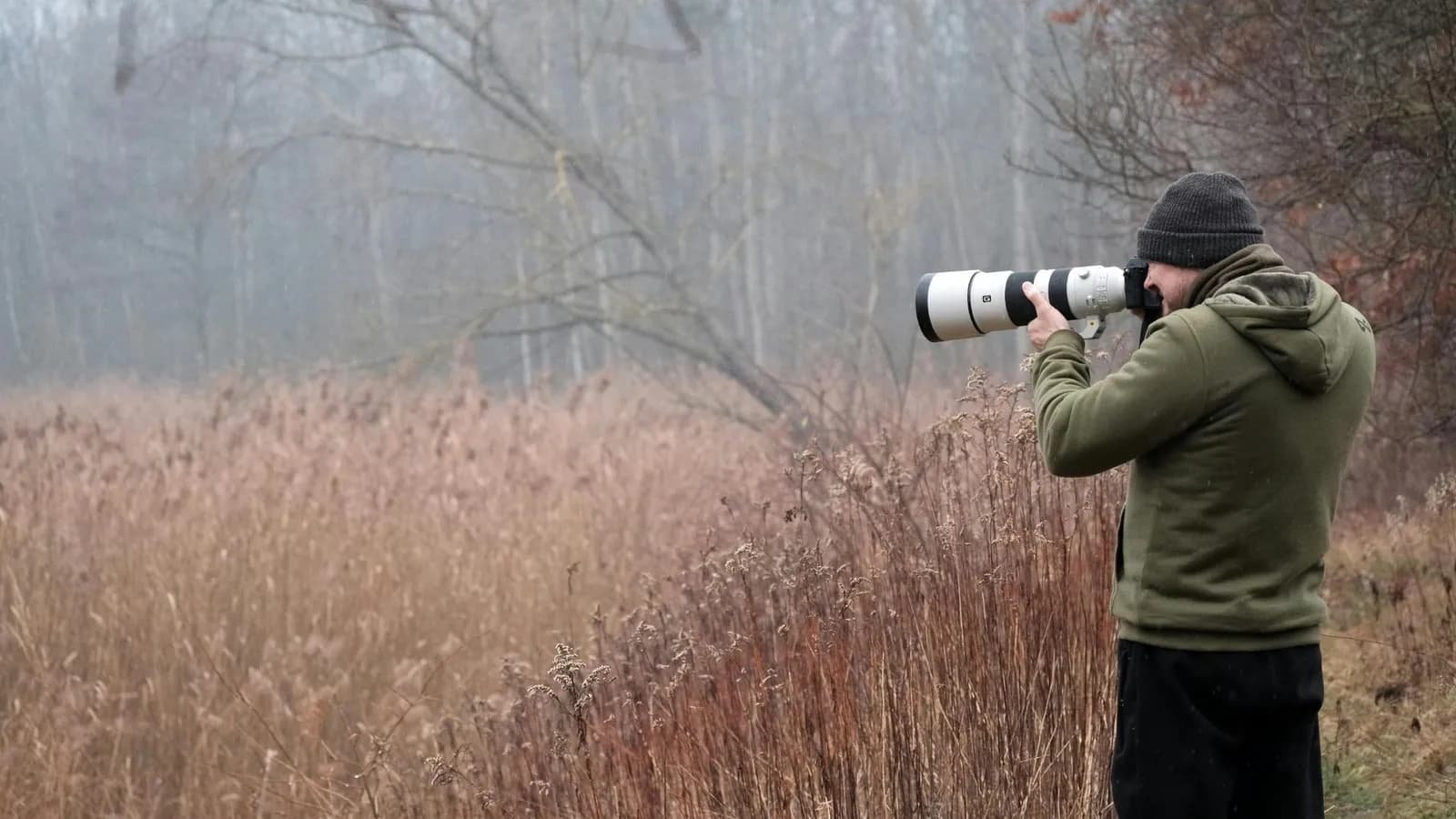
The Tamron E 50-400 mm f/4.5-6.3 stands out with its weight of 1155 g and 67 mm filter diameter, the lowest in the category. Its zoom range starts at 50 mm, making it more versatile than its direct competitors. This is a strong argument for travel and trekking, where every gram counts.
The Canon RF 100-500 mm f/4.5-7.1 L IS USM extends to 500 mm, giving a reach advantage over 100-400 mm lenses. On APS-C Canon (1.6× crop) it is equivalent to 800 mm on full frame, an exceptional reach for ornithology. Its maximum aperture at 500 mm is f/7.1, which requires a significant ISO increase in low light.
100-400 mm and 100-500 mm zooms: versatility for sports and wildlife
RF 100-300mm f/2.8 L IS USM
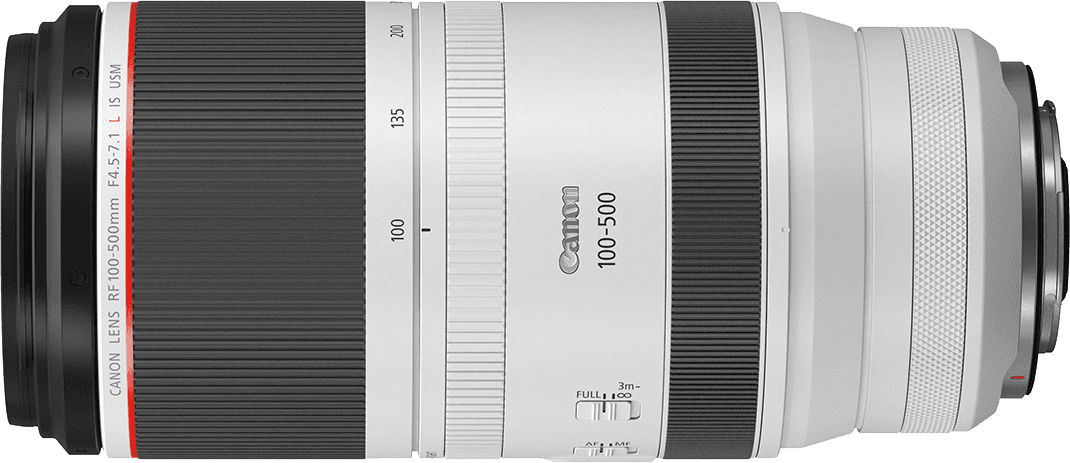
RF 100-500mm F4.5-7.1L IS USM
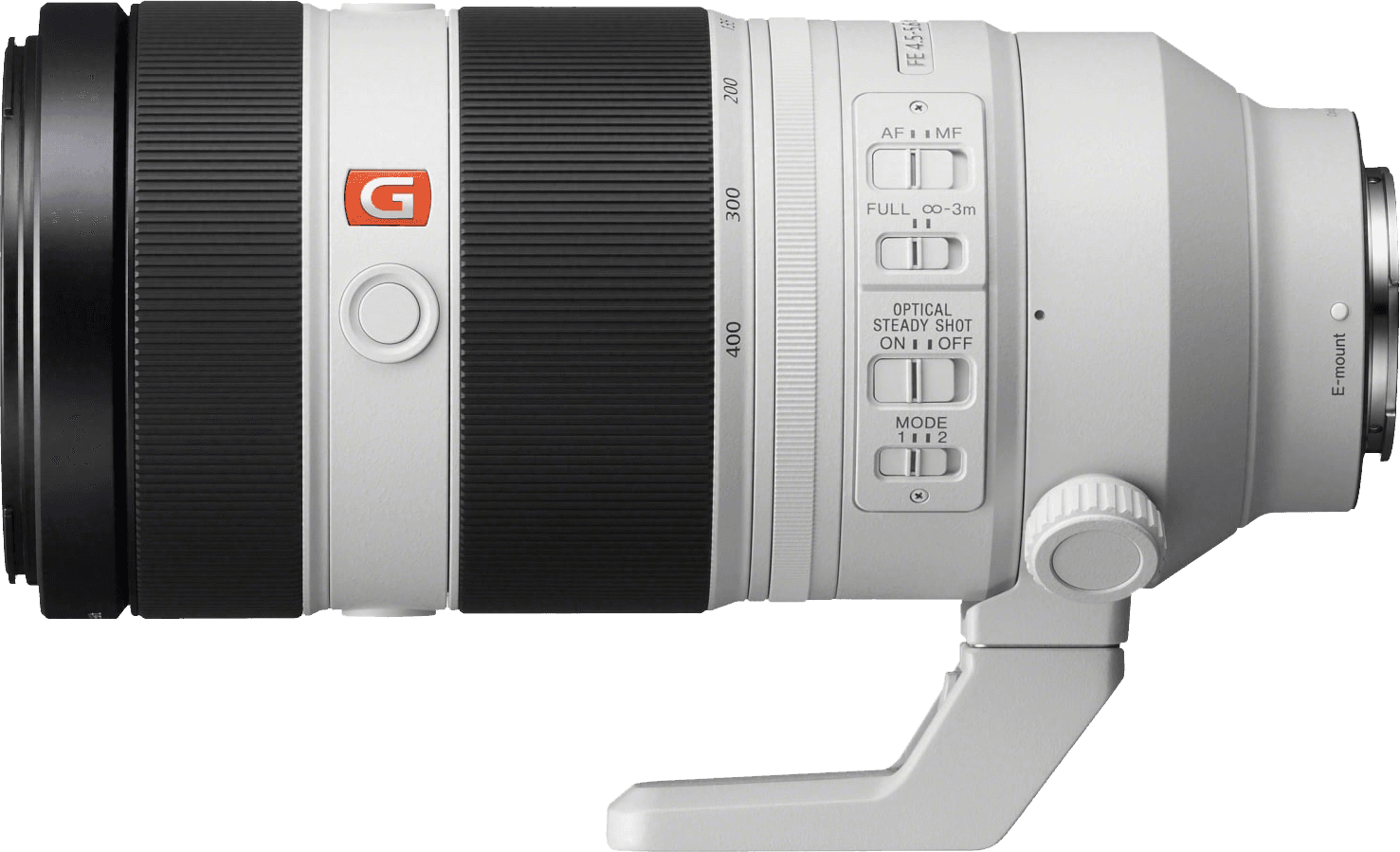
FE 100-400mm f/4.5-5.6 GM OSS
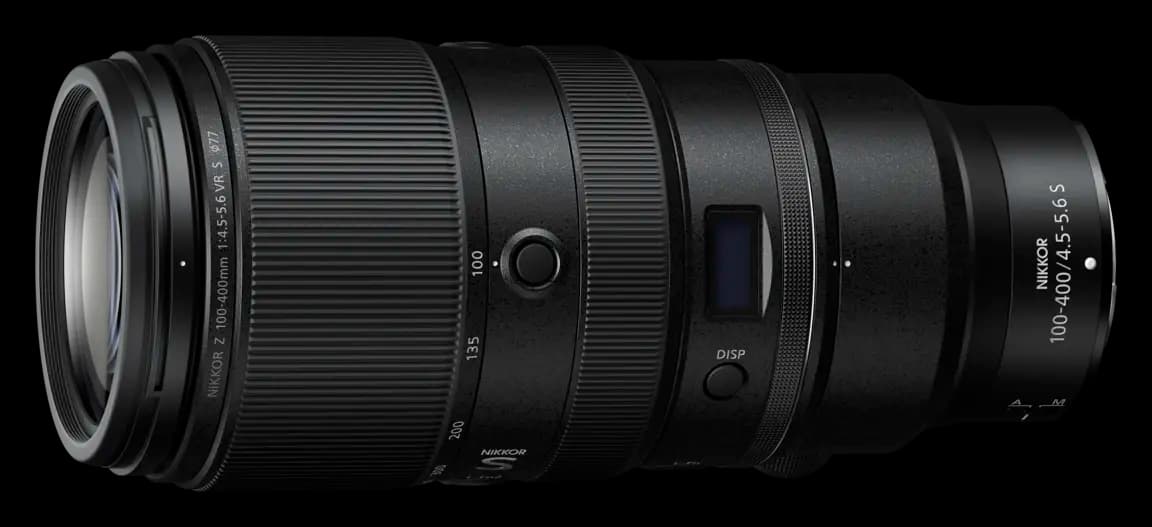
Nikkor Z 100-400mm f/4.5-5.6 VR S
E 50-400mm F4.5-6.3 A067
The Nikkor Z 28-400 mm: the all-in-one travel lens
The Nikkor Z 28-400 mm f/4-8 VR is in a category of its own. At 725 g it is the lightest lens in this guide. Its zoom range from 28 mm to 400 mm covers everything from wide-angle to super-telephoto. Its aperture at 400 mm is f/8, which penalises it in low light. But for travel where you want to carry only one lens, it is a solution that is hard to beat.
The all-in-one travel zoom
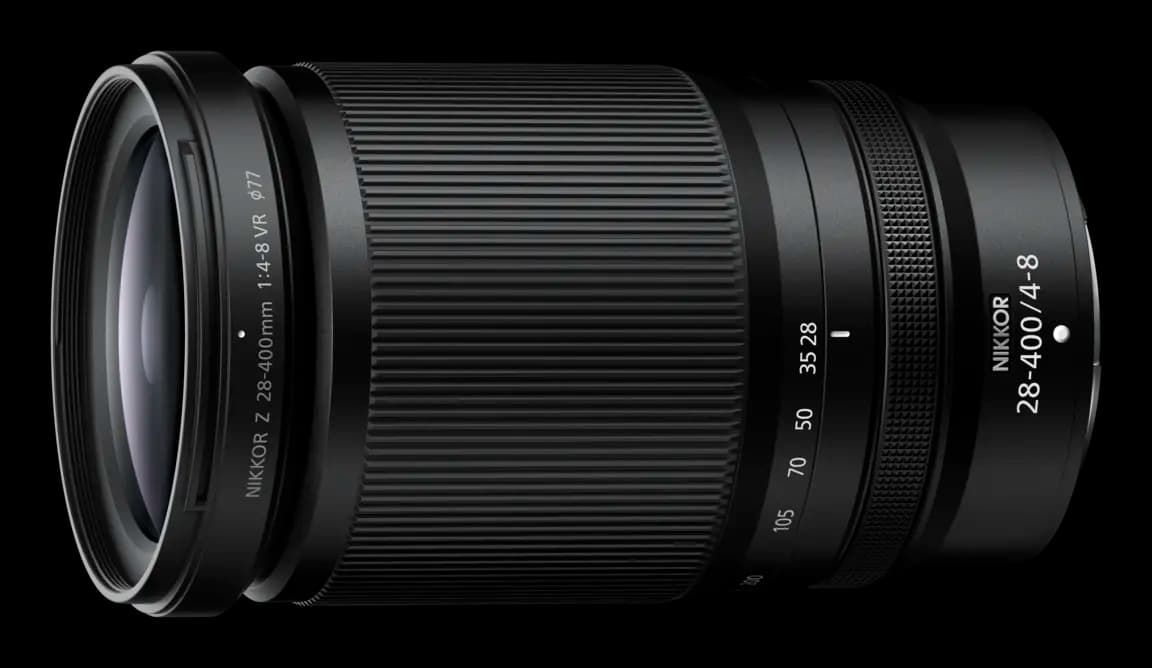
Super-Telephoto Lenses for Long Reach: 180-600 mm and Beyond
Beyond 500 mm we enter the territory of wild animals, ornithology and very long-distance sports. The weight/reach compromises become drastic.
The Nikkor Z 180-600 mm f/5.6-6.3 VR is the most accessible lens in this category at 1955 g. Its zoom range starts at 180 mm, making it less versatile than 100-400 mm lenses, but its reach at 600 mm is real. On APS-C Nikon (1.5× crop) it is equivalent to 900 mm on full frame. This is a reach that few lenses can achieve without exceeding £10 000.
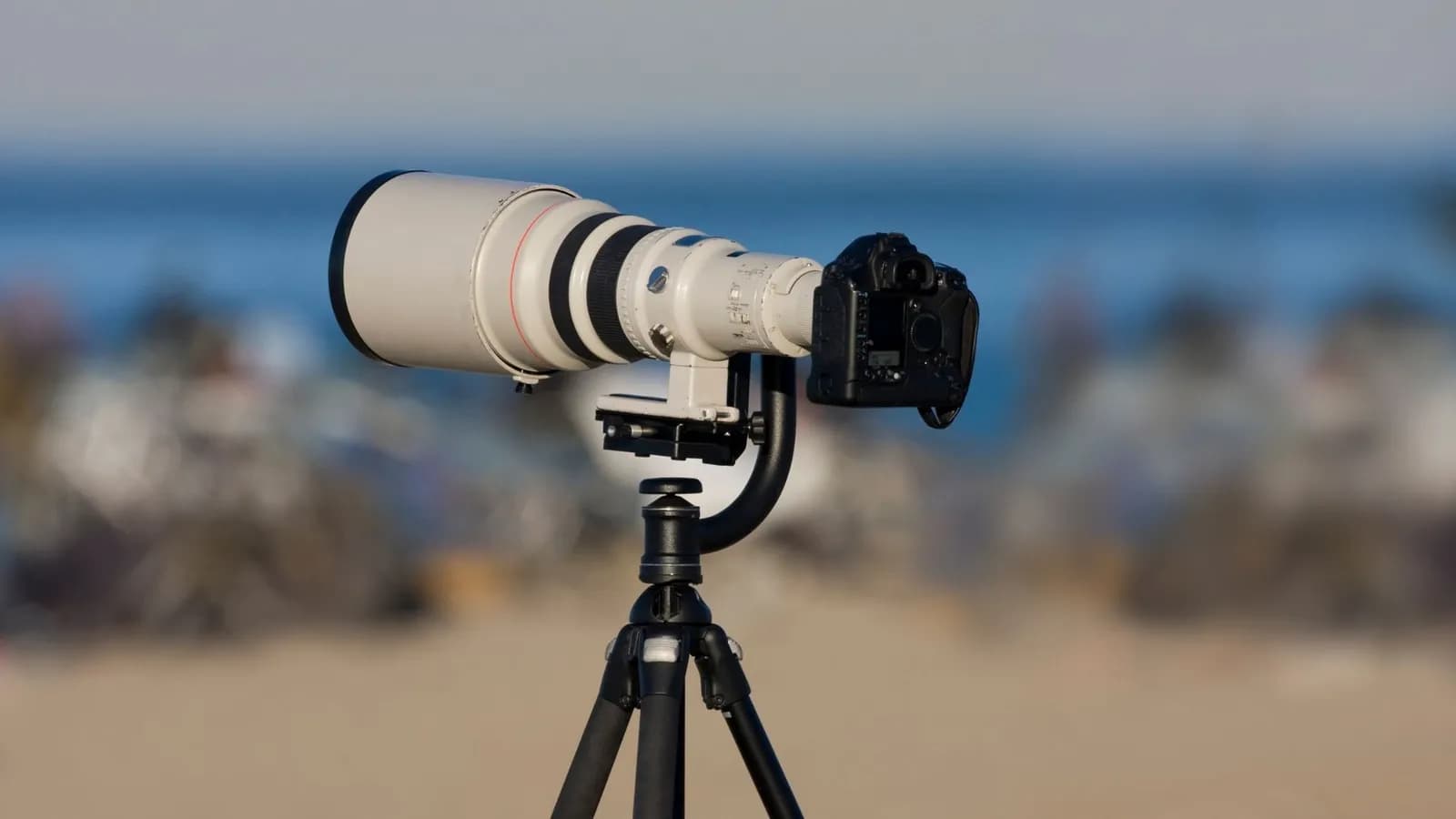
The Panasonic Leica DG Vario-Elmar 100-400 mm f/4-6.3 is designed for the Micro Four Thirds format (MFT, 2× crop). At 100-400 mm on MFT it is equivalent to 200-800 mm on full frame. At 985 g it offers exceptional reach for a moderate weight. The MFT system has limits at high ISO, but for wildlife in bright daylight this combination is remarkably effective.
Super-telephoto lenses for long reach
Nikkor Z 180-600mm f/5.6-6.3 VR
Leica DG Vario-Elmar 100-400mm f/4-6.3 Asph. Power O.I.S.
Lumix S 70-300mm f/4.5-5.6 Macro O.I.S.
Professional prime lenses: 400 mm, 600 mm, 800 mm
Long prime lenses are the tools of professional sports press photographers and naturalists. Their optical and AF performance is superior to equivalent zooms. Their price and weight are also in a different league.
Professional prime lenses
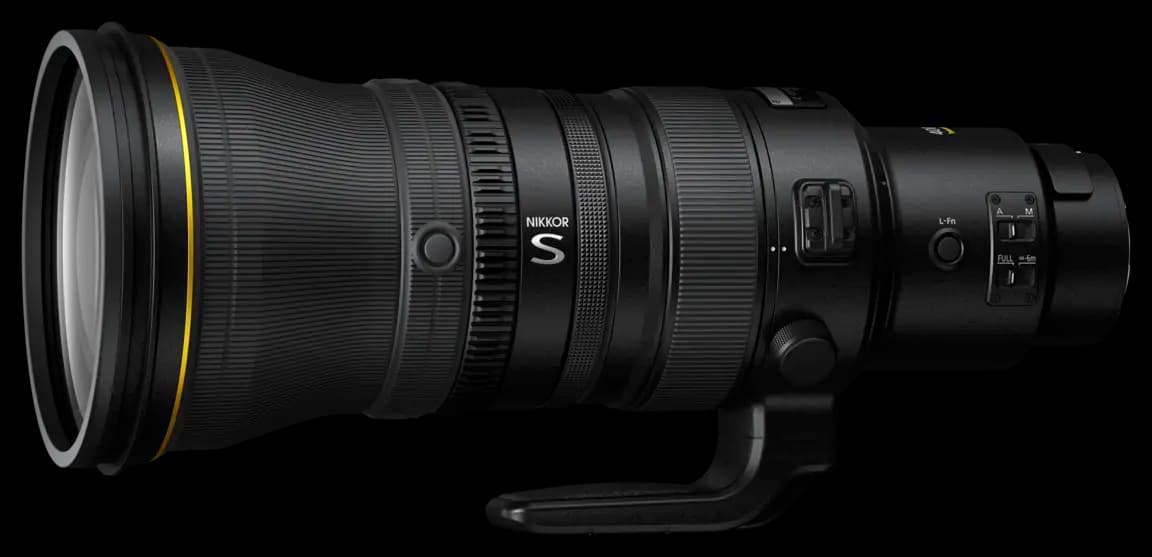
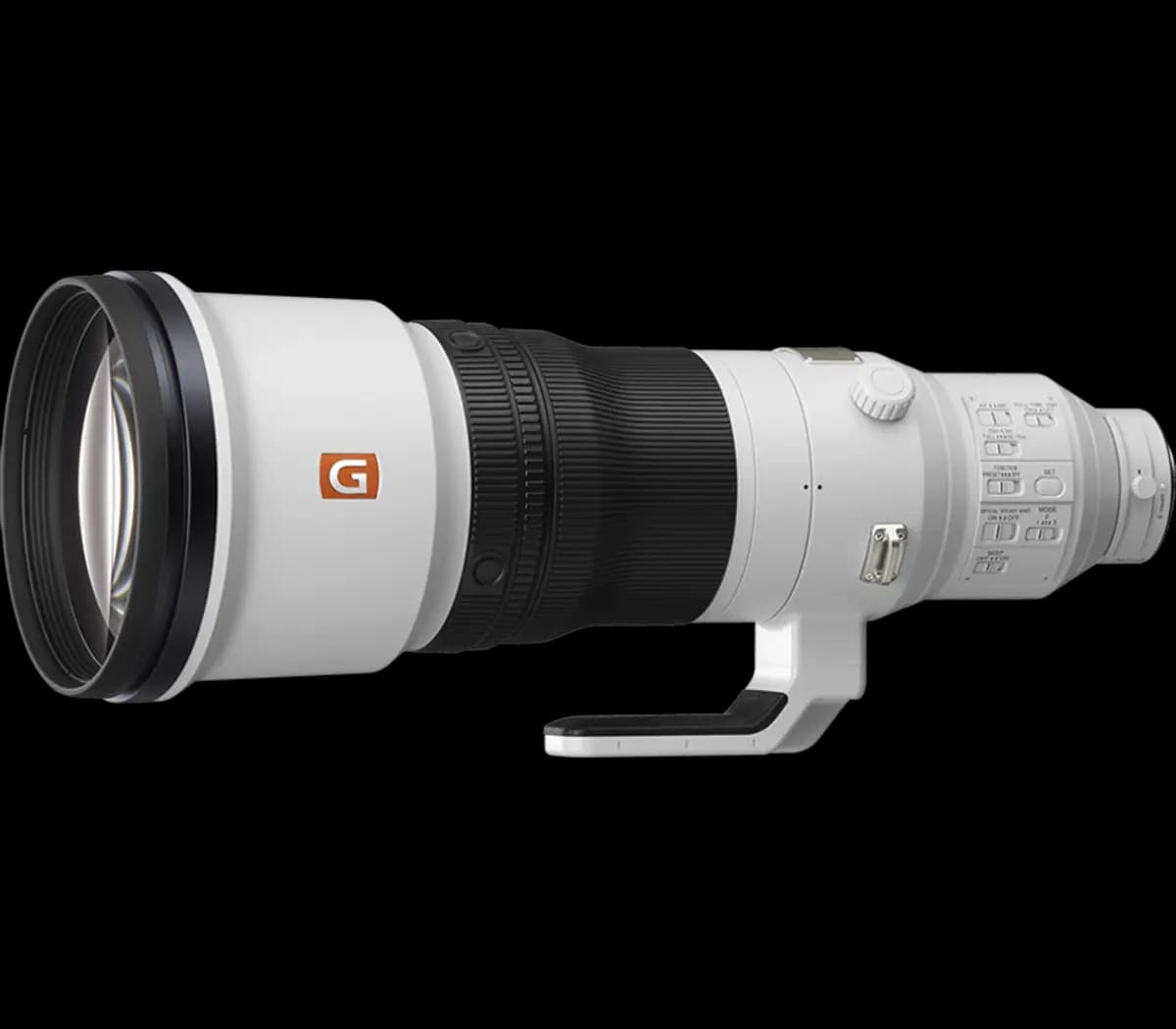
The Nikkor Z 400 mm f/2.8 TC VR S at £13 999 integrates a native 1.4× teleconverter, allowing a switch to 560 mm f/4 without accessories. The Sony FE 600 mm f/4 GM OSS at £12 999 is the Sony reference for ornithology and very long-distance sports. The Canon RF 800 mm f/5.6 L IS USM at £19 999 is the longest lens in the catalogue, weighing 3140 g.
A 600 mm f/4 rented for a ten-day safari costs less than a week of travel expenses. The lens is not always the most profitable investment to own.
Teddy, camera-duel.com
Complete Comparison: All Lenses in the Guide at a Glance
This table summarises the verified data for all lenses presented. It complements the detailed grids in the previous sections.
| Lens | Focal range | Maximum aperture | Weight (g) | Stabilisation | Filter (mm) | Indicative price |
|---|---|---|---|---|---|---|
| Canon RF 70-200 mm f/2.8 L IS USM Z | 70-200 mm | f/2.8 | 1115 | 5.5 stops | 77 | £2999 |
| Nikkor Z 70-200 mm f/2.8 VR S II | 70-200 mm | f/2.8 | 1340 | 6 stops | 77 | £3099 |
| Sony FE 70-200 mm f/2.8 GM OSS | 70-200 mm | f/2.8 | 1480 | Yes | 77 | N/A |
| Sigma 70-200 mm f/2.8 DG DN OS Sports | 70-200 mm | f/2.8 | 1335 | 7.5 stops | 77 | £1599 |
| Tamron E 50-400 mm f/4.5-6.3 | 50-400 mm | f/4.5-6.3 | 1155 | Yes | 67 | N/A |
| Sony FE 100-400 mm f/4.5-5.6 GM OSS | 100-400 mm | f/4.5-5.6 | 1395 | Yes | 77 | N/A |
| Nikkor Z 100-400 mm f/4.5-5.6 VR S | 100-400 mm | f/4.5-5.6 | 1355 | Yes | 77 | N/A |
| Canon RF 100-500 mm f/4.5-7.1 L IS USM | 100-500 mm | f/4.5-7.1 | 1365 | 5 stops | 77 | N/A |
| Nikkor Z 28-400 mm f/4-8 VR | 28-400 mm | f/4-8 | 725 | Yes | 77 | N/A |
| Nikkor Z 180-600 mm f/5.6-6.3 VR | 180-600 mm | f/5.6-6.3 | 1955 | 5.5 stops | 95 | N/A |
| Panasonic Leica DG 100-400 mm f/4-6.3 | 100-400 mm | f/4-6.3 | 985 | 5 stops | 72 | £1899 |
| Panasonic Lumix S 70-300 mm f/4.5-5.6 | 70-300 mm | f/4.5-5.6 | 790 | 6.5 stops | 77 | £1199 |
| Canon RF 100-300 mm f/2.8 L IS USM | 100-300 mm | f/2.8 | 2590 | 5.5 stops | 112 | £9999 |
| Nikkor Z 400 mm f/2.8 TC VR S | 400 mm | f/2.8 | 2950 | 5.5 stops | 46 | £13999 |
| Sony FE 600 mm f/4 GM OSS | 600 mm | f/4 | 3040 | 5 stops | 41 | £12999 |
| Canon RF 800 mm f/5.6 L IS USM | 800 mm | f/5.6 | 3140 | 4.5 stops | 52 | £19999 |
Which Lens to Choose According to Your Precise Use
The previous sections have laid the foundations. This section decides by concrete use, without detour.
Indoor sports (basketball, handball, swimming, martial arts)
Verdict: a 70-200 mm f/2.8 is mandatory. Artificial lighting in gyms and pools requires a maximum aperture. Among the four models in the catalogue, the Sigma 70-200 mm f/2.8 DG DN OS Sports at £1599 offers the best value on Sony E and Leica L. On Canon RF, the Canon RF 70-200 mm f/2.8 L IS USM Z at £2999 stands out for its weight of 1115 g, the lowest in the category.
Outdoor sports (football, athletics, cycling, rugby)
Verdict: a 100-400 mm or 100-500 mm is the right choice. Outdoor light compensates for the smaller aperture. The zoom range covers both near and distant action. On Sony E, the Sony FE 100-400 mm f/4.5-5.6 GM OSS or the Tamron E 50-400 mm depending on budget. On Nikon Z, the Nikkor Z 100-400 mm f/4.5-5.6 VR S. On Canon RF, the Canon RF 100-500 mm f/4.5-7.1 L IS USM for the extra reach.
Wildlife in national parks, zoos or reserves
Verdict: a 100-400 mm on APS-C is the best entry point. On APS-C Sony or Nikon (1.5× crop), a 100-400 mm is equivalent to 150-600 mm on full frame. This is sufficient for most mammals and medium-sized birds at short to medium distance. The Tamron E 50-400 mm is particularly suitable: its range starts at 50 mm, useful for contextual shots, and its weight of 1155 g is comfortable for a full day.
Wild animals, safari, ornithology
Verdict: 500 mm minimum on full frame, 400 mm minimum on APS-C. The Nikkor Z 180-600 mm f/5.6-6.3 VR is the most accessible solution to reach 600 mm without exceeding 2000 g. On MFT, the Panasonic Leica DG 100-400 mm f/4-6.3 is equivalent to 200-800 mm on full frame for 985 g: this is a difficult combination to beat in terms of reach/weight/price.
Travel: one lens to cover everything
Verdict: the Nikkor Z 28-400 mm f/4-8 VR at 725 g is the only lens in this guide that meets this constraint. Its f/8 aperture at 400 mm is a real concession in low light. But if you want to carry only one lens for a trip mixing landscape, portrait and close-range wildlife, no other lens in the catalogue offers this range at this weight.
Tight budget (under £2000)
Best value for money
- Sigma 70-200 mm f/2.8: £1599, indoor sports
- Panasonic Lumix S 70-300 mm: £1199, travel wildlife
- Panasonic Leica DG 100-400 mm: £1899, MFT long reach
Intermediate budget (£2000-5000)
Accessible professional performance
- Canon RF 70-200 mm f/2.8 Z: £2999, sports in all conditions
- Nikkor Z 70-200 mm f/2.8 VR S II: £3099, maximum versatility
Professional budget (over £10 000)
Press and professional naturalist tools
- Canon RF 100-300 mm f/2.8 L: £9999, professional indoor sports
- Sony FE 600 mm f/4 GM: £12 999, professional ornithology
- Nikkor Z 400 mm f/2.8 TC: £13 999, long-distance sports
- Canon RF 800 mm f/5.6 L: £19 999, maximum reach
Common Mistakes to Avoid Before Buying
These mistakes regularly appear in forums and buyer feedback. Identifying them before purchase avoids costly regrets.
- 1
Choosing focal length without checking aperture at that focal length
A 100-400 mm f/4.5-5.6 works at f/5.6 at 400 mm, not at f/4.5. Always check the aperture at the focal length you will use most often.
- 2
Confusing stabilisation with sufficient shutter speed
Stabilisation does not freeze the subject. At 1/60 s with a bird in flight, even with 7.5 stops of stabilisation, the subject will be blurred. Stabilisation compensates only for photographer movement.
- 3
Ignoring total system weight (lens + body)
A Canon RF 800 mm f/5.6 L IS USM at 3140 g plus a 900 g body gives a system of 4040 g. Without a robust tripod or monopod, this system is unusable handheld for a full day.
- 4
Buying a long prime without testing your body’s AF
A 600 mm f/4 on an entry-level body can give disappointing results when tracking a moving subject. The lens is not solely responsible for AF performance: the body plays a major role.
- 5
Neglecting the mount ecosystem
A Sigma lens in Sony E mount will not work on a Canon RF body without an adapter, and AF performance may be degraded. Check mount compatibility before any purchase, especially second-hand.
Body and Lens: Thinking About the Complete System
The lens does not work alone. The body determines AF performance in tracking, burst rate and high-ISO capability. A good lens on an unsuitable body produces disappointing results.
For sports and wildlife, three body characteristics are critical. First, burst rate in uncompressed RAW (not JPEG, not lossy compressed RAW). Second, buffer depth: how many images in a burst before the body slows down. Third, AF performance when tracking moving subjects, especially bird and animal detection, now standard on high-end Sony, Nikon and Canon bodies.
The Sony A9 III with its global shutter eliminates rolling shutter and allows 120 fps electronically without distortion. This is a decisive advantage for high-speed sports. But these capabilities are useless if the lens cannot keep up with the subject at that rate. The lens’s AF (motor, algorithm) is as important as the body’s AF.
Sony A9 III test: does the global shutter change everything?Our detailed analysis of the Sony A9 III, the reference body for sports and wildlife in 2026.Frequently asked questions
What is the minimum focal length for photographing birds in flight?▾
On full frame, 500 mm minimum, ideally 600 mm. On APS-C (1.5× crop), a 400 mm is equivalent to 600 mm on full frame and is sufficient in the majority of cases. Focal length alone is not enough: continuous autofocus on the body and a burst rate of at least 10 fps in RAW are also necessary to have a realistic chance of sharp images of a bird in flight.
Is a prime or a zoom better for wildlife?▾
The zoom is more practical for wildlife: the subject moves unpredictably, and reframing without changing lenses is a real advantage. The prime offers a larger maximum aperture and slightly higher sharpness wide open. For a beginner or a photographer who does not want to change lenses in the field, a 100-400 mm or 100-500 mm is the best entry point. Long primes (400 mm f/2.8, 600 mm f/4) are reserved for professional or highly specialised use.
Is an f/6.3 telephoto lens sufficient for sports?▾
For outdoor sports in bright light, yes. For indoor sports or artificial light, no. At f/6.3, obtaining 1/1000 s at reasonable ISO (ISO 1600 maximum for a good full-frame body) is possible only if ambient light is sufficient. In a gym or covered hall, f/6.3 requires ISO 6400 or 12 800, which degrades image quality on most sensors. For indoor sports, f/2.8 is the professional standard.
Can a teleconverter be used on a 100-400 mm zoom?▾
Technically yes, if the manufacturer allows it. But a 1.4× on a 100-400 mm f/5.6 gives 140-560 mm at f/8. At f/8, AF on many bodies is degraded or inoperative in low light. High-end bodies (Sony A9 III, Nikon Z9, Canon R3) maintain AF down to f/8 and beyond, but this is not universal. Check your body’s compatibility before investing in a teleconverter.
What is the best telephoto lens to start wildlife photography on a small budget?▾
The Panasonic Lumix S 70-300 mm f/4.5-5.6 Macro O.I.S. at £1199 is the most accessible entry point in the catalogue for full-frame Leica L. On Sony E, the Tamron E 50-400 mm f/4.5-6.3 is a versatile and lightweight alternative. On MFT, the Panasonic Leica DG 100-400 mm f/4-6.3 at £1899 offers reach equivalent to 200-800 mm on full frame for under £2000. The second-hand market is also a serious option: previous generations of Sony or Nikon 100-400 mm lenses offer excellent performance at reduced prices.
Is lens stabilisation useful for sports and wildlife?▾
Partially. Stabilisation compensates for photographer movement, not subject movement. To freeze a sprinter or a bird in flight, only shutter speed matters. Stabilisation is useful for comfortably holding a long, heavy telephoto between bursts, for intentional panning (motion blur), and for static or slow subjects (resting mammals, perched birds). On a body with IBIS, the combination of IBIS plus optical stabilisation is more effective than either alone.
Read next
Best Camera for Vlogging: The Guide to Choosing Without Mistakes in 2026
8 bodies compared on their video score, field strengths and deal-breakers. A factual guide to choosing the right vlogging camera for your real usage.
Best value camera: the guide to choosing without mistakes in 2026
Six bodies, three sensor formats, one goal: find the camera that matches your use without paying for unnecessary specs. Structured comparison, clear verdicts.

Which Lens for Landscape Photography: Focal Lengths, Apertures and System Choices
Ultra-wide-angle or versatile zoom? Prime or zoom? This guide breaks down each parameter and helps you choose the right lens for your landscape practice, system by system.