Best value camera: the guide to choosing without mistakes in 2026
Six bodies, three sensor formats, one goal: find the camera that matches your use without paying for unnecessary specs. Structured comparison, clear verdicts.
Why "best value" is a trap question
Value does not exist in the absolute. It depends on what you photograph, how often you shoot, and the lens system you are willing to invest in.
A body rated 8/10 sold at a high price can represent a better purchase than a body rated 4.4/10 sold for half the price, if the first saves you from buying a second body in eighteen months. Conversely, a Full Frame 24.5 MP sensor is pointless if you never leave autofocus and only post on Instagram.
The first question to ask is not "which is best?" but "best for what?".
The three variables that truly define value
- 1
Main use
Landscape, light travel, portrait, amateur sport: each use values different specs. A 26.1 MP APS-C sensor is ample for A2 landscape prints. IBIS becomes essential as soon as you shoot indoors without a tripod.
- 2
Lens ecosystem
The body price is rarely the heaviest item over five years. Access to affordable, high-performing native lenses determines the real value of the system. A limited ecosystem forces costly compromises.
- 3
Expected lifespan
A body released in 2019 can still produce excellent images, but its autofocus and connectivity show their age against 2024-2025 models. Second-hand can be an excellent option, provided you check shutter count.
Sensor format: what it really changes
Micro Four Thirds, APS-C, full-frame: three formats appear in this comparison. Understanding their differences prevents paying for a spec you do not need.
The figures that matter by format
| Format | Sensor size | Crop factor | Main advantage | Main concession |
|---|---|---|---|---|
| Micro Four Thirds | 17.3 x 13 mm | x2 | Compactness, accessible telephoto | High-ISO noise, limited bokeh |
| APS-C | 23.5 x 15.6 mm | x1.5 to x1.6 | Size/quality balance | Less sharpness in very low light vs FF |
| Full Frame | 36 x 24 mm | x1 | Dynamic range, low light, bokeh | Weight, lens cost |
Micro Four Thirds (MFT) is the most compact format. The x2 crop factor means a 50 mm lens behaves like a 100 mm full-frame equivalent. This is an advantage for wildlife and sport, a constraint for wide-angle.
APS-C remains the most versatile format on the market. With a x1.5 crop factor on Fujifilm and Sony, it delivers image quality very close to full-frame in 80 % of everyday situations, at noticeably lower bulk and lens cost.
Full-frame justifies its premium in three precise cases: photography in very low light (beyond ISO 6400), large-format prints (beyond A1), and the search for pronounced bokeh with standard focal lengths.
Full-frame, APS-C or Micro Four Thirds: which to choose?The complete guide to deciding between the three formats according to your use and budget.The specs that really matter (and those manufacturers overstate)
Technical sheets are written by marketing teams. Some announced values require critical reading.
Resolution: beyond 24 MP, gains are marginal for most uses
A 24.2 MP sensor produces 6000 x 4000 pixel files. This is sufficient for an A1 print (594 x 841 mm) at 72 dpi, or for significant cropping in post-processing. Moving to 32.5 MP or 26.1 MP brings real benefit only if you crop aggressively or print very large.
The stated resolution says nothing about actual pixel quality. Measured dynamic range (in EV at base ISO), noise handling and autofocus precision matter more day-to-day.
IBIS: stabilisation that changes the game indoors
IBIS (in-body stabilisation) lets you use slower shutter speeds without blur. The weather-sealed and stabilised bodies in this comparison, such as the Nikon Z5 II and the Canon EOS R7, offer valuable latitude indoors or in fading light.
Beware of manufacturers' measurement conditions: a stabilisation rating of 5 stops is measured under ideal conditions with a stabilised lens. In real use, expect 2 to 3 stops of effective gain on a static subject.
Weather sealing: a deal-breaker for travel and outdoor work
Autofocus: the hardest spec to read on paper
The number of AF points announced does not reflect real-world detection quality. A well-calibrated 425-point AF often outperforms a poorly optimised 4000-point AF on moving subjects. Independent sources (DPReview, Imaging Resource) remain the reference for evaluating real subject-detection performance, especially on eyes and animals.
Entry-level: bodies to start without closing doors
Starting does not mean buying the cheapest. It means buying a body that will not limit your progress for at least three years.
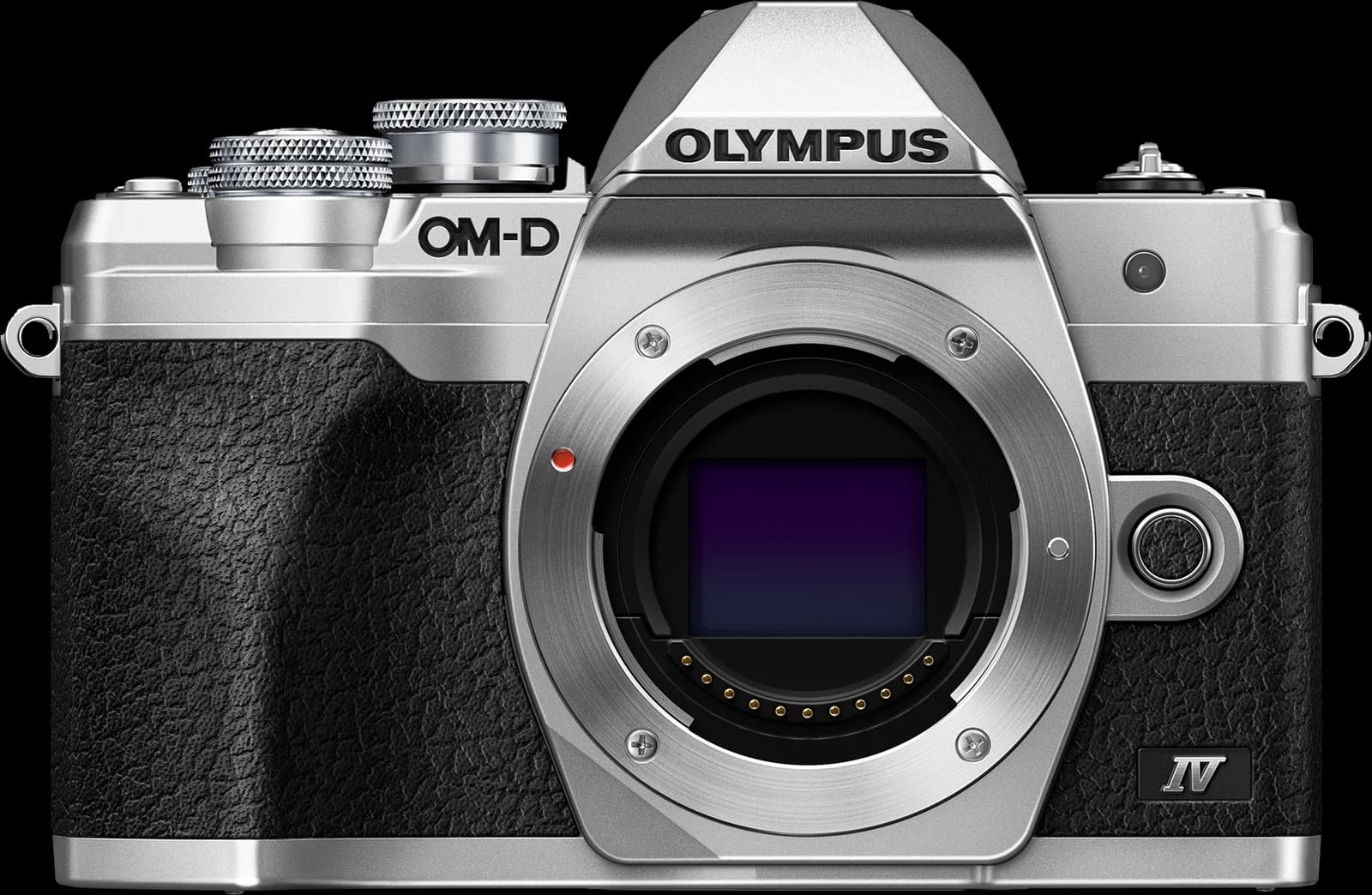
Two bodies in this comparison target entry-level: the Sony α6400 and the OM System E-M10 Mark IV. Their profiles differ greatly. Sony bets on recognised real-time autofocus in a dense APS-C ecosystem. OM System bets on compactness and IBIS in Micro Four Thirds.
The Sony α6400 dates from 2019. Its 24.2 MP APS-C sensor remains competitive, but the lack of IBIS and its relative age weigh against more recent rivals. Its score of 5.5/10 reflects a solid but ageing body.
The OM System E-M10 Mark IV offers IBIS in an ultra-compact format with a 20.3 MP MFT sensor. Its score of 4.4/10 reflects real low-light limits and an MFT ecosystem that is gradually shrinking. It remains relevant for very light travel use or for someone who does not want to carry weight.
Entry-level: two different approaches
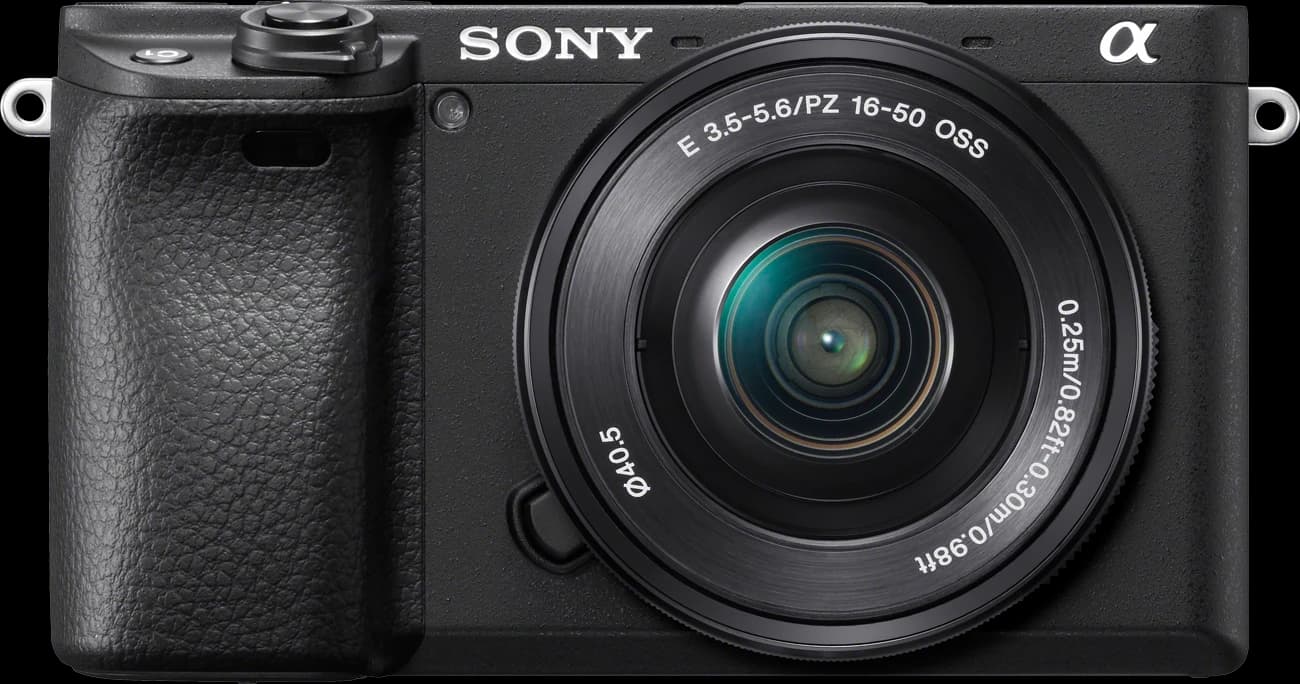
Sony α6400
APS-C, 24.2 MP, 2019
- Real-time AF with eye detection
- Very well-supplied Sony E ecosystem
- No IBIS: limiting indoors
- Ageing body (released 2019)
- Score: 5.5/10
OM System E-M10 Mark IV
MFT, 20.3 MP, IBIS, 2020
- Built-in IBIS: rare asset at this level
- Ultra-compact format
- MFT sensor limited beyond ISO 3200
- MFT ecosystem contracting
- Score: 4.4/10
Expert APS-C hybrids: the sweet spot for value
Expert APS-C is the category where value is most favourable. You get 90 % of full-frame capability at significantly lower bulk and lens cost.
Two APS-C bodies stand out clearly in this comparison: the Canon EOS R7 (scored 7.6/10) and the Fujifilm X-T30 III and X-M5 (scored 6.9/10 and 4.4/10). The Canon and the Fujifilm X-T30 III target similar uses but with opposing philosophies.
Canon EOS R7: highest APS-C score in the comparison
The Canon EOS R7 features 32.5 MP, IBIS and weather sealing. Released in 2022, it remains one of the most complete APS-C bodies on the market. Its autofocus inherits Dual Pixel CMOS AF II technology, validated by DPReview as one of the most reliable in its class on moving subjects.
Its score of 7.6/10 makes it the best-rated APS-C body in this comparison. The RF-S ecosystem is still developing, but access to full-frame RF lenses (with crop factor) greatly expands possibilities.
Fujifilm X-T30 III and X-M5: two very different positionings
The Fujifilm X-T30 III shares the same X-Trans CMOS 4 26.1 MP sensor as the X-M5. Its score of 6.9/10 reflects a compact, well-finished body with Fujifilm's recognised colour rendering. The lack of IBIS is its main limit for indoor or low-light photography.
The Fujifilm X-M5 is the most compact body in the X range. Its score of 4.4/10 reflects significant compromises: no IBIS, no viewfinder, reduced ergonomics. It suits a very specific profile: the traveller who wants an X-Trans sensor in the smallest possible body. For versatile photography, the X-T30 III is the more coherent choice.
Fujifilm's X ecosystem is one of the richest in APS-C: high-quality XF lenses and a complete range of primes and zooms. This is a strong argument over time.
Expert APS-C hybrids
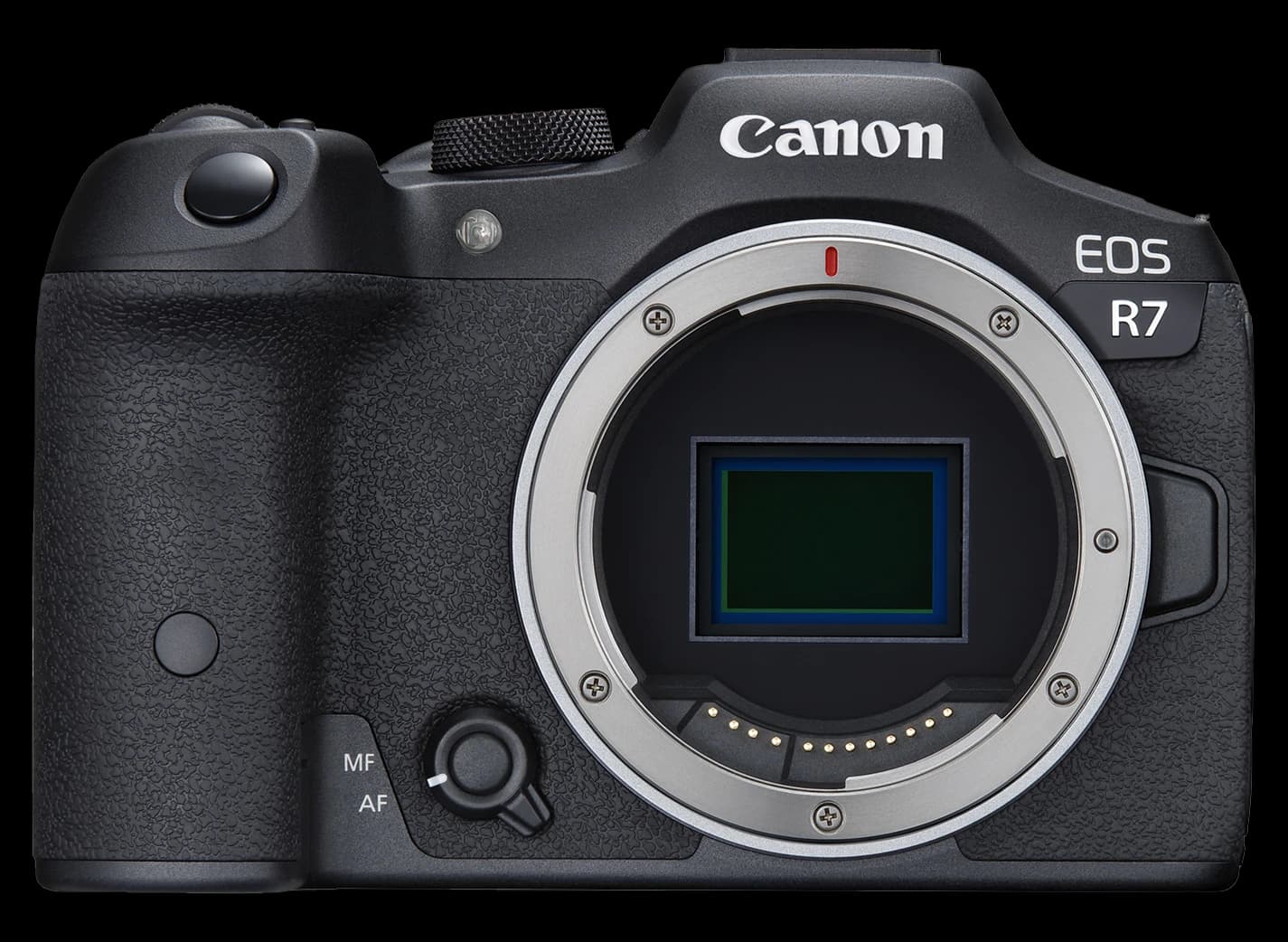
Canon
EOS R7
from 1 349 £
8 offers


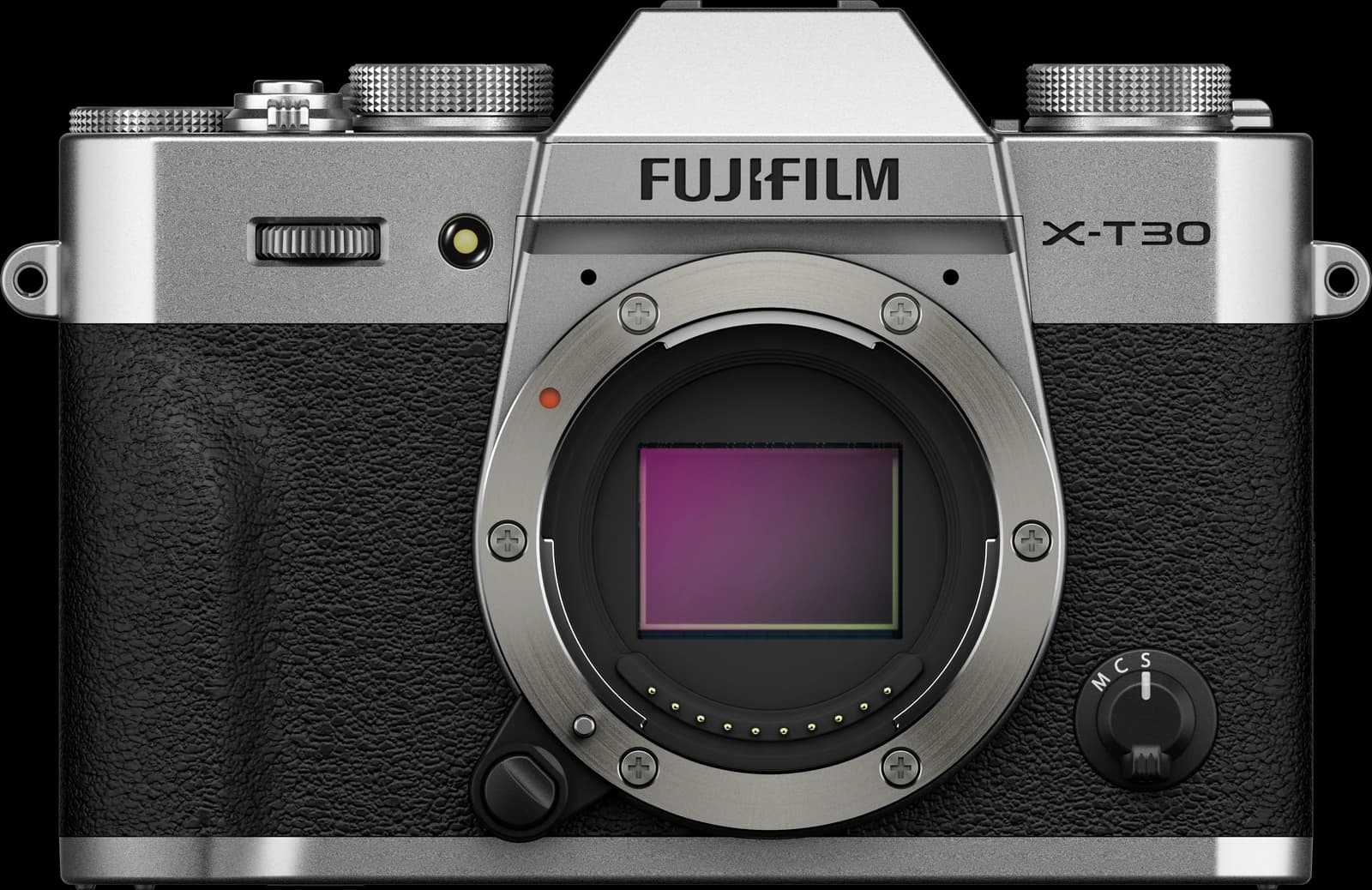
Fujifilm
X-T30 III
from 761,12 £
7 offers
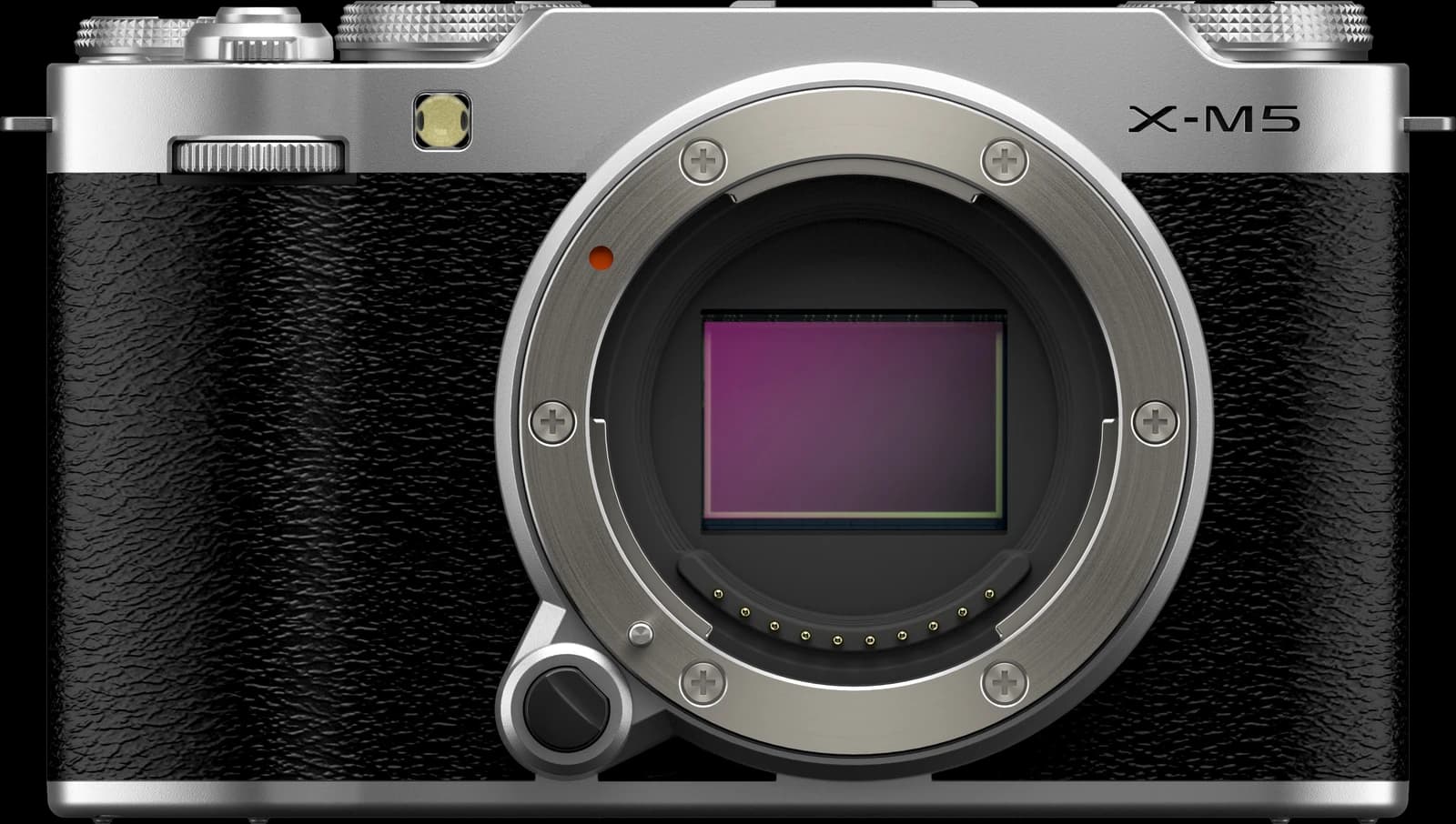
Fujifilm
X-M5
from 726 £
4 offersYou'll find the best prices on the market here, updated daily — and by going through these partner links, you support Camera Duel without paying a cent more.
Accessible full-frame: the Nikon Z5 II changes the game
Full-frame was long reserved for professionals. The Nikon Z5 II redefines what "accessible" means in this category.
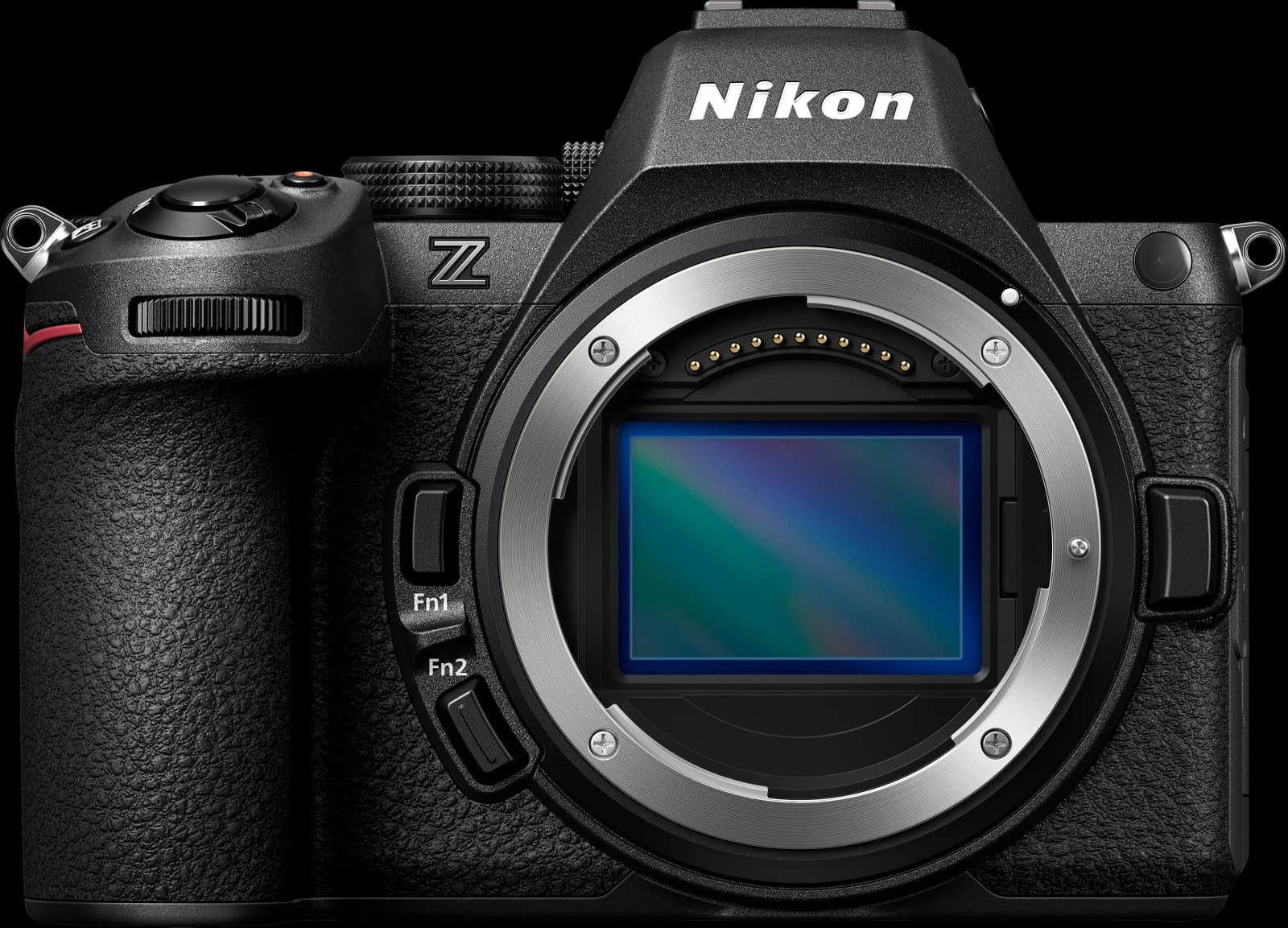
The Nikon Z5 II is the only full-frame body in this comparison. With 24.5 MP, IBIS, weather sealing and a score of 8/10, it is the highest-rated body in the selection. Released in 2025, it benefits from Nikon's latest-generation autofocus and a rapidly expanding Z ecosystem.
Its Full Frame CMOS 24.5 MP sensor offers superior dynamic range and noise handling to all APS-C bodies in this comparison. The difference is noticeable mainly beyond ISO 3200 and in highlight recovery during post-processing.
Weather sealing is a strong argument for outdoor use. Combined with IBIS, it makes the body well suited to travel and landscape in difficult conditions.
Accessible full-frame
When full-frame is truly justified
- Regular photography beyond ISO 3200 (concerts, dark interiors, night).
- Large-format prints beyond A1 where every pixel counts.
- Search for pronounced bokeh with focal lengths between 35 mm and 85 mm.
- Landscape with significant highlight and shadow recovery in RAW.
The Nikon Z5 II is the body that makes full-frame accessible without sacrificing the specs that matter: IBIS, weather sealing, modern autofocus. It is the best value in this comparison if your use justifies the format.
Teddy, camera-duel.com
Overall comparison: six bodies, the specs that decide
A concise summary to compare the six bodies on the decisive criteria.
| Body | Format | Resolution | IBIS | Weather sealed | Year | Score |
|---|---|---|---|---|---|---|
| Nikon Z5 II | Full Frame | 24.5 MP | Yes | Yes | 2025 | 8/10 |
| Canon EOS R7 | APS-C | 32.5 MP | Yes | Yes | 2022 | 7.6/10 |
| Fujifilm X-T30 III | APS-C | 26.1 MP | No | No | 2024 | 6.9/10 |
| Sony α6400 | APS-C | 24.2 MP | No | No | 2019 | 5.5/10 |
| Fujifilm X-M5 | APS-C | 26.1 MP | No | No | 2024 | 4.4/10 |
| OM System E-M10 IV | MFT | 20.3 MP | Yes | No | 2020 | 4.4/10 |
Reading this table reveals a clear correlation: the highest-rated bodies are also those that combine IBIS and weather sealing. This is no coincidence. These two specs indicate a level of finish and versatility reflected throughout the design.
The Sony α6400 is the exception: well rated at launch, it now shows its age against more recent rivals. Its autofocus remains a reference, but the lack of IBIS and weather sealing weighs in a 2026 comparison.
Compare two bodies side by sideAccess the interactive comparator to put the bodies you are interested in head to head.Which body for which use: clear recommendations
Each use has its best choice in this comparison. Here are the unambiguous verdicts.
For starting hybrid photography
Verdict: Canon EOS R7. Its score of 7.6/10, IBIS and weather sealing make it the body to enter a serious system. It costs more than a Sony α6400 or an OM System E-M10 IV, but it will not force you to change bodies in eighteen months. Canon's RF ecosystem is the best supplied on the market in 2026. If the R7's price positioning exceeds your budget, the Sony α6400 second-hand remains a solid alternative, provided you accept the lack of IBIS.
For light travel
Verdict: Fujifilm X-T30 III. Its compactness, X-Trans CMOS 4 26.1 MP sensor and colour rendering make it an ideal travel companion. The lack of IBIS requires good technique (shutter speed, stance) or the use of stabilised lenses. For travel where weight is the absolute constraint, the Fujifilm X-M5 is even more compact, but its ergonomic concessions (no viewfinder, no IBIS) reserve it for a very specific profile.
For landscape and outdoor photography
Verdict: Nikon Z5 II. The combination of Full Frame 24.5 MP sensor, IBIS and weather sealing is unbeatable in this comparison for landscape. Full-frame dynamic range allows recovery of highlights and shadows in RAW with a margin APS-C cannot match. For landscape in difficult conditions (sea spray, rain, cold), weather sealing is not optional.
For street photography and discretion
Verdict: Fujifilm X-T30 III or X-M5. Fujifilm's retro design goes unnoticed in the city. The X-Trans sensor produces a film-like rendering appreciated in street photography. The X-M5 is the more discreet of the two, but its reduced ergonomics can become frustrating during a full day of shooting.
For wildlife and amateur sport
Verdict: Canon EOS R7. Its 32.5 MP and Dual Pixel CMOS AF II autofocus deliver the best tracking performance in this comparison on moving subjects. The APS-C x1.6 crop factor extends telephoto reach, a real advantage for wildlife. I have no personal field feedback on this body for wildlife, but independent data (DPReview, Imaging Resource) confirm its AF performance on fast subjects.
Nikon Z5 II
Best for landscape and low light
- Full Frame 24.5 MP with IBIS
- Weather sealed: built for the outdoors
- Best dynamic range in the comparison
- Score: 8/10
Canon EOS R7
Best for amateur sport and versatility
- 32.5 MP APS-C with IBIS and weather sealing
- Dual Pixel CMOS AF II on moving subjects
- Very well-supplied RF ecosystem
- Score: 7.6/10
Fujifilm X-T30 III
Best for travel and street
- Compact, recognised X-Trans colour rendering
- No IBIS: technique required
- Rich XF ecosystem
- Score: 6.9/10
Classic mistakes to avoid before buying
Most purchase regrets come from the same mistakes. Here they are, with the questions to ask before confirming.
- 1
Buying the body without thinking about lenses
The body is rarely the most expensive item over five years. A quality 50 mm f/1.8 prime often costs as much as an entry-level body. Check the availability and pricing of native lenses before choosing your system.
- 2
Confusing resolution with image quality
A 32.5 MP sensor does not automatically produce better images than a 24.5 MP sensor. Pixel quality (dynamic range, noise handling, colour rendering) matters as much as pixel count. Consult independent measurements from DXOMark and Photons to Photos for objective comparison.
- 3
Ignoring body age
A body released in 2019 such as the Sony α6400 can still produce excellent images, but its autofocus on moving subjects and connectivity (Bluetooth, Wi-Fi) show their age. If buying new, favour a model released after 2022.
- 4
Neglecting ergonomics
A body you do not take with you because it is too heavy or bulky is worthless, whatever its score. Test in hand if possible. Control size, viewfinder position and weight with the standard lens are concrete criteria.
- 5
Forgetting the second-hand market
Bodies from 2022-2023 are available second-hand at very competitive prices. A Canon EOS R7 or Sony α6400 in very good condition often represents better value than a new entry-level body. Check shutter count and mount condition.
How to read a technical sheet without being caught out
Manufacturer sheets contain useful information, but also data measured under optimal conditions you will never reproduce in the field.
The asterisks manufacturers do not show
The stated burst rate is almost always measured in JPEG with the electronic shutter. In uncompressed RAW, expect a speed reduced by 30 to 50 % and a buffer that fills quickly. Always check real buffer duration on independent tests (DPReview, Imaging Resource) before relying on burst for sport.
The stated ISO range often includes extended values ("ISO 50" or "ISO 204 800") that correspond to digital processing, not native sensor sensitivity. Native ISO range, measured by tools such as Photons to Photos or Bill Claff, is always lower than marketing figures.
The three figures to check first
- Dynamic range measured at base ISO (in EV): look for DXOMark or Photons to Photos measurements.
- Burst rate in uncompressed RAW (not JPEG or lossy compressed RAW).
- Real buffer duration in sustained burst: how many seconds before slowdown.
Final verdict: ranking by value
After analysing the six bodies, here is the overall value ranking with associated use cases.
The Nikon Z5 II is the best value in this comparison for serious photography use. Its score of 8/10, weather sealing, IBIS and 24.5 MP full-frame sensor make it the most complete body. It suits anyone who regularly photographs outdoors, on travel or in low light.
The Canon EOS R7 is the best value in APS-C. Its score of 7.6/10, 32.5 MP, IBIS and weather sealing place it above all other APS-C bodies in this comparison. It is the logical choice for amateur sport, wildlife and everyday versatility.
The Fujifilm X-T30 III is the best value for light travel and street photography. Its score of 6.9/10 and X-Trans 26.1 MP sensor deliver distinctive colour rendering in a compact format. The lack of IBIS is its main limit.
The Sony α6400, Fujifilm X-M5 and OM System E-M10 Mark IV each have a precise use case, but their scores (5.5/10, 4.4/10, 4.4/10) and respective limits (age, lack of IBIS, contracting MFT format) reserve them for very specific profiles.
Frequently asked questions
What is the best value camera in 2026?▾
The Nikon Z5 II is the best value in this comparison for serious photography use. It combines a Full Frame 24.5 MP sensor, IBIS, weather sealing and a score of 8/10. For a tighter budget or APS-C use, the Canon EOS R7 (scored 7.6/10) is the best choice with IBIS and weather sealing included.
Which camera should I choose to start?▾
The Canon EOS R7 is the most coherent choice for starting without closing doors. Its IBIS, weather sealing and Dual Pixel CMOS AF II autofocus allow progress without changing bodies for several years. If the price positioning is too high, the Sony α6400 second-hand remains a solid alternative, provided you accept the lack of IBIS and a body released in 2019.
APS-C or full-frame: which to choose for value?▾
APS-C offers the best value for the majority of uses. The Canon EOS R7 (APS-C 32.5 MP, scored 7.6/10) covers 90 % of situations with lower bulk and lens cost than full-frame. Full-frame is justified only if you regularly shoot beyond ISO 3200, print large format, or if RAW dynamic range is critical for your use.
Which camera for light travel?▾
The Fujifilm X-T30 III (APS-C, 26.1 MP, scored 6.9/10) is the best travel choice in this comparison. Compact, with recognised X-Trans colour rendering and a rich lens ecosystem. The lack of IBIS requires good technique or stabilised lenses. For even greater compactness, the Fujifilm X-M5 is an option, but its ergonomic concessions (no viewfinder, no IBIS) reserve it for a very specific profile.
Is it better to buy new or second-hand?▾
Second-hand is a serious option, especially for the Sony α6400 and the Canon EOS R7. These two bodies have sold in high volumes: the secondary market is well supplied. Check shutter count (ideally under 20 000 for a second-hand body), mount condition and sensor condition. A second-hand body in very good condition can represent better value than a new entry-level model with inferior specs.
Which camera for landscape photography?▾
The Nikon Z5 II is the best landscape choice in this comparison. Its Full Frame 24.5 MP sensor offers the best dynamic range of the group, its IBIS allows work in fading light without a tripod, and its weather sealing makes it reliable in difficult conditions (rain, sea spray, cold). For landscape on light travel, the Canon EOS R7 or Fujifilm X-T30 III are competent APS-C alternatives.
Read next
Best Camera for Vlogging: The Guide to Choosing Without Mistakes in 2026
8 bodies compared on their video score, field strengths and deal-breakers. A factual guide to choosing the right vlogging camera for your real usage.
Which Telephoto Lens to Choose for Sports and Wildlife: The Complete Guide
Minimum focal length, aperture, stabilisation and field weight: this guide examines every criterion and compares 16 verified telephoto lenses to help you decide.

Which Lens for Landscape Photography: Focal Lengths, Apertures and System Choices
Ultra-wide-angle or versatile zoom? Prime or zoom? This guide breaks down each parameter and helps you choose the right lens for your landscape practice, system by system.