Gear
Full Frame, APS-C or Micro Four Thirds: Which to Choose in 2026?
Three sensor formats, three usage philosophies. This guide breaks down the real differences, with figures to back them up, to help you decide without drowning in specs.
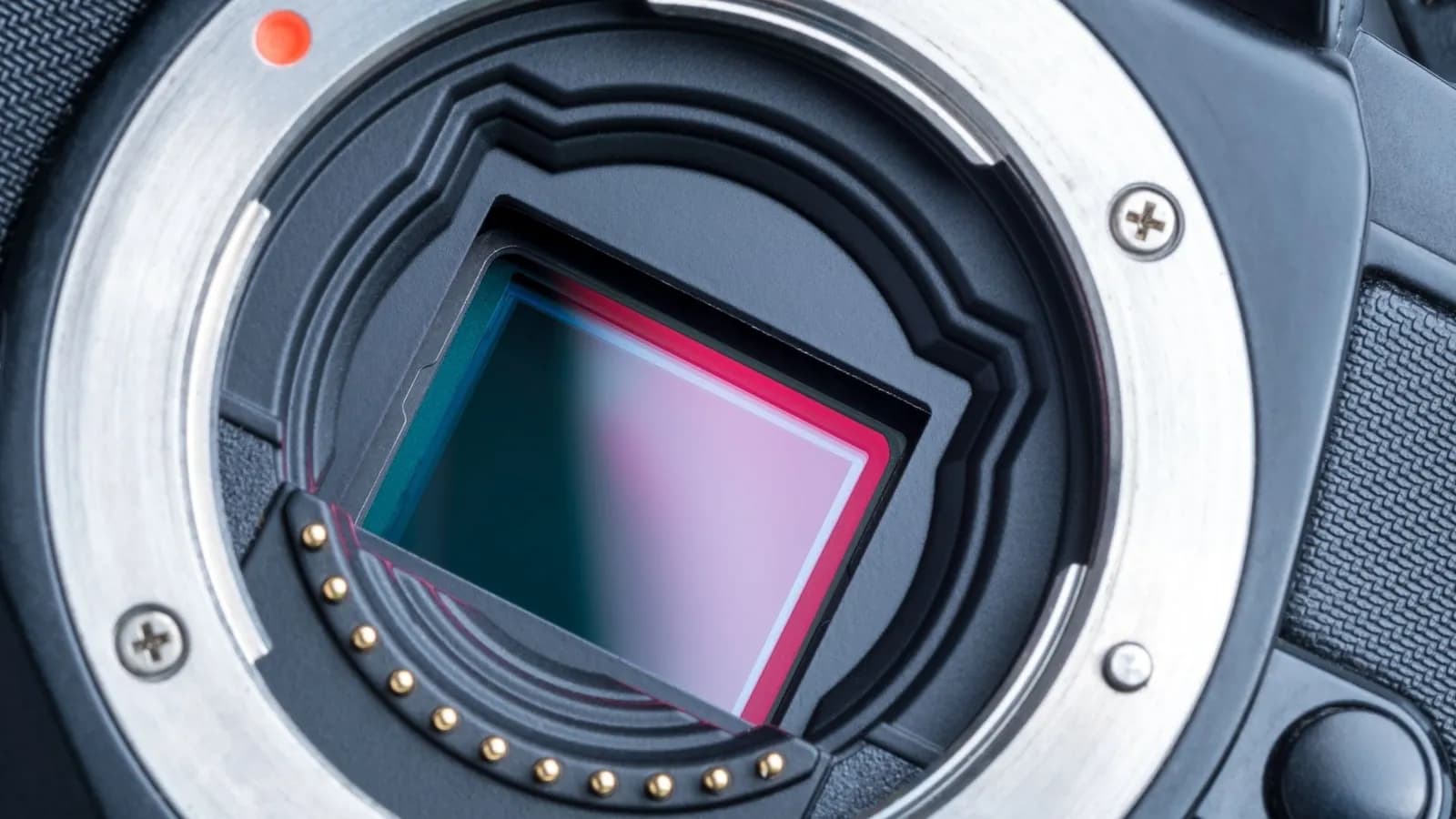
What Sensor Size Really Changes
Before comparing camera bodies, you need to understand why sensor size is the most structuring variable in digital photography.
A photosensitive sensor captures light. The larger its surface area, the wider each photosite can be, and the more photons it collects per unit of time. This surface-to-photosite ratio determines native sensitivity, dynamic range and noise levels at high ISO. Everything else—resolution, colour, autofocus—partly derives from this basic principle.
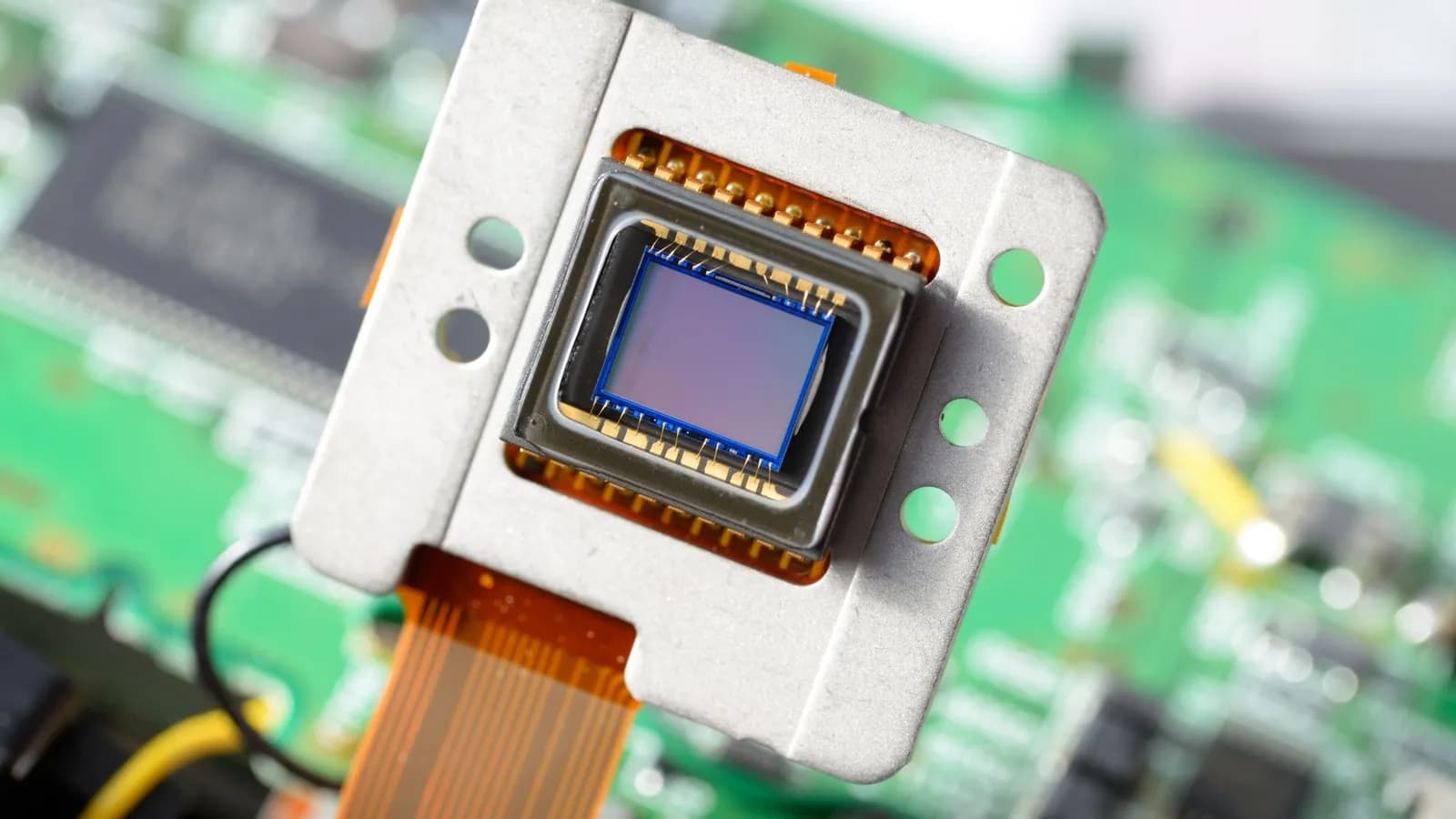
The surface area of a full-frame sensor is roughly 2.3 times larger than an APS-C Sony/Fujifilm/Nikon (and 2.6 times an APS-C Canon), and 3.8 times larger than a Micro Four Thirds sensor. This is not a detail: it is a physical ratio that translates directly into the objective measurements of DXOMark and Photons to Photos.
Image Quality: Noise, Dynamic Range and Depth of Field
Three objective parameters allow comparison of formats without subjectivity: the signal-to-noise ratio at high ISO, dynamic range and depth of field obtained at equivalent aperture.
Digital noise and ISO sensitivity
Photons to Photos measurements show that, at equivalent resolution, a full-frame sensor gains roughly 1 to 1.5 EV over APS-C and 2 to 2.5 EV over Micro Four Thirds in terms of read noise. In practice, full frame at ISO 6400 produces a noise level comparable to APS-C at ISO 3200 and Micro Four Thirds at ISO 1600. This is not an absolute rule: recent BSI sensors (Sony IMX) have considerably reduced the gap. Yet the physical advantage of full frame remains real and measurable.
In practice, this gap becomes perceptible from ISO 3200 on APS-C and ISO 1600 on Micro Four Thirds, according to DXOMark measurements on current bodies. Below these values, the difference is negligible on standard prints or screen display.
Dynamic range
Dynamic range measures the gap between recoverable highlights and usable shadows in a RAW file. Recent full-frame sensors typically display 14 to 15 EV at ISO 100 (Sony A7R V, Nikon Z8). The best current APS-C sensors reach 13 to 14 EV at ISO 100 (Fujifilm X-T50, Sony A6700). Micro Four Thirds sensors sit around 12 to 13 EV at ISO 100 (OM System OM-1 Mark II, Panasonic G9 II). The gap is roughly 1 EV between each format. In high-contrast landscapes, this extra EV can make a difference when recovering shadows in post-processing.
Depth of field and aperture equivalence
To obtain the same angle of view and the same depth of field across the three formats, the crop factor must be applied to both focal length AND aperture. A 50 mm f/1.4 on full frame equates to a 35 mm f/1.0 on APS-C (1.5x crop) or a 25 mm f/0.7 on Micro Four Thirds (2x crop). These lenses do not all exist, or are very expensive. Full frame therefore offers a structural advantage in background blur (bokeh) and subject separation at comparable lens budgets.
Weight and Bulk: The Complete System, Not Just the Body
Comparing the weight of a body alone makes no sense. What matters is the weight of the system: body, standard lens, fast lens, and bag.
A full-frame body without lens can weigh 650 to 900 g. A compact APS-C body is around 400 to 550 g. A Micro Four Thirds body drops to 350 to 500 g. Yet the lens often accounts for 60 to 70 % of the total system weight. A 70-200 mm f/2.8 on full frame exceeds 1 400 g. The Micro Four Thirds equivalent (35-100 mm f/2.8) weighs 360 g. The difference on the complete system is therefore far more marked than on the body alone.
| System | Body (g) | Versatile zoom (g) | Estimated total (g) |
|---|---|---|---|
| Full frame (e.g. Sony A7 IV + 24-105 f/4) | 659 | 663 | ~1 320 |
| APS-C (e.g. Fujifilm X-T50 + 18-55 f/2.8-4) | 438 | 310 | ~748 |
| Micro Four Thirds (e.g. OM-5 + 12-45 f/4) | 414 | 254 | ~668 |
For a travel or hiking photographer, the difference between 668 g and 1 320 g over a day’s walk is significant. I regularly photograph in Brittany in the rain and on alpine hikes: fatigue from carrying gear is a real factor that influences decisions to go out and the number of photos taken. This is not an aesthetic argument; it is a usage factor.
Choose your lens according to your usageLens choice weighs as heavily as the body in the weight/quality equation.Lens Ecosystem: Range, Price and Compatibility
The body is an entry point. The lens ecosystem determines what you will be able to do in five years.
Full frame benefits from the richest ecosystems: Sony FE, Canon RF, Nikon Z, Leica M. Sony FE offers more than 80 native lenses and hundreds of third-party adaptations. Canon RF provides very high-quality lenses but with a restrictive licensing policy that limits third-party manufacturers. Nikon Z is gaining strength with a now complete catalogue.
APS-C has mature ecosystems. Fujifilm X-Mount offers 35 native lenses covering all uses, with a strong optical identity (Fujinon). Sony E-Mount APS-C shares mounts with full-frame FE, a major advantage: all FE lenses can be used on a Sony APS-C body at full resolution.
Micro Four Thirds has the most mature ecosystem in proportion: more than 100 native lenses between Olympus/OM System and Panasonic Lumix, plus third-party manufacturers (Sigma, Voigtländer, Laowa, TTArtisan). Cross-compatibility between OM System and Panasonic bodies is total. This is a concrete advantage for users who change bodies without changing lenses.
Full frame
Sony FE / Canon RF / Nikon Z
- Widest ecosystem by number of lenses
- High entry price for native lenses
- Abundant third-party lenses on Sony FE
- Canon RF: restrictive third-party policy
APS-C
Fujifilm X / Sony E / Nikon Z DX
- Fujifilm X-Mount: 35 native lenses, complete range
- Sony E-Mount: full compatibility with FE lenses
- Compact, lightweight native lenses
- Nikon Z DX: still limited native range
Micro Four Thirds
OM System / Panasonic Lumix
- More than 100 native lenses across both brands
- Total cross-compatibility OM System / Panasonic
- Very compact lenses for the equivalent focal length
- Third-party manufacturers well represented (Sigma, Voigtländer)
Real Budget: Body, Lenses and Total System Cost
The price of a body represents only part of the total budget. The gap between formats widens on lenses.
An entry-level full-frame body starts around 1 500 euros (Sony A7C II, Nikon Z5 II). High-performing APS-C bodies sit between 800 and 1 800 euros (Fujifilm X-T50, Sony A6700). High-end Micro Four Thirds bodies remain under 1 500 euros (OM System OM-1 Mark II, Panasonic G9 II). The gap on the body alone is therefore moderate.
The gap widens on lenses. A native 85 mm f/1.4 on full frame costs between 1 200 and 2 500 euros. The Micro Four Thirds equivalent (45 mm f/1.2) is around 700 to 900 euros. On a complete kit of three lenses (wide-angle, standard, portrait), full frame can cost 2 to 3 times more than Micro Four Thirds for comparable performance under standard usage conditions.
Compare two bodies side by sideUse the comparator to evaluate the specs/price ratio between two specific models.Weather Sealing and Robustness: What Data Sheets Do Not Always Say
Weather sealing is a deal-breaker for photographers who work outdoors. Its presence or absence must weigh heavily in the purchase decision.
Weather sealing (gaskets on buttons, dials and mount) is not systematic, even on bodies over 1 000 euros. It is present on most high-end full-frame bodies (Sony A7 IV, Nikon Z6 III, Canon R6 Mark II). It is also present on mid-range APS-C bodies such as the Fujifilm X-T4 or Sony A6700. On Micro Four Thirds, OM System is particularly rigorous: the OM-5 and OM-1 Mark II feature certified IP53 weather sealing, which is rare at this size.
I regularly photograph in the rain in Brittany and in coastal spray. An unsealed body in these conditions is a real risk. Weather sealing does not guarantee immersion, but it protects against water splashes and condensation. Always check the data sheet before buying if you photograph outdoors.
Test OM System OM-3 Astro: robustness and astrophotographyAn example of a Micro Four Thirds body designed for extreme conditions.Autofocus and Burst: What Manufacturer Figures Hide
Burst rates announced by manufacturers are often measured under optimal conditions. Reality with uncompressed RAW is different.
Manufacturers announce burst speeds in JPEG or lossy compressed RAW. In uncompressed RAW, speeds sometimes drop by 30 to 50 % and the buffer fills faster. Always check independent measurements (DPReview, Imaging Resource) before relying on official figures.
On autofocus, the three formats have converged on on-sensor phase-detection systems (PDAF) with AI subject recognition. The difference between formats is today less marked than between generations of bodies. An OM System OM-1 Mark II on Micro Four Thirds has subject AF as capable as a Sony A7 IV on full frame on the majority of subjects. Sensor format is no longer the limiting factor for autofocus in 2026.
For sports and distant wildlife, Micro Four Thirds retains a practical advantage: the effective reach of long focal lengths. A 300 mm f/4 Pro OM System frames like a 600 mm f/4 on full frame, for a weight of 1 270 g versus more than 3 000 g for the full-frame equivalent. For this type of use, I rely on DPReview data and published field reports, not having practised professional sport in competition conditions.
Video: Does Sensor Format Really Influence Quality?
Video has become a major purchase criterion on hybrid bodies. Sensor format plays a role, but it is not the only one.
In video, full frame offers an advantage in high-ISO noise and depth of field, for the same physical reasons as in stills. Yet overheating has been a historic problem for compact full-frame bodies in prolonged 4K recording. Smaller APS-C and Micro Four Thirds bodies dissipate heat differently, with variable results depending on the model.
Video crop (additional cropping applied during recording) is an often underestimated factor. Some full-frame bodies apply a 1.5x to 1.7x crop in 4K, reducing the advantage of the large sensor area. Always check whether the body records 4K with full-sensor readout or with cropping.
I do not analyse cinema video from the field. On this subject I rely on DPReview measurements and Imaging Resource tests. Fujifilm APS-C bodies (X-H2S in particular) and recent Micro Four Thirds bodies (Panasonic G9 II, OM System OM-1 Mark II) offer highly competitive video profiles for hybrid photo/video production.
Which Format for Which Use: The Decision Table
Here is a usage-based synthesis to guide your choice without ambiguity.
| Use | Full frame | APS-C | Micro Four Thirds |
|---|---|---|---|
| Landscape / architecture | Optimal (dynamic range, resolution) | Very good | Good (slight weight advantage) |
| Portrait / fashion | Optimal (bokeh, skin rendering) | Very good | Correct (limited depth of field) |
| Travel / hiking | Heavy, bulky | Good compromise | Optimal (weight, compactness) |
| Sports / close wildlife | Very good (AF, noise) | Very good | Very good (recent AF) |
| Distant wildlife | Expensive (long lenses) | Good | Optimal (focal reach, weight) |
| Astrophotography | Optimal (noise, large sensor) | Very good | Good (long IBIS, dedicated bodies) |
| Hybrid video | Very good (if no crop) | Very good | Very good |
| Tight budget | Difficult (expensive lenses) | Good | Optimal (abundant used market) |
This table does not claim one format is superior to the others in absolute terms. It states that for each use, one format offers the best balance between image quality, weight, budget and lens availability. Choose your dominant use first, then your format.
Exceptions That Prove the Rule
Some bodies blur the boundaries between formats. You need to know them so you do not reason with overly rigid categories.
The Sony A7CR is a 61-megapixel full-frame body in a compact form factor. It weighs 514 g naked, less than some APS-C bodies. It proves full frame can be compact, but at the cost of a limited buffer and reduced ergonomics. It is not a universal body: it is a specialised tool for travel with high-resolution demands.
Conversely, the OM System OM-1 Mark II on Micro Four Thirds delivers autofocus performance, weather sealing and burst rate (120 fps electronic) that surpass many full-frame bodies. Its 20-megapixel sensor lags in resolution, yet its system performance is objectively superior to full-frame bodies costing twice as much on certain criteria.
The Fujifilm X100VI illustrates another exception: an APS-C fixed-lens camera with a 23 mm f/2 (35 mm equivalent) in a 521 g weather-sealed body. It is not versatile, but it represents the best quality/compactness/daily-use compromise for a street or travel photographer who accepts the fixed-focal-length constraint.
- 1
Sony A7CR
Full-frame 61 MP in compact format (514 g). Ideal for high-resolution travel, but limited buffer and reduced ergonomics.
- 2
OM System OM-1 Mark II
Micro Four Thirds with 120 fps electronic, advanced subject AF and IP53 weather sealing. Surpasses full-frame bodies on system performance.
- 3
Fujifilm X100VI
Compact APS-C with fixed 23 mm f/2 lens, 521 g, weather sealed. The best compromise for street and travel photography with accepted fixed-focal-length constraint.
- 4
Panasonic Lumix G97
Accessible Micro Four Thirds with 4K video and weather sealing. Solid entry point for hybrid photographers on a controlled budget.
Classic Mistakes to Avoid Before Buying
Most purchase regrets stem from decisions made on poor criteria. Here are the most common.
- 1
Choosing the format before the use
Sensor format is a consequence of need, not a starting point. Define your dominant use first (travel, portrait, sport, landscape), then choose the format that best answers it.
- 2
Comparing the body without the lenses
A 1 500 euro full-frame body with a 200 euro kit lens will produce inferior images to a 900 euro APS-C body with a quality native lens at 600 euros. Total system budget takes precedence over body budget.
- 3
Ignoring the weight of the complete system
Weigh the body with the lens you will use 80 % of the time. This figure is the only relevant one for assessing real portability.
- 4
Relying on manufacturer burst figures
Check measurements in uncompressed RAW with full buffer on DPReview or Imaging Resource. The gap with official figures can reach 50 %.
- 5
Neglecting the future ecosystem
A format with a limited or declining lens ecosystem constrains you to change the entire system if you evolve. Check ecosystem health before investing in lenses.
The best format is the one you carry. A Micro Four Thirds in your bag is worth more than a full-frame body left at home because it is too heavy.
Teddy, camera-duel.com
Verdict: Which Format to Choose According to Your Profile
Here is a clear-cut arbitration by buyer profile. No 'it depends' without follow-up.
Choose full frame if...
Portrait, studio, high-resolution landscape
- You mainly photograph in studio or portrait with need for pronounced bokeh
- You need 14+ EV of dynamic range for high-contrast landscapes
- Your total budget exceeds 3 000 euros body + lenses
- System weight is not a limiting factor for you
Choose APS-C if...
Versatility, travel, value for money
- You seek the best quality/weight/price compromise on versatile use
- You are drawn to Fujifilm’s identity (colour rendering, ergonomics)
- You want access to full-frame lenses (Sony E-Mount)
- Your total budget lies between 1 500 and 3 000 euros
Choose Micro Four Thirds if...
Travel, wildlife, controlled budget
- Weight and compactness are your absolute priorities
- You photograph distant wildlife or sports
- You want the most mature lens ecosystem for the budget
- Your total budget is under 1 500 euros or you buy used
Full frame is not the superior format by default. It is superior on precise criteria (dynamic range, high-ISO noise, bokeh) under precise conditions (low light, portrait, studio). On travel, weight, budget and versatility, APS-C and Micro Four Thirds outperform full frame. Choose the format that answers your dominant use, not the one that impresses on paper.
Tool to choose your cameraAnswer a few questions for a personalised recommendation.Frequently asked questions
Is full frame really better than APS-C?▾
On measurable precise criteria, yes: full frame offers roughly 1 to 1.5 EV extra dynamic range at ISO 100 and a similar advantage on high-sensitivity noise. But 'better' depends on use. For travel or long-focal-length sport, APS-C or Micro Four Thirds offer a better performance/weight/price ratio. Full frame is the best format for portrait, studio and high-resolution landscape with a high budget.
Is Micro Four Thirds a declining format?▾
No, contrary to what one sometimes reads. OM System (ex-Olympus) and Panasonic Lumix continue to release Micro Four Thirds bodies and lenses in 2026. The OM System OM-1 Mark II and Panasonic G9 II are competitive high-end bodies. The ecosystem counts more than 100 native lenses. The format is niche compared with full frame, but it is active and coherent.
Can full-frame lenses be used on an APS-C or Micro Four Thirds body?▾
Yes, with an adapter or natively depending on the mount. On Sony E-Mount, FE (full-frame) lenses work natively on APS-C bodies with full performance. On Micro Four Thirds, adapters allow use of lenses from many mounts, but autofocus may be degraded or absent depending on the lens. The crop factor applies: a 50 mm full-frame lens on Micro Four Thirds frames like a 100 mm.
Which format should you choose to start photography?▾
For a beginner, APS-C is the most rational choice. It offers sufficient image quality for all learning, a rich lens ecosystem, manageable weight and a controlled budget. Micro Four Thirds is a valid alternative if compactness is a priority. Entry-level full frame is often a bad idea for beginners: the remaining budget for lenses is insufficient, and the advantages of the format only appear with quality lenses.
Does the crop factor change image quality?▾
No, not directly. The crop factor crops the field of view; it does not degrade the sharpness or rendering of the lens. The quality difference between formats comes from sensor surface area (light collection, noise, dynamic range), not from the cropping itself. A 25 mm f/1.8 on Micro Four Thirds produces an image as sharp as a 50 mm f/1.8 on full frame over the equivalent area. The difference lies in depth of field and high-sensitivity noise.
Which format is best for video?▾
There is no single answer. Full frame offers an advantage in high-ISO noise and depth of field, but some bodies apply a 1.5x to 1.7x crop in 4K, reducing that advantage. Fujifilm APS-C bodies (X-H2S) and recent Micro Four Thirds bodies (Panasonic G9 II) offer highly competitive video profiles for hybrid production. Check whether the body records 4K with full-sensor readout or with cropping before buying.
Read next
Best value camera: the guide to choosing without mistakes in 2026
Six bodies, three sensor formats, one goal: find the camera that matches your use without paying for unnecessary specs. Structured comparison, clear verdicts.
Which Telephoto Lens to Choose for Sports and Wildlife: The Complete Guide
Minimum focal length, aperture, stabilisation and field weight: this guide examines every criterion and compares 16 verified telephoto lenses to help you decide.

Which Lens for Landscape Photography: Focal Lengths, Apertures and System Choices
Ultra-wide-angle or versatile zoom? Prime or zoom? This guide breaks down each parameter and helps you choose the right lens for your landscape practice, system by system.