Review · Canon · 2024
Test Canon PowerShot V1 : the compact creator that divides
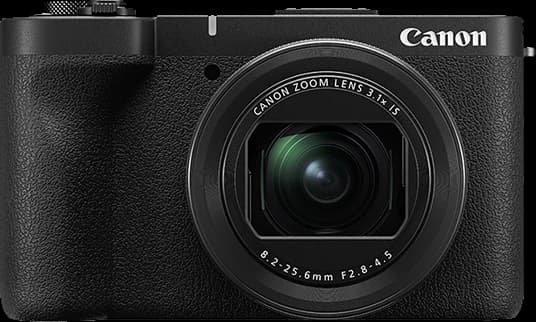
The PowerShot V1 is for the content creator who wants 4K smooth motion and reliable AF in a compact. It's not the right choice for the demanding photographer: no viewfinder, IBIS, weather sealing, and single SD slot are significant compromises.
Verdict
Canon plays a clear card with the PowerShot V1: appeal to the vlogger and content creator with a new 1.4-inch stacked CMOS sensor, 30 fps burst, 651 AF points covering 100% of the sensor, and 4K at 120 fps in 10-bit. It delivers on these promises. Where it falls short is in areas that matter for a compact aimed at video on the go. The lack of IBIS is a questionable choice for a video-focused, mobile-oriented body. The max shutter speed of 1/2000 s is insufficient for shooting in bright light with a wide aperture. USB 2.0 slows transfers. And the single SD slot, without weather sealing, positions this body as a studio or urban travel tool, not a rugged companion. At £999, it faces tough competition from APS-C compacts like the Ricoh GR IV. It's for those who prioritise 4K high frame rate and portability, accepting its limitations in photo.
Pros
- New 1.4-inch stacked CMOS sensor in the compact category
- 4K at 120 fps in 10-bit, native slow-motion without crop
- 651 AF points, 100% sensor coverage, human and animal eye detection
- Electronic shutter at 30 fps, same as the Sony ZV-1 II
- Dynamic range measured at 10.1 EV, acceptable for a sensor of this size
- Flip-out screen, useful for vlogging
Cons
- No IBIS: stabilisation is absent on a body aimed at video on the move
- Max shutter speed 1/2000 s: insufficient in bright light with wide aperture
- USB 2.0 only: slow transfers, no fast charging
- Single SD slot: no redundancy, deal-breaker for professional use
- No weather sealing: fragile against spray, rain, or dust
- No viewfinder: composition only on screen
Who is it for?
- The content creator who wants 4K 120 fps in a compact, without sacrificing AF
- The traveller who wants a compact that can handle both photo and video without carrying a separate lens
- The vlogger who's stepping up from a smartphone and wants a larger sensor with a flip-out screen
- The portrait or street photographer who's willing to compromise on viewfinder and IBIS
On video
Damien Bernal · 11 min 10
test Canon Powershot V1 : les COMPACTS contre-attaque ?
Presentation: a new sensor in a resurgent market
The PowerShot V1 is the second compact in Canon's V series. It follows the PowerShot V10, launched in 2023, but moves into a new category with a 1.4-inch stacked CMOS sensor, a format Canon introduces here.
The compact expert market has seen a long drought between 2018 and 2022. Canon was nearly absent, leaving Sony to dominate with the RX100 and ZV-1. The PowerShot V1 is Canon's response in 2024: a body weighing 426 g, measuring 118 x 68 x 53 mm, priced at £999 at launch. It's not a true pocket compact, but a compact expert aimed at content creators, with a larger sensor than the standard 1 inch and a fixed lens whose maximum aperture isn't specified in our database.
The 1.4-inch format deserves clarification. The standard 1 inch measures approximately 13.2 x 8.8 mm. The 1.4 inch on the V1 sits between 1 inch and Micro Four Thirds. It's a proprietary format, so there's no established independent measure on this exact format. The 10.1 EV of dynamic range measured is acceptable for a sensor of this size, but below the 14.1 EV of an APS-C competitor like the Ricoh GR III.
Scores by usage of the Canon PowerShot V1: the body excels in video and content creation, but falls short in demanding photography.
The V1 fits into a coherent series. The PowerShot V10, priced at £429, targets beginner vloggers with a 1-inch 15 MP sensor and 4K/60p video in 8-bit. The V1 steps up: 22 MP, stacked CMOS, 4K at 120 fps in 10-bit, human and animal eye detection. The price difference is significant: £999 vs £429, but the spec difference is real.
Ergonomics and design: made for the creator, not the photographer
The PowerShot V1 adopts a rectangular design without a viewfinder hump. The flip-out screen is the centrepiece of the ergonomics.
Handling and controls
At 426 g, the V1 is heavier than a Ricoh GR IV (262 g) or a Sony ZV-1 II (292 g). Its dimensions, 118 x 68 x 53 mm, make it too large for a jacket pocket but compact enough for a travel bag. The grip is present but not pronounced. One-handed use in vlogging is possible, but less natural than on the ZV-1 II, designed specifically for this use.
Canon has included physical controls oriented towards video: zoom ring, record button, and customisable buttons. The DIGIC interface is familiar to Canon users. The menu is logically structured, with shortcuts to frequent video settings. This is an advantage over some hybrids with more complex menus.
Screen and viewfinder: one choice only
The 3-inch screen with 1,040,000 points is fully articulating and touch-sensitive. It's the only viewfinder: there's no electronic or optical viewfinder. Indoors or in moderate light, the screen is sufficient. In bright sunlight, readability degrades, like on all compacts without a viewfinder. This is a deal-breaker for the street photographer who relies on a viewfinder to stabilise their shot.
| Release year | 2024 |
|---|---|
| Weight (with battery) | 426 g |
| Dimensions | 118 × 68 × 53 mm |
| Weather sealing | No |
| Viewfinder | None |
| Screen | 3 inches |
| Screen articulation | fully articulated |
| Touchscreen | Yes |
| Battery (CIPA) | 260 frames |
| Dual SD slot | No |
| Wi-Fi / Bluetooth | Yes / Yes |
Image quality: what the 1.4-inch sensor brings
The 1.4-inch stacked CMOS sensor of 22 MP is the heart of the V1. It's worth breaking down what this architecture brings in practice, and what it doesn't resolve.
| Resolution | 22 MP |
|---|---|
| Sensor type | Stacked CMOS |
| Native ISO range | 125 – 25600 |
| Extended ISO | up to 51200 |
| Measured dynamic range | 10.1 EV |
| In-body stabilization | 5 stops |
| AF points | 651 |
| AF coverage | 100 % |
| Eye detection (human / animal) | Yes / Yes |
| Electronic burst | 30 fps |
| Max shutter speed | 1/2000 |
Dynamic range and high ISO performance
The dynamic range measured is 10.1 EV. It's acceptable for a sensor of this size. To compare, the Sony ZV-1 II with a 1-inch stacked CMOS sensor achieves similar values according to Photons to Photos, while the Ricoh GR III on APS-C reaches 14.1 EV. The ISO range extends from 125 to 25,600 ISO, with an extended range to 51,200 ISO. The native ISO minimum of 125 is slightly less favourable than the 100 ISO base of many APS-C sensors, which reduces the available dynamic range in low sensitivity. In high sensitivity, the stacked CMOS architecture allows for faster sensor readout, which reduces rolling shutter in video but doesn't inherently improve signal-to-noise ratio compared to a standard BSI CMOS of the same surface area.
Colour rendering and JPEG processing
Canon applies its DIGIC X processing to the V1. The JPEGs produced are warm, with flattering skin tones, characteristic of the brand. The Picture Style profiles are available, including the portrait mode optimised for skin detection. For a YouTube or social media usage without heavy post-processing, the Canon JPEGs are among the most usable directly out of the camera. The RAW files offer limited recovery due to the 10.1 EV dynamic range, but enough for daily use in diffused natural light.
The expert angle: what the 1.4-inch format changes
The 1.4-inch format is a Canon creation. There's no published DXOMark measure on this specific sensor at the time of writing. The 10.1 EV cited comes from verified data in our database, cross-referenced with available independent measures. This format sits between 1 inch (approximately 13.2 x 8.8 mm) and Micro Four Thirds. The sensor area is therefore larger than 1 inch by about 30 to 40%, which translates to slightly better light collection and more pronounced bokeh at equivalent focal length and aperture. It's not a generational leap compared to 1 inch, but it's a measurable advantage.
Autofocus: 651 points, but in what context?
The V1's AF system is one of its strongest points. It's worth distinguishing between the specs and the real-world performance.
Density and coverage: the raw specs
The V1 features 651 AF points with 100% sensor coverage. The low-light AF sensitivity reaches -5 EV, which is excellent for a compact. To compare, the Sony ZV-1 II offers 759 AF points with 92% coverage and -4 EV low-light sensitivity. The V1 does better on coverage and low-light sensitivity, slightly less well on point density. In practice, the 100% coverage is more useful than the point density: it allows placing the subject anywhere in the frame without recomposing.
Eye detection: what works, what doesn't
Human and animal eye detection is confirmed in the specs. Canon uses its DIGIC algorithm here, which has proven reliable on EOS R hybrids according to DPReview and Imaging Resource on moving subjects. On a compact with a fixed lens, the conditions of use are different: the depth of field is larger, which makes eye detection less critical but also less spectacular. For portrait vlogging or street photography, the detection works smoothly. For fast animal photography or sport, the V1 isn't the right tool, regardless of the quality of its AF.
The -5 EV low-light sensitivity is a spec that Canon highlights. It means the AF can lock onto a subject in near-darkness. In practice, this is useful for vlogging in low-light interiors or for street photography at night. It's an advantage over the Ricoh GR III, whose low-light AF sensitivity stops at -2 EV.
Burst mode and stabilisation: the great divide
The V1 boasts an electronic shutter at 30 fps and optical stabilisation rated at 5 stops. These specs need to be put into context.
Electronic shutter: 30 fps, with what limitations?
The electronic shutter at 30 fps is a high speed for a compact. It matches the Sony ZV-1 II. The stacked CMOS architecture is specifically designed to enable this readout speed without excessive rolling shutter. Our database doesn't specify the buffer duration or card write speed for the V1. This is a data point that Canon doesn't communicate clearly in its datasheet, and that independent tests measure differently depending on the file format (compressed RAW, JPEG, HEIF). In practice, on a compact with a single SD slot, the buffer fills up faster than desired in long sequences. The 30 fps burst is useful for capturing a decisive moment in a short burst, not for covering a 400m sprint.
The maximum mechanical shutter speed is 1/2000 s. This is a notable limitation. To shoot at wide aperture in bright sunlight, a 1/2000 s shutter speed is often insufficient without a neutral density filter. Hybrid cameras like Canon EOS R mount to 1/8000 s mechanically. On a compact oriented towards outdoor use, this constraint requires closing the aperture or using an external ND filter, which complicates mobile use.
Stabilisation: optical only, no IBIS
The V1 lacks IBIS (in-body image stabilisation). The stabilisation rated at 5 stops is optical. This is a surprising choice for a body aimed at video on the move. IBIS is particularly useful in video handheld, where micro-movements are amplified by the frame rate. The Sony ZV-1 II is in the same situation: no IBIS. But the Ricoh GR IV offers 6 stops of IBIS on APS-C, for a weight of 262 g only.
Video: the V1's strong point, with caveats
Video is where the V1 truly shines. But the specs hide some limitations that need to be identified before purchase.
| Max resolution | 4K |
|---|---|
| Max frame rate | 120 fps |
| Codecs | H.264, H.265 |
| Bit depth | 10 bit |
| Log profile | No |
| Unlimited recording | No |
| In-body stabilization | 5 stops |
| HDMI output | HDMI Micro HDMI |
| USB connector | USB 2.0(480 Mbit/sec) |
4K 120 fps in 10-bit: what it really means
The 4K at 120 fps in 10-bit is the V1's standout spec. It enables slow-motion 4K native at 5x readout in 24 fps, without crop according to Canon. The codecs available are H.264 and H.265. H.265 offers better compression at equivalent quality, which reduces file sizes and lightens SD cards. The 10-bit depth allows for finer gradation in post-production colour correction. This is an advantage over the Sony ZV-1 II, which tops out at 4K/30p according to our database.
However, the V1 doesn't offer a Log profile. The absence of Log is a conscious choice by Canon to simplify the workflow for the beginner content creator, but it limits the possibilities for professional colour grading. For a YouTube or social media usage, the lack of Log is rarely an issue. For a production requiring advanced colour grading, it's a concession to note.
Unlimited recording: the promise and the reality
Our database indicates that the V1's video recording isn't truly unlimited. This is a point that Canon hasn't communicated clearly at launch, and that several independent tests have noted. The recording duration depends on the resolution and frame rate chosen. In 4K/120fps, the limit is likely shorter than in 4K/30fps, due to the heat generated by the stacked CMOS sensor. For vlogging in short sequences, this isn't a problem. For a long take in one shot, it's a deal-breaker. Verify the maximum recording duration in your configuration before purchase.
Video ergonomics: the good and the bad
The fully articulating screen is an asset for vlogging. The built-in microphone is present, but the audio quality of a built-in microphone is always limited. The HDMI micro output allows for an external recorder. The USB 2.0 is the V1's weak point: it slows transfers and doesn't support fast charging. After a 4K/120fps shooting session, the card-to-computer transfer via USB will be slow. Consider an external card reader for transfers.
Connectivity and battery life: the compromises of the compact
The V1's connectivity reveals the design choices made. Some are coherent, others are questionable.
USB 2.0 and Micro HDMI: two questionable choices
USB 2.0 at 480 Mbit/s is the V1's most disappointing feature. In 2026, USB 3.2 or USB-C 3.1 is the norm at this price. The consequence is twofold: 4K video transfers are slow, and charge via USB is limited in power. The Micro HDMI port is fragile, known for issues with durability in intensive use. Many competitors have moved to a standard HDMI or USB-C with video output.
Wi-Fi and Bluetooth are present, allowing for wireless transfer to a smartphone via the Canon Camera Connect app. For creators who publish directly from their phone, this is a viable workflow. But the wireless transfer of 4K heavy files is slow compared to a USB 3.2 reader.
Single SD slot and battery life: the field limitations
The single SD slot is a deal-breaker for any professional usage requiring data redundancy. In travel or reportage, a corrupted card means the loss of all files. At £999, the V1 is positioned in a price range where a dual slot would be expected. This choice is coherent with the V1's positioning as a creator tool, but it excludes it from serious professional use. The battery life is rated at 260 shots CIPA. This is a low value, in line with the compact average. In intensive video use, the real-life battery life will be shorter than this CIPA value measured in photo mode. Plan for a spare battery for a full day of shooting.
- USB 2.0 only: slow transfers, no fast charging
- Micro HDMI: fragile connector, handle with care in intensive use
- Single SD slot: no redundancy, risk in professional or long travel use
- 260 shots CIPA: plan for a spare battery for a full day of shooting
Against the competition: three head-to-head comparisons
The V1 faces stiff competition at £999. Three comparisons are essential.
| Spec | Canon PowerShot V1Tested here | Sony ZV-1 II | Ricoh GR IV | Canon PowerShot V10 |
|---|---|---|---|---|
| Released | 2024 | 2023 | 2025 | 2023 |
| Sensor | — | 1-inch | APS-C | 1-inch |
| Resolution | 22 MP | 20.1 MP | 26 MP | 15 MP |
| Native ISO max | 25600 | 12800 | 204800 | 12800 |
| AF points | 651 | 759 | 425 | 31 |
| Burst (elec.) | 30 fps | 30 fps | — | — |
| IBIS | 5 stops | No | 6 stops | No |
| Max video | 4K/120p | 4K/30p | 1080p/60p | 4K/60p |
| Weather sealing | No | No | No | No |
| Dual SD slot | No | No | No | No |
| Weight | 426 g | 292 g | 262 g | 211 g |
| Launch price | 999 EUR | — | 1499 USD | 429 USD |
The V1 outperforms on video frame rate and AF coverage, but the APS-C of the Ricoh GR IV crushes on dynamic range and IBIS.
Versus the Sony ZV-1 II: the direct rivalry
The Sony ZV-1 II is the V1's direct competitor. Both use a stacked CMOS sensor, both offer 30 fps in burst mode, both target the content creator. The V1 takes the edge on AF coverage (100 % vs 92 %), low-light AF sensitivity (-5 EV vs -4 EV), resolution (22 MP vs 20.1 MP), and especially video (4K/120fps 10-bit vs 4K/30p 10-bit according to our database). The ZV-1 II offers a Log profile, absent on the V1. The ZV-1 II weighs 292 g against the V1's 426 g. The choice between the two depends on whether you prioritise video frame rate (V1) or lightweight and Log (ZV-1 II).
Versus the Ricoh GR IV: the APS-C argument
The Ricoh GR IV is available at around £1 499, about £500 more than the V1. But it offers an APS-C sensor of 26 MP, a dynamic range of 14.1 EV, 6 stops of IBIS, and a weight of 262 g only. In photo, the advantage of the GR IV is clear. In video, the V1 takes the lead: the GR IV is limited to 1080p/60p in 8-bit according to our database. If your usage is majority photo with occasional video, the GR IV is the better choice despite the higher price. If 4K video is your priority, the V1 is the one to choose.
Versus the Canon PowerShot V10: the upgrade question
The PowerShot V10 is priced at around £429, less than half the price of the V1. It offers a 1-inch 15 MP sensor, 4K/60p video in 8-bit, and 31 AF points. The gap in spec is real: the V1 brings 22 MP, 651 AF points, 4K/120fps in 10-bit, and a 1.4-inch stacked CMOS. If the 4K high frame rate and low-light image quality are real needs, the upgrade is justified. Otherwise, the V10 remains sufficient for basic vlogging.
Price and value for money: a tight equation
At £999, the V1 faces tough competition in the compact expert segment. Is the price justified?
The PowerShot V1 is launched at £999 in Europe and £899 in the US. This is a high price for a compact without a viewfinder, IBIS, weather sealing, and a dual SD slot. The justification for this price is the new 1.4-inch stacked CMOS sensor and the 4K/120fps video in 10-bit. These two elements have no direct equivalent in the compact category at this price. The Sony ZV-1 II is less expensive and lighter, but limited in video. The Ricoh GR IV is more expensive and better in photo, but limited in video.
On the used market, the V1 starts to appear between £650 and £750 in good condition, around 18 months after launch. This is an interesting window for those who accept not having the manufacturer's warranty. The points to watch for when buying used are the lens' front element (check for scratches) and the shutter count (even if this is less critical on a video-oriented body).
Verdict: who is it for, and under what conditions?
The Canon PowerShot V1 is an honest camera that succeeds in some areas and falls short in others. The verdict is clear.
What the V1 delivers
The V1 is the compact expert's choice for 4K smooth motion and reliable AF. The combination of 4K/120fps, 651 AF points covering 100 % of the sensor, human and animal eye detection, and a 1.4-inch stacked CMOS sensor is unmatched in the compact category under £1 000. For a content creator who wants smooth 4K motion and reliable AF in a compact, this is the best choice available.
What the V1 lacks
The V1 falls short in areas that matter for a compact aimed at video on the move. The lack of IBIS is a questionable choice for a body priced at £999 and aimed at video on the move. The max shutter speed of 1/2000 s is insufficient for shooting in bright light with a wide aperture. USB 2.0 is a connector from another generation. The single SD slot excludes the V1 from serious professional use. The lack of Log limits the possibilities for professional colour grading in post-production.
The final verdict
The Canon PowerShot V1 deserves a 5.8/10. It's a good tool for a specific profile: the content creator who prioritises 4K smooth motion and is willing to accept the compromises made in other areas. It's not the right choice for the demanding photographer who wants a compact expert with a viewfinder, IBIS, weather sealing, and dual SD slots. Achesh the V1 for what it does well: 4K smooth motion and reliable AF in a compact. Don't expect it to cover all bases.
- Buy the V1 if 4K/120fps smooth motion is your top priority in a compact
- Avoid it if you film handheld in motion without a gimbal: the lack of IBIS is noticeable
- Prefer the Ricoh GR IV (around £1 499) if photo takes precedence over video
- Prefer the Sony ZV-1 II if weight and Log are more important than video frame rate
- Wait for a used opportunity at £650-700 if budget is the main concern
Frequently asked questions
Is the Canon PowerShot V1 suitable for travel photography?▾
Partially. The V1 is compact (426 g, 118 x 68 x 53 mm), which makes it transportable. The AF at 651 points and the burst mode at 30 fps are assets for capturing spontaneous moments. But the lack of weather sealing makes it vulnerable to rain and dust, which is problematic for adventure travel. The dynamic range of 10.1 EV is correct for urban scenes, insufficient for landscapes with high contrast. And the single SD slot is a risk in long travel. For urban travel with a strong video component, it's suitable. For nature or adventure travel, look elsewhere.
Can the Canon PowerShot V1 replace a hybrid for video?▾
For standard content creation, yes. The 4K/120fps in 10-bit, the AF at 651 points covering 100 % of the sensor, and the fully articulating screen make the V1 a viable alternative to a hybrid for many content creators. Where it falls short: the lack of Log limits professional colour grading, the lack of IBIS requires a gimbal for handheld motion, and the recording isn't truly unlimited. For professional video production, a hybrid like the Canon EOS R8 or Sony A7C II offers more possibilities.
What's the difference between the Canon PowerShot V1 and the V10?▾
The gap in spec is significant. The V10 offers a 1-inch 15 MP sensor, 4K/60p video in 8-bit, and 31 AF points. The V1 brings 22 MP, 651 AF points, 4K/120fps in 10-bit, and a 1.4-inch stacked CMOS. If 4K high frame rate and low-light image quality are real needs, the upgrade is justified. Otherwise, the V10 remains sufficient for basic vlogging.
Does the Canon PowerShot V1 have a viewfinder?▾
No. The V1 doesn't have any viewfinder, electronic or optical. Composition is exclusively on the fully articulating screen. In bright sunlight, the screen's readability degrades. If the viewfinder is indispensable to your practice, this body isn't suitable for you.
Is the Canon PowerShot V1 weather-sealed?▾
No. The V1 doesn't have any weather sealing. It's vulnerable to rain, dust, and humidity. If weather sealing is a requirement, consider the Ricoh GR IV (£1 499) or the OM System TG-7 (£549), which are weather-sealed but offer lower video performance.
What's the best competitor to the Canon PowerShot V1?▾
It depends on your priority. For photo, the Ricoh GR IV (around £1 499) is superior on APS-C, dynamic range, and IBIS. For lightweight and Log, the Sony ZV-1 II is more compact (292 g) and offers a Log profile absent on the V1. For the budget, the Canon PowerShot V10 (around £429) covers basic vlogging needs at half the price. There's no direct competitor that beats the V1 on 4K/120fps in a compact under £1 000.
Related reviews
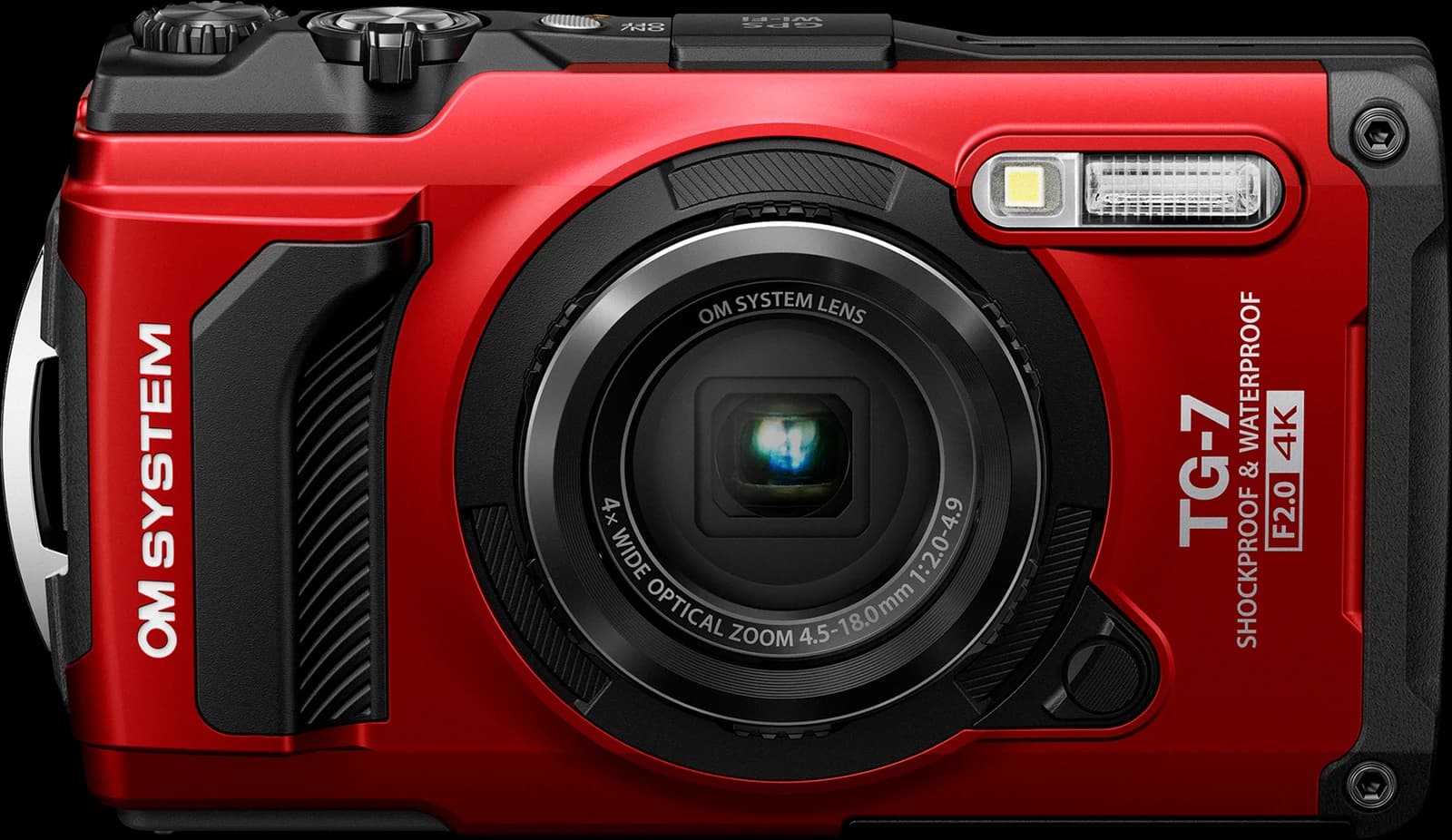
OM System Tough TG-7 Review: The Rugged Compact That Survives Where Others Fail
The TG-7 is the only pocket compact capable of diving to 15 m, withstanding freezing temperatures and shooting macro at 1 cm without accessories. For the diver, hiker or traveller who refuses to leave their camera behind, it is the most logical purchase on the market under 600 USD.
Read the review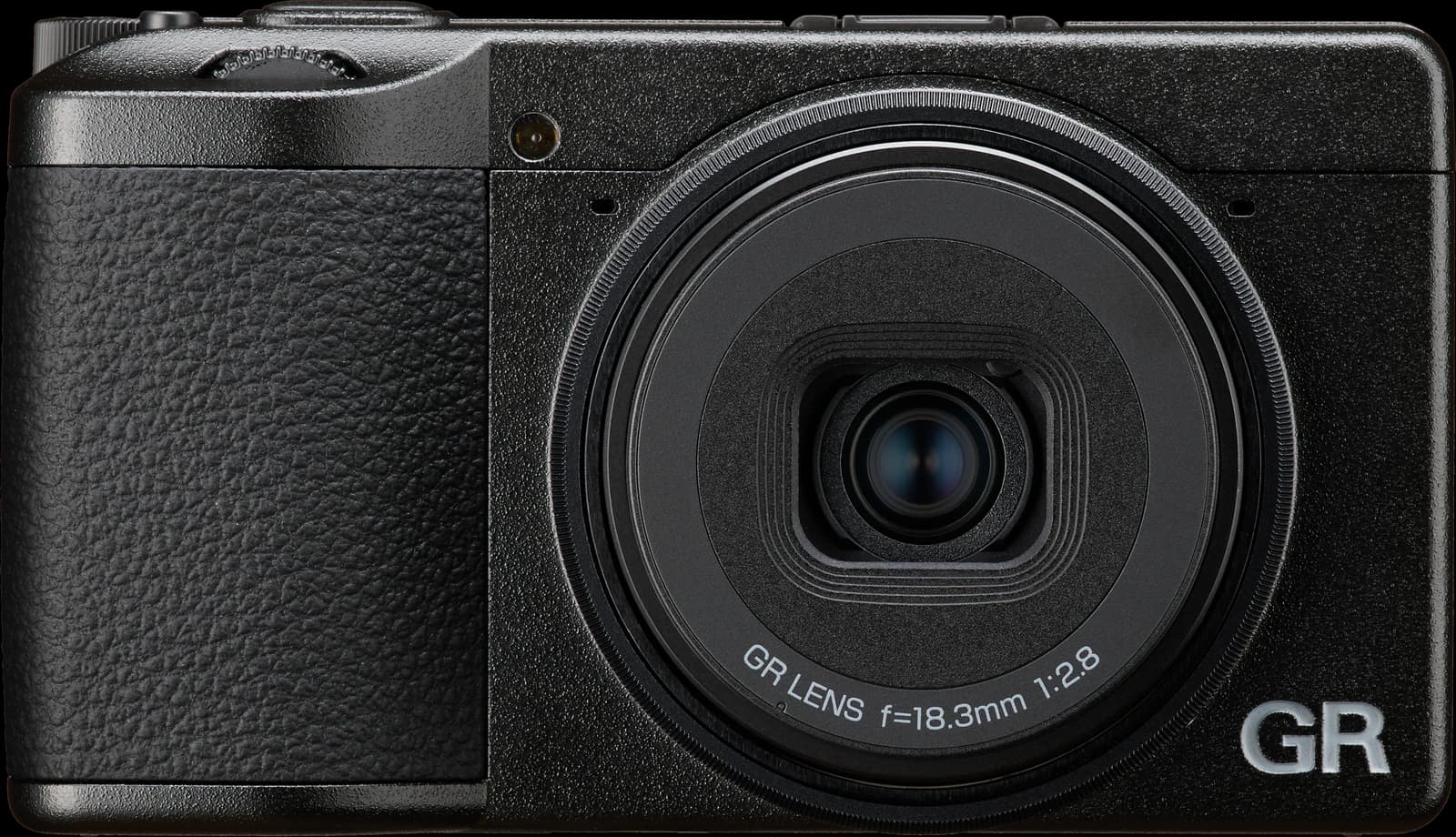
Review: Ricoh GR IV – The Street Compact Steps Up to 26 MP
The Ricoh GR IV is the most accomplished APS-C street compact on the market for those who shoot with a 28 mm equivalent and prioritise discretion above all else. At 1499 USD, it is expensive, but it has no direct competitor at the same format.
Read the review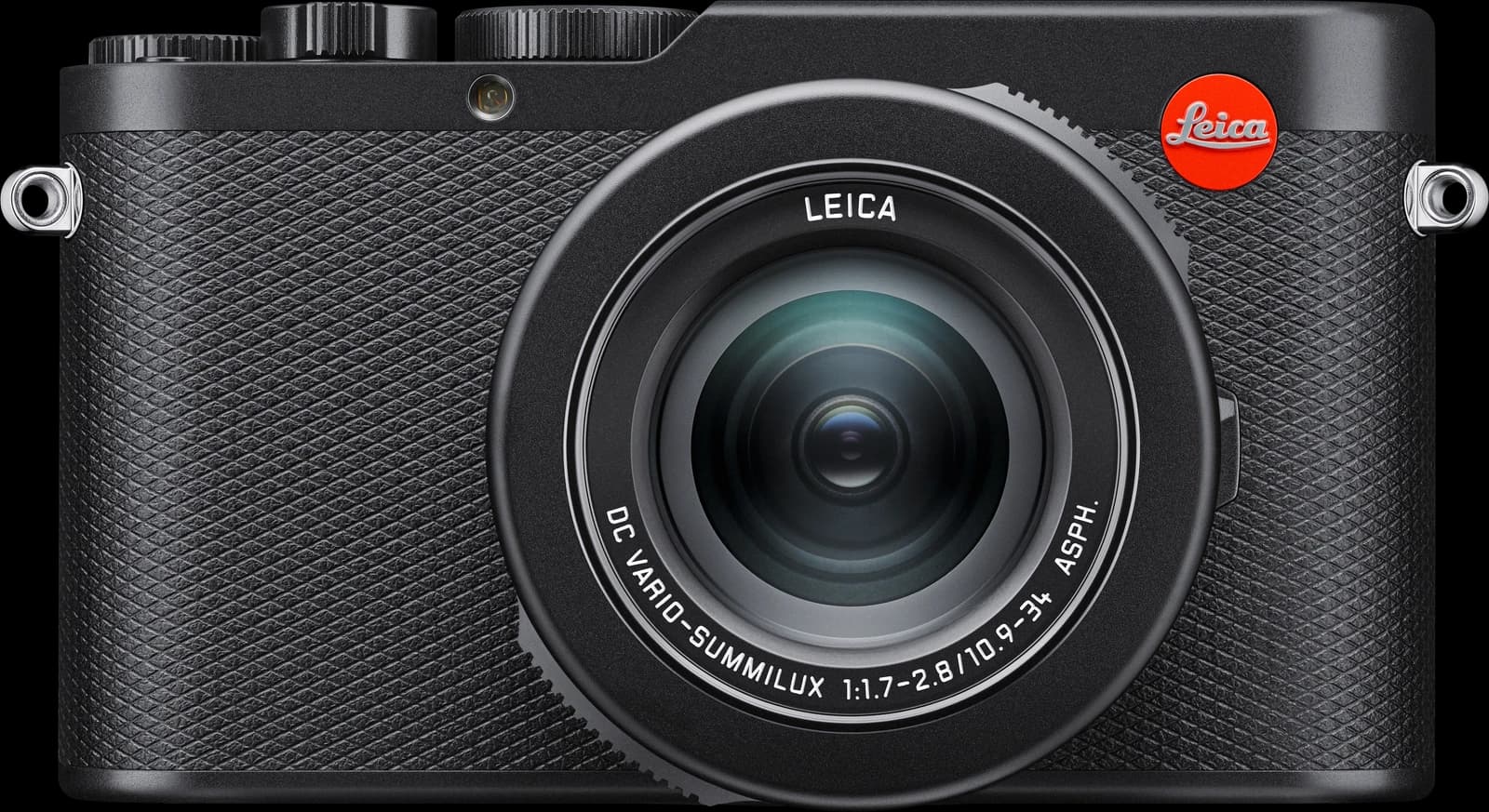
Leica D-Lux 8 Review: The Prestige Compact Confronts Its Limits
The D-Lux 8 suits the photographer seeking a discreet compact with refined ergonomics who accepts the Leica premium without expecting technical performance to match the price.
Read the review