Review · Leica · 2024
Leica D-Lux 8 Review: The Prestige Compact Confronts Its Limits
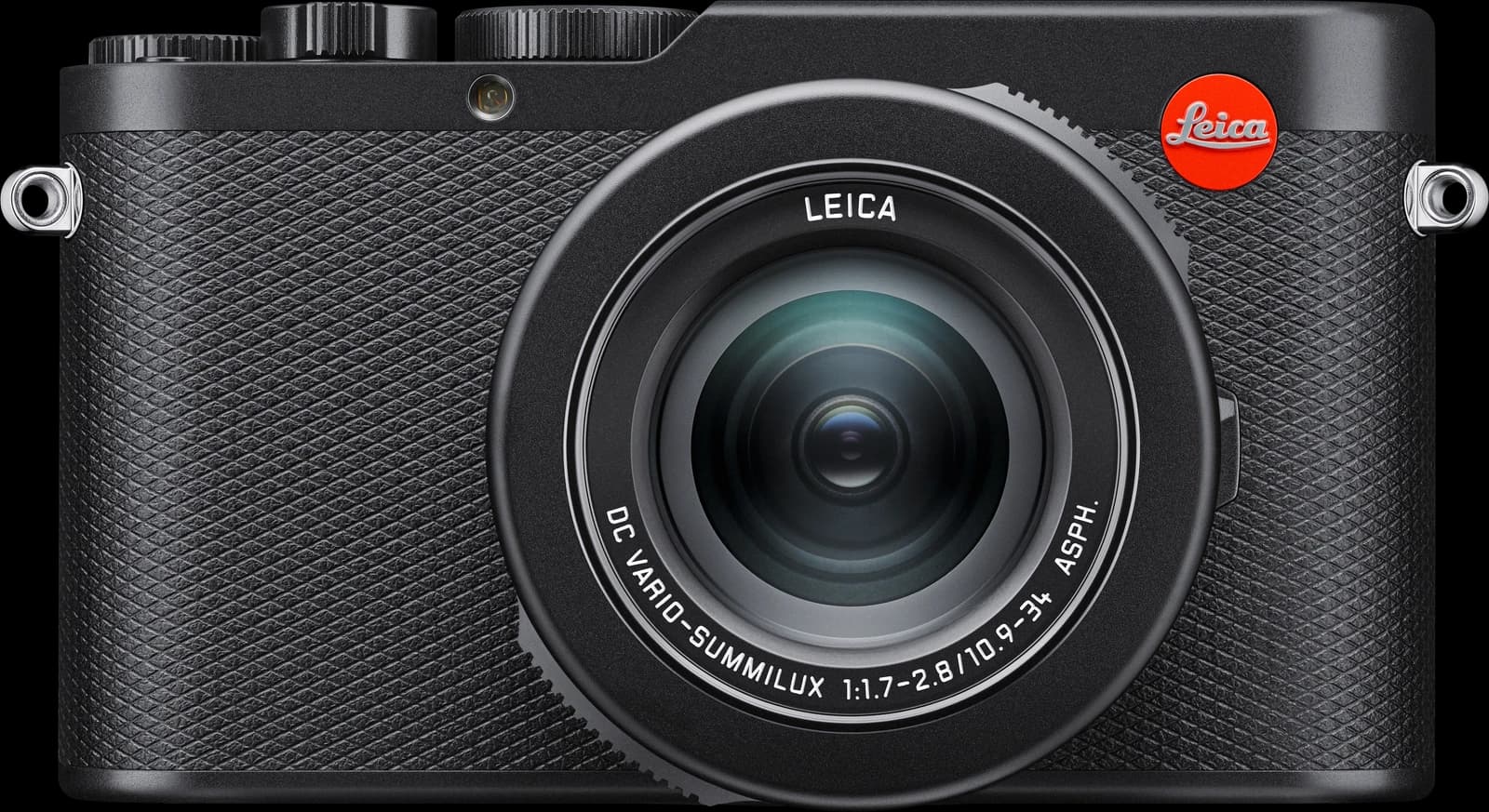
The D-Lux 8 suits the photographer seeking a discreet compact with refined ergonomics who accepts the Leica premium without expecting technical performance to match the price.
Verdict
At $1,595, the Leica D-Lux 8 offers a 17 MP MFT sensor without IBIS, weather-sealing, video Log or dual SD slots. Against the Canon PowerShot V1 at $999 with a stacked CMOS sensor, 30 fps electronic burst, 5 stops of IBIS and 4K/120p 10-bit video, the D-Lux 8 falls short technically. It is justified only by its design, build, analogue ergonomics and Leica brand appeal. These are real factors, yet they do not warrant a $596 premium for a photographer who prioritises image performance. The used market is particularly relevant here: a D-Lux 7 can be found between $700 and $900 and shares the same optics and sensor. The rational buyer must weigh this differential with clarity.
Pros
- Impeccable build and analogue ergonomics for a compact
- Vario-Summilux f/1.7-2.8 lens bright across the entire focal range
- Electronic burst 11 fps with continuous AF, usable for street and reportage
- OLED EVF 2,360,000 dots with 0.74x magnification, rare in this class
- Touchscreen 3-inch at 1,843,200 dots, excellent legibility
- Battery life 390 shots CIPA, adequate for a travel compact
Cons
- Complete absence of IBIS: deal-breaker in low light with the long end
- No weather-sealing on a $1,595 travel compact
- Limited video: 8-bit H.264, no Log, no unlimited recording
- Single SD card slot: no redundancy possible
- 49 AF points only, no animal AF
- 17 MP MFT sensor with no notable advance over the D-Lux 7
Who is it for?
- The street and travel photographer who values discretion, design and analogue ergonomics over raw performance
- The owner of a Leica M or Q system wanting a second compact body within the same brand ecosystem
- The photographer who mainly shoots in favourable light and does not need IBIS or advanced video
- The collector or enthusiast of fine objects willing to pay the Leica premium knowingly
On video
PetaPixel · 12 min 56
Leica D-Lux 8 Review: Hello Again, Old Friend!
Presentation: A Prestige Compact on an Ageing Technical Base
The D-Lux 8 arrives in 2026 as the direct successor to the D-Lux 7. It retains the same formula: a Micro Four Thirds sensor dressed in premium finish and a bright Leica-branded lens.
The Leica D-Lux 8 belongs to a lineage of expert MFT compacts that Leica has offered for several generations. Its kinship with the Panasonic LX100 II is well documented: the same 17 MP MFT sensor measuring 17.3 x 13 mm, the same core architecture. Leica adds its colour rendering, interface, 24-75 mm equivalent Vario-Summilux f/1.7-2.8 lens and metal finish that justifies part of the premium. The launch price is set at $1,595, placing it in a segment where technical competition is fierce.
Usage scores for the Leica D-Lux 8: strengths in street and travel, structural weaknesses in video and sport.
The central question is straightforward: what has Leica changed compared with the D-Lux 7? The honest answer is very little on the technical side. The sensor is identical. The lens is identical. Ergonomics have been slightly refined, the interface updated and connectivity modernised with a USB-C 3.1 Gen 1 port. This is a generational refresh, not a redesign. For an owner of a D-Lux 7, upgrading is not justified. For a first-time buyer entering the Leica compact world, the D-Lux 8 is the most accessible model in the range, yet at $1,595 the word "accessible" needs qualification.
| Sensor | MFT |
|---|---|
| Sensor size | 17.3 × 13 mm |
| Resolution | 17 MP |
| Sensor type | CMOS |
| Native ISO range | 100 – 25000 |
| Extended ISO | up to 25000 |
| In-body stabilization | No |
| AF points | 49 |
| Eye detection (human / animal) | Yes / No |
| Mechanical burst | 7 fps |
| Electronic burst | 11 fps |
| Max shutter speed | 1/16000 |
Ergonomics and Design: The Undisputed Strength
On this ground the D-Lux 8 does not disappoint. Handling, material quality and the logic of the physical controls meet expectations for the price.
Build and Handling
The body weighs 397 g and measures 130 x 69 x 62 mm. It is heavier and bulkier than a Ricoh GR IV (262 g) or a Sony ZV-1F (256 g), yet the difference is justified by the metal construction and integrated zoom lens. In the hand the D-Lux 8 feels dense and solid. The manual control dials (aperture on the lens ring, shutter speed on the top dial) give direct access to exposure settings without menus. This analogue philosophy appeals to photographers accustomed to dedicated controls.
Phototrend rightly noted that the D-Lux 8 is "not that compact". At 130 mm wide it exceeds the dimensions of a Ricoh GR IV (109 mm) significantly. It will not fit in a standard jacket pocket. It is compact in the commercial sense, not in everyday portability. This point must be clear before purchase.
Viewfinder and Screen
The OLED viewfinder offers 2,360,000 dots with 0.74x magnification. This is a serious specification for a compact: most cameras in this class either lack a viewfinder or provide lower-quality electronic ones. The 0.74x magnification matches entry-level mirrorless cameras. The rear screen measures 3 inches at 1,843,200 dots. It is touch-sensitive, aiding AF point selection. However, it is fixed: no articulation or tilt. For low or high-angle shooting this is a concrete limitation.
Image Quality: Examining the MFT Sensor
The 17 MP MFT sensor is the centrepiece of the D-Lux 8. It determines dynamic range, high-ISO behaviour and final resolution. The figures are known, as are the limits.
Resolution and Dynamic Range
The 17 MP CMOS sensor measuring 17.3 x 13 mm produces files that are perfectly usable up to A3 prints. Pixel density remains reasonable, helping to control noise at high sensitivities. No DXOMark data exists specifically for the D-Lux 8 in our verified database. Dynamic-range figures are therefore not reported here. However, the Panasonic LX100 II, which shares the same sensor, has been independently tested by multiple sources and the results place this sensor in a competent but unexceptional bracket for its generation of MFT.
Native ISO ranges from 100 to 25,000, with no extended modes beyond. This is a respectable native range for an MFT sensor. In practice, RAW files remain usable up to 6,400 ISO with manageable noise in post-processing. Beyond 12,800 ISO degradation becomes visible and software noise reduction is required. The absence of IBIS matters here: without sensor stabilisation, shutter speeds must stay fast enough to avoid camera shake, pushing ISO higher sooner than on a stabilised body.
Colour Rendering and Monochrome Mode
Leica colour processing is a genuine asset. The D-Lux 8 colour profiles produce JPEGs with a recognisable visual signature: controlled warm tones, balanced contrast and flattering skin rendering. This is not measurable in numbers, yet it is consistent with what Leica users expect. The monochrome mode deserves special mention. Several independent tests, including Phototrend, highlight the quality of black-and-white JPEG output. Leica monochrome processing yields files with fine grain and tonal hierarchy that stand apart from generic profiles. For a street photographer oriented towards black and white, this is a concrete advantage.
The Vario-Summilux Lens: The Differentiating Asset
The 24-75 mm equivalent lens with a maximum aperture of f/1.7 at 24 mm and f/2.8 at 75 mm is the true strength of the D-Lux 8. An f/1.7 aperture on a compact is rare. It allows work in low ambient light without excessive ISO and produces perceptible background blur despite the MFT format. Optical quality meets Leica expectations: high central sharpness from wide open, well-controlled chromatic aberrations and distortion managed in JPEG via automatic correction. In RAW a slight wide-angle distortion is visible and correctable in post-processing.
Autofocus: Functional, Not Remarkable
The D-Lux 8 AF system meets the needs of street and travel photographers. It does not claim to rival modern hybrid systems.
Architecture and Sensor Coverage
The D-Lux 8 has 49 AF points. This is adequate coverage for a compact, with a grid layout that covers almost the entire sensor. Human face and eye detection is included, simplifying portrait and street work. Animal eye detection is absent. For a compact aimed at travel and street, this omission is acceptable: the main subjects are human.
AF speed is satisfactory in good light. In low light the system shows its limits: low-light AF sensitivity is not stated in official specifications, and independent tests report hesitation below EV 3. This is not fatal for urban street photography where light levels remain adequate. In dark interiors or concerts the limitations become noticeable.
Human Eye Detection: What Works and What Drops
Human eye detection works reliably on subjects facing the camera or in slight three-quarter view. It drops on strict profiles and fast-moving subjects. In street situations where subjects are often moving and partially obscured, the system regularly falls back to face detection then to the central AF point. This behaviour is predictable and manageable with practice, yet it confirms that the D-Lux 8 is not a sports-reporting tool.
Burst and Stabilisation: The Figures and Their Limits
The 11 fps electronic burst is presented as an asset. The absence of IBIS is the structural deal-breaker of the D-Lux 8.
Burst Rate: Mechanical vs Electronic
The D-Lux 8 reaches 7 fps mechanical and 11 fps electronic. Maximum electronic shutter speed is 1/16,000 s, allowing wide apertures in bright sun without an ND filter. In practice the 11 fps burst is usable for capturing fleeting expressions in street or decisive moments in reportage. It is not sized for professional sport or birds in flight. Buffer depth is not officially stated by Leica. Independent tests indicate the buffer fills quickly with uncompressed RAW, limiting long bursts.
Absence of IBIS: The Concrete Impact
The lack of sensor stabilisation is the most problematic aspect of the D-Lux 8 at this price. Without IBIS the minimum shutter speed for a static subject follows the classic rule: at least 1/equivalent focal length. At 75 mm equivalent this demands 1/80 s minimum. In low light this forces higher ISO or wider apertures, reducing depth of field. The Canon PowerShot V1 at $999 offers 5 stops of IBIS. The Ricoh GR IV at $1,499 offers 6 stops. At $1,595, the total absence of sensor stabilisation on the D-Lux 8 is difficult to justify technically.
- Canon PowerShot V1: 5 stops IBIS at $999
- Ricoh GR IV: 6 stops IBIS at $1,499
- Ricoh GR III HDF: 4 stops IBIS at $1,070
- Leica D-Lux 8: 0 stops IBIS at $1,595
The only stabilisation on the D-Lux 8 is optical, built into the lens. Its real-world effectiveness is not stated in stops by Leica. It partially compensates for camera shake on static subjects but does not address subject movement blur. For a photographer who regularly works in low ambient light this is a major concession.
Video: A Section That Confirms Leica's Priorities
Leica does not make video a priority on the D-Lux 8. The specifications confirm this unambiguously.
| Max resolution | 4K |
|---|---|
| Max frame rate | 30 fps |
| Codecs | H.264 |
| Bit depth | 8 bit |
| Log profile | No |
| Unlimited recording | No |
| In-body stabilization | No |
| HDMI output | HDMI Micro HDMI |
| USB connector | USB-C 3.1 Gen 1 |
Resolution, Codec and Colour Depth
The D-Lux 8 records a maximum of 4K at 30 fps. The codec is 8-bit H.264. There is no Log profile, no 10-bit option and no unlimited recording. For a travel compact used occasionally for holiday clips this is sufficient. For a content creator or videographer it is insufficient. The Canon PowerShot V1 offers 4K/120p 10-bit at $999. The Sony ZV-1 II offers 4K/30p 10-bit with Log at a lower price. The D-Lux 8 has no video argument against these alternatives.
Recording and Video Connectivity
Video recording is not unlimited. The exact limit duration is not stated in official specifications. The HDMI output is Micro HDMI, allowing connection to an external recorder, yet Micro HDMI is mechanically fragile and cables are less common than Mini HDMI or full-size HDMI. The USB-C 3.1 Gen 1 port handles file transfer and charging but not native live streaming.
Connectivity and Battery Life: The Bare Essentials
The D-Lux 8 covers the basics of modern connectivity without going further. Battery life is adequate for the category.
| Release year | 2024 |
|---|---|
| Weight (with battery) | 397 g |
| Dimensions | 130 x 69 x 62 |
| Weather sealing | No |
| Viewfinder | OLED EVF |
| Viewfinder resolution | 2360000 dots |
| Screen | 3 inches |
| Screen articulation | fixed |
| Touchscreen | Yes |
| Battery (CIPA) | 390 frames |
| Dual SD slot | No |
| Wi-Fi / Bluetooth | Yes / Yes |
Wireless Connectivity and Transfer
Wi-Fi and Bluetooth are present. The Leica FOTOS app enables image transfer to a smartphone and basic remote control. Bluetooth supports passive geotagging. USB-C 3.1 Gen 1 handles wired transfer and charging. This is a functional set without notable features. The single card slot accepts UHS-II SD cards. The lack of dual slots is a deal-breaker for professionals who rely on redundancy. For personal or enthusiast use a single slot is acceptable.
Measured CIPA Battery Life
Rated endurance is 390 shots to CIPA standard. This is respectable for a compact with built-in EVF. In real-world use with the EVF active continuously, expect below 300 shots. With the screen only and Wi-Fi disabled it is possible to exceed the stated 390 shots. For a single day of travel one battery is enough. For multi-day trips without mains access, carry a spare battery.
Against the Competition: Where the D-Lux 8 Really Stands
The D-Lux 8 operates in a segment where several rivals offer superior specifications at lower prices. Comparison is essential before any purchase.
| Spec | Leica D-Lux 8Tested here | Canon PowerShot V1 | Ricoh GR IV | Sony ZV-1 II |
|---|---|---|---|---|
| Released | 2024 | 2024 | 2025 | 2023 |
| Sensor | MFT | — | APS-C | 1-inch |
| Resolution | 17 MP | 22 MP | 26 MP | 20.1 MP |
| Native ISO max | 25000 | 25600 | 204800 | 12800 |
| AF points | 49 | 651 | 425 | 759 |
| Burst (elec.) | 11 fps | 30 fps | — | 30 fps |
| IBIS | No | 5 stops | 6 stops | No |
| Max video | 4K/30p | 4K/120p | 1080p/60p | 4K/30p |
| Weather sealing | No | No | No | No |
| Dual SD slot | No | No | No | No |
| Weight | 397 g | 426 g | 262 g | 292 g |
| Launch price | 1595 USD | 999 EUR | 1499 USD | — |
Comparison on key criteria: sensor, stabilisation, video, weight and price. The D-Lux 8 is outpaced on most technical specs.
Against the Canon PowerShot V1: The Spec Shock
The Canon PowerShot V1 is the most direct and most devastating rival for the D-Lux 8. At $999, $596 less, it offers a 22 MP stacked CMOS sensor, 30 fps electronic burst versus 11 fps, 5 stops of IBIS versus none, 651 AF points versus 49, 4K/120p 10-bit video versus 4K/30p 8-bit, and 100 % AF coverage. The D-Lux 8 beats the V1 on no measurable technical criterion. It wins on design, finish, analogue ergonomics and brand signature. These are real arguments, yet they must be conscious choices, not accepted by default.
Against the Ricoh GR IV: Two Different Philosophies
The Ricoh GR IV at $1,499 is a less direct rival because it offers a fixed 28 mm equivalent focal length against the 24-75 mm zoom of the D-Lux 8. Yet it carries a significantly larger 26 MP APS-C sensor, native ISO up to 204,800 versus 25,000, 6 stops of IBIS and weighs 262 g versus 397 g. For low-light street photography the GR IV is structurally superior. For focal versatility the D-Lux 8 wins. The choice depends on usage, yet the GR IV is technically more capable for $96 less.
Expert Angle: D-Lux 8 vs Used D-Lux 7
No SERP competitor addresses this point. The D-Lux 7 is available used between $700 and $900 depending on condition. It shares the same 17 MP MFT sensor and f/1.7-2.8 Vario-Summilux lens with the D-Lux 8, and very similar ergonomics. Differences between generations concern the updated interface, USB-C port (versus Micro-USB on the D-Lux 7) and minor software tweaks. For a buyer wanting the Leica compact experience without paying new prices, a good-condition D-Lux 7 represents markedly better value. The $700 to $900 difference between the two is not justified by image performance.
Price and Value: The Central Question
At $1,595 the D-Lux 8 is the most expensive compact in its segment outside the Leica Q. Value for money deserves an honest analysis.
The launch price of $1,595 places the D-Lux 8 in an uncomfortable zone. It is too expensive to compare with mainstream compacts and too limited technically to justify its price against entry-level mirrorless cameras. A Sony A6700 with kit lens sits in the same price bracket and delivers vastly superior performance. The D-Lux 8 is justified only if the buyer explicitly values the compact form factor, analogue ergonomics and Leica brand. These criteria have real value, yet it is subjective and not measured in specifications.
On the used market the D-Lux 8 is still too recent to have depreciated significantly. Used examples trade around $1,200 to $1,400 depending on condition. At that price the gap with a used D-Lux 7 narrows further. The recommendation is clear: if you want a D-Lux 8, buy it new for warranty and Leica service support. If you want the Leica compact experience at the best value, seek an excellent-condition D-Lux 7.
Verdict: For Whom, and at What Price?
The D-Lux 8 is a good compact with genuine qualities. It is not a good compact at $1,595 if you prioritise technical performance.
The Leica D-Lux 8 succeeds at what it sets out to do: deliver an expert compact with refined ergonomics, a bright lens and premium finish. The 2,360,000-dot OLED viewfinder, 1,843,200-dot screen, 11 fps burst and f/1.7 lens are real arguments. Colour rendering and monochrome mode live up to the brand's reputation.
Yet at $1,595 the concessions are too numerous to ignore. No IBIS. No weather-sealing. No video Log. No dual card slots. Only 8-bit H.264. A 17 MP MFT sensor unchanged since the D-Lux 7. Against the Canon PowerShot V1 at $999, which surpasses the D-Lux 8 on every measurable technical criterion, the price differential is justified only by non-technical factors: design, brand and analogue ergonomics.
- Buy the D-Lux 8 if you want the Leica compact experience and accept its technical limits knowingly.
- Choose the Canon PowerShot V1 if you prioritise technical performance and advanced video for $596 less.
- Consider the Ricoh GR IV if low-light street is your main use and a fixed focal length does not bother you.
- Look at the used market for a D-Lux 7 if you want the Leica compact experience at the best value.
Frequently asked questions
Is the Leica D-Lux 8 better than the D-Lux 7?▾
Technically the difference is minimal. The 17 MP MFT sensor and f/1.7-2.8 Vario-Summilux lens are identical. The D-Lux 8 adds a USB-C port, an updated interface and minor software tweaks. For a D-Lux 7 owner, upgrading is not justified. For a first-time buyer, a used D-Lux 7 between $700 and $900 delivers a very similar experience at a markedly lower price.
Is the Leica D-Lux 8 weather-sealed?▾
No. The D-Lux 8 has no protection against water spray, dust or humidity. This is a deal-breaker for a travel compact used in demanding conditions. At $1,595 the omission is difficult to justify. If weather-sealing matters, look elsewhere.
Is the Leica D-Lux 8 good for video?▾
No. Video is the structural weak point of the D-Lux 8. It records 4K/30p in 8-bit H.264, without Log and without unlimited recording. For video the Canon PowerShot V1 at $999 offers 4K/120p 10-bit, and the Sony ZV-1 II offers 10-bit with Log at a lower price. If video forms a significant part of your work, the D-Lux 8 is not suitable.
What is the difference between the Leica D-Lux 8 and the Leica Q3?▾
The difference is fundamental. The Q3 is a full-frame 60.3 MP mirrorless camera with a fixed Summilux 28 mm f/1.7 lens, weather-sealed, with 8K/30p 10-bit Log video, 315 AF points and 100 % AF coverage. It costs $5,995. The D-Lux 8 is a 17 MP MFT compact at $1,595 with a zoom. They address entirely different buyers. The Q3 is a professional tool; the D-Lux 8 is an expert compact.
Does the Leica D-Lux 8 have a viewfinder?▾
Yes. The D-Lux 8 integrates a 2,360,000-dot OLED electronic viewfinder with 0.74x magnification. This is a serious specification for a compact: most cameras in this class do not offer one. The viewfinder is a genuine argument for photographers who prefer to frame through the eye rather than the screen.
Should I buy the Leica D-Lux 8 or the Canon PowerShot V1?▾
Technically the Canon PowerShot V1 at $999 is superior on every measurable criterion: 22 MP stacked CMOS sensor, 30 fps electronic burst, 5 stops of IBIS, 651 AF points, 4K/120p 10-bit video. The D-Lux 8 at $1,595 beats it on none. If you prioritise performance, choose the V1. If you prioritise design, finish and the Leica brand, choose the D-Lux 8 knowing exactly what you are paying for.
Related reviews
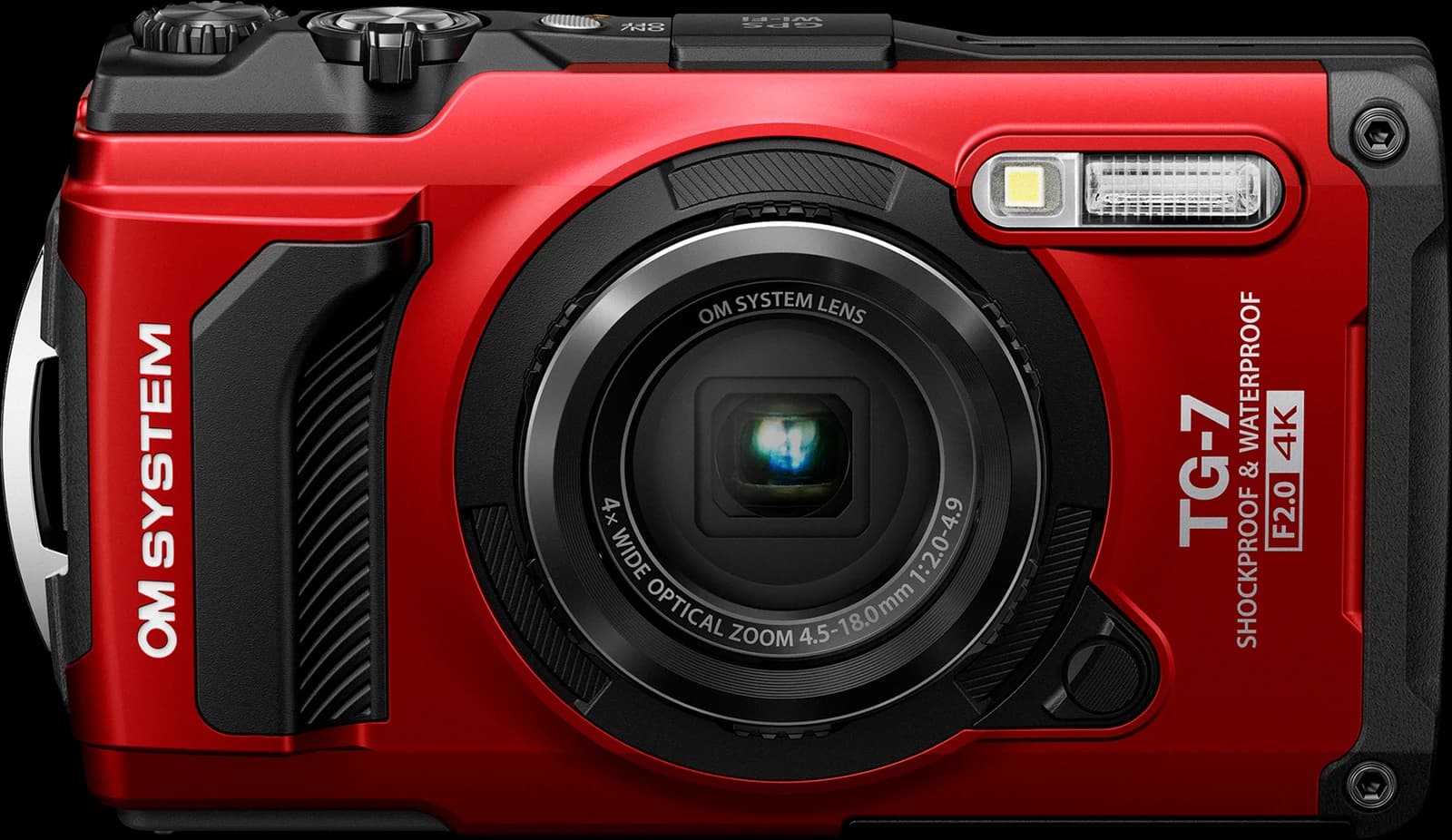
OM System Tough TG-7 Review: The Rugged Compact That Survives Where Others Fail
The TG-7 is the only pocket compact capable of diving to 15 m, withstanding freezing temperatures and shooting macro at 1 cm without accessories. For the diver, hiker or traveller who refuses to leave their camera behind, it is the most logical purchase on the market under 600 USD.
Read the review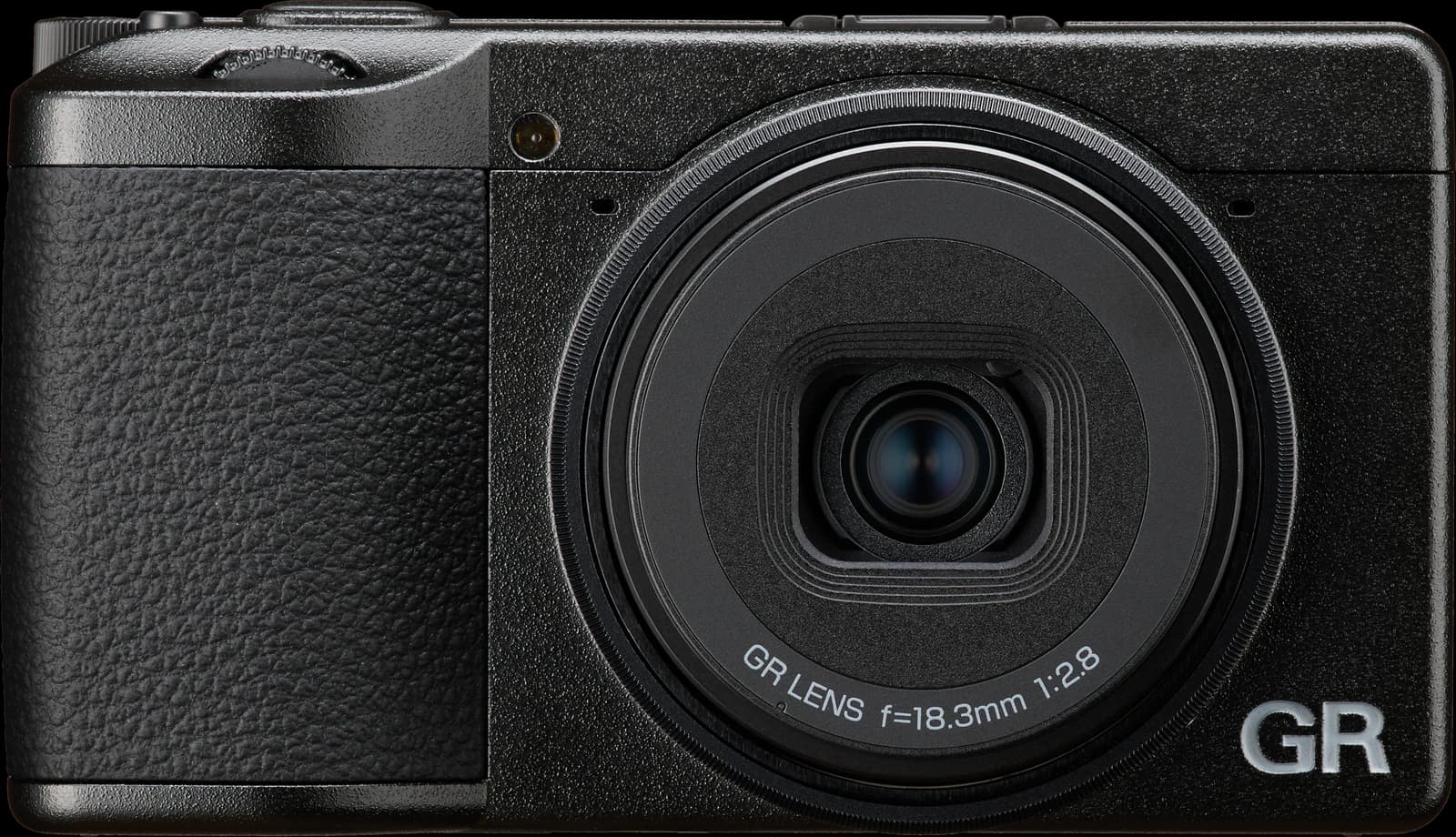
Review: Ricoh GR IV – The Street Compact Steps Up to 26 MP
The Ricoh GR IV is the most accomplished APS-C street compact on the market for those who shoot with a 28 mm equivalent and prioritise discretion above all else. At 1499 USD, it is expensive, but it has no direct competitor at the same format.
Read the review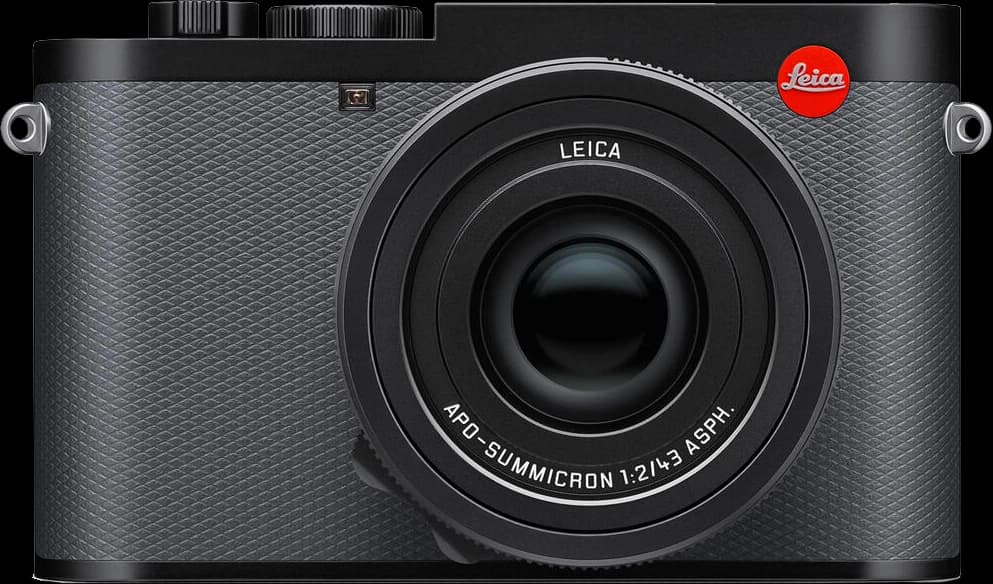
Leica Q3 43 Review: The Full-Frame Compact That Owns Its Price
The Leica Q3 43 is made for the demanding photographer who wants a single body, a single focal length, and no compromise on image quality. At 6,750 EUR, it is not justified otherwise.
Read the review