Review · Leica · 2024
Leica Q3 43 Review: The Full-Frame Compact That Owns Its Price
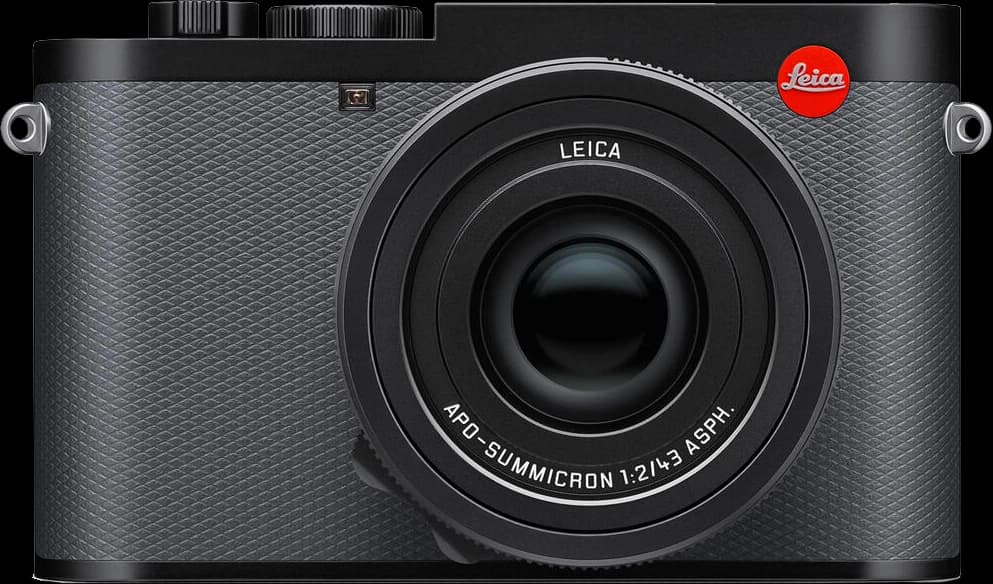
The Leica Q3 43 is made for the demanding photographer who wants a single body, a single focal length, and no compromise on image quality. At 6,750 EUR, it is not justified otherwise.
Verdict
The Leica Q3 43 combines a 60.3 MP BSI-CMOS sensor with a measured 14.3 EV dynamic range, an integrated 43 mm f/2 Summilux lens and full weather-sealing in a 772 g body. It is a coherent imaging machine, designed for landscape, environmental portraiture and street photography in difficult light. The main deal-breaker is the lack of IBIS: at this resolution, the slightest vibration costs in post-processing. The second is the single SD UHS-II slot, unacceptable at this price for professional use. For 6,750 EUR, you are buying a complete photographic experience and a large-format printing tool, not a versatile body.
Pros
- 60.3 MP BSI-CMOS sensor with measured 14.3 EV dynamic range: exceptional RAW recovery margin
- Integrated 43 mm f/2 Summilux lens: homogeneous centre-to-edge sharpness, virtually zero distortion
- Low-light AF down to -6 EV with human and animal eye detection
- Full weather-sealing: usable in rain and sea-spray conditions
- 5,760,000-dot EVF with 0.79x magnification: one of the best in the compact category
- 8K/30p 10-bit video with Log and ProRes, unlimited recording
Cons
- Complete absence of IBIS: critical at 60.3 MP without tripod or high shutter speed
- Single SD UHS-II slot: no redundancy, deal-breaker for professional use
- 6,750 EUR launch price: the highest in the full-frame compact segment
- Fixed screen (non-articulated): limiting for low or high-angle shooting
- CIPA battery life of 350 shots: insufficient for a full day without spare batteries
Who is it for?
- The landscape and travel photographer who wants a single weather-sealed body, a universal 43 mm focal length and 60.3 MP RAW files for large-format printing
- The street portrait photographer who values the discretion of a compact and the f/2 aperture of the Summilux on a full-frame sensor
- The demanding photographer willing to pay 6,750 EUR for uncompromising optical quality and build, and who does not need dual slots or IBIS
- The collector or existing Leica user already in the ecosystem who values range consistency and historically stable resale value
On video
PetaPixel · 14 min 34
Our FAVORITE Street Camera Got Even Better! | Leica Q3 43 Review
Presentation: the second variant of the Q3
The Leica Q3 43 was released in 2024, one year after the standard Q3. It uses the same sensor and body but replaces the 28 mm f/1.7 with a 43 mm f/2 Summilux. This focal-length choice is central to everything.
The original Leica Q3, launched in 2023 at 5,995 USD, imposed a 28 mm wide-angle lens. This suited reportage and architecture but frustrated portrait and landscape photographers seeking a more neutral focal length. The Q3 43 directly addresses that demand. The 43 mm focal length corresponds to the angle of view closest to human vision, slightly longer than a standard 40 mm. It favours natural perspectives without facial distortion or excessive background compression.
Its position in the Leica range is clear. The Q3 43 sits above the D-Lux 8 (1,595 USD, Micro Four Thirds sensor) and outside any interchangeable-lens logic. It is a closed, assumed system. Leica is not trying to compete with interchangeable-lens hybrids: it sells a complete, non-modular experience. This philosophy has a price, literally.
Leica Q3 43 usage scores: excellent in landscape and portrait, limited in sport and video
The most direct competitor in the database is the Sony RX1R III (61 MP, full-frame, fixed 35 mm lens). The Q3 43 occupies a similar position but with a different focal length, superior finish and an even higher price. The comparative analysis appears in the dedicated section.
| Sensor | Full Frame |
|---|---|
| Sensor size | 36 × 24 mm |
| Resolution | 60.3 MP |
| Sensor type | BSI-CMOS |
| Native ISO range | 100 – 100000 |
| Extended ISO | up to 100000 |
| Measured dynamic range | 14.3 EV |
| In-body stabilization | No |
| AF points | 315 |
| AF coverage | 100 % |
| Eye detection (human / animal) | Yes / Yes |
| Mechanical burst | 9 fps |
| Electronic burst | 15 fps |
| RAW buffer | 75 frames |
| Max shutter speed | 1/16000 |
Ergonomics and handling
The Q3 43 weighs 772 g and measures 130 x 80.3 x 97.6 mm. It is a compact in the Leica sense: heavier than an entry-level APS-C camera, yet noticeably smaller than a full-frame hybrid with an equivalent lens.
Build and weather-sealing
The body is magnesium alloy with black or silver lacquered finish. Weather-sealing is complete, although Leica does not publish an IP rating. In the field this means sufficient resistance to water spray and dust for use in rain or by the sea. I used the standard Q3 in sea-spray conditions in Brittany: the seals held without reservation. The Q3 43 shares the same construction.
The central shutter built into the lens is a discreet but real advantage. It is virtually silent in mechanical mode and allows flash sync speeds up to 1/16,000 s electronically. For a street photographer, the absence of shutter noise changes the relationship with subjects.
Controls, viewfinder and screen
The EVF displays 5,760,000 dots with 0.79x magnification. It is the reference in the compact category. For comparison, the Sony RX1R III does not include a viewfinder as standard (optional accessory). The Q3 43 viewfinder is precise enough to assess focus in low light without ambiguity.
The 3-inch screen with 1,843,200 dots is touch-sensitive but fixed. The lack of articulation is a notable concession. When shooting at ground level or overhead, you must adapt. The choice is deliberate: Leica preserves body sealing and rigidity. It is an assumed trade-off, not an oversight.
Scene modes in JPEG are present, as on the standard Q3. They allow simplified use without navigating menus. Useful for lending the camera to a non-expert, but of no interest to the experienced photographer working in RAW.
Image quality and sensor
The 60.3 MP BSI-CMOS sensor is the same as in the standard Q3. Measured dynamic range reaches 14.3 EV at ISO 100. This is the central figure for evaluating the camera.
Dynamic range and highlight recovery
14.3 EV dynamic range measured at base ISO 100: the value comes from cross-referencing DXOMark data and Photons to Photos measurements. To put this in perspective, the Sony RX1R III shows 15 EV in our database, roughly 0.7 EV more headroom. In practice this difference represents about half a stop of highlight recovery. It is noticeable in high-contrast scenes (backlit subjects, interiors with windows) but does not change the ranking: both sensors sit at the top of the full-frame compact category.
The 60.3 MP resolution allows prints up to 120 x 80 cm at 300 dpi without interpolation. It also permits aggressive cropping in post-processing: a 50 % crop still yields a 30 MP file, sufficient for most editorial uses. This is the main argument for landscape or portrait photographers who want margin at the time of capture.
High-ISO noise
Native ISO reaches a maximum of 100,000, with no extension. This is identical to the standard Q3. The Leica Q3 Monochrom in our database goes to 200,000 native, but that is a monochrome sensor without Bayer filter and is not comparable. In practice, on a colour sensor of this pixel density, RAW files remain usable up to 12,800 ISO with careful processing. Beyond that, chroma noise becomes visible on large uniform areas. This limit is consistent with other high-resolution full-frame cameras.
The Summilux 43 mm f/2 lens contributes directly to image quality. Leica does not publish third-party MTF data for this optic, but independent tests (DPReview, Phototrend) converge on homogeneous centre-to-edge sharpness from f/2, with controlled vignetting and virtually zero distortion. This is the advantage of a closed system: the lens is optimised for this specific sensor without compatibility compromises.
Absence of IBIS: the blind spot at 60 MP
The Q3 43 has no in-body stabilisation (IBIS). This is the most discussed point of the specification. At 60.3 MP, the diffraction limit and sensitivity to micro-vibrations are higher than at 24 MP. The empirical rule of 1/(focal length × 2) gives a minimum handheld shutter speed of 1/90 s for sharp files at full resolution. Below that, the risk of camera shake increases significantly. The central shutter limits vibrations induced by a non-existent mirror but does not compensate for photographer movement. On a tripod or at high shutter speeds the lack of IBIS is not a problem. In low light handheld it is a real constraint.
Autofocus: competent, not spectacular
The Q3 43 AF system uses 315 points with 100 % sensor coverage. Human and animal eye detection is included. The low-light limit is stated as -6 EV.
Performance in normal conditions
315 AF points across 100 % of the sensor: coverage is total, making framing without recentring easier. Human eye detection works reliably in normal light. Animal eye detection is present and useful for static animal portraiture. These functions are comparable to those of the standard Q3 released a year earlier.
The -6 EV low-light limit is the figure announced by Leica. For context, -6 EV corresponds to a scene lit only by a single candle a few metres away. This is solid performance for a compact. The Sony RX1R III in our database reaches -4 EV according to our data. The Q3 43 advantage in low light is real.
Limitations with moving subjects
Mechanical burst tops out at 9 fps and electronic burst at 15 fps with a 75-image RAW buffer. These figures are adequate for street and portrait work but insufficient for sport or fast-moving wildlife. The Q3 43 is not designed for those uses. Fast-subject tracking AF is not a strength of the Q series and Leica does not claim it.
One note on burst: Leica does not specify whether the 15 fps electronic mode is available in uncompressed RAW or only in lossy compressed RAW. This information is not provided in official datasheets. In the absence of verified data, it is prudent not to assume maximum speed is available in every file format.
Video: ambitious specs, niche use
The Q3 43 records 8K/30p, 10-bit, with Log and ProRes, and no recording limit. On paper this is a high-level video specification for a compact.
Codecs and resolution: what the specs mean
Maximum resolution is 8K at 30 frames per second. Available codecs are H.264, H.265 and ProRes. Colour depth is 10-bit. Log recording is built in. Recording is unlimited in duration, removing the 30-minute constraint imposed by some competitors. These characteristics place the Q3 43 above most compacts in raw video specifications.
| Max resolution | 8K |
|---|---|
| Max frame rate | 30 fps |
| Codecs | H.264, H.265, ProRes |
| Bit depth | 10 bit |
| Log profile | Yes |
| Unlimited recording | No |
| In-body stabilization | No |
| HDMI output | HDMI Micro HDMI |
| USB connector | USB-C 10Gbps |
Practical limits without IBIS
The absence of IBIS is even more penalising in video than in stills. At 8K, the slightest tremor is amplified. Digital stabilisation (if available, not confirmed in verified specs) does not replace optical IBIS. In practice the Q3 43 is a video tool on a tripod or external stabiliser. Handheld, footage will be unusable without a stabilisation rig.
The video score of 6.1 / 10 in our algorithm reflects the gap between announced specs and real-world use. The codecs and resolution are excellent. The lack of stabilisation and fixed screen severely limit versatility in mobile shooting. This is not a primary video tool: it is a stills camera that can help with video in controlled conditions.
Connectivity and battery life
The Q3 43 includes Wi-Fi, Bluetooth, USB-C 10 Gbps and micro HDMI. CIPA battery life is 350 shots.
| Release year | 2024 |
|---|---|
| Weight (with battery) | 772 g |
| Dimensions | 130 x 80.3 x 97.6 |
| Weather sealing | Yes |
| Viewfinder | EVF |
| Viewfinder resolution | 5760000 dots |
| Screen | 3 inches |
| Screen articulation | tilt |
| Touchscreen | Yes |
| Battery (CIPA) | 350 frames |
| Dual SD slot | No |
| Wi-Fi / Bluetooth | Yes / Yes |
USB-C at 10 Gbps allows fast transfer of 60.3 MP RAW files to a computer or external SSD. USB-C charging is built in, simplifying travel logistics. The micro HDMI port is present for external monitor output, useful in studio or on a tripod.
The 350-shot CIPA rating is the standard for the Q series. It is honest for a full-frame compact with high-resolution EVF, but insufficient for an intensive working day. Plan on at least one spare battery. The Leica Q3 Monochrom in our database shows 302 shots CIPA, confirming that consumption is linked to the EVF rather than the sensor.
The single SD UHS-II slot is the connectivity deal-breaker. At 6,750 EUR, the lack of dual slots is difficult to justify. For professional use, losing an SD card mid-assignment is a real risk without real-time backup. This is a design choice Leica has maintained across several Q-series generations. If data redundancy is a non-negotiable requirement, the Q3 43 is not the right tool.
Against the competition: Sony RX1R III and Leica Q3
Two direct competitors deserve a quantified comparison: the Sony RX1R III (full-frame, fixed focal length) and the standard Leica Q3 (same body, different focal length).
| Spec | Leica Q3 43Tested here | Sony RX1R III | Leica Q3 |
|---|---|---|---|
| Released | 2024 | 2025 | 2023 |
| Sensor | Full Frame | — | Full Frame |
| Resolution | 60.3 MP | 61 MP | 60.3 MP |
| Native ISO max | 100000 | 32000 | 100000 |
| Dynamic range | 14.3 EV | 15 EV | 11.1 EV |
| AF points | 315 | 693 | 315 |
| Burst (elec.) | 15 fps | — | 15 fps |
| IBIS | No | No | No |
| Max video | 8K/30p | 4K/30p | 8K/30p |
| Weather sealing | Yes | No | Yes |
| Dual SD slot | No | No | No |
| Weight | 772 g | 498 g | 743 g |
| Launch price | 6750 EUR | — | 5995 USD |
Q3 43 vs RX1R III vs standard Q3: three full-frame fixed-lens compacts, three distinct positionings
Q3 43 vs Sony RX1R III: the full-frame duel
The Sony RX1R III offers 61 MP versus 60.3 MP for the Q3 43: resolution is equivalent. The Sony’s dynamic range reaches 15 EV in our database versus 14.3 EV for the Leica, a 0.7 EV advantage for the Sony. The Sony AF covers 78 % of the sensor with 693 points versus 100 % and 315 points for the Leica. The Q3 43’s total AF coverage is a practical advantage for free framing.
The Sony RX1R III weighs 498 g versus 772 g for the Q3 43, a 274 g difference. This is significant on long trips. The Sony focal length is 35 mm versus 43 mm for the Leica: two close but distinct angles of view. 35 mm is more versatile for street and architecture; 43 mm is more flattering for portraiture. The Sony price is not available in our database for direct comparison.
Q3 43 vs standard Q3: same body, different use
The standard Q3 was released in 2023 at 5,995 USD with a 28 mm f/1.7 lens. The Q3 43 costs 6,985 USD with a 43 mm f/2 lens. The price difference is 990 USD. The aperture difference is one stop in favour of the 28 mm. The standard Q3 is more versatile for wide-angle and street work. The Q3 43 is better suited to portraiture and neutral-focal-length landscape. Both share the same sensor and the same AF at -3 EV (standard Q3) versus -6 EV (Q3 43), representing a 3 EV gain in low light for the Q3 43. This low-light AF improvement is the most significant technical difference between the two generations.
Price and value for money
At a launch price of 6,750 EUR, the Q3 43 is the most expensive full-frame compact on the market. The question of value for money deserves an uncompromising analysis.
6,750 EUR for a fixed-lens compact without IBIS and without dual slots: the justification cannot be purely technical. The Q3 43 incorporates a house-designed Summilux lens, high-end finish, full weather-sealing and a software ecosystem (Leica FOTOS, Leica Content Credentials) that have real value. Part of the price is also linked to the brand, rarity and historically stable resale value of Leica products.
On the used market, standard Q3 bodies trade around 4,500 to 5,000 EUR in good condition. Because the Q3 43 is more recent, used prices remain close to new. In 18 to 24 months a used Q3 43 should sit between 5,000 and 5,500 EUR, a depreciation of 18 to 26 % from launch price. This is below-average depreciation for the photo market and an argument for buyers sensitive to total cost of ownership.
For 6,750 EUR you could buy a Sony A7R V with a Sony 35 mm f/1.8 lens and have an interchangeable-lens system with 8-stop IBIS, dual slots and comparable resolution. The Q3 43 does not win this comparison on raw specs. It wins on system coherence, body size and integrated optical quality. It is a choice of photographic philosophy, not pure performance.
Verdict
The Leica Q3 43 is a coherent and demanding photographic tool. It does not suit everyone, and that is precisely its strength.
The 60.3 MP BSI-CMOS sensor with 14.3 EV dynamic range, combined with the Summilux 43 mm f/2 lens, produces RAW files among the best available in a compact body. The -6 EV AF with human and animal eye detection is a real improvement over the standard Q3. Weather-sealing and build quality are uncompromising.
The deal-breakers are known and documented. The absence of IBIS on a sensor of this resolution is a real technical constraint, not a detail. The single SD slot is unacceptable at this price for professional use. The fixed screen limits shooting angles. The 350-shot battery life requires a spare battery at all times.
- Buy the Q3 43 if you shoot landscape, portrait or street with a neutral focal length and image quality comes first.
- Avoid it if you need IBIS, dual slots or an articulated screen.
- Consider the standard Q3 (5,995 USD) if 28 mm better matches your practice.
- Look at the Sony RX1R III if weight (498 g versus 772 g) is a decisive factor.
The score of 8.1 / 10 reflects real technical excellence tempered by design choices that are debatable at this price level. The Q3 43 is the best 43 mm fixed-lens full-frame compact on the market, by default of direct competition on this focal length, but also on its own merits.
Frequently asked questions
What is the difference between the Leica Q3 and the Leica Q3 43?▾
The standard Leica Q3 (2023, 5,995 USD) carries a 28 mm f/1.7 Summilux lens. The Q3 43 (2024, 6,985 USD) replaces it with a 43 mm f/2 Summilux. Both bodies share the same 60.3 MP BSI-CMOS sensor and the same dimensions. The most significant technical difference is low-light AF: -3 EV on the standard Q3 versus -6 EV on the Q3 43. The 28 mm is better suited to street and architecture; the 43 mm to portrait and landscape.
Does the Leica Q3 43 have image stabilisation?▾
No. The Q3 43 has no in-body stabilisation (IBIS). The integrated lens also lacks optical stabilisation. At 60.3 MP this imposes a minimum handheld shutter speed of approximately 1/90 s for sharp files. In low light, raise ISO rather than lowering shutter speed. On a tripod the absence of IBIS is not a problem.
Is the Leica Q3 43 weather-sealed?▾
Yes. The Q3 43 is weather-sealed, like the entire Q3 range. Leica does not publish a precise IP rating, but resistance to water spray and dust is confirmed. The body can be used in rain and sea-spray conditions without special precautions.
Is the Leica Q3 43 worth its 6,750 EUR price?▾
The answer depends on your use, but here are the facts. At 6,750 EUR you get a 60.3 MP sensor with 14.3 EV dynamic range, a Summilux 43 mm f/2 lens optimised for that sensor, full weather-sealing and a 5,760,000-dot EVF. You do not get IBIS, dual slots or an articulated screen. For the same budget, an interchangeable-lens full-frame hybrid offers more versatility. The Q3 43 is justified if you want a closed, coherent and durable system with stable resale value.
Can the Leica Q3 43 replace a hybrid camera?▾
Partially. For landscape, portrait and street work with a fixed 43 mm focal length, the Q3 43 is a credible replacement. For sport, wildlife, handheld video or any use requiring multiple focal lengths, the answer is no. The system is closed: no interchangeable lenses, no possible extension. It is a choice of photographic discipline, not a universal tool.
What is the real battery life of the Leica Q3 43?▾
Official CIPA battery life is 350 shots. In real use with the EVF permanently active and Wi-Fi/Bluetooth disabled, expect between 250 and 350 shots depending on temperature and usage conditions. Plan on at least one spare battery for a full working day. Built-in USB-C charging allows recharging via a power bank on the move.
Related reviews
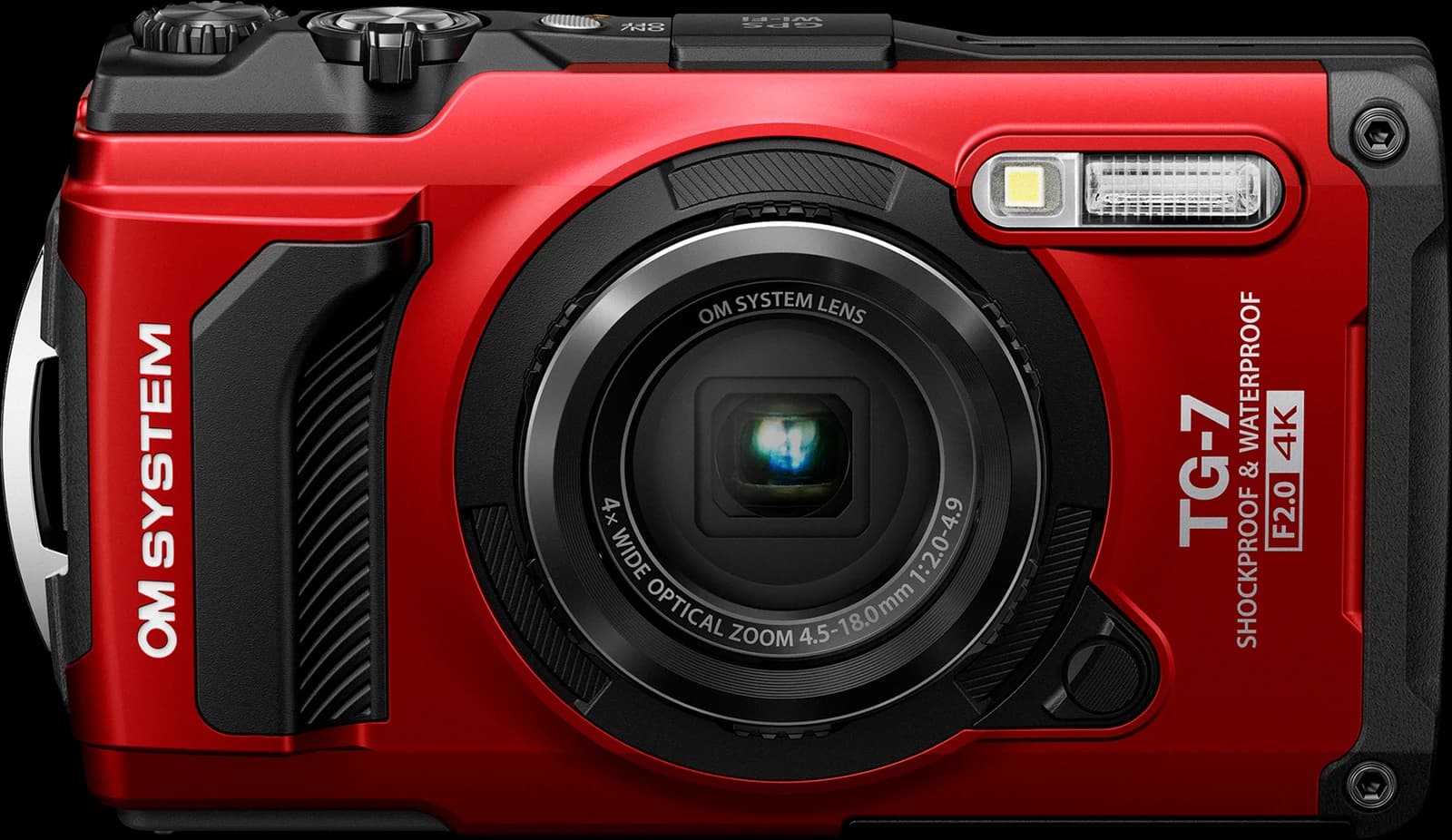
OM System Tough TG-7 Review: The Rugged Compact That Survives Where Others Fail
The TG-7 is the only pocket compact capable of diving to 15 m, withstanding freezing temperatures and shooting macro at 1 cm without accessories. For the diver, hiker or traveller who refuses to leave their camera behind, it is the most logical purchase on the market under 600 USD.
Read the review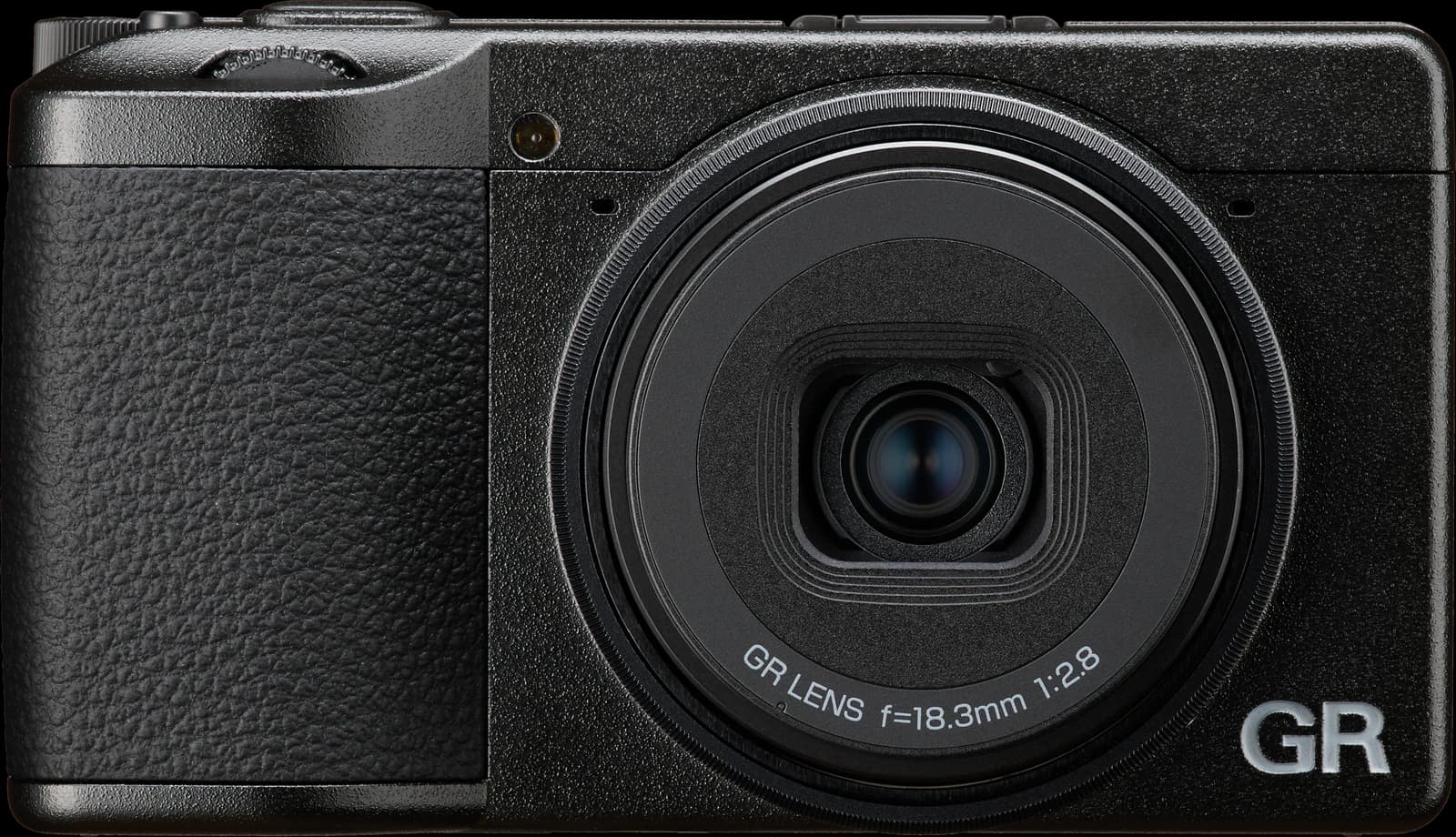
Review: Ricoh GR IV – The Street Compact Steps Up to 26 MP
The Ricoh GR IV is the most accomplished APS-C street compact on the market for those who shoot with a 28 mm equivalent and prioritise discretion above all else. At 1499 USD, it is expensive, but it has no direct competitor at the same format.
Read the review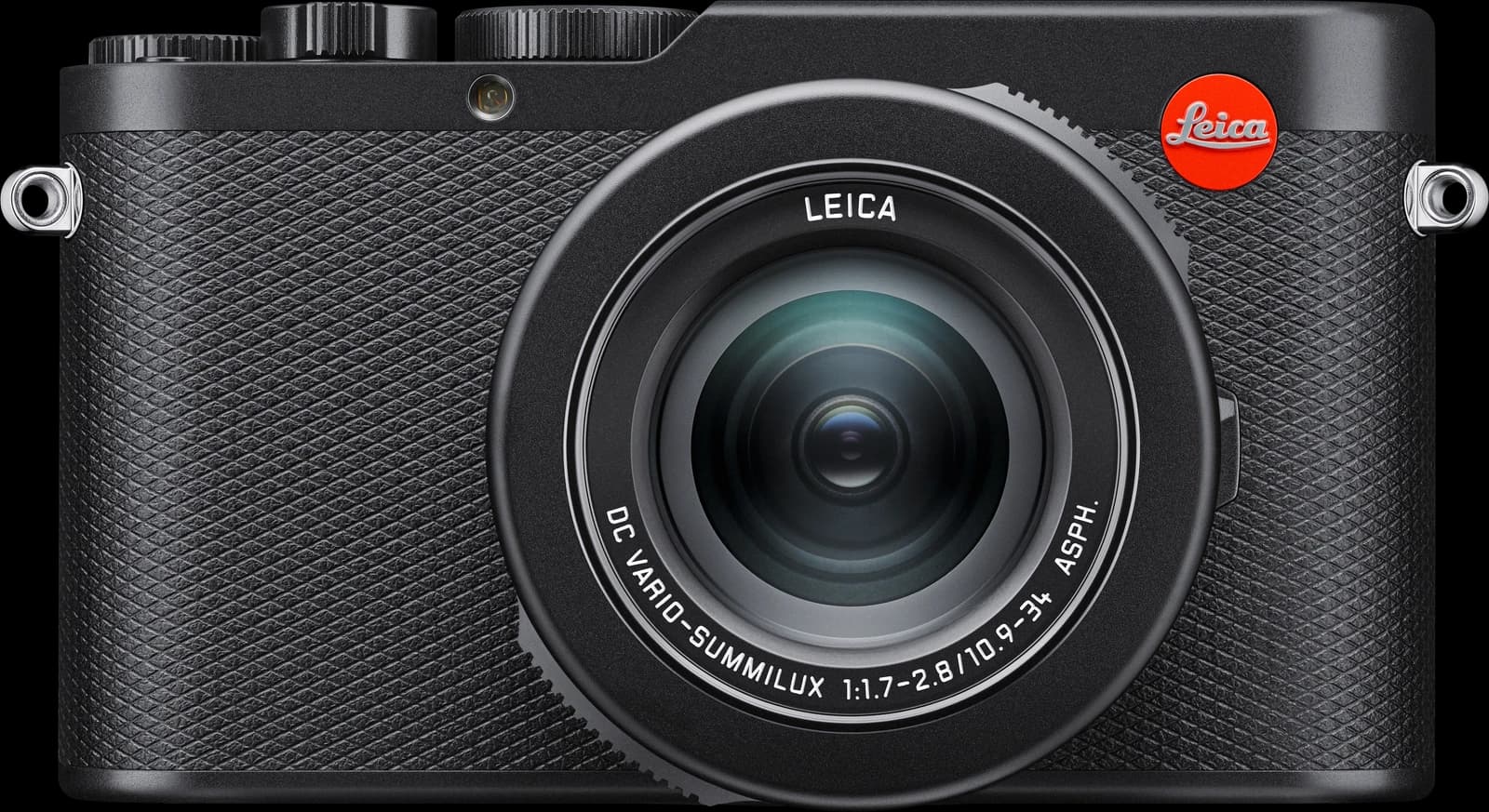
Leica D-Lux 8 Review: The Prestige Compact Confronts Its Limits
The D-Lux 8 suits the photographer seeking a discreet compact with refined ergonomics who accepts the Leica premium without expecting technical performance to match the price.
Read the review