Review · Ricoh · 2025
Review: Ricoh GR IV – The Street Compact Steps Up to 26 MP
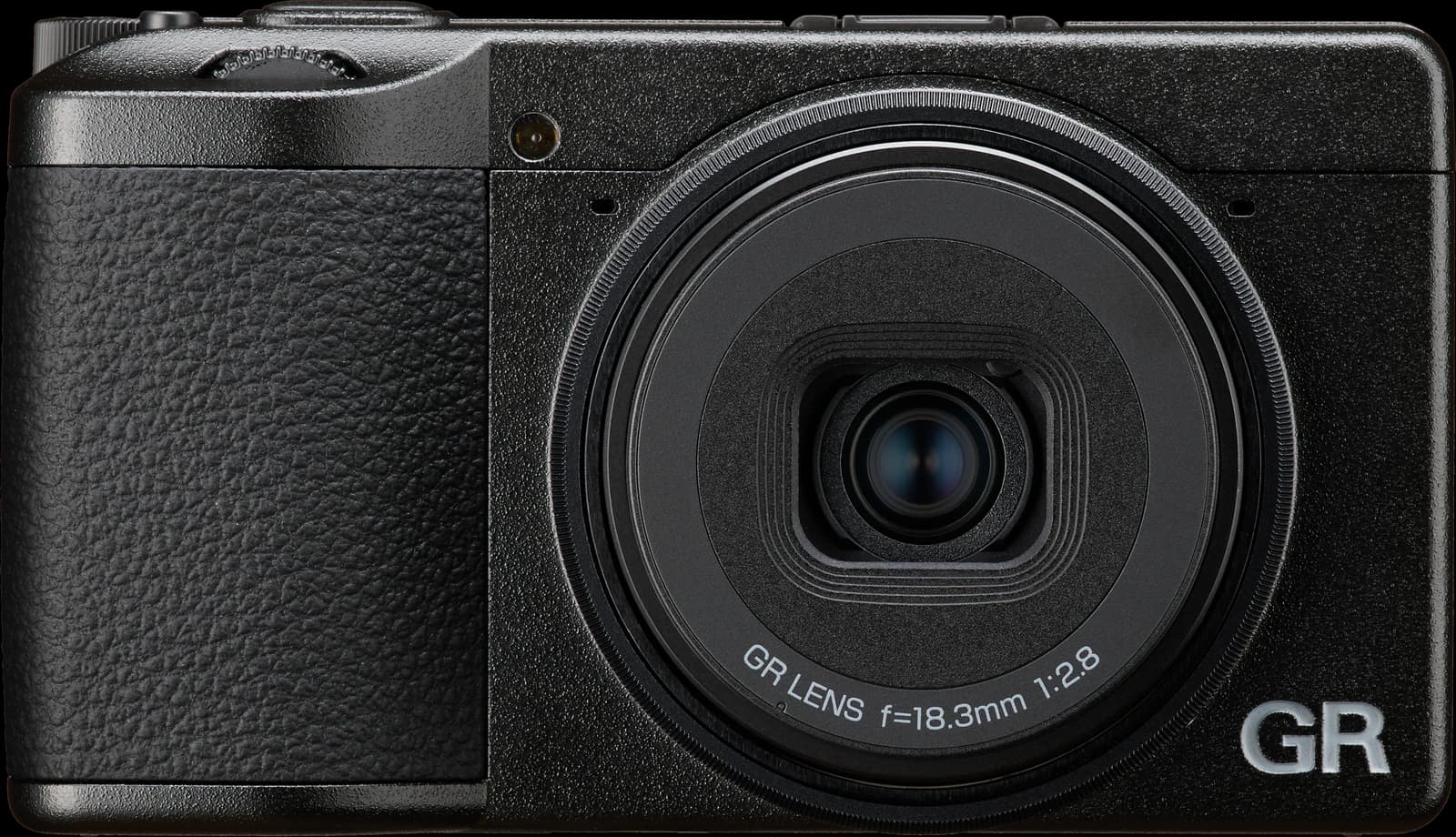
The Ricoh GR IV is the most accomplished APS-C street compact on the market for those who shoot with a 28 mm equivalent and prioritise discretion above all else. At 1499 USD, it is expensive, but it has no direct competitor at the same format.
Verdict
The Ricoh GR IV fulfils its mission with a rigour few compacts can claim. The 26 MP APS-C sensor, 6-stop IBIS and native ISO range up to 204 800 form a coherent trio for street, travel and low light. The compromises are real: no weather-sealing, a buffer of 8 RAW frames, video capped at 1080p/60p, and a fixed screen. None of these limits are deal-breakers for the intended use. The real deal-breaker is the price: 1499 USD for a compact without a viewfinder, without dual slots and limited to UHS-I SD cards. The GR III HDF was available at 1070 USD with 24 MP and 4-stop IBIS. The upgrade justifies the extra cost if you regularly work at high sensitivities or need to crop in post. For everyone else, the GR III HDF or GR IIIx HDF remain serious alternatives worth considering before signing.
Pros
- 26 MP APS-C sensor in a 262 g body measuring 109 × 61 × 33 mm
- Native ISO up to 204 800: extended range without boost mode
- 6-stop IBIS: two stops gained over the GR III HDF (4 stops)
- Human eye AF detection and -4 EV triggering threshold
- 28 mm equivalent f/2.8: the classic street focal length with maximum compactness
Cons
- No weather-sealing: a deal-breaker for use in rain or by the sea
- RAW buffer limited to 8 frames at 4 fps mechanical
- Video capped at 1080p/60p, no Log, no 4K
- Fixed 3-inch screen: no articulation for low- or high-angle shots
- SD UHS-I only: write speed capped, slower buffer clearing
- CIPA battery life of 250 shots: carry a spare
Who is it for?
- Street photographers who want a 26 MP APS-C camera in a jacket pocket and mainly shoot at 28 mm equivalent
- Light travellers who refuse to carry a mirrorless body and seek the best possible still-image quality under 300 g
- Urban night photographers who exploit the native ISO 204 800 and 6-stop IBIS for handheld shooting without flash
- GR-series users upgrading from the GR III who want measurable gains in high-ISO performance and stabilisation
On video
Damien Bernal · 9 min 49
test Ricoh GR IV : encore plus compact (v4 d'un best seller)
Introduction: a street compact, not a stripped-down mirrorless
The Ricoh GR IV arrives in 2025 as a direct continuation of the GR line. It does not aim to compete with mirrorless cameras: it assumes a fixed focal length, pocket format and a philosophy of total discretion.
Ricoh has built the GR range on an unchanging principle for years: an APS-C sensor, a fixed wide-angle lens and a body that fits in a trouser pocket. The GR IV follows the same rule. It measures 109 × 61 × 33 mm and weighs 262 g. That is 5 g more than the GR III HDF, a difference imperceptible in real use. The manufacturer’s intention is clear: to produce the most discreet tool possible for street and travel photography, without compromising sensor quality.
The main novelty compared with the GR III HDF is the sensor. The GR IV rises to 26 MP versus 24 MP on its direct predecessor. IBIS increases from 4 stops to 6 stops. The native ISO range extends to 204 800 versus 102 400 on the GR III HDF. These three developments are consistent with the target use: more resolution for cropping in post, more stabilisation for long handheld exposures, and more latitude in low light.
Usage profile of the Ricoh GR IV: excellent for travel and street, limited for video and sport.
What the GR IV is not: a versatile camera. Burst rate tops out at 4 fps mechanical with a buffer of 8 RAW frames. Video stops at 1080p/60p. There is no viewfinder, no articulated screen and no weather-sealing. These absences are not oversights: they are design choices that keep the body within its target dimensions and weight. Judging them as faults would be beside the point.
| Sensor | APS-C |
|---|---|
| Sensor size | 23.5 × 15.6 mm |
| Resolution | 26 MP |
| Sensor type | CMOS |
| Native ISO range | 100 – 204800 |
| Extended ISO | up to 204800 |
| In-body stabilization | 6 stops |
| AF points | 425 |
| Eye detection (human / animal) | Yes / No |
| Mechanical burst | 4 fps |
| RAW buffer | 8 frames |
| Max shutter speed | 1/4000 |
Ergonomics and handling: continuity as philosophy
Ricoh does not reinvent GR ergonomics with each generation. It is a deliberate choice that retains existing users and makes handling immediate for anyone who has already held a GR.
Size and physical controls
The dimensions 109 × 61 × 33 mm place the GR IV among compacts that fit in a jacket pocket without distorting the fabric. The front grip is lightly pronounced, a conscious concession to compactness. For extended use, a wrist strap remains advisable. Button layout follows the lineage of the range: mode dial on the front, thumb-accessible ADJ button and configurable function keys.
The screen measures 3 inches with a resolution of 1 037 000 dots. It is touch-sensitive, which simplifies AF point selection. It is fixed, however: no articulation. For hip-level shooting, a classic street-photography technique, you must compose blind or memorise field angles. This is a real constraint, but it is well known to all GR users.
Snap Focus and focusing modes
Snap Focus is the signature feature of the GR range. It lets you pre-set a fixed focus distance (typically 1 m or 1.5 m) and trigger instantly without waiting for AF confirmation. Combined with the natural depth of field of a 28 mm equivalent at f/2.8, it makes focusing almost transparent in most daylight street situations. This is a radically different approach from subject detection: it assumes mastery of the zone of sharpness, but it eliminates any shutter-release delay.
The GR IV also offers contrast-detect AF with 425 points and human-eye detection. Animal-eye detection is absent. The AF triggering threshold drops to -4 EV, covering most urban low-light situations. In practice, Snap Focus remains the preferred method for fast street work; eye-detection AF is more useful for posed portraits or static scenes.
Image quality: what the 26 MP actually change
The sensor is the heart of the GR IV. The 26 MP APS-C resolution is the central argument for the step up from the GR III HDF. Here is what it changes in practice.
Resolution and cropping in post
26 MP on a 23.5 × 15.6 mm APS-C sensor gives a pixel density of around 4.7 MP/cm². This is a measured advance over the 24 MP of the GR III HDF. In practice, the gain shows mainly when cropping: with 26 MP you can crop to 50 % of the original area and retain roughly 6.5 MP usable, enough for an A4 print at 300 dpi. For street photography where cropping in post is common (removing a distracting element, tightening the frame), this gain is real and usable.
For large-format printing, 26 MP allow clean prints up to approximately 60 × 40 cm at 300 dpi. This is sufficient for the vast majority of uses, including exhibition. The fixed 28 mm equivalent focal length in any case imposes framing discipline that limits the need for heavy cropping.
Dynamic range and colour rendering
Ricoh does not publish a measured dynamic-range figure for the GR IV in the data available to date. Independent sources (DXOMark, Photons to Photos) have not yet released a full measurement at the time of writing. The GR III HDF shows 14.1 EV of dynamic range according to our database. If the GR IV retains a similar sensor architecture with slightly higher density, a comparable value is likely, but we will not confirm it without independent measurement.
The colour rendering of the GR range has historically been appreciated for its neutrality and fidelity. The built-in Picture Styles (Vivid, Natural, Monotone, etc.) allow in-camera JPEG processing without post-production. The Monotone mode is particularly refined: it produces black-and-white JPEGs with a grain and contrast rendering that many users employ directly without Lightroom.
High sensitivity: ISO 204 800 in real use
The maximum native ISO of 204 800 is the most significant advance over the GR III HDF (102 400 native). The extended native range means the sensor uses these values without additional software interpolation. In practice, high ISO on APS-C sensors produces luminance noise that is manageable in RAW and more problematic chroma noise. At ISO 51 200, most modern APS-C sensors produce usable black-and-white images. At ISO 102 400 and beyond, results depend heavily on subject and processing. Without published independent measurements we cannot quantify the exact gain over the GR III HDF, but the extension of the native range is a positive signal.
Autofocus: 425 points and eye detection, but Snap Focus remains king
The GR IV’s autofocus improves on previous generations. It remains secondary, however, to the camera’s intended philosophy of use.
AF system: coverage and triggering threshold
The GR IV offers 425 AF points covering a good portion of the sensor. The triggering threshold drops to -4 EV, equivalent to a scene lit by a candle at about 1 m. This is a respectable figure for a street compact. Human-eye detection is present, which aids portraits in automatic AF mode. Animal-eye detection is absent, which is not a shortcoming for the target use.
The GR III HDF showed an AF threshold of -2 EV according to our database. The move to -4 EV on the GR IV represents a 2 EV gain, i.e. the ability to focus in four times less light. This is a concrete improvement for urban night photography where deep shadow areas are frequent.
Snap Focus: the alternative to AF for fast street work
Snap Focus pre-sets focus at a fixed distance and triggers without AF delay. At f/2.8 on a 28 mm equivalent, depth of field at 1.5 m covers approximately 1 m to 3 m depending on the exact focus setting. This zone of sharpness is sufficient for the great majority of street situations at conversational distance. The result is near-instant release, without the AF confirmation delay that can miss a decisive fraction of a second.
Contrast-detect AF remains useful for posed portraits, static scenes and situations where subject distance is unpredictable. Human-eye detection improves precision on close portraits. But for the street photographer shooting in motion, Snap Focus combined with good control of the zone of sharpness remains the most effective approach on this body.
Burst, buffer and stabilisation: figures to place in context
Burst rate and buffer on the GR IV are limited by design. Stabilisation, on the other hand, is the real technical argument of this generation.
Burst and buffer: 4 fps, 8 RAW frames
Mechanical burst tops out at 4 fps with a buffer of 8 RAW frames. At that rate the buffer fills in 2 seconds. For street photography this is not a handicap: the GR technique relies on anticipation and single shots, not continuous burst. A sports or wildlife photographer will be blocked immediately. That is not the target use, and this limit should not weigh in the evaluation of the body for its real-world purpose.
The 8-frame RAW buffer is identical to that of the GR III HDF. It is a constant of the range. The UHS-I SD card limits write speed and slows buffer clearing. A fast UHS-I card (Class 3, 90 MB/s write) reduces clearing time, but the UHS-I ceiling remains lower than what a UHS-II or CFexpress slot would allow. For short bursts (2–3 frames) the buffer poses no problem.
6-stop IBIS: the real contribution of the GR IV
The GR IV’s IBIS compensates for 6 stops of camera shake. That is 2 stops more than the GR III HDF (4 stops). In practice, two extra stops of compensation allow shutter speeds twice as slow for the same probability of a sharp image. If you could shoot at 1/15 s handheld with the GR III HDF, you can theoretically drop to 1/4 s with the GR IV. For urban night photography, dark interiors and low ambient-light scenes, this is a concrete, measurable gain.
Combined with native ISO 204 800, the 6-stop IBIS forms the central technical duo of the GR IV. The two specifications work together: IBIS lets you lower ISO by lengthening exposure, improving image quality. Conversely, high ISO lets you maintain a fast enough shutter speed to freeze subject movement while IBIS handles photographer shake. This is the most useful combination for night street work.
- IBIS 6 stops: +2 stops vs GR III HDF (4 stops)
- Mechanical burst 4 fps, buffer 8 RAW frames: identical to GR III HDF
- SD UHS-I only: write-speed ceiling, slower buffer clearing than UHS-II
- Mechanical shutter max 1/4000 s: sufficient for f/2.8 in daylight with built-in ND if available
Video: an accessory function, not a priority
Video on the GR IV is functional but deliberately limited. If video is an important criterion for you, this body is not the right choice.
| Max resolution | 1080p |
|---|---|
| Max frame rate | 60 fps |
| Codecs | H.264 |
| Log profile | No |
| Unlimited recording | No |
| In-body stabilization | 6 stops |
| HDMI output | HDMI Micro HDMI |
| USB connector | USB 3.0(5 GBit/sec) |
Resolution and codec: 1080p/60p, H.264, no Log
The GR IV records a maximum of 1080p at 60 fps. The codec is H.264 in 8-bit. There is no Log mode, no 4K and no unlimited recording. These limitations are consistent with the body’s philosophy: video is a supplementary function for capturing a travel scene or street moment, not a video-production tool.
1080p/60p is sufficient for social-media publication or personal use. For any professional or semi-professional use (YouTube, documentary, wedding) these specs are inadequate in 2026. The Canon PowerShot V1 offers 4K/120p in 10-bit with Log for 999 EUR: if video matters, look elsewhere.
Video stabilisation and practical use
The 6-stop IBIS also benefits video. Electronic stabilisation can supplement IBIS for moving shots. In 1080p the crop associated with electronic stabilisation is less penalising than in 4K. For handheld travel clips in 1080p the result is usable. This is not a reason to buy the GR IV for video, but it is a usable emergency feature.
Connectivity, storage and battery life: points to watch
The GR IV is a connected compact, but certain connectivity choices deserve particular attention before purchase.
Storage: SD UHS-I, single slot
The GR IV accepts SD cards in the UHS-I standard only. There is a single slot. The absence of dual slots is a comprehensible compactness choice on this format, but it eliminates any redundancy for professional photographers who shoot with dual backup. The UHS-I ceiling limits write speed to roughly 104 MB/s theoretical, slowing RAW buffer clearing compared with a UHS-II slot. For short bursts or single shots this is not a daily problem.
Connectivity and transfer
USB is USB 3.0 (5 Gbit/s), allowing fast transfer to a computer. The HDMI port is Micro HDMI, requiring an adapter cable if you wish to output to an external monitor. Wi-Fi and Bluetooth are present for wireless transfer and remote control via the Ricoh Image Sync app. Wireless connectivity is useful for quick sharing to a phone while travelling.
Battery life: 250 CIPA shots
CIPA battery life is 250 shots. This is a low figure, even for a compact. The GR III HDF showed 200 shots: the GR IV improves slightly. In real use, an intense day of shooting can exhaust the battery. The systematic recommendation on this range is to carry at least one spare battery. Third-party compatible spares are available at reasonable prices and reduce this weakness to a manageable inconvenience.
| Release year | 2025 |
|---|---|
| Weight (with battery) | 262 g |
| Dimensions | 109 × 61 × 33 mm |
| Weather sealing | No |
| Viewfinder | None |
| Screen | 3 inches |
| Screen articulation | fixed |
| Touchscreen | Yes |
| Battery (CIPA) | 250 frames |
| Dual SD slot | No |
| Wi-Fi / Bluetooth | Yes / Yes |
Against the competition: which to choose according to your use
The GR IV has no direct APS-C fixed-lens competitor in the same price bracket. Comparison is therefore organised by use and by compromise.
| Spec | Ricoh GR IVTested here | Ricoh GR III HDF | Ricoh GR IV HDF | Canon PowerShot V1 |
|---|---|---|---|---|
| Released | 2025 | 2024 | 2024 | 2024 |
| Sensor | APS-C | APS-C | APS-C | — |
| Resolution | 26 MP | 24 MP | 26 MP | 22 MP |
| Native ISO max | 204800 | 102400 | 102400 | 25600 |
| Dynamic range | — | 14.1 EV | 14.1 EV | 10.1 EV |
| AF points | 425 | 425 | — | 651 |
| Burst (elec.) | — | 4 fps | 4 fps | 30 fps |
| IBIS | 6 stops | 4 stops | 6 stops | 5 stops |
| Max video | 1080p/60p | 1080p/60p | 1080p/60p | 4K/120p |
| Weather sealing | No | No | No | No |
| Dual SD slot | No | No | No | No |
| Weight | 262 g | 257 g | 262 g | 426 g |
| Launch price | 1499 USD | 1070 USD | — | 999 EUR |
GR IV vs GR III HDF vs Canon PowerShot V1: three compact philosophies, three distinct buyer profiles.
GR IV vs GR III HDF: does the 430 USD upgrade justify itself?
The GR III HDF is available at 1070 USD versus 1499 USD for the GR IV. The 429 USD difference funds the following advances: +2 MP (26 vs 24), +2 stops IBIS (6 vs 4), +2 EV low-light AF (-4 vs -2 EV), doubled native ISO (204 800 vs 102 400). If you regularly shoot in low light or need to crop significantly in post, these advances are justified. If you mainly shoot in good light, the GR III HDF delivers 95 % of the GR IV’s qualities for 430 USD less.
The GR IV HDF (Hi-Low Dispersion filter variant) is also in our database with specs close to the standard GR IV. The difference between the two variants lies in the optical filter that alters the rendering of artificial lights. If you shoot extensively in urban night environments with point light sources (neons, street lamps), the HDF variant produces softer starbursts. This is an aesthetic choice, not a raw performance difference.
GR IV vs Canon PowerShot V1: two opposing philosophies
The Canon PowerShot V1 offers a 22 MP Stacked CMOS sensor, 30 fps electronic burst, 4K/120p video in 10-bit with Log, 5-stop IBIS and 651 AF points for 999 EUR. It is heavier (426 g vs 262 g) and bulkier. The GR IV beats the V1 on compactness, native ISO (204 800 vs 25 600) and IBIS (6 stops vs 5 stops). The V1 beats the GR IV on burst, video and price. If video or burst matter, the V1 wins. If compactness and low-light stills are priorities, the GR IV is superior.
GR IV vs Sony RX1R III: the full-frame debate
The Sony RX1R III belongs to another price and format category. It offers 61 MP full-frame BSI CMOS, 693 AF points, 5 fps mechanical and 4K/30p video in 10-bit with Log. Its maximum native ISO is 32 000, well below the GR IV. It weighs 498 g versus 262 g for the GR IV. The RX1R III is a portable studio and high-end portrait tool. The GR IV is a discreet street tool. The two cameras do not address the same photographer.
Price and value: 1499 USD – is it justified?
The GR IV is the most expensive fixed-lens APS-C compact in the Ricoh range. Its pricing deserves rigorous analysis.
At a launch price of 1499 USD, the GR IV sits in the premium-compact segment. It has no direct APS-C fixed-lens competitor in this price bracket: the APS-C fixed-lens compact market is essentially Ricoh’s property. This absence of direct competition partly explains the tariff. The Sony RX1R III is full-frame at a markedly higher price. The Canon PowerShot V1 is a 22 MP Stacked CMOS model at 999 EUR with a different format and philosophy.
On the used market, GR III and GR III HDF bodies circulate between 600 USD and 900 USD depending on condition. If your budget is constrained, a good-condition used GR III remains a serious alternative: the 24 MP, 4-stop IBIS and native ISO 102 400 cover the majority of street situations. The difference with the GR IV appears mainly in extreme low light and heavy cropping. For an occasional photographer or someone new to the GR range, the used market is a sensible entry point.
The GR IV HDF (Hi-Low Dispersion filter variant) is listed in our database without a communicated launch price. If you are considering this variant, check the price differential at the time of purchase: the HDF filter typically adds around a hundred dollars over previous generations.
Verdict: the best APS-C street compact, at an assumed price
The GR IV is a specialised tool that excels at its mission. It does not pretend to be anything else.
The Ricoh GR IV rigorously accomplishes what it is designed for. The 26 MP APS-C sensor in 262 g, 6-stop IBIS, native ISO 204 800 and -4 EV AF threshold form a coherent package for street, travel and low-light photography. The concessions (no weather-sealing, 8-frame RAW buffer, 1080p/60p video, fixed screen, 250-shot battery life) are all design choices that keep the body within its target dimensions. None is a fault for the use for which it is intended.
The only point that merits real reflection is price. 1499 USD for a compact without viewfinder, without dual slots and without 4K is a significant sum. The GR III HDF at 1070 USD offers 95 % of the GR IV’s qualities for the great majority of situations. The decision to buy the GR IV rather than its predecessor is justified if you regularly shoot in extreme low light or systematically crop your images. For everyone else, the GR III HDF or a used GR III remain honest alternatives.
Our score of 7.8/10 reflects a camera that excels in its niche, with a single reservation on price. Had Ricoh added weather-sealing and dual SD slots, the score would rise to 8.5/10 without hesitation. As it stands, the GR IV is the best APS-C street compact on the market, but it commands a premium for a niche that has no direct alternative.
- Buy the GR IV if you regularly shoot in low light and the native ISO 204 800 and 6-stop IBIS are concrete arguments for your use.
- Buy the GR III HDF at 1070 USD if you mainly shoot in good light and budget is a factor.
- Buy the Canon PowerShot V1 at 999 EUR if 4K/120p video or 30 fps burst matter in your use.
- Look at the used GR III market if your budget is under 900 USD and you are discovering the range.
Frequently asked questions
What is the difference between the Ricoh GR IV and the GR III HDF?▾
The GR IV brings three main advances over the GR III HDF: the sensor rises from 24 MP to 26 MP, IBIS increases from 4 stops to 6 stops, and maximum native ISO doubles from 102 400 to 204 800. The low-light AF threshold also improves from -2 EV to -4 EV. Weight remains virtually identical (262 g vs 257 g). The GR IV’s launch price is 1499 USD versus 1070 USD for the GR III HDF. If you mainly shoot in good light, the difference is hard to justify day-to-day. If you regularly shoot in low light or crop intensively, the advances are concrete and useful.
Is the Ricoh GR IV weather-sealed?▾
No. The Ricoh GR IV is not weather-sealed. This is a clear deal-breaker for photographers who shoot in rain, by the sea or in humid environments. Ricoh has never offered a weather-sealed version in the standard GR range. If weather resistance is a criterion, no APS-C fixed-lens compact with weather-sealing exists on the market to date. The only weather-sealed alternative in our database is the Pentax WG-1000, but it uses a 1/2.3-inch sensor with specifications in no way comparable to the GR IV.
Does the Ricoh GR IV produce good video?▾
No. Video on the GR IV is functional but limited: 1080p/60p in H.264 8-bit, no Log, no 4K, no unlimited recording. This is sufficient for travel clips or personal social-media use. For any semi-professional or professional use these specs are inadequate in 2026. The Canon PowerShot V1 offers 4K/120p in 10-bit with Log for 999 EUR, 500 USD less. If video matters in your use, the GR IV is not the right choice.
Which memory card should I use with the Ricoh GR IV?▾
The GR IV accepts SD, SDHC and SDXC cards to the UHS-I standard. There is no UHS-II or CFexpress slot. To optimise RAW buffer clearing (8 frames), choose a UHS-I card with a minimum write speed of 90 MB/s (V30 or U3 class). SanDisk Extreme Pro or Sony SF-G UHS-I cards are suitable references. The UHS-I ceiling limits theoretical speed to around 104 MB/s: a faster card will not bring additional benefit on this body.
Should I buy the Ricoh GR IV or wait for the next version?▾
The GR IV was released in 2025. The GR range has historically had a slow renewal cadence: several years between generations. No successor has been announced to date. If you have an immediate need and the GR IV’s specs match your use, waiting is not justified. If your budget is constrained, the GR III HDF at 1070 USD or a used GR III between 600 USD and 900 USD are relevant alternatives without waiting.
Does the Ricoh GR IV have a viewfinder?▾
No. The GR IV has neither an optical nor an electronic viewfinder. Composition is performed exclusively on the 3-inch rear screen with 1 037 000 dots. The screen is touch-sensitive but fixed. In bright sunlight, legibility may be reduced. Ricoh offers an optional external optical viewfinder that mounts on the hot shoe, but it is not included in the box. If a viewfinder is indispensable for you, the GR IV is not suitable.
Related reviews
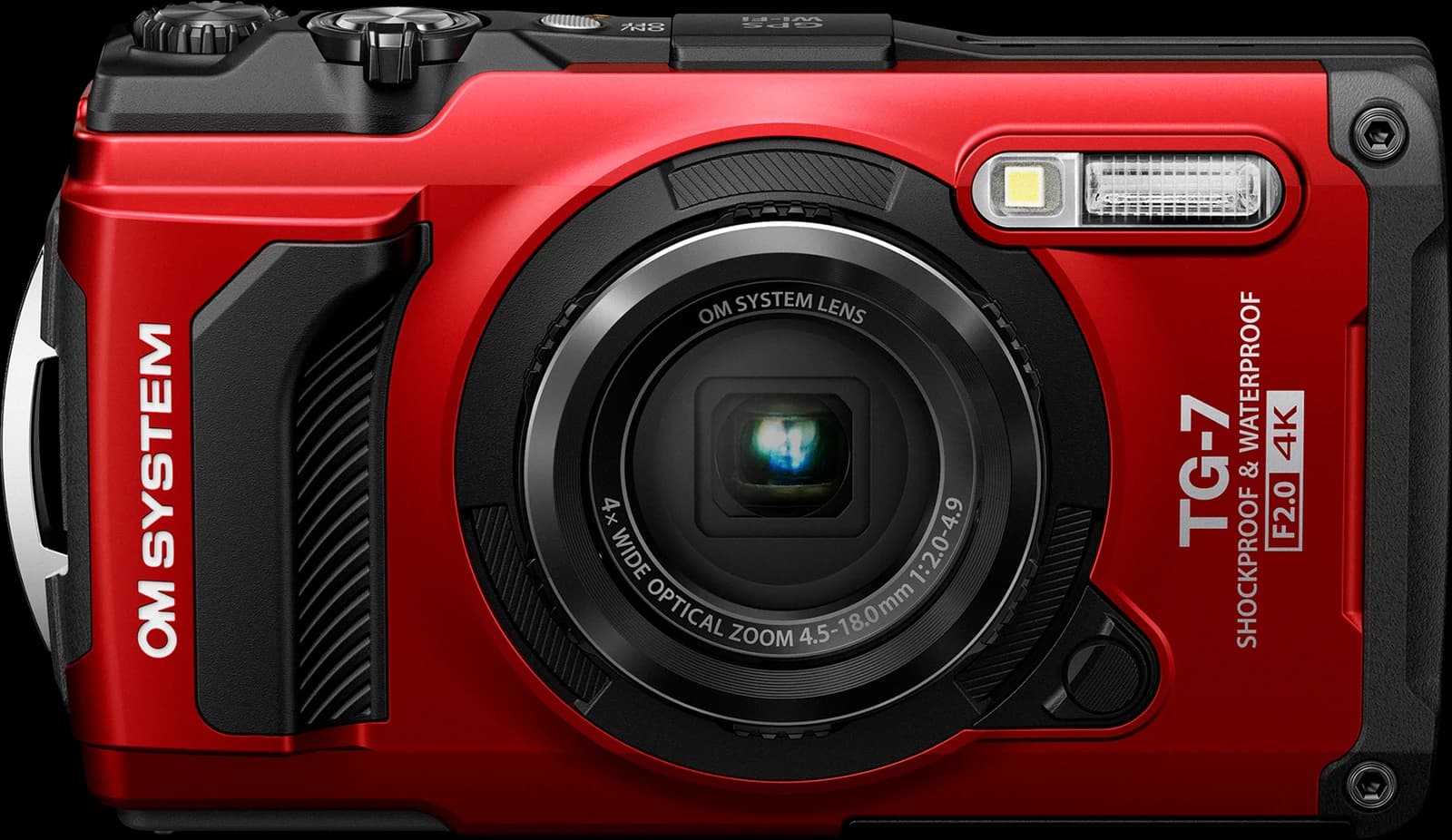
OM System Tough TG-7 Review: The Rugged Compact That Survives Where Others Fail
The TG-7 is the only pocket compact capable of diving to 15 m, withstanding freezing temperatures and shooting macro at 1 cm without accessories. For the diver, hiker or traveller who refuses to leave their camera behind, it is the most logical purchase on the market under 600 USD.
Read the review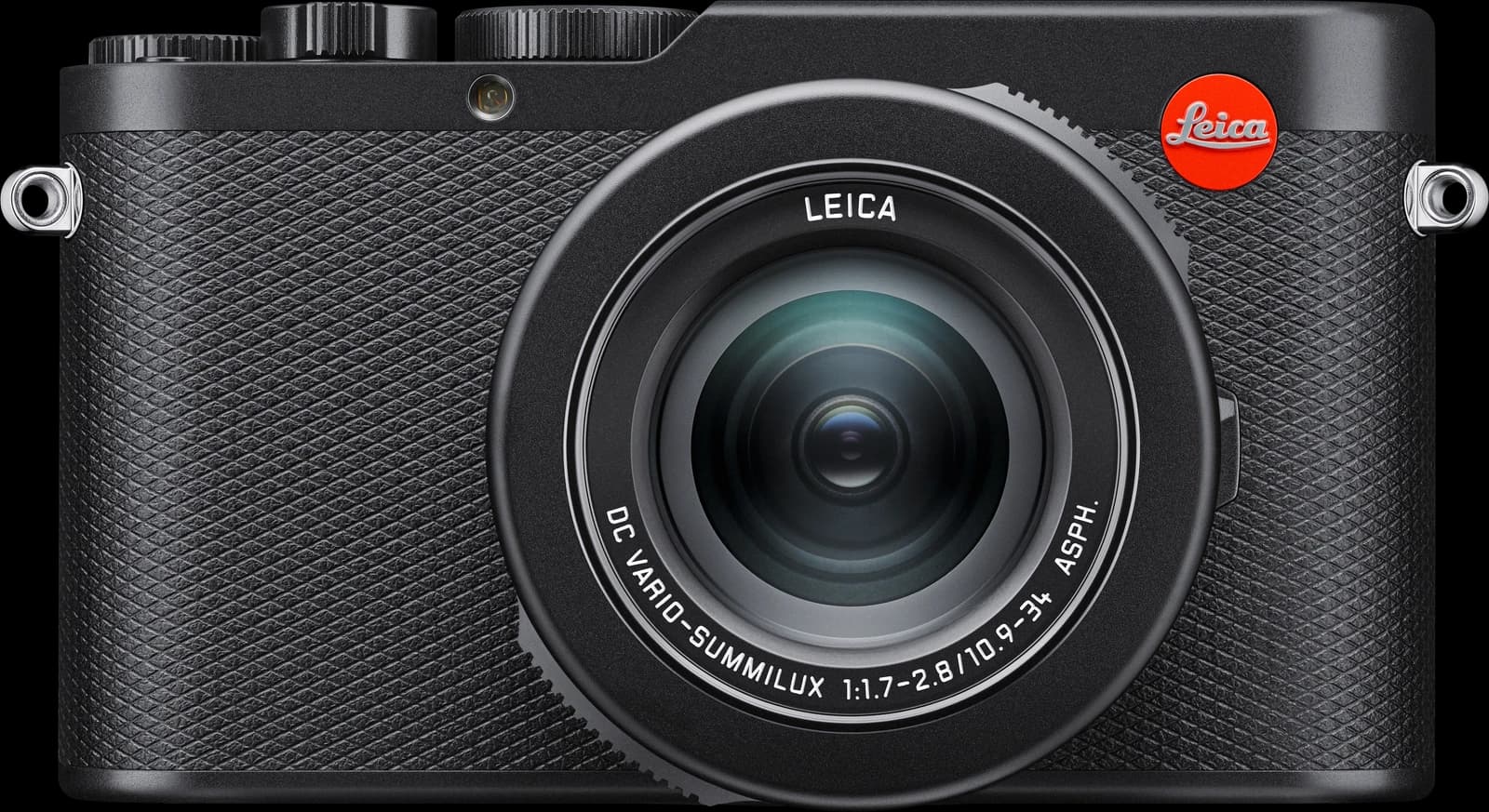
Leica D-Lux 8 Review: The Prestige Compact Confronts Its Limits
The D-Lux 8 suits the photographer seeking a discreet compact with refined ergonomics who accepts the Leica premium without expecting technical performance to match the price.
Read the review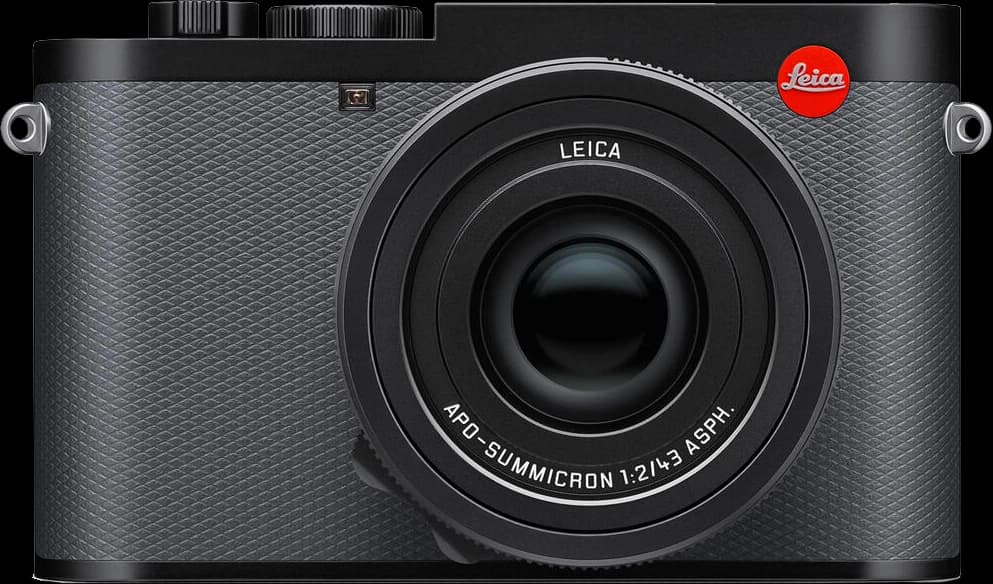
Leica Q3 43 Review: The Full-Frame Compact That Owns Its Price
The Leica Q3 43 is made for the demanding photographer who wants a single body, a single focal length, and no compromise on image quality. At 6,750 EUR, it is not justified otherwise.
Read the review