Review · OM System · 2023
OM System Tough TG-7 Review: The Rugged Compact That Survives Where Others Fail
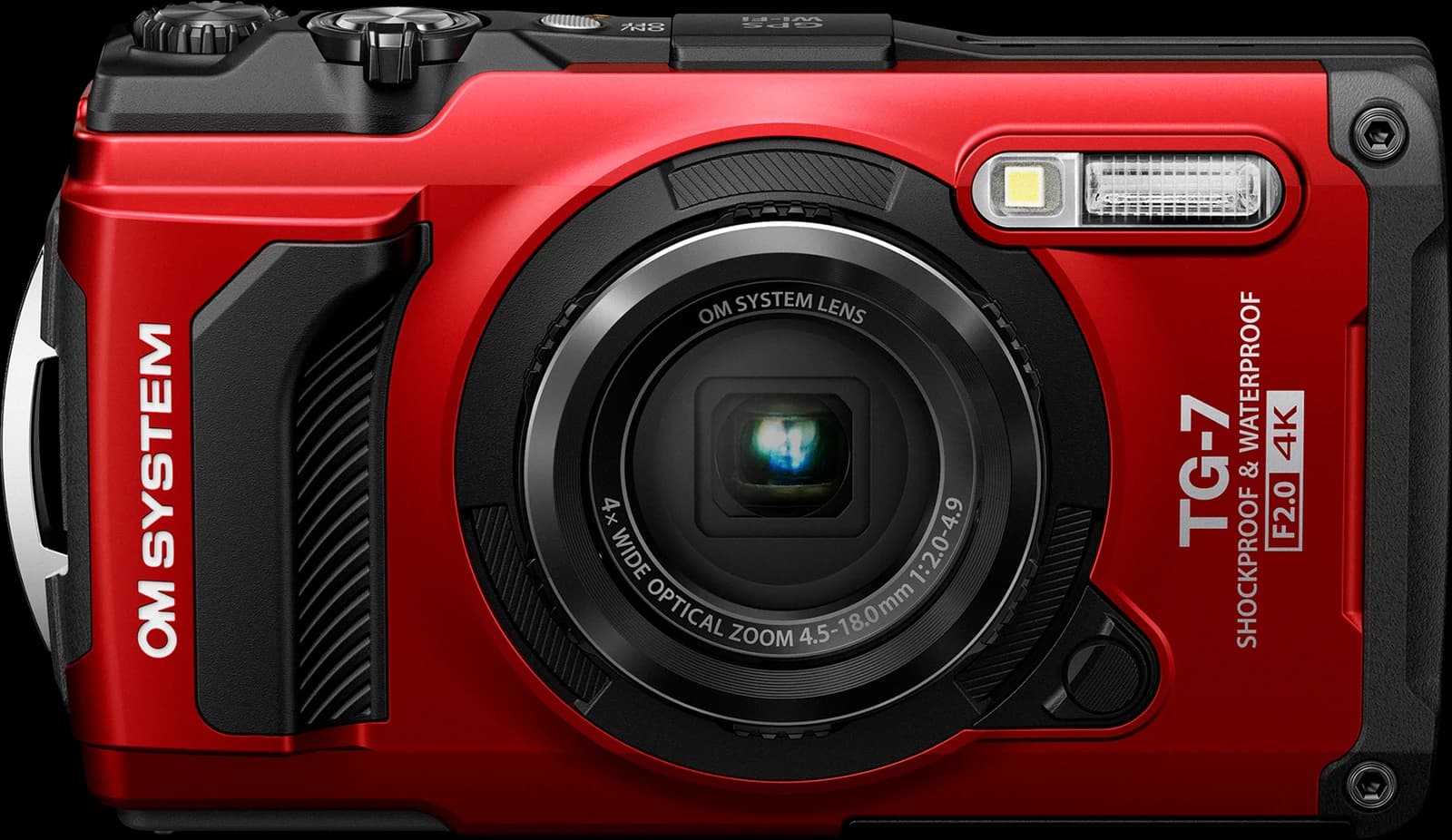
The TG-7 is the only pocket compact capable of diving to 15 m, withstanding freezing temperatures and shooting macro at 1 cm without accessories. For the diver, hiker or traveller who refuses to leave their camera behind, it is the most logical purchase on the market under 600 USD.
Verdict
The TG-7 does not claim to compete with a 1-inch sensor compact on raw image quality. Its 12-megapixel BSI CMOS sensor in 1/2.3-inch format is the price to pay for fitting in a ski jacket pocket and surviving immersion at 15 m depth without a housing. This compromise is acknowledged, documented and consistent with its intended use. What sets the TG-7 apart from its TG-6 predecessor is the arrival of USB-C, a back-illuminated (BSI) sensor, human subject detection in AF, and a burst rate raised to 20 fps. Against the Pentax WG-8 at 399 USD, the TG-7 justifies its premium through better AF density (25 points versus 9), faster burst shooting, and an accessory ecosystem (housings, underwater flashes, macro diffusers) with no equivalent. The only real deal-breaker: the lack of a touchscreen and the fixed screen, which complicate shooting while diving or in awkward positions. For the target user, the TG-7 does its job better than any other. Score: 7.6/10.
Pros
- Waterproof to 15 m without housing, shockproof, freezeproof and crushproof
- Macro at 1 cm minimum focus distance, unique in this price category
- 20 fps burst with 14 RAW buffer, solid for a rugged compact
- Human eye AF detection built-in, a first for the TG series
- USB-C finally present, Wi-Fi and Bluetooth for field transfers
- Complete accessory ecosystem: housings, underwater flashes, macro diffusers
Cons
- 1/2.3-inch sensor: limited dynamic range and noise handling beyond ISO 800
- Fixed, non-touch screen: awkward when diving or in difficult positions
- Maximum shutter speed 1/2000 s: insufficient in bright sun with wide aperture
- Single UHS-I SD slot: no redundant backup
- No sensor stabilisation (IBIS), no Log video, H.264 8-bit codec only
- Launch price 549 USD high compared with Pentax WG-8 at 399 USD
Who is it for?
- The amateur or semi-pro diver who wants to shoot to 15 m without investing in a separate 300 EUR housing
- The hiker or mountaineer who exposes gear to cold, shocks and driving rain without compromising relative image quality for the category
- The minimalist traveller who wants one pocketable camera for beach, mountain and city without fear of loss or damage
- The naturalist photographer shooting macro in wet conditions where a standard compact or hybrid would not survive
- The construction or inspection professional documenting sites in harsh conditions who needs a certified rugged camera
On video
Joshua Vergara · 10 min 37
OM SYSTEM Tough TG-7: Point and shoot and SMASH
Presentation: A Field Tool, Not a Versatile Compact
The TG-7 was released in 2023 under the OM System brand, direct successor to Olympus. It continues a line dating back to the TG-1 (2012) that has always defended the same positioning: an indestructible compact, waterproof without a housing, capable of shooting where other cameras stay in the bag.
Understanding the TG-7 requires first addressing its intended use. This body is not designed to compete with a Sony ZV-1 II or Ricoh GR III on studio image quality. It is built to survive immersion at 15 m depth, a 2.1 m drop, crushing at 100 kgf, temperatures down to -10 °C and exposure to dust. These certifications (IPX8, MIL-STD-810) are not marketing claims: they define a different job.
The TG-7 weighs 249 g and measures 113.9 x 65.8 x 32.7 mm. It fits in a hiking trouser pocket. Its lens covers 25 to 100 mm equivalent in 35 mm format (f/2.0 to f/4.9), with a minimum focus distance of 1 cm in super macro mode. This last point is defining: no competing compact in this price range offers such proximity without an accessory.
TG-7 usage profile: excellence in extreme conditions and macro, accepted compromises on image quality and video
Compared with the TG-6 (2019), the TG-7 brings four concrete improvements. The sensor moves to BSI (back-illuminated) technology, marginally improving light gathering. USB-C replaces the proprietary micro-USB, an expectation after four generations. Human eye AF detection appears. Burst rate rises to 20 fps, versus 12 fps on the TG-6. These changes are modest but consistent with a mature platform.
| Resolution | 12 MP |
|---|---|
| Sensor type | BSI CMOS |
| Native ISO range | 100 – 12800 |
| Extended ISO | up to 12800 |
| In-body stabilization | No |
| AF points | 25 |
| Eye detection (human / animal) | Yes / No |
| Mechanical burst | 20 fps |
| Electronic burst | 20 fps |
| RAW buffer | 14 frames |
| Max shutter speed | 1/2000 |
Ergonomics and Build: The Pocket Fortress
The TG-7’s robustness is not an advertising promise. It is certified to military and industrial standards that can be verified. Here is what that means in practice in the field.
Certifications and Resistance: What the Figures Guarantee
The TG-7 is certified IPX8 (continuous immersion at 15 m for 60 minutes), MIL-STD-810 (resistance to shock, vibration, humidity, altitude), drop-resistant from 2.1 m onto hard surfaces, crush-resistant to 100 kgf, and operational down to -10 °C. These certifications are measured in laboratory conditions according to defined protocols. They do not guarantee invincibility, but they define a usage envelope that no direct competitor covers as completely at this price.
I have used TG-series bodies in sea spray and driving rain in Brittany. The battery/card compartment seal is the number-one point of attention: the gasket must be clean and dry before each closure. OM System supplies a spare gasket in the box. It is a detail that matters for long-term waterproofing.
Handling and Controls
The body is compact but not minimalist. The mode dial on the front, motorised zoom ring and dedicated video record button remain accessible with thin gloves. The 3-inch screen with 1,040,000 dots is fixed and non-touch. This is the most debatable compromise on the TG-7: when diving with thick gloves, navigating menus via physical buttons is laborious. Competitors such as the Pentax WG-8 share this shortcoming, yet it remains a genuine point of friction.
CIPA battery life is rated at 340 shots per charge. This is respectable for a compact of this size, identical to the Pentax WG-8 (340 shots) and better than the Sony ZV-1 II (186 shots). USB-C charging is a real improvement over the TG-6: an external power bank is sufficient for a day’s hiking.
| Release year | 2023 |
|---|---|
| Weight (with battery) | 249 g |
| Dimensions | 113.9 x 65.8 x 32.7 |
| Weather sealing | Yes |
| Viewfinder | None |
| Screen | 3 inches |
| Screen articulation | fixed |
| Touchscreen | No |
| Battery (CIPA) | 340 frames |
| Dual SD slot | No |
| Wi-Fi / Bluetooth | Yes / Yes |
Image Quality: The Limits of the 1/2.3-Inch Sensor, Acknowledged and Contextualised
The 12-megapixel BSI CMOS sensor in 1/2.3-inch format is the central compromise of the TG-7. It must be understood before it is judged.
Dynamic Range and Noise: What the Small Sensor Implies
A 1/2.3-inch sensor offers a photosensitive area roughly 13 times smaller than a 1-inch sensor and 56 times smaller than full-frame. Physical laws apply: dynamic range is reduced and noise rises faster at high sensitivities. DXOMark does not publish measurements for the TG-7, but Photons to Photos measurements on the TG-6 (identical sensor size) gave a dynamic range of approximately 10.5 EV at ISO 100, falling to 8 EV at ISO 800. The move to BSI on the TG-7 brings a marginal estimated gain of 0.3 to 0.5 EV in low light, not officially measured.
In practice, RAW files (ORF format) are usable up to ISO 400 without notable compromise. At ISO 800, chrominance noise becomes visible. Beyond ISO 1600, degradation is significant and in-camera processing cannot recover much. Native ISO range extends from 100 to 12,800, but values above ISO 1600 should be reserved for situations with no alternative.
Macro and Wide-Angle: The Real Optical Strengths
The TG-7’s super macro mode allows focusing at 1 cm from the subject. This is a rare capability and, in the rugged compact category, unique at this level of performance. Macro results are impressive for a compact: the extremely shallow depth of field at this distance creates subject separation that naturalist photographers will appreciate. OM System offers an optional macro flash diffuser (LG-1) that significantly improves lighting of small subjects.
At wide angle (25 mm equivalent), the maximum aperture of f/2.0 is generous for a rugged compact. It allows shooting in indoor or underwater light at reasonable shutter speeds. Wide-angle distortion is corrected in JPEG by the processor; RAW files require manual correction in Lightroom or Capture One. Vignetting is moderate and correctable.
Autofocus: 25 Points and Human Eye Detection
The TG-7 offers 25 AF points with human eye detection. This is a notable advance over the TG-6, which offered no subject detection. In practice, eye detection works reliably in adequate light on static or slow-moving subjects. It drops on fast subjects or in low light. Animal detection is not available, a limitation for underwater naturalist photography (fish, seabeds). Macro focusing is manual or assisted by single AF: subject detection does not engage at 1 cm distance.
Maximum shutter speed is 1/2000 s. This is a real limit in bright sun with the lens at f/2.0: at ISO 100, correct exposure can exceed 1/2000 s in the middle of the day. The absence of a built-in ND filter (present on some 1-inch compacts) is a shortcoming felt by users in extreme lighting conditions.
Burst and Buffer: 20 fps for a Rugged Compact
The TG-7’s 20 fps burst is one of the most surprising specs on the datasheet. It deserves critical analysis.
The TG-7 claims 20 fps burst with a buffer of 14 RAW frames. These figures are confirmed by the OM System datasheet. There is no distinction between mechanical and electronic burst in the official documentation: the 20 fps corresponds to the maximum available rate. For comparison, the Pentax WG-8 does not publish a burst figure in our database, nor does the Ricoh G900 II.
A 14-frame RAW buffer at 20 fps represents 0.7 seconds of continuous burst before saturation. This is short. In practice it means the TG-7 is suited to capturing a precise instant (a jump, a wave, a moving fish) but not a long sequence. Buffer clearing time depends on the speed of the UHS-I SD card used: a fast UHS-I card (V30 class minimum) is recommended to minimise wait times between bursts.
Video: 4K Available, but Structural Limits
The TG-7 records in 4K, but the conditions for using this resolution are more restrictive than the datasheet suggests.
Resolution and Codec: What the TG-7’s 4K Is Really Worth
The TG-7 records in 4K with an H.264 8-bit codec. There is no Log profile, no 10-bit, no unlimited recording. These absences are consistent with the body’s positioning: the TG-7 is not a video tool. It is designed to capture documentary sequences in difficult conditions, not to produce cinematic content.
The maximum frame rate announced is 480 fps. This figure corresponds to slow-motion mode at reduced resolution (not specified in the official datasheet for the associated resolution). In 4K, the standard frame rate is 30 fps. The absence of sensor stabilisation (IBIS) is penalising for handheld video: sequences while walking or moving will be unstable without digital stabilisation (which crops the field of view).
Underwater Video: The Main Use Case
For documentary underwater video (recreational diving, snorkelling, field reporting), the TG-7 is functional. 4K/30p in H.264 produces files directly usable for web or social media. Correcting the blue/green cast underwater requires post-production grading or a red filter (sold separately). The Micro HDMI (Type D) port allows output to an external monitor, but external recording is not documented as functional.
| Max resolution | 4K |
|---|---|
| Max frame rate | 480 fps |
| Codecs | H.264 |
| Bit depth | 8 bit |
| Log profile | No |
| Unlimited recording | No |
| In-body stabilization | No |
| HDMI output | HDMI Micro (Type D) |
| USB connector | USB-C 2.0 |
Connectivity and Battery Life: USB-C Changes the Game
The arrival of USB-C on the TG-7 is the update most requested by series users. The TG-6 still used a proprietary micro-USB connector, incompatible with standard cables. The TG-7’s USB-C is version 2.0: it does not support fast charging or high-speed transfer. In practice, transferring RAW files to a computer remains slow. An external card reader is recommended for intensive sessions.
Wi-Fi and Bluetooth are built in. The OM System Image Share app enables wireless transfer and remote control from a smartphone. This feature is particularly useful for macro photography (remote triggering without vibration) or shooting in awkward positions. Bluetooth connection allows geotagging via smartphone, compensating for the lack of built-in GPS.
CIPA battery life of 340 shots is honest for the category. It equates to a day’s hiking with moderate use. Consumption is similar when diving. Carry a spare battery (BLS-50, compatible with several OM System bodies) for long outings. USB-C charging from an external power bank works during transport.
Against the Competition: Is the TG-7 the Best Rugged Camera?
The market for waterproof rugged compacts is narrow. Two direct competitors merit a detailed comparison: the Pentax WG-8 and the Ricoh G900 II.
TG-7 vs Pentax WG-8: The Rugged Camera Duel
The Pentax WG-8 was released in 2024 at 399 USD, 150 USD less than the TG-7. It is waterproof to 20 m (versus 15 m for the TG-7), shockproof and freezeproof. Its 20-megapixel 1/2.3-inch CMOS sensor offers more raw resolution, but its AF is limited to 9 points versus 25 on the TG-7. The WG-8’s burst rate is not documented in our database. Maximum native ISO on the WG-8 is 6,400 versus 12,800 on the TG-7. The WG-8 records 4K/30p in 8-bit, like the TG-7. CIPA battery life is identical: 340 shots. The WG-8 weighs 242 g versus 249 g for the TG-7.
The TG-7’s premium is justified by three elements: AF density (25 points versus 9), human eye detection (absent on the WG-8), and the OM System accessory ecosystem (housings, underwater flashes, macro diffusers) that has no equivalent at Pentax. If you dive regularly and use dedicated accessories, the TG-7 is the rational choice. If you want a basic rugged camera for hiking and travel, the WG-8 at 399 USD is a serious alternative.
TG-7 vs Ricoh G900 II: Professional versus Rugged
The Ricoh G900 II is positioned in the professional segment (construction, industry, inspection) at 799 USD. It is waterproof, shockproof and includes GPS. Its 20-megapixel BSI CMOS sensor offers higher resolution. Its AF is limited to 9 points with 100 % coverage according to our database. It records 4K/30p in 8-bit. CIPA battery life is 340 shots, identical to the TG-7. The G900 II weighs 242 g.
The G900 II includes native GPS, absent on the TG-7. For professionals who geotag shots on site or during inspection, this is a decisive advantage. For the diver or hiker, the 250 USD premium over the TG-7 is not justified: the OM System ecosystem is richer and the TG-7’s burst rate is superior.
| Spec | OM System Tough TG-7Tested here | Pentax WG-8 | Ricoh G900 II |
|---|---|---|---|
| Released | 2023 | 2024 | 2023 |
| Resolution | 12 MP | 20 MP | 20 MP |
| Native ISO max | 12800 | 6400 | 12800 |
| AF points | 25 | 9 | 9 |
| IBIS | No | No | No |
| Max video | 4K/480p | 4K/30p | 4K/30p |
| Weather sealing | Yes | Yes | Yes |
| Dual SD slot | No | No | No |
| Weight | 249 g | 242 g | 242 g |
| Launch price | 549 USD | 399 USD | 799 USD |
TG-7 vs Pentax WG-8 vs Ricoh G900 II: three waterproof rugged cameras, three distinct positionings. The TG-7 leads on AF and burst, the WG-8 wins on price, the G900 II on built-in GPS.
The OM System Ecosystem: The Argument Competitors Lack
One of the angles least covered by editorial competition is the TG-7’s accessory ecosystem. Yet it is one of its most structural advantages.
OM System offers a range of TG-7-specific accessories with no equivalent at Pentax or Ricoh. The PT-059 underwater housing allows diving to 45 m (versus 15 m without housing). The LG-1 macro flash diffuser improves lighting of small subjects at close range. The UFL-3 underwater flash integrates directly with the housing. These accessories turn the TG-7 into a complete system for recreational or semi-professional underwater photography at a total cost well below that of a hybrid with a dedicated housing.
The TG-7’s microscope mode (focus stacking in macro) is a software function that produces images with extended depth of field from multiple shots at different focus distances. This mode is unique in the rugged compact category. It appeals to naturalist photographers, amateur entomologists and inspection professionals documenting surfaces at very close range.
- PT-059 housing: diving to 45 m, compatible with UFL-3 underwater flashes
- LG-1 macro diffuser: even lighting of subjects at 1 cm, reduces reflections
- UFL-3 underwater flash: compensates for colour loss at depth
- Microscope mode: focus stacking for extended depth of field in macro
- BLS-50 battery: compatible with several OM System bodies, simplifies charging management
No direct competitor (Pentax WG-8, Ricoh G900 II) offers a comparable ecosystem in depth and coherence. This is the strongest argument in favour of the TG-7 for a user planning to progress in underwater or macro nature photography.
Price and Value: 549 USD, Is It Justified?
The TG-7 launches at 549 USD. This pricing deserves honest analysis in the current market context.
At 549 USD, the TG-7 is the most expensive rugged compact in its category, ahead of the Ricoh G900 II (799 USD, but positioned in the professional segment) and the Pentax WG-8 (399 USD). Against 1-inch sensor compacts such as the Sony ZV-1 II (around 800 EUR), the TG-7 is cheaper but offers markedly lower image quality. The comparison makes no sense: these are two different jobs.
On the used market, the TG-6 (direct predecessor) is found between 250 and 350 EUR depending on condition. If human eye AF detection, USB-C and 20 fps burst are not priorities for you, the used TG-6 is a serious economical alternative. The new TG-7 is justified if you are starting from scratch, want manufacturer warranty, or plan to invest in the accessory ecosystem (PT-059 housing, UFL-3 flash) optimised for the TG-7.
OM System Tough TG-7

OM System Tough TG-7 Digital Camera - Red (Successor Olympus TG-6)
395,99 GBP · amazon.co.uk


You'll find the best prices on the market here, updated daily — and by going through these partner links, you support Camera Duel without paying a cent more.
Verdict: The Best Rugged Compact on the Market, Within Its Scope
The TG-7 fulfils its mission with rare coherence. It is waterproof to 15 m, shockproof, freezeproof and crushproof. It offers 1 cm macro, 20 fps burst, human eye AF detection, and an accessory ecosystem without equal in the category. These qualities are exactly what its target user expects.
The compromises are real and acknowledged. The 1/2.3-inch sensor limits image quality beyond ISO 800. The fixed, non-touch screen complicates shooting in awkward positions. The maximum shutter speed of 1/2000 s is insufficient in bright sun with a wide aperture. The H.264 8-bit codec without Log closes the door to creative video. These limits are not faults in the context of a rugged compact: they are the price of waterproofing and robustness.
Against the Pentax WG-8 at 399 USD, the TG-7 justifies its 150 USD premium through superior AF density (25 points versus 9), human eye detection, and an incomparable accessory ecosystem. If you dive, shoot macro nature in wet conditions, or want a camera that survives everything without a housing, the TG-7 is the most logical purchase on the market in this category. If you want a basic rugged camera for travel without intensive underwater use, the WG-8 at 399 USD is an honest alternative.
- Buy the TG-7 if you dive regularly and want an expandable system with housing and flash
- Buy the TG-7 if macro nature photography in difficult conditions is your main use
- Choose the Pentax WG-8 if you want a basic rugged camera at 150 USD less
- Consider a used TG-6 if USB-C and eye detection are not priorities for you
Frequently asked questions
To what depth is the TG-7 waterproof without a housing?▾
The TG-7 is certified IPX8 for immersion at 15 m depth for 60 minutes without a housing. To go deeper, OM System offers the PT-059 housing that extends resistance to 45 m. Always check the condition of the battery compartment seal before each dive.
Is the TG-7 better than the TG-6?▾
The TG-7 brings four concrete improvements over the TG-6: BSI sensor (better light gathering), USB-C (end of the proprietary connector), human eye AF detection, and burst rate raised to 20 fps (versus 12 fps on the TG-6). If you already own a TG-6 in good condition, the upgrade is not essential. If you are starting from scratch or if USB-C and eye detection are priorities, the TG-7 is the right choice. The used TG-6 between 250 and 350 EUR remains a valid economical alternative.
Does the TG-7 take good low-light photos?▾
No, not in the sense of a 1-inch sensor compact. The TG-7’s 1/2.3-inch sensor is usable up to ISO 400 without notable compromise. At ISO 800, chrominance noise becomes visible. Beyond ISO 1600, degradation is significant. In low light, favour the built-in flash or the wide-angle f/2.0 at the lowest possible ISO.
What is the difference between the TG-7 and the Pentax WG-8?▾
The Pentax WG-8 (399 USD) is 150 USD cheaper than the TG-7 (549 USD) and is waterproof to 20 m (versus 15 m for the TG-7). However, its AF is limited to 9 points versus 25 on the TG-7, its maximum native ISO is 6,400 versus 12,800, and it lacks subject detection. The OM System accessory ecosystem (housings, underwater flashes, macro diffusers) has no equivalent at Pentax. For underwater use with accessories, the TG-7 is superior. For a basic hiking rugged camera, the WG-8 is an honest alternative.
Can the TG-7 replace a hybrid for travel?▾
No, if image quality is your priority. The TG-7’s 1/2.3-inch sensor does not compete with a 1-inch (Sony ZV-1 II) or APS-C (Ricoh GR III) sensor on dynamic range, noise or resolution. However, if you travel in difficult conditions (beach, mountains, rain, adventure) and want one pocketable camera that survives everything, the TG-7 is a rational complement or substitute for a more fragile hybrid. The two uses are not incompatible: many travel photographers carry both.
Is the TG-7 suitable for underwater wildlife photography?▾
Partially. The 20 fps burst and 25 AF points are assets for capturing moving subjects. Human eye AF detection is available, but animal detection is absent: for fish and underwater subjects, single AF or zone AF are the most reliable modes. Image quality at ISO 400 is sufficient in decent lighting (snorkelling in clear water). In deep or turbid water, rising ISO degrades results quickly. For serious underwater wildlife photography, the PT-059 housing and UFL-3 flash are investments that change the game.
Related reviews
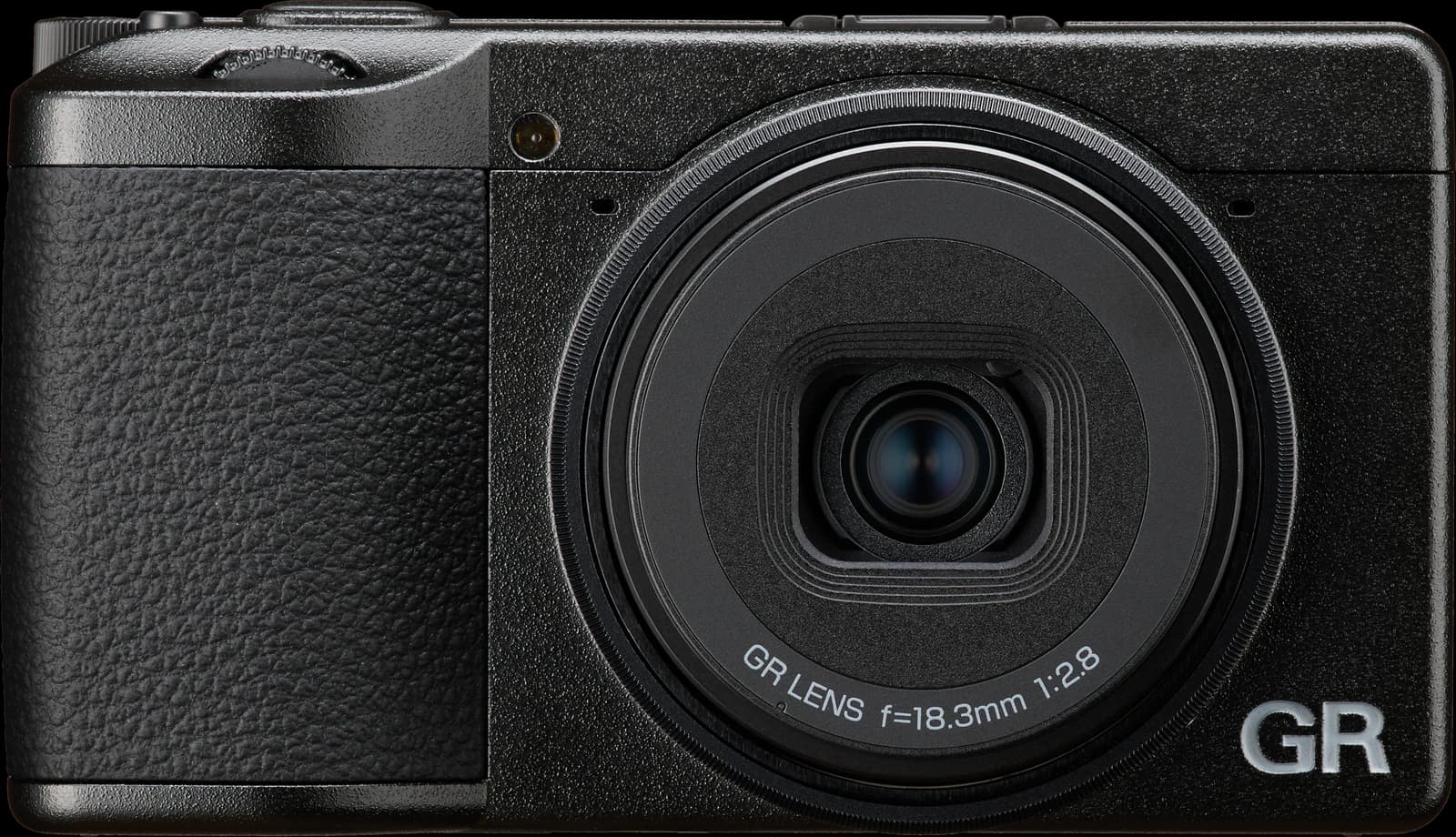
Review: Ricoh GR IV – The Street Compact Steps Up to 26 MP
The Ricoh GR IV is the most accomplished APS-C street compact on the market for those who shoot with a 28 mm equivalent and prioritise discretion above all else. At 1499 USD, it is expensive, but it has no direct competitor at the same format.
Read the review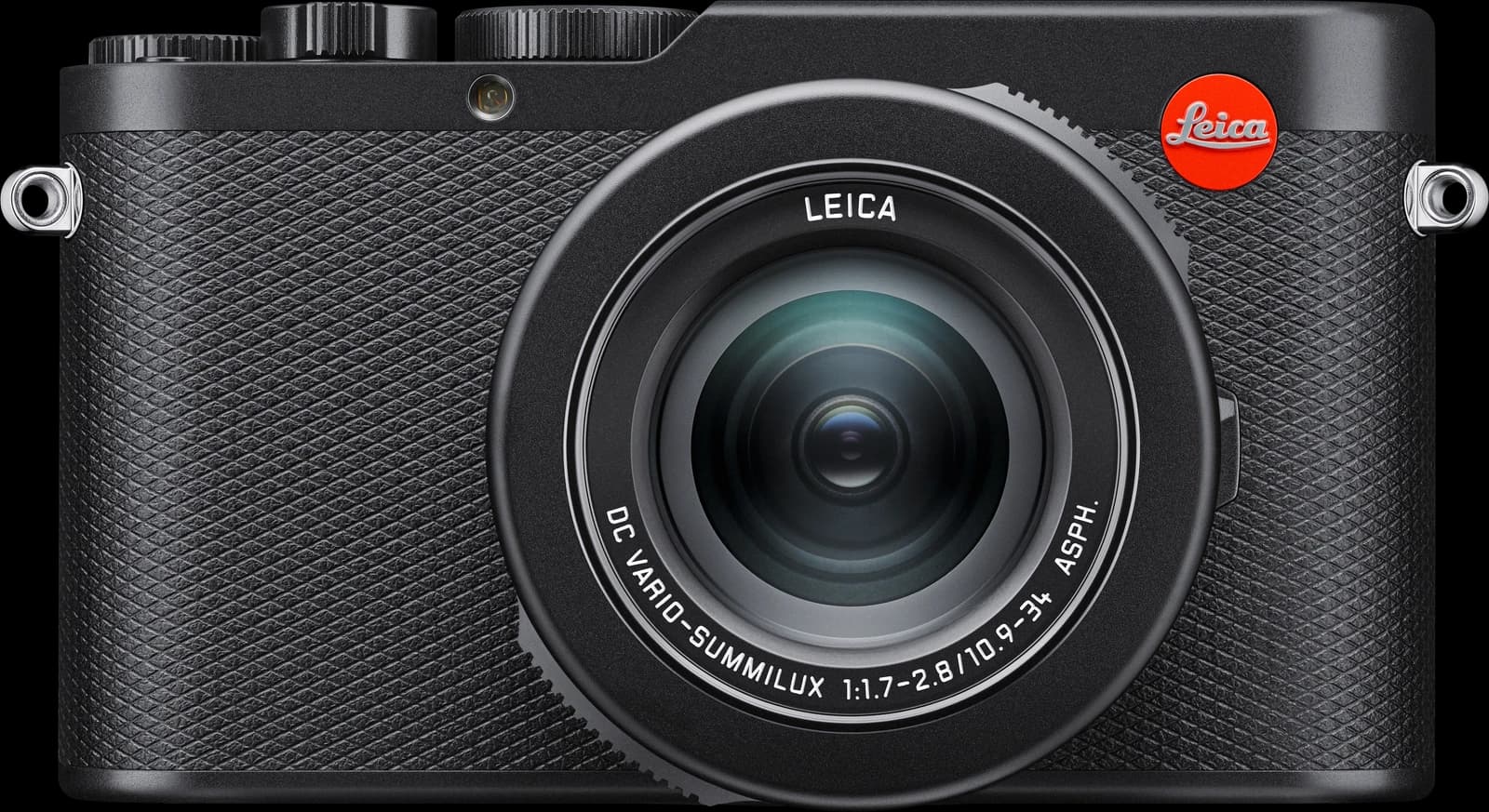
Leica D-Lux 8 Review: The Prestige Compact Confronts Its Limits
The D-Lux 8 suits the photographer seeking a discreet compact with refined ergonomics who accepts the Leica premium without expecting technical performance to match the price.
Read the review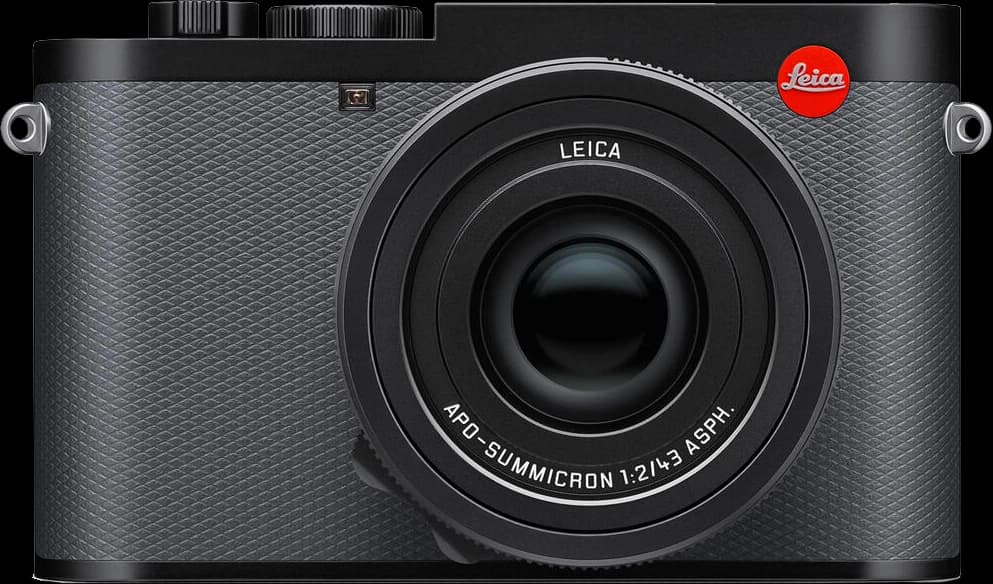
Leica Q3 43 Review: The Full-Frame Compact That Owns Its Price
The Leica Q3 43 is made for the demanding photographer who wants a single body, a single focal length, and no compromise on image quality. At 6,750 EUR, it is not justified otherwise.
Read the review