Review · Canon · 2024
Review: Canon EOS R5 Mark II – The Full-Frame Camera That Doesn't Compromise
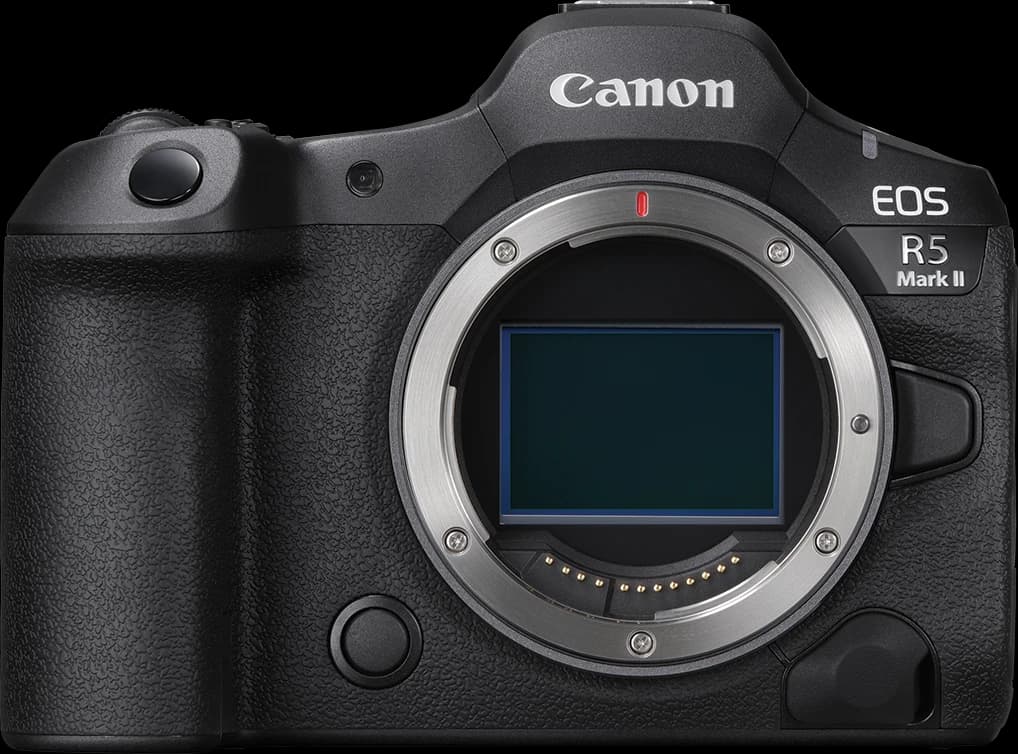
The R5 Mark II is the most versatile full-frame body under 5 000 USD: 45 MP, 30 fps electronic, 8K ProRes RAW and 8.5-stop IBIS in one chassis. Buy it if you refuse to choose between resolution, speed and video.
Verdict
The Canon EOS R5 Mark II brings together on a single stacked 45 MP sensor what the competition still splits across two product lines: the resolution of the Sony A7R V (61 MP conventional BSI, but limited to 10 fps) and the speed of the Nikon Z8 (120 fps electronic, but 45.7 MP on a slower AF sensor). Dynamic range measures 11.5 EV at base 100 ISO, solid but not exceptional against the 11.3 EV of the Z8 or the 11.7 EV of the Sony A7 IV. The real differentiator is the announced 8.5-stop IBIS, the best in full-frame at launch. The main trade-off remains price: 4 299 USD at launch, 300 USD more than the Nikon Z8 at equivalent resolution, for a noticeably lighter body (746 g versus 910 g). On the used market the original R5 now trades around 2 200–2 500 USD, making the Mark II hard to justify for purely static photography. For everything else it has no direct rival this complete.
Pros
- Stacked 45 MP sensor: resolution and speed combined in one body
- 8.5-stop IBIS, best in full-frame at launch
- 30 fps electronic burst with 93-frame RAW buffer
- 8K/60p ProRes RAW, unlimited recording, no overheating
- AF down to -6.5 EV with human/animal eye detection, 100 % sensor coverage
- Dual CFexpress Type B + SD UHS-II slots, weather-sealing, USB-C 3.2 Gen 2
Cons
- 4 299 USD launch price: premium over the Nikon Z8 at 4 000 USD
- 11.5 EV dynamic range: respectable but not class-leading
- 746 g: heavier than most modern full-frame mirrorless bodies
- RF ecosystem: still limited native long-reach options at accessible prices
Who is it for?
- Wedding photographers who alternate high-resolution posed portraits with fast decisive-moment bursts
- Hybrid videographers who want 8K ProRes RAW without buying a dedicated cinema camera
- Travel photographers who refuse to choose between resolution and responsiveness in one bag
- Studio portraitists who want maximum cropping latitude (45 MP) with reliable low-light eye AF (-6.5 EV)
On video
Photo Genius · 8 min 04
CANON EOS R5 Mark II TESTED and REVIEW Bird photography
Presentation: a stacked sensor that changes everything
The R5 Mark II succeeds the original R5 of 2020. Resolution stays at 45 MP, but the sensor type switches from conventional CMOS to Stacked CMOS. This change is the key to everything that follows.
The Canon EOS R5 Mark II launched in 2024 at 4 299 USD. It sits in the high-end versatile full-frame mirrorless segment, between the R3 (5 999 USD, 24.1 MP, pure sports) and the R5 C (4 499 USD, 45 MP, cinema-oriented). The Mark II targets photographers who refuse to specialise.
The move to a Stacked CMOS sensor (36 × 24 mm, 45 MP) is the major technical break from the first R5. A stacked sensor integrates buffer memory directly on the chip, speeding up data readout. Direct result: electronic burst rises from 20 fps (original R5) to 30 fps, and rolling shutter, the Achilles heel of conventional CMOS sensors in electronic mode, drops significantly. This is not cosmetic: it is what makes electronic burst usable on fast-moving subjects.
Usage profile of the Canon EOS R5 Mark II: rare balance between resolution, speed and video
On the current market the R5 Mark II faces two direct rivals at comparable resolution: the Nikon Z8 (45.7 MP, Stacked CMOS, 4 000 USD) and the Sony A7R V (61 MP, conventional BSI CMOS, 3 900 USD). Canon sits between them on price, above on electronic shutter speed (1/32 000 s) and IBIS (8.5 stops versus 8 stops for the Z8 and Sony). The question is not whether it is good. It is whether it is worth 300 USD more than the Z8 for your specific needs.
| Sensor | Full Frame |
|---|---|
| Sensor size | 36 × 24 mm |
| Resolution | 45 MP |
| Sensor type | Stacked CMOS |
| Native ISO range | 100 – 51200 |
| Extended ISO | up to 102400 |
| Measured dynamic range | 11.5 EV |
| In-body stabilization | 8.5 stops |
| AF points | 1053 |
| AF coverage | 100 % |
| Eye detection (human / animal) | Yes / Yes |
| Mechanical burst | 12 fps |
| Electronic burst | 30 fps |
| RAW buffer | 93 frames |
| Max shutter speed | 1/32000 |
Ergonomics and handling
The R5 Mark II chassis largely follows the original R5. Dimensions (138.5 × 101.2 × 93.5 mm) and weight (746 g) change little. The main updates are in controls and the viewfinder.
OLED viewfinder and fully articulated screen
The OLED viewfinder reaches 5 760 000 dots at 0.76x magnification. It is the class reference: the Nikon Z8 shows 3 690 000 dots and the Sony A7R V 9 440 000 dots, but the latter weighs 723 g and drains more battery. In practice 5 760 000 dots are ample for checking focus on moving subjects. Fluidity matters as much as raw resolution, and the R5 Mark II viewfinder is flawless on this point according to independent DPReview tests.
The 3.2-inch (2 100 000-dot) screen is fully articulated. This complete hinge, absent on the Nikon Z8 (tilting only), is a real advantage for solo video and low-angle shooting. The screen is touch-sensitive, allowing AF point movement without taking your eye from the viewfinder via touch-in-EVF mode.
Eye Control AF: the polarising feature
The R5 Mark II reintroduces Eye Control AF, a technology that tracks the photographer’s eye movement through the viewfinder to place the AF point. Canon dropped the feature after its 1990s film EOS bodies. Its return has divided specialist opinion: repaire.net notes that calibration can be inconsistent depending on eye shape and ambient light. The function is useful for sports or reportage shooters who want to select a zone quickly without touching the joystick. It is optional and can be disabled. Do not buy for this feature alone: treat it as a bonus whose reliability varies from user to user.
Dual slots and connectivity
The dual CFexpress Type B and SD UHS-II slot configuration is serious. CFexpress Type B provides the bandwidth needed for sustained 45 MP RAW bursts. The SD UHS-II slot in second position is a pragmatic compromise: SD cards remain cheaper and more widely available than CFexpress for backup or quick field transfers. USB-C 3.2 Gen 2 supports high-speed transfer and body charging. The full-size HDMI output is a plus for videographers connecting an external monitor without an adapter.
| Release year | 2024 |
|---|---|
| Weight (with battery) | 746 g |
| Dimensions | 138.5 x 101.2 x 93.5 |
| Weather sealing | Yes |
| Viewfinder | OLED EVF |
| Viewfinder resolution | 5760000 dots |
| Screen | 3.2 inches |
| Screen articulation | fully articulated |
| Touchscreen | Yes |
| Battery (CIPA) | 630 frames |
| Dual SD slot | Yes |
| Wi-Fi / Bluetooth | Yes / Yes |
| Lens mount | Canon RF |
Image quality: what the stacked sensor really delivers
A stacked 45 MP sensor promises both studio resolution and sports speed. Measured reality is more nuanced.
Measured dynamic range and high-ISO noise
Dynamic range measures 11.5 EV at base 100 ISO according to our verified database, aligned with Photons to Photos data. This is an honest result for a stacked sensor: Stacked CMOS generally sacrifices fractions of an EV in dynamic range versus conventional BSI sensors in exchange for readout speed. The Sony A7R V (BSI CMOS, 11.7 EV) and Sony A7 IV (BSI CMOS, 11.7 EV) edge ahead in pure dynamic range. The Nikon Z8 (Stacked CMOS, 11.3 EV) trails slightly. The R5 Mark II therefore sits in the upper mid-pack of its class without being the outright leader.
At high ISO the native range extends to 51 200 ISO, with an extension to 102 400 ISO. For wedding or indoor reportage shooters, noise remains usable up to 12 800 ISO according to DPReview visual tests, with gradual but controlled degradation beyond. The Canon EOS R3, with its 24.1 MP Stacked CMOS sensor, reaches higher native ISO (102 400 ISO native) thanks to lower pixel density, but it does not offer the resolution of the R5 Mark II.
Resolution and cropping: 45 MP in practice
45 MP on a 36 × 24 mm sensor yields a density of 6 720 × 4 480 pixels. In practice this allows aggressive cropping in post: a 50 % crop still leaves 22.5 MP usable, more than the native resolution of most mid-range full-frame mirrorless bodies. For large prints the resolution supports prints larger than 80 × 53 cm at 300 dpi without interpolation. This is a strong argument for portrait, landscape and reportage work where editorial cropping is common.
RAW is available in full-resolution uncompressed, lossless compressed and SRAW (reduced resolution). SRAW helps reduce buffer and storage pressure during long sequences. Canon also offers Custom Picture profiles directly in-camera, allowing fine JPEG tuning without Lightroom. This is appreciated by press photographers delivering straight from the field.
Autofocus: density, low light and animal detection
The R5 Mark II AF system uses 1 053 points with 100 % sensor coverage. The number alone does not tell the whole story.
Human and animal eye detection: what works
Human and animal eye detection is enabled by default. In practice the system identifies and tracks a human face down to -6.5 EV, equivalent to a near-dark scene lit by a single candle at distance. This figure matches the Sony A7 IV (-4 EV) and exceeds the Panasonic Lumix S5 II (-6 EV). The Nikon Z8 claims -9 EV, but that value is measured under specific conditions that do not always reflect real-world moving-subject performance.
Animal detection covers dogs, cats, birds and some wildlife. Field tests published by DPReview confirm fast acquisition on birds in flight, a demanding use case that stresses both the stacked sensor’s readout speed and AF calculation precision. On this specific point the R5 Mark II rivals the Nikon Z8 and surpasses the Sony A7R V, whose conventional BSI sensor shows more pronounced rolling shutter in electronic burst.
Coverage and responsiveness in difficult conditions
100 % sensor coverage means the AF point can be placed right to the extreme edges of the frame. This is a direct advantage for off-centre compositions without cropping. The Canon EOS R3 offers the same coverage with the same 1 053 points, but on a 24.1 MP sensor: relative AF point density is therefore higher on the R3, which can matter on very small subjects in frame.
Overall AF responsiveness is boosted by the DIGIC X processor, which simultaneously handles stacked-sensor readout, AF calculation and buffer writing. At 30 fps electronic burst, tracking remains stable on subjects changing direction rapidly, according to independent tests consulted. It is the combination of stacked sensor plus fast processor that makes this possible: a conventional BSI sensor at 30 fps would produce unacceptable rolling shutter on fast lateral movement.
Burst and stabilisation: the numbers and their limits
30 fps electronic and 8.5 stops of IBIS are the two most visible marketing claims of the R5 Mark II. Here is what they actually mean.
Electronic burst: 30 fps and real buffer
Electronic burst reaches 30 fps with AF tracking active. Mechanical burst is limited to 12 fps, which is standard for the class. The stated buffer is 93 RAW frames, roughly 3.1 seconds of continuous shooting at 30 fps before saturation. This figure should be interpreted with caution: Canon does not specify whether it was measured in uncompressed or compressed RAW. DPReview tests indicate the uncompressed RAW buffer is noticeably shorter. In lossless compressed RAW the 93 frames are achievable.
For comparison the Nikon Z8 reaches 120 fps electronic, four times faster. But the Z8 targets professional sports use that the R5 Mark II does not claim. At 30 fps the R5 Mark II comfortably covers wedding, reportage and general wildlife. The Canon EOS R3, with its 30 fps also, remains the choice for top-level sports in the Canon ecosystem thanks to its less demanding 24.1 MP sensor.
IBIS 8.5 stops: measurement conditions and real-world performance
IBIS is rated at 8.5 stops. This figure is measured to CIPA standards with a compatible stabilised lens. Without a stabilised lens, real-world performance typically drops to 5–6 stops according to independent tests, as noted by phototrend.fr. This is important: the 8.5 stops are not achievable with every RF lens.
I regularly shoot in demanding conditions, especially strong wind by the sea and low light at dusk. On these uses, effective 5-stop IBIS with a non-stabilised lens remains very useful for shutter speeds between 1/15 s and 1/60 s. The Nikon Zf claims 8 stops IBIS on a 710 g body, but its conventional CMOS sensor does not offer the same burst speed. The Panasonic Lumix S1R II also claims 8 stops IBIS for 3 200 USD, making it a serious rival on this specific criterion.
Video: 8K ProRes RAW and unlimited recording
The R5 Mark II is the first Canon body to offer 8K/60p recording without time limits. This is a clear break from the original R5, which overheated after a few minutes in 8K.
Codecs and bitrates: ProRes RAW in-camera
The R5 Mark II records in H.264, H.265, ProRes, ProRes RAW and Cinema RAW. Colour depth reaches 12-bit in RAW. Log is available natively. This codec list is exceptional for a mirrorless body: the Sony A7R V is limited to internal H.265 10-bit without ProRes. The Nikon Z8 offers internal 12-bit RAW but without ProRes. The R5 Mark II is the only body in its class to offer internal ProRes RAW without an external recorder.
Video tools include Waveform, False Color, custom LUTs and advanced white-balance management. These functions, usually reserved for cinema cameras, are directly accessible from the body menu. For a solo hybrid videographer this is a genuine time-saver on set.
8K/60p without overheating: what changed
Unlimited 8K recording is made possible by a complete thermal redesign. Canon does not disclose the technical details, but independent DPReview tests confirm the absence of thermal cut-off during extended 8K/30p and 4K/60p sessions. In 8K/60p some limitations may appear depending on ambient temperature, common to all bodies in this class.
8K resolution also allows comfortable cropping to 4K in post or extraction of 33 MP stills from video footage. This workflow is appreciated by wedding photographers covering decisive moments alone.
| Max resolution | 8K |
|---|---|
| Max frame rate | 60 fps |
| Codecs | H.264, H.265, ProRes, ProRes RAW, RAW |
| Bit depth | 12 bit |
| Log profile | Yes |
| Unlimited recording | Yes |
| In-body stabilization | 8.5 stops |
| HDMI output | HDMI Full HDMI |
| USB connector | USB-C 3.2 Gen 2 |
Video positioning versus the competition
The Panasonic Lumix S1R II offers 8K/120p for 3 200 USD, 1 100 USD less than the R5 Mark II. This is a strong argument for pure videographers. But the Lumix S1R II does not offer internal ProRes RAW and its AF is less reliable on subject detection according to Imaging Resource tests. The Canon EOS R5 C (4 499 USD) remains an alternative for videographers wanting a dedicated cinema body with the same 45 MP resolution, but it weighs 770 g and lacks IBIS.
For a video score of 9.1/10, the R5 Mark II earns its mark: no other full-frame mirrorless body combines internal ProRes RAW, unlimited 8K/60p and 8.5-stop IBIS in one chassis at this price.
Battery life and connectivity
630 CIPA shots is a standard figure for a high-end full-frame mirrorless body. Connectivity is complete with no notable compromises.
The 630-shot CIPA rating is measured under standardised conditions that do not reflect real use. In practice a wedding photographer alternating bursts and posed shots can expect 400–500 shots per battery under normal conditions. The Nikon Z8 claims 340 CIPA shots, noticeably less. The Canon EOS R3 reaches 860 CIPA shots thanks to its larger LP-E19 battery. The R5 Mark II uses the LP-E6NH battery, compatible with existing Canon chargers, an advantage for already-equipped Canon users.
Wi-Fi and Bluetooth are standard. Wi-Fi supports direct FTP transfer to a remote server, appreciated by press photographers sending images from the field. USB-C 3.2 Gen 2 also enables high-speed wired transfer and body charging from an external power bank, extending runtime on long video shoots.
- 630 CIPA shots: above average for high-end full-frame mirrorless
- USB-C 3.2 Gen 2: fast transfer and body charging from external battery
- Full-size HDMI: external monitor connection without adapter
- Wi-Fi + Bluetooth: field FTP transfer and smartphone connection
- LP-E6NH battery: compatible with existing Canon battery ecosystem
Versus the competition: Nikon Z8 and Sony A7R V
Three high-resolution full-frame bodies dominate the market in 2026. Here is what the numbers actually say.
Versus the Nikon Z8: speed versus versatility
The Nikon Z8 (45.7 MP, Stacked CMOS, 4 000 USD) is the most credible direct rival. It offers 120 fps electronic versus 30 fps for the R5 Mark II, making it the obvious choice for professional sports. But the Z8 weighs 910 g versus 746 g for the Canon, and its screen tilts but does not fully articulate. Dynamic range on the Z8 measures 11.3 EV versus 11.5 EV for the Canon. IBIS on the Z8 reaches 8 stops versus 8.5 stops for the Canon. On video the Z8 offers internal 12-bit RAW but without ProRes. The R5 Mark II is 299 USD more expensive yet lighter, better equipped for video and slightly superior in IBIS. Unless you shoot professional sports, the Canon is the better buy.
Versus the Sony A7R V: resolution versus speed
The Sony A7R V (61 MP, BSI CMOS, 3 900 USD) offers 16 MP more than the Canon, relevant for very large prints or extreme crops. But its conventional BSI sensor limits it to 10 fps electronic and produces more pronounced rolling shutter. Its dynamic range reaches 11.7 EV, slightly ahead of the Canon. IBIS is rated at 8 stops. The Sony A7R V is the best choice for static studio work at very high resolution. For any use involving movement the R5 Mark II is superior.
| Spec | Canon EOS R5 Mark IITested here | Nikon Z8 | Sony α7R V |
|---|---|---|---|
| Released | 2024 | 2023 | 2022 |
| Sensor | Full Frame | Full Frame | Full Frame |
| Resolution | 45 MP | 45.7 MP | 61 MP |
| Native ISO max | 51200 | 25600 | 32000 |
| Dynamic range | 11.5 EV | 11.3 EV | 11.7 EV |
| AF points | 1053 | 493 | 693 |
| Burst (elec.) | 30 fps | 120 fps | 10 fps |
| IBIS | 8.5 stops | 8 stops | 8 stops |
| Max video | 8K/60p | 8K/30p | 8K/60p |
| Weather sealing | Yes | Yes | Yes |
| Dual SD slot | Yes | Yes | Yes |
| Weight | 746 g | 910 g | 723 g |
| Launch price | 4299 USD | 4000 USD | 3900 USD |
Canon EOS R5 Mark II versus its two direct full-frame high-resolution rivals: the Z8 leads in pure speed, the A7R V in resolution, the Canon balances both.
Price and value
4 299 USD at launch places the R5 Mark II in the premium segment. The used market changes the equation.
At launch the R5 Mark II costs 299 USD more than the Nikon Z8 and 399 USD more than the Sony A7R V. This premium is justified by the combination of internal ProRes RAW, 8.5-stop IBIS and fully articulated screen, none of which the Z8 or A7R V offer simultaneously. For a hybrid photo-video shooter the extra cost is rational.
On the used market the original Canon EOS R5 (45 MP, conventional CMOS, 20 fps) trades around 2 200–2 500 USD. For static photography without advanced video the original R5 remains a serious alternative at less than half the price of the Mark II. The main differences are electronic burst (20 fps versus 30 fps), rolling shutter (significantly reduced on the Mark II) and IBIS (8 stops claimed on the original versus 8.5 stops on the Mark II). If you do not need ProRes RAW video or 30 fps, the used original R5 is a rational purchase.
Canon EOS R5 Mark II
Canon EOS R5 Mark II Mirrorless Camera Body
4 399 GBP · Clifton Cameras


You'll find the best prices on the market here, updated daily — and by going through these partner links, you support Camera Duel without paying a cent more.
Verdict
The Canon EOS R5 Mark II is the most complete hybrid full-frame body under 5 000 USD. Here is why, and for whom.
The R5 Mark II achieves what its direct rivals fail to do: combine 45 MP, 30 fps electronic, internal 8K ProRes RAW and 8.5 stops of IBIS in a 746 g weather-sealed body with dual card slots. No other full-frame body ticks all five boxes simultaneously at this price.
Its limitations are real but acceptable. Dynamic range of 11.5 EV is not the best in class. The 4 299 USD price is high. The RF ecosystem still lacks affordable long-reach lenses. And the 8.5 stops of IBIS require a stabilised RF lens to be reached.
- Buy it if you shoot both photo and professional video and refuse two bodies
- Buy it if wedding, high-resolution portrait or fast reportage is your core work
- Skip it if your use is exclusively static studio photography: the used original R5 at 2 300 USD is sufficient
- Skip it if you shoot professional high-speed sports: the Nikon Z8 at 120 fps is better suited
Frequently asked questions
What is the difference between the Canon EOS R5 and the R5 Mark II?▾
The original R5 (2020) uses a conventional 45 MP CMOS sensor limited to 20 fps electronic and suffered overheating in 8K video. The R5 Mark II (2024) switches to a Stacked CMOS sensor that reaches 30 fps electronic, reduces rolling shutter, adds internal ProRes RAW, eliminates 8K overheating and improves IBIS to 8.5 stops. Launch price rose from 3 899 USD to 4 299 USD. On the used market the original R5 can be found around 2 200–2 500 USD: the rational alternative for photography-only use without advanced video.
Is the Canon EOS R5 Mark II better than the Nikon Z8?▾
It depends on use, but here is a clear arbitration. The Nikon Z8 (45.7 MP, 120 fps, 4 000 USD) is superior for professional sports thanks to its four-times-higher burst rate. The R5 Mark II (45 MP, 30 fps, 4 299 USD) is superior for video (internal ProRes RAW, unlimited recording), ergonomics (fully articulated screen, 164 g lighter) and slightly in IBIS (8.5 stops versus 8 stops). For any use other than top-level sports, the R5 Mark II is the better buy despite the 299 USD premium.
Can the Canon EOS R5 Mark II replace a dedicated video camera?▾
For a solo videographer or light production, yes. The R5 Mark II records 8K/60p ProRes RAW internally, without time limits, with professional monitoring tools (Waveform, False Color, LUTs). It does not replace a dedicated cinema camera for large-budget productions, but it removes the need for an external recorder in most hybrid workflows. The Canon EOS R5 C (4 499 USD) remains the alternative if video represents more than 80 % of your work, as it offers active cooling and a cinema-oriented design.
Which memory cards should I use with the Canon EOS R5 Mark II?▾
The primary slot accepts CFexpress Type B cards, required to handle the data rate of 45 MP RAW bursts or 8K ProRes RAW video. The secondary slot accepts SD UHS-II cards, cheaper and more widely available, useful for backup or less demanding video formats. For 30 fps RAW burst, a CFexpress Type B card with write speeds above 1 700 MB/s is recommended to avoid buffer saturation before the stated 93 frames.
Is the Eye Control AF on the R5 Mark II reliable?▾
Eye Control AF detects the photographer’s eye movement in the viewfinder to position the AF point. The function is useful for sports or reportage shooters who want to select a zone quickly without touching the joystick. In practice reliability varies with eye shape, glasses and ambient light. Specialist press feedback is mixed: calibration can be inconsistent. The function is optional and can be disabled. Do not buy for this feature alone.
Is the Canon EOS R5 Mark II worth its price in 2026?▾
At 4 299 USD launch price the R5 Mark II is expensive but justified for demanding hybrid photo-video use. In 2026 its price has probably dropped on the new market and used examples are beginning to appear. If you find a good used copy under 3 200 USD, it is an excellent purchase. If your use is exclusively static photography, the used original R5 at 2 200–2 500 USD remains more rational. If you shoot professional video, the R5 Mark II has no direct rival this complete at this price.
Related reviews
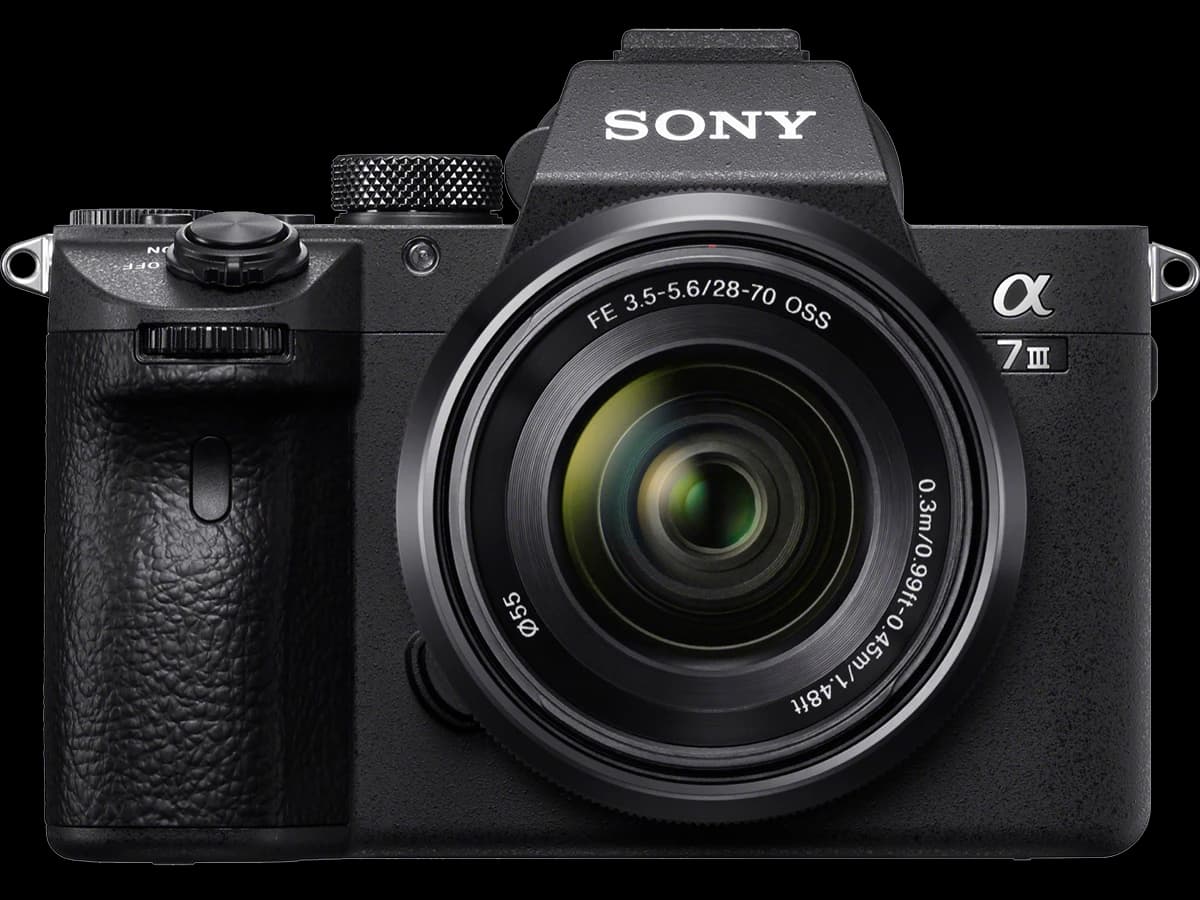
Review: Sony α7 III – Still Relevant in 2026?
The Sony α7 III remains an excellent used choice for weddings, portraits and travel thanks to its **710-shot CIPA battery life** and 693-point AF. Demanding videographers should look elsewhere.
Read the review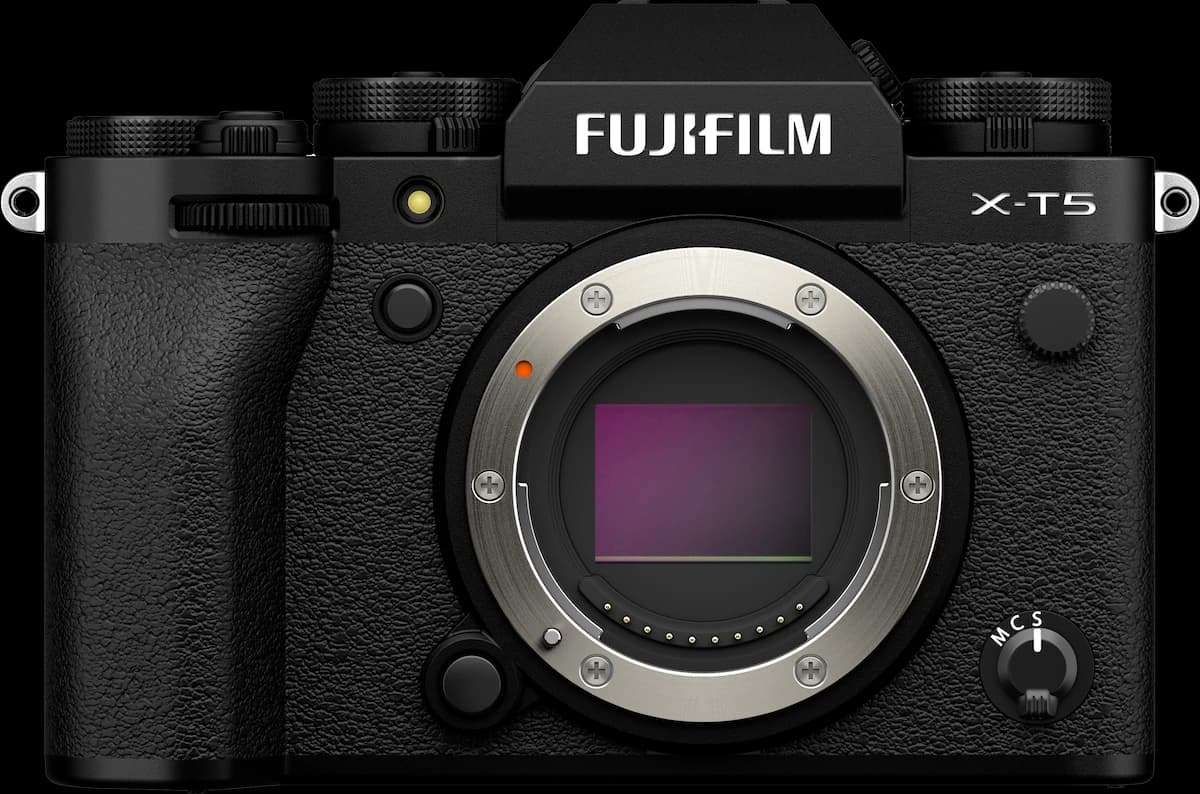
Fujifilm X-T5 Review: Pure Photography Before Video
The Fujifilm X-T5 suits landscape, portrait or travel photographers seeking 40.2 MP in a compact 557 g body. It is not a tool for intensive sport or professional video.
Read the review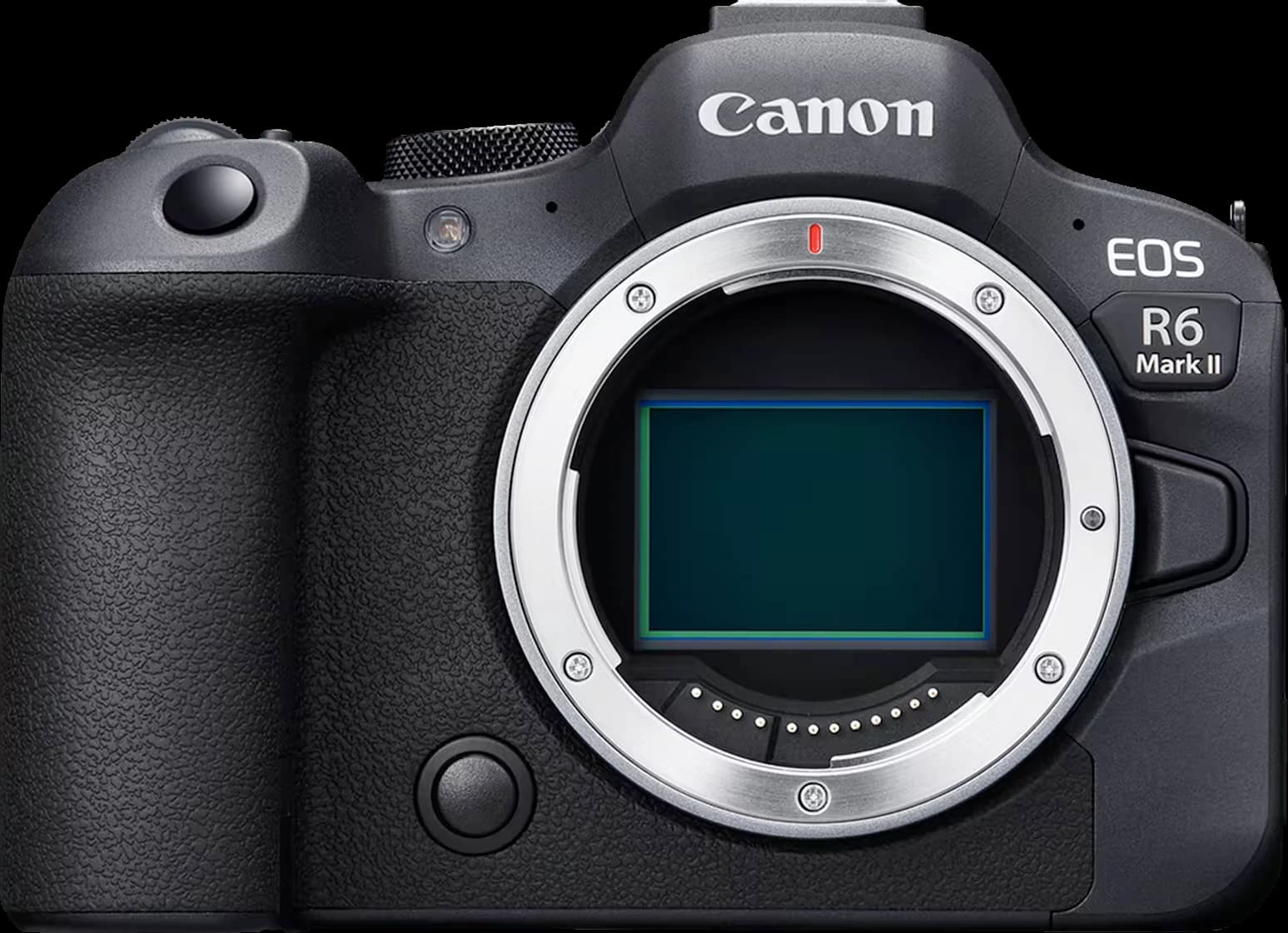
Review Canon EOS R6 Mark II: Still the Right Choice in 2026?
The Canon EOS R6 Mark II remains the most balanced general-purpose hybrid in its class for weddings, portraits and travel, provided you accept a RAW buffer limited to 75 images and video capped at 4K/60p.
Read the review