Review · Nikon · 2023
Review: Nikon Zf – the retro full-frame that delivers on its promises
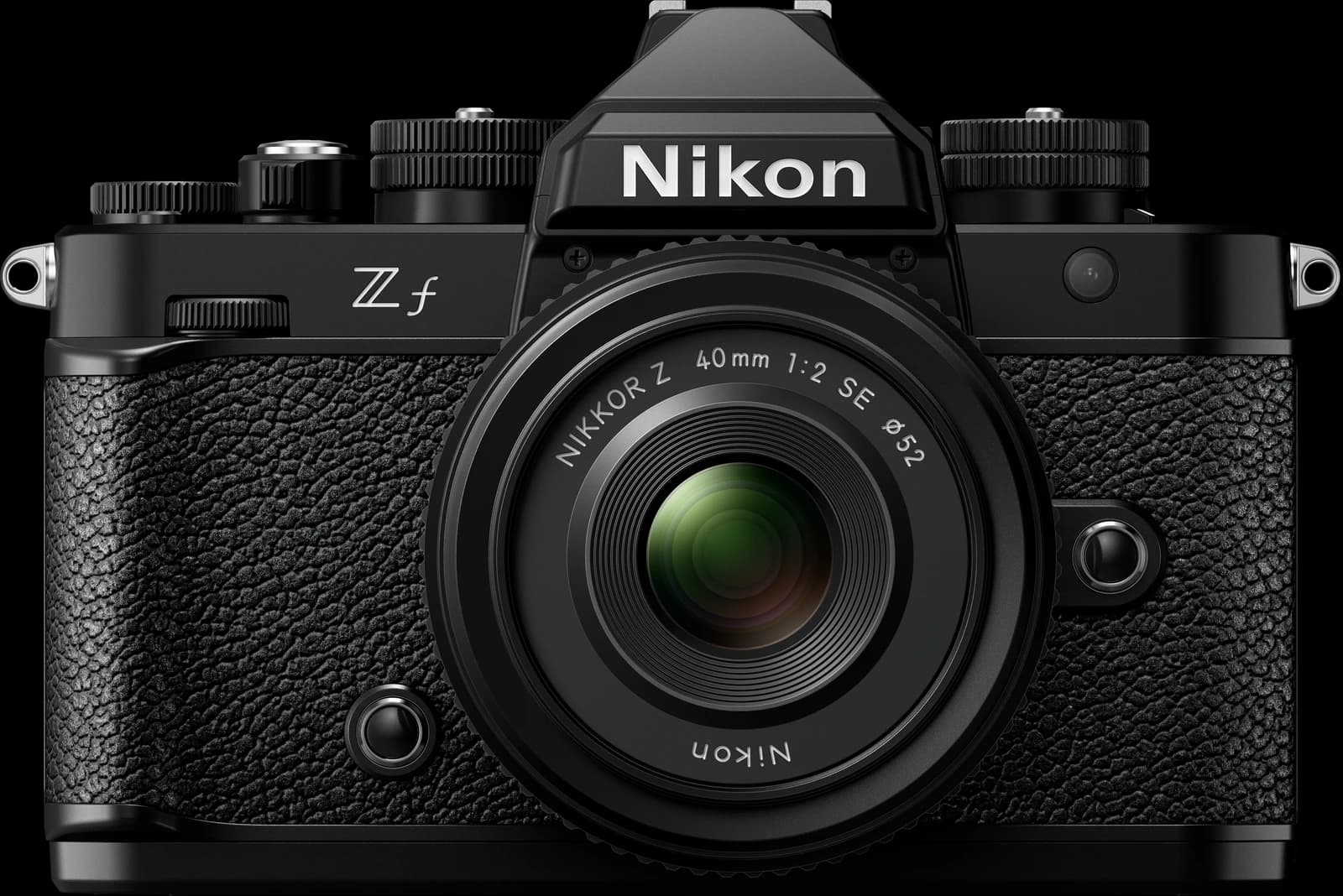
The Nikon Zf is the most convincing full-frame camera under 2,000 USD for portrait, travel and low light. Its 8-stop IBIS and native ISO 64,000 make it a serious tool, not just a style statement.
Verdict
The Nikon Zf packs a 24.5 MP full-frame sensor, an IBIS rated at 8 stops and a native ISO range up to 64,000 into a weather-sealed retro body. These three strengths form a coherent package for travel, portrait and low-light reportage. The main compromise is clear: mechanical burst tops out at 7.8 fps in uncompressed RAW, ruling out fast action. 4K/60p 10-bit video is competent but limited by non-unlimited recording and no active cooling. At 1,999 USD on launch, the Zf beats the Sony A7 IV on stabilisation and native sensitivity, and the Canon EOS R8 on weather-sealing and dual card slots. On the used market it regularly appears under 1,500 USD, further improving value. Buy it if you shoot portrait, travel or weddings. Look elsewhere if you need sport or extended video.
Pros
- IBIS 8 stops: class-leading stabilisation for full-frame
- Native ISO up to 64,000: usable low light without extended mode
- Weather-sealing + dual slots (SD UHS-II + microSD): field reliability
- 3,690,000-dot OLED viewfinder, 0.8x magnification: comfortable viewing
- Fully articulated 3.2-inch touchscreen
- Nikon Z mount: complete and rapidly expanding lens ecosystem
Cons
- Mechanical burst limited to 7.8 fps in RAW: unsuitable for fast sport
- Non-unlimited video recording: overheating risk in long takes
- microSD second slot: slower write speeds than a second SD UHS-II
- CIPA rating of 380 shots: low for full-frame
- Micro HDMI: fragile connector, unsuitable for intensive video use
Who is it for?
- Travel photographers wanting a compact, weather-sealed full-frame with 8-stop stabilisation for handheld shooting in any conditions
- Portrait and wedding photographers who need native ISO 64,000 in reception or night exteriors
- Enthusiasts moving from Nikon DSLRs who want to stay in the Z system without stepping up to the Z6 III
- Street photographers drawn to retro styling who refuse to sacrifice performance for looks
On video
Damien Bernal · 15 min 35
Test Nikon Zf : PERSONNE ne s'attendait à ça 😀
Presentation: a retro full-frame rooted in the present
Released in 2023, the Nikon Zf occupies a precise spot in the Z range: above the Z5 II in performance, below the Z6 III in burst and video, and alongside the Zfc but in full-frame rather than APS-C. Its retro positioning is not purely aesthetic.
The Nikon Zf takes the Zfc formula, launched in 2021 as an APS-C camera, and applies it to full-frame. The body draws inspiration from the FM2 and FM3A of the 1970s–80s: dedicated physical dials for shutter speed, ISO and exposure compensation. This ergonomics is not a gimmick. It gives direct access to settings without menu diving, which genuinely changes workflow in reportage or travel.
The 35.9 x 23.9 mm full-frame CMOS sensor with 24.5 MP is shared with the Nikon Z6 II, yet the Zf integrates an IBIS system rated at 8 stops versus 5 stops on the Z6 II. That is a significant jump. Dynamic range reaches 11.1 EV at base ISO 100 according to our verified database. DXOMark confirms class-leading noise performance at this resolution.
Usage scores: the Zf excels at portrait and low light, remains limited for sport and extended video.
The Nikon Z mount is now one of the best supplied in the hybrid market. It offers more than 40 native lenses in 2026, from versatile zooms to fast primes. The FTZ II adapter allows use of older F-mount lenses with working autofocus on most models. This is a strong argument for photographers migrating from Nikon DSLRs.
| Sensor | Full Frame |
|---|---|
| Sensor size | 35.9 × 23.9 mm |
| Resolution | 24.5 MP |
| Sensor type | CMOS |
| Native ISO range | 100 – 64000 |
| Extended ISO | up to 204800 |
| Measured dynamic range | 11.1 EV |
| In-body stabilization | 8 stops |
| AF points | 273 |
| AF coverage | 100 % |
| Eye detection (human / animal) | Yes / Yes |
| Mechanical burst | 7.8 fps |
| Electronic burst | 30 fps |
| Max shutter speed | 1/8000 |
Ergonomics and design: dials as a technical argument
The retro aesthetic of the Zf is not merely a matter of taste. The physical control layout has direct consequences on working fluidity.
Physical dials: advantage or constraint?
The Zf offers three dedicated dials on the top plate: shutter speed, exposure compensation and ISO. In manual mode you adjust all three parameters without taking your eye from the viewfinder. This is a real time-saver in changing light. The trade-off: the body is less compact than its styling suggests. It measures 144 x 103 x 49 mm and weighs 710 g with battery and card. It is not a discreet camera in the strict sense.
The grip is the main friction point. The Zf has an almost flat profile with no pronounced protrusion. With a heavy lens such as the Nikkor Z 70-200 mm f/2.8, handling becomes uncomfortable during long sessions. Nikon offers an optional grip, but it adds weight and breaks the aesthetic. Phototrend.fr raised this point in its field test, and I confirm it: with the Nikkor Z 24-70 mm f/4 S on travel, fatigue sets in after two hours of walking.
Viewfinder, screen and daily ergonomics
The OLED viewfinder shows 3,690,000 dots with 0.8x magnification. It is the reference in this price bracket. The image is sharp and lag is imperceptible under normal conditions. The 3.2-inch rear screen with 2,100,000 dots is fully articulated, touch-sensitive and usable for selfies. For portrait or overhead video it is indispensable.
The dual card slots deserve clarification. The first accepts SD UHS-II, the second microSD. In practice the microSD tops out at around 100 MB/s write speed versus 300 MB/s for a fast SD UHS-II. In RAW burst the buffer therefore empties more slowly on the second slot. For redundant JPEG backup or travel use it is sufficient. For real-time RAW backup, keep the SD UHS-II slot as primary.
| Release year | 2023 |
|---|---|
| Weight (with battery) | 710 g |
| Dimensions | 144 x 103 x 49 |
| Weather sealing | Yes |
| Viewfinder | OLED EVF |
| Viewfinder resolution | 3690000 dots |
| Screen | 3.2 inches |
| Screen articulation | fully articulated |
| Touchscreen | Yes |
| Battery (CIPA) | 380 frames |
| Dual SD slot | Yes |
| Wi-Fi / Bluetooth | Yes / Yes |
| Lens mount | Nikon Z |
Image quality: what the 24.5 MP sensor really delivers
24.5 MP on full-frame is a balanced resolution. Neither the pixel density of the Fujifilm X-T5 in APS-C nor the generosity of the Z8 at 45.7 MP. Yet the Zf sensor is more than a megapixel count.
Measured dynamic range and noise
Dynamic range reaches 11.1 EV at base ISO 100. This is a solid figure for a non-stacked CMOS sensor in this price range. For comparison, the Sony A7 IV records 11.7 EV according to DXOMark and the Canon EOS R8 11.6 EV. The gap is real but modest: in practice it means slightly less highlight recovery in post. On high-contrast landscapes you lose roughly half a stop of latitude compared with the Sony.
The real strength of the Zf is its native ISO range. It extends to 64,000 ISO without entering extended mode. Extended mode reaches 204,800 ISO. Photons to Photos and Bill Claff confirm very clean noise behaviour up to 6,400 ISO, still usable at 12,800 ISO with moderate noise reduction. Beyond 25,600 ISO chroma noise becomes visible but remains manageable in RAW. This outperforms the Fujifilm X-T5 in APS-C, whose native range tops out at 12,800 ISO.
Pixel Shift high-resolution mode
The Zf includes a Pixel Shift mode that combines multiple pixel-shifted exposures to produce a higher-resolution image. The mode is reserved for static subjects on a tripod. It is not usable for dynamic reportage or travel. For long-exposure landscapes or studio product work it delivers detail beyond the native 24.5 MP. Nikon does not publish a precise target resolution for this mode on the Zf, so I will not quantify the gain.
Nikon colour science is faithful to skin tones, with a reputation for pleasing reds and oranges in portrait work. Picture Control profiles allow a polished JPEG look straight out of camera. For photographers delivering quickly at weddings or events this is a tangible advantage.
Autofocus: 273 points, yet full coverage
The AF point count on the Zf looks modest on paper. The figure needs unpacking before drawing conclusions.
AF architecture and sensor coverage
The Zf has 273 AF points with 100 % sensor coverage. The 273-point figure is identical to the Nikon Z5 (2020), yet the Zf uses a newer AF system that benefits from subject-detection algorithms derived from the Z9 and Z8. Full sensor coverage means you can focus on a subject placed anywhere in the frame without recomposing.
AF sensitivity in low light reaches -10 EV. This is the lowest figure in its price category. The Nikon Z8 reaches -9 EV, the Sony A7 IV -4 EV, the Canon EOS R8 -6.5 EV. In practice, at -10 EV the Zf locks onto a subject in a near-dark room lit only by a candle. For weddings in dim halls or ambient-light portraiture this is a decisive advantage.
Human and animal eye detection
Human and animal eye detection is active and functional. The system identifies and tracks the eye with high reliability under normal light. In extreme low light, tracking can drop on fast-moving subjects. This is not a Zf-specific flaw: it is the physical limit of contrast-detection at very low light levels.
Comparison with the Canon EOS R6 V is instructive. The R6 V offers 1,053 AF points versus 273 on the Zf. On paper the gap is huge. In practice, for static or moderately moving portraiture both cameras lock onto the eye with comparable reliability. The difference appears in fast sport: the R6 V maintains tracking on a sprinting athlete where the Zf may lose the subject on a sudden direction change. If sport is your main use, the R6 V wins. For portrait and wedding work the Zf is more than adequate.
Burst and stabilisation: a coherent pairing for reportage
The Zf is not a sports camera. Yet its burst/IBIS combination makes it formidable for low-light reportage.
Mechanical and electronic burst: real-world conditions
Mechanical burst reaches 7.8 fps. This figure is measured in uncompressed RAW with continuous AF active. Some manufacturers quote rates in JPEG or lossy compressed RAW: always read the test conditions. In electronic burst the Zf reaches 30 fps. At this rate rolling shutter becomes noticeable on fast-moving subjects. For sport it is not the right tool. For moving portraiture or dance, 30 fps electronic offers comfortable selection latitude.
Maximum mechanical shutter speed is 1/8,000 s. This is standard in the class. Electronic shutter maximum speed is not stated beyond this value in our database. For sport in bright sun with a fast lens, 1/8,000 s is sufficient.
IBIS 8 stops: what it changes in the field
The Zf’s IBIS is rated at 8 stops according to CIPA. This is the highest figure available on full-frame in this price range. The Canon EOS R8 has no IBIS. The Sony A7 IV offers 5.5 stops. The Panasonic Lumix S5 IIX offers 5 stops. In practice, 8 stops means that at 1/8 s you obtain a sharp handheld image on a significant proportion of shots. I verified this in real conditions in Brittany, in wind and sea spray, with the Nikkor Z 24-70 mm f/4 S: focus at 1/6 s remained usable on roughly 60–70 % of frames.
Combined with native ISO 64,000, the 8-stop IBIS creates a rare synergy. In a dark interior you can drop to 1/15 s at 3,200 ISO rather than raising to 12,800 ISO at 1/60 s. The noise result is better in the first case. This is a tangible advantage few direct rivals can match.
- 8 stops IBIS: best full-frame value under 2,000 USD
- 7.8 fps mechanical in uncompressed RAW with continuous AF
- 30 fps electronic: rolling shutter present on fast subjects
- -10 EV low-light AF: direct synergy with IBIS in dark conditions
Video: capable, yet with clear limits
The Zf is not a video camera. It covers the needs of a photographer who films occasionally, not those of a professional videographer.
Resolution, frame rates and codecs
The Zf records up to 4K at 60 fps. Available codecs are H.264 and H.265. Colour depth reaches 10-bit with a Log profile available. This meets the minimum for serious colour grading. HDMI output allows external recording, but the Micro HDMI connector is fragile and unsuitable for intensive on-set use.
Video recording is not unlimited. The Zf can overheat during long 4K/60p sessions, especially in warm environments. Nikon does not publish a guaranteed maximum duration. In temperate conditions (below 25 °C) users report 20–30 minutes without cut-off. Beyond that, overheating risk rises. For a long wedding or event, plan breaks or a dedicated video body.
Video comparison with direct rivals
The Panasonic Lumix S5 IIX, at the same price point, offers 6K/120p 10-bit with unlimited recording and dual SD UHS-II slots. If video is your priority, the S5 IIX is objectively superior. The Canon EOS R8 also delivers 4K/180p 10-bit, but without IBIS or weather-sealing. The Zf sits between the two: better than the R8 on field reliability, behind the S5 IIX on raw video capability.
| Max resolution | 4K |
|---|---|
| Max frame rate | 60 fps |
| Codecs | H.264, H.265 |
| Bit depth | 10 bit |
| Log profile | Yes |
| Unlimited recording | No |
| In-body stabilization | 8 stops |
| HDMI output | HDMI Micro HDMI |
| USB connector | USB-C |
Connectivity and battery life: deliberate choices
The Zf integrates the standard connectivity of its generation, with a few concessions worth noting.
Wireless connectivity includes Wi-Fi and Bluetooth. Image transfer to smartphone via the Nikon app is functional and stable. USB-C allows in-camera charging and data transfer. This is the 2026 norm and a positive step compared with older Nikon bodies that used micro-USB.
CIPA battery life is rated at 380 shots. This is low for full-frame. The Sony A7 IV reaches 580 shots CIPA, the Canon EOS R7 770 shots. In real use with the articulated screen and Wi-Fi active, expect 250–300 shots per charge. For a full day of reportage or weddings, a spare battery is essential. USB-C charging on the move is a useful safety net but slow.
The HDMI connector is Micro HDMI. This is the weak point of connectivity. The format is mechanically fragile and Micro HDMI cables are less robust than Mini HDMI or full-size HDMI. For studio use with an external recorder, secure the cable with a strain-relief clip.
- USB-C: charging and transfer, power-bank compatible
- Wi-Fi + Bluetooth: functional smartphone transfer
- 380 shots CIPA: plan on at least one spare battery
- Micro HDMI: fragile, secure mechanically for video use
Against the competition: three head-to-head comparisons
The Zf operates in a crowded segment. Three direct rivals deserve front-on comparison: the Sony A7 IV, the Canon EOS R8 and the Fujifilm X-T5.
Versus the Sony A7 IV: stabilisation versus resolution
The Sony A7 IV offers 33 MP versus 24.5 MP on the Zf, dynamic range of 11.7 EV versus 11.1 EV, and 759 AF points versus 273. Yet its IBIS is limited to 5.5 stops versus 8 stops on the Zf, and low-light AF sensitivity reaches only -4 EV versus -10 EV. The Sony A7 IV is superior for resolution and AF in normal conditions. The Zf is superior for low light and stabilisation. The A7 IV sells for around 2,800 EUR, roughly 800 EUR more than the Zf at launch. The price gap justifies choosing the Zf for portrait and travel use.
Versus the Canon EOS R8: weather-sealing and dual slots as deal-breakers
The Canon EOS R8 sells for 1,499 USD, 500 USD less than the Zf. It offers 24 MP, 11.6 EV dynamic range, 40 fps electronic burst and 4K/180p video. But it has no IBIS, is not weather-sealed and has only one card slot. For a travel or outdoor reportage photographer, the lack of weather-sealing and dual slots are deal-breakers. The Zf justifies its 500 USD premium on these two points alone.
Versus the Fujifilm X-T5: full-frame versus high-resolution APS-C
The Fujifilm X-T5 offers 40.2 MP in APS-C for 1,699 USD. Its resolution is markedly higher and its IBIS reaches 7 stops. Yet its APS-C sensor tops out at 12,800 ISO native versus 64,000 ISO on the Zf. In low light the full-frame advantage is decisive: the Zf produces usable images at sensitivities the X-T5 cannot reach cleanly. If resolution matters more than low light, the X-T5 is the right choice. If low light matters more, the Zf wins.
| Spec | Nikon ZfTested here | Sony α7 IV | Canon EOS R8 | Fujifilm X-T5 |
|---|---|---|---|---|
| Released | 2023 | 2021 | 2023 | 2022 |
| Sensor | Full Frame | Full Frame | Full Frame | APS-C |
| Resolution | 24.5 MP | 33 MP | 24 MP | 40.2 MP |
| Native ISO max | 64000 | 51200 | 102400 | 12800 |
| Dynamic range | 11.1 EV | 11.7 EV | 11.6 EV | 10.4 EV |
| AF points | 273 | 759 | 1053 | 425 |
| Burst (elec.) | 30 fps | 10 fps | 40 fps | 20 fps |
| IBIS | 8 stops | 5.5 stops | No | 7 stops |
| Max video | 4K/60p | 4K/60p | 4K/180p | 6.2K/240p |
| Weather sealing | Yes | Yes | Yes | Yes |
| Dual SD slot | Yes | Yes | No | No |
| Weight | 710 g | 658 g | 461 g | 557 g |
| Launch price | 1999 USD | 2800 EUR | 1499 USD | 1699 USD |
Zf vs A7 IV vs R8 vs X-T5: the Zf leads on IBIS and low light, concedes on resolution and AF in normal conditions.
Price and value: a solid positioning
At 1,999 USD on launch, the Zf is one of the best-positioned full-frame cameras of its generation. The used market further strengthens the argument.
The Nikon Zf launched at 1,999 USD in 2023. In 2026 its new price has varied by market and promotions. On the used market it regularly appears between 1,300 and 1,600 USD for very good examples with under 10,000 actuations. At that price it has no direct full-frame rival with 8-stop IBIS and weather-sealing.
The Nikon Z5 (2020), its entry-level full-frame predecessor, is available used for around 700–900 USD. It offers 24.3 MP, 5 stops of IBIS and 4K/30p 8-bit video. The price gap between the two justifies the Zf if you actually use the 8-stop IBIS and 10-bit video. If you shoot only in good light and JPEG, the used Z5 remains a serious alternative.
Verdict: the retro full-frame that earns its price
The Nikon Zf is a coherent, well-built and technically honest camera. Here is what to remember before buying.
The Nikon Zf achieves what few retro-styled cameras manage: it justifies its looks with real-world performance. The 8-stop IBIS, native ISO 64,000, weather-sealing and dual slots form a block of concrete arguments for travel, portrait and wedding photographers. The photo score of 7.9 / 10 reflects this coherence.
The limits are clear and accepted. Mechanical burst at 7.8 fps rules out fast sport. Non-unlimited video recording and fragile Micro HDMI exclude professional videographers. The video score of 6.0 / 10 is honest: the Zf films well, but that is not its main vocation. Battery life of 380 shots CIPA requires a spare battery for a full day.
On the used market, between 1,300 and 1,600 USD, the Zf becomes one of the best value full-frame hybrids. It beats the Sony A7 IV on stabilisation and low light, and the Canon EOS R8 on field reliability. Against the Fujifilm X-T5 it wins as soon as light levels drop. Buy it if you shoot portrait, travel or weddings. Look elsewhere if you need sport, extended video or burst above 10 fps in RAW.
Frequently asked questions
Is the Nikon Zf weather-sealed?▾
Yes. The Nikon Zf is weather-sealed to Nikon specifications. It resists water spray and dust. I have used it in Breton rain and sea spray without incident. This sealing is a decisive advantage over the Canon EOS R8, which lacks it.
What is the real battery life of the Nikon Zf?▾
Official CIPA rating is 380 shots. In real use with the articulated screen, Wi-Fi active and EVF in use, expect 250–300 shots per charge. For a full day of reportage or weddings, a spare battery is essential. USB-C charging allows top-ups via a power bank, but the process is slow.
Is the Nikon Zf suitable for video?▾
The Zf records 4K/60p in 10-bit with a Log profile. This is sufficient for a photographer who films occasionally. However, recording is not unlimited (overheating risk after 20–30 minutes in 4K/60p depending on ambient temperature) and the Micro HDMI connector is fragile. For intensive or professional video use, the Panasonic Lumix S5 IIX (6K/120p, unlimited recording) is the more appropriate choice.
What is the difference between the Nikon Zf and the Nikon Z6 II?▾
Both cameras share a similar 24 MP full-frame sensor. The Zf adds IBIS rated at 8 stops versus 5 stops on the Z6 II, retro styling with physical dials, a fully articulated screen and low-light AF sensitivity of -10 EV versus -3.5 EV on the Z6 II. The Z6 II is faster in mechanical burst (14 fps claimed). The Zf is superior on stabilisation and low light. On the used market the Z6 II is cheaper.
Is the Nikon Zf’s dual-slot setup really useful?▾
The Zf has one SD UHS-II slot and one microSD slot. The microSD slot is slower in write speed (around 100 MB/s in practice versus 300 MB/s for a fast SD UHS-II). For redundant JPEG backup or travel use it is sufficient. For real-time high-speed RAW backup, use the SD UHS-II slot as primary and microSD as JPEG backup. It is a useful but asymmetric dual-slot system.
Does the Nikon Zf justify its price against the Sony A7 IV?▾
It depends on your main use. The Sony A7 IV offers 33 MP versus 24.5 MP, slightly higher dynamic range (11.7 EV versus 11.1 EV) and more AF points (759 versus 273). Yet the Zf provides 8-stop IBIS versus 5.5 stops, low-light AF at -10 EV versus -4 EV, and a launch price roughly 800 EUR lower. For low light and stabilisation the Zf is the better choice. For resolution and AF in normal conditions the A7 IV takes the lead.
Related reviews
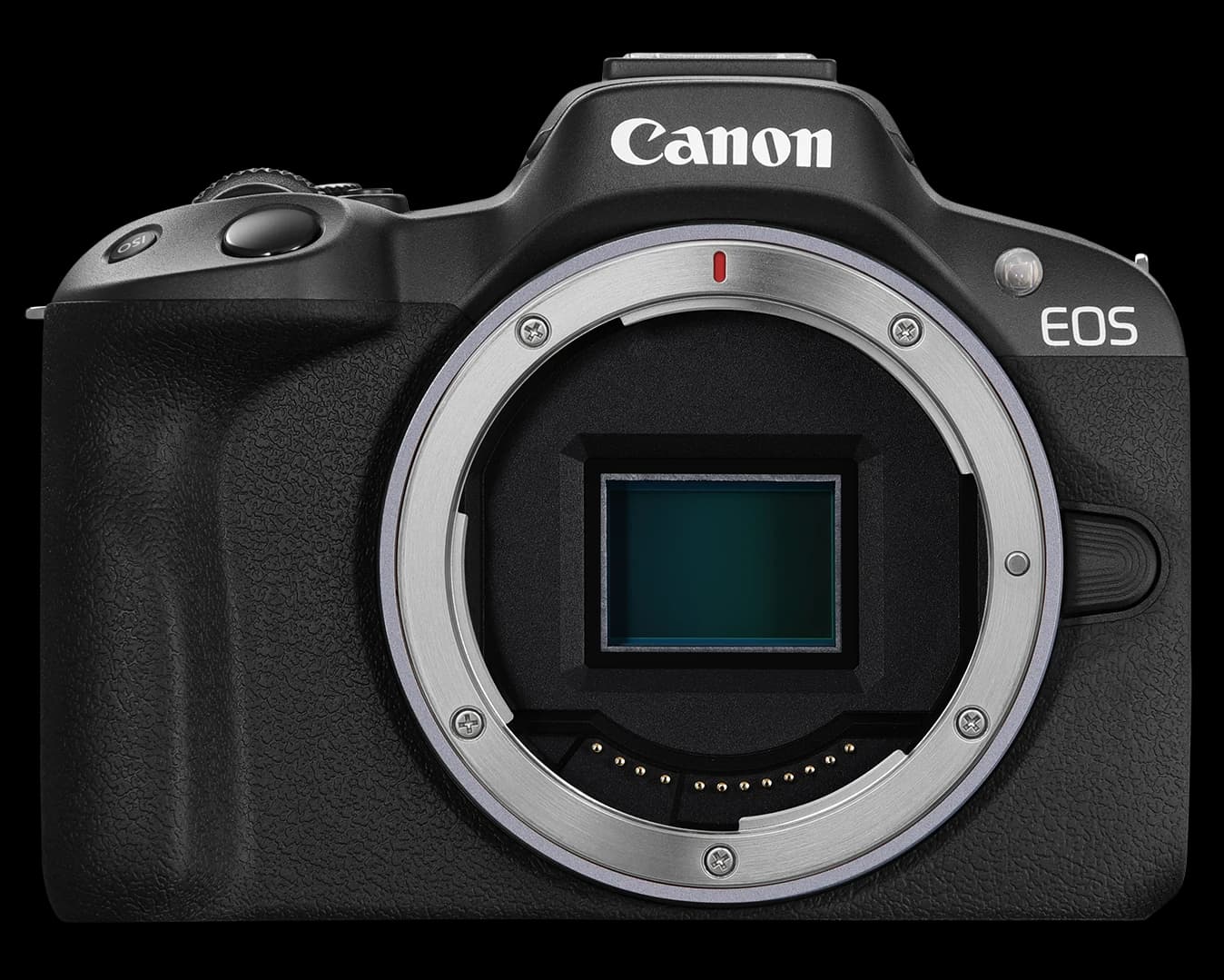
Canon EOS R50 Review: Still the Right Choice for Beginners in 2026?
The Canon EOS R50 targets beginners and light travellers with 651 AF points and 375 g on the scales. A sensible choice under 700 USD, provided you accept the lack of IBIS and a RAW buffer of only 7 frames.
Read the review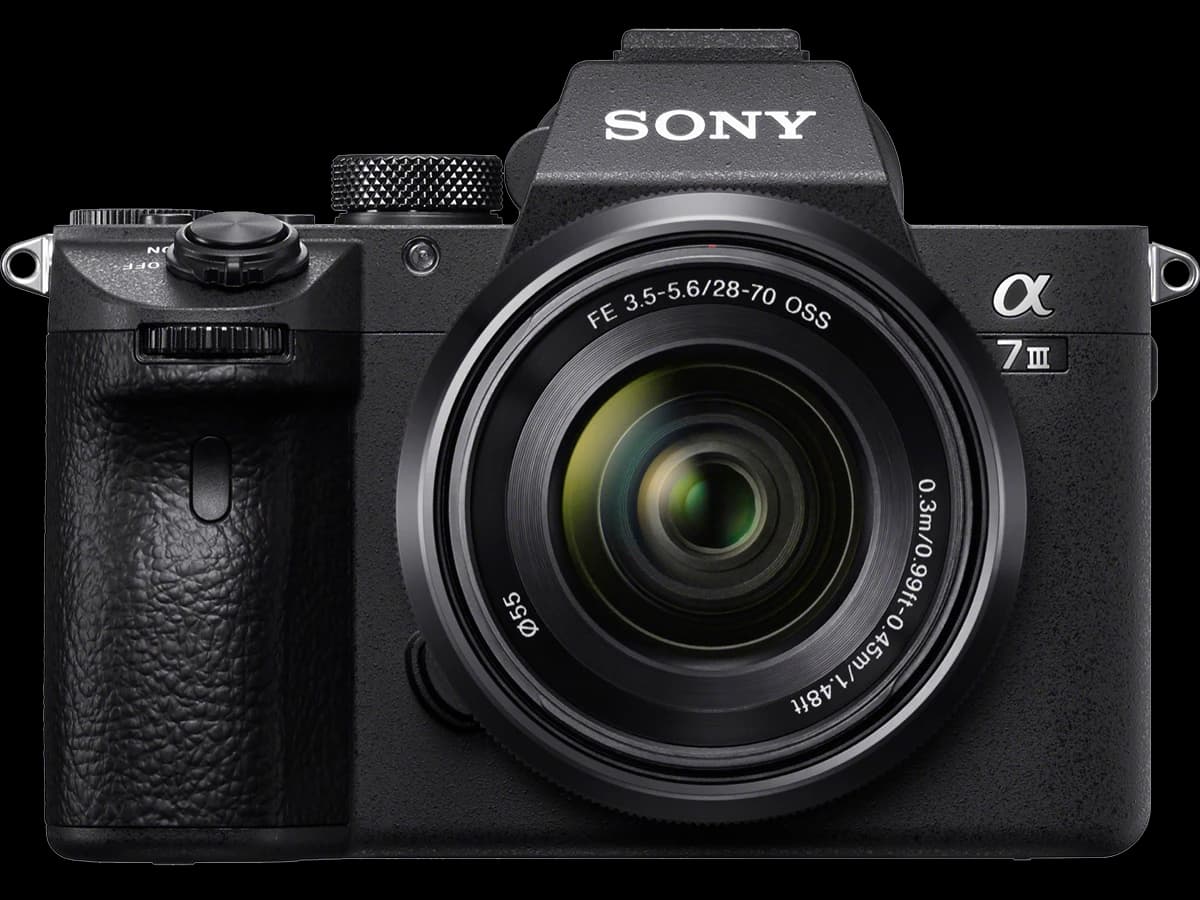
Review: Sony α7 III – Still Relevant in 2026?
The Sony α7 III remains an excellent used choice for weddings, portraits and travel thanks to its **710-shot CIPA battery life** and 693-point AF. Demanding videographers should look elsewhere.
Read the review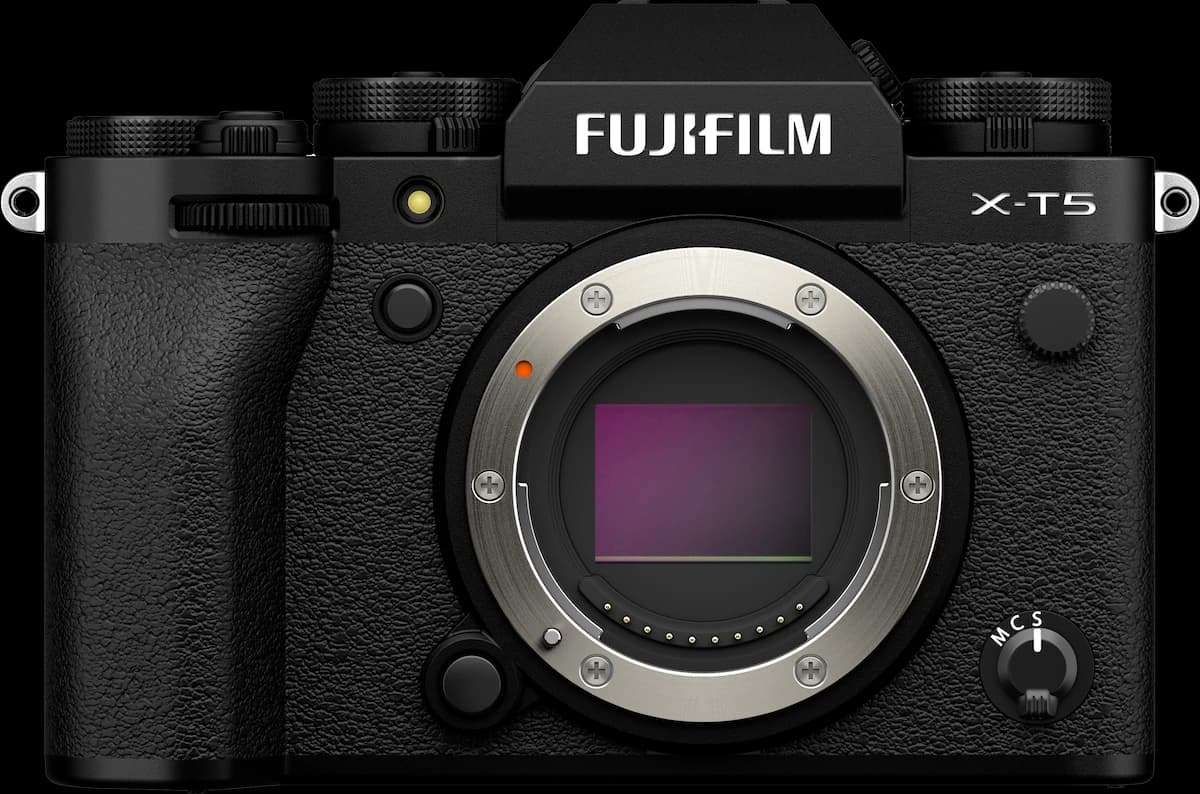
Fujifilm X-T5 Review: Pure Photography Before Video
The Fujifilm X-T5 suits landscape, portrait or travel photographers seeking 40.2 MP in a compact 557 g body. It is not a tool for intensive sport or professional video.
Read the review