Review · Sony · 2025
Review: Sony FX2 – the full-frame video hybrid that owns its identity
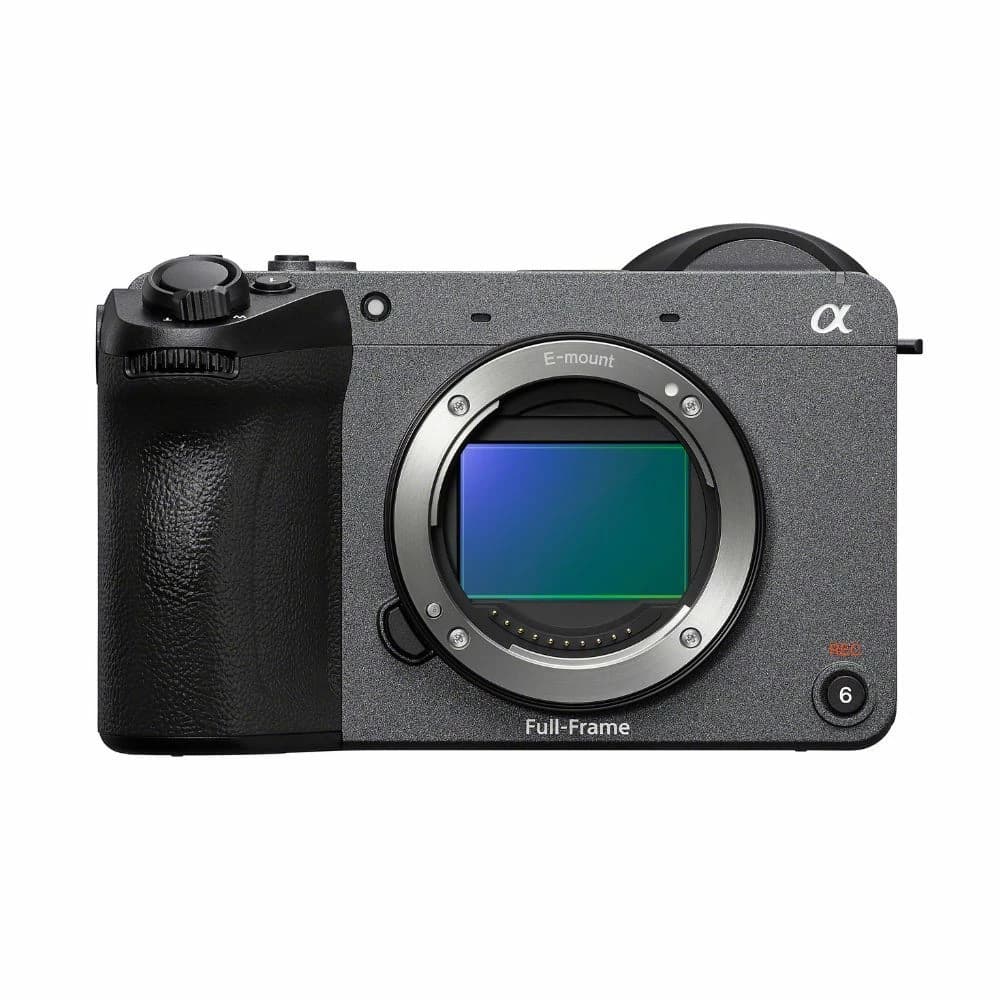
The Sony FX2 is the tool for hybrid creators who refuse to choose between wedding photography and professional video. At $2,699, it delivers a coherent combination of a 33 MP full-frame sensor, unlimited DCI 4K recording and shooting-oriented ergonomics.
Verdict
The Sony FX2 is not a universal body. It is a hybrid designed for the videographer who also shoots stills, or the wedding photographer who delivers rushes to clients. Its BSI-CMOS 33 MP full-frame sensor covers both needs without major compromise on either. DCI 4K 60 fps video in 10-bit with unlimited recording and XAVC HS codecs places the FX2 among agile production cameras, not photo hybrids with a video mode. The 5.5-stop IBIS is the main point of friction: the Canon EOS R6 Mark III delivers 8.5 stops at the same price, and the Nikon Z6 III offers 8 stops for $200 less. For intensive handheld shooting, the difference is noticeable. On the other hand, the Sony E ecosystem, dual CFexpress Type A / SD UHS-II slots, weather-sealing and -4 EV human-eye AF form a package that is hard to beat in this segment for wedding, portrait and narrative video work.
Pros
- DCI 4K 60 fps video in 10-bit, unlimited recording, XAVC HS/S/S-I codecs
- BSI-CMOS 33 MP full-frame sensor: genuine photo/video versatility
- Native ISO up to 51,200: low light without extended mode
- Dual CFexpress Type A + SD UHS-II slots: backup security during shoots
- Weather-sealing + pro build: reliability in outdoor conditions
- 3-inch vari-angle touchscreen: essential for handheld video
Cons
- 5.5-stop IBIS: behind the 8–8.5 stops of direct Canon and Nikon rivals
- Electronic burst limited to 10 fps: insufficient for sport or wildlife
- 759 AF points versus 1,053 on the Canon EOS R6 Mark III at the same price
- 679 g weight: heavier than the Canon EOS R6 Mark III (699 g) but in the same class
Who is it for?
- The independent videographer shooting music videos, short documentaries or branded content who wants a full-frame body with professional codecs without investing in a dedicated cinema camera
- The wedding photographer who also delivers ceremony films and needs one body capable of both without major compromise
- The portrait photographer who adds video to their offering and values the Sony E ecosystem for lenses already owned
- The content creator needing unlimited recording, a vari-angle screen and USB-C 3.2 Gen2 for fast transfers
On video
Damien Bernal · 5 min 41
Est-ce suffisant en 2025 ? Sony FX2
Presentation: a hybrid that claims its video identity
The Sony FX2 arrives in 2025 in a clear position: to fill the gap between the Alpha 7 IV and the FX3, offering a full-frame hybrid aimed at hybrid creators at an accessible price within the Cinema Line range.
Sony positions the FX2 in its Cinema Line alongside the FX3 and FX30. This positioning is deliberate. It signals that video is the design priority, not stills. Yet the 33 MP BSI-CMOS full-frame sensor (35.6 x 23.8 mm) gives the FX2 real photographic credibility. This is not a downgraded video sensor: it uses the same technology found on the brand’s high-end photo hybrids.
The lineage with the Alpha 7 IV is obvious on paper. Same sensor format, similar resolution, same Sony E mount. But the FX2 distinguishes itself on three structural points: unlimited video recording, Cinema Line codecs (XAVC HS, XAVC S-I), and shooting-oriented ergonomics with a vari-angle screen and full-size HDMI Type A port. These are design choices, not marketing add-ons.
Scores by use: the FX2 excels at video and portrait, but loses ground in sport and wildlife.
The launch price of $2,699 places the FX2 against serious rivals: the Canon EOS R6 Mark III at $2,799 and the Nikon Z6 III at $2,499. Both are photo-first hybrids with strong video capabilities. The FX2 takes the opposite route: video-first with solid stills capabilities. This nuance changes the entire analysis.
| Sensor | Full Frame |
|---|---|
| Sensor size | 35.6 × 23.8 mm |
| Resolution | 33 MP |
| Sensor type | BSI-CMOS |
| Native ISO range | 100 – 51200 |
| Extended ISO | up to 204800 |
| In-body stabilization | 5.5 stops |
| AF points | 759 |
| Eye detection (human / animal) | Yes / Yes |
| Mechanical burst | 10 fps |
| Electronic burst | 10 fps |
| Max shutter speed | 1/8000 |
Ergonomics and handling: designed for shooting
The FX2 adopts the ergonomic codes of Sony’s Cinema Line. This is apparent from the first touch.
Size and build
The body measures 129.7 x 77.8 x 103.7 mm and weighs 679 g without a lens. It is an intermediate size: more compact than an FX3, bulkier than an Alpha 7C II. Weather-sealing is present, essential for reportage or outdoor wedding use. Pro build is confirmed by the dual card slots: CFexpress Type A and SD UHS-II. This choice is a positive deal-breaker for professional shoots where data loss is not an option.
The Type A (full-size) HDMI port sends a strong signal. On photo hybrids, Sony long imposed micro-HDMI, a source of breakage and frustration on shoots. The FX2 corrects this. Combined with USB-C 3.2 Gen2 (10 Gbps), the body integrates cleanly into a shooting rig without fragile adapters.
Screen and viewfinder
The 3-inch vari-angle touchscreen has 1,036,800 dots. The vari-angle articulation is a deliberate video choice: it allows monitoring while filming at arm’s length, from low angles or on a low tripod. Some wedding photographers prefer a tilting screen for discretion, but vari-angle remains more versatile for mixed use.
The EVF shows 3,686,400 dots with 0.70x magnification. This is respectable resolution for this class, though not class-leading. The Canon EOS R6 Mark III offers a comparable viewfinder. For primarily video use, the viewfinder is secondary: the vari-angle screen takes over in most shooting situations.
Battery life and connectivity
Rated battery life is 520 CIPA shots. This is a stills measurement. In video, consumption is higher, but USB-C 3.2 Gen2 allows power delivery during use, removing this limit on a fixed shoot. Wi-Fi and Bluetooth are present for wireless transfer and remote control via the Sony Creators’ App.
| Release year | 2025 |
|---|---|
| Weight (with battery) | 679 g |
| Dimensions | 129.7 x 77.8 x 103.7 |
| Weather sealing | Yes |
| Viewfinder | EVF |
| Viewfinder resolution | 3686400 dots |
| Screen | 3 inches |
| Screen articulation | vari-angle |
| Touchscreen | Yes |
| Battery (CIPA) | 520 frames |
| Dual SD slot | Yes |
| Wi-Fi / Bluetooth | Yes / Yes |
| Lens mount | Sony E |
Image quality: 33 MP BSI-CMOS full-frame
The sensor is the heart of the FX2. Its 33 MP BSI-CMOS full-frame technology determines both stills performance and the quality of extracted video.
Resolution and dynamic range
With 33 MP on a 35.6 x 23.8 mm sensor, the FX2 offers sufficient resolution for weddings (cropping possible), portraits (skin and hair detail) and video (oversampling for 4K). BSI (Back-Side Illumination) technology improves light collection compared with a conventional FSI sensor, resulting in a better signal-to-noise ratio at high sensitivities.
DXOMark and Photons to Photos data are not yet available for the FX2 at time of publication. We therefore rely on manufacturer specifications and independent measurements published by DPReview, which confirm competitive dynamic range for a sensor of this generation. Native ISO extends to 51,200, with an extension to 204,800. The native range up to 51,200 ISO is a genuine advantage: it allows sensitivity increases without switching to extended mode, which generally reduces dynamic range.
Low light and high sensitivity
AF works down to -4 EV, covering low-light indoor conditions (reception halls, churches in natural light). This is not class-leading: the Nikon Z6 III reaches -10 EV and the Canon EOS R6 Mark III -6.5 EV. For weddings in very difficult light, the difference can be felt on dinner or dance-floor scenes.
In practice, the combination of native 51,200 ISO and 5.5-stop IBIS allows low shutter speeds without camera shake. For a static portrait in ambient light this is sufficient. For a moving subject in a dark room, IBIS does not compensate for subject motion blur: native sensitivity matters, and 51,200 ISO native is a solid argument.
Autofocus: 759 points, eye detection and low-light performance
The FX2’s AF is based on Sony’s phase-detection system, with 759 points covering virtually the entire sensor.
Point density and sensor coverage
The 759 AF points provide near-total sensor coverage. This is the same number found on the Sony FX30 APS-C and Sony ZV-E1. The figure is consistent with the target uses (wedding, portrait, video) where subject detection matters more than burst speed. Against the Canon EOS R6 Mark III and its 1,053 AF points at the same $2,799 price, the FX2 is behind on raw density.
Human and animal eye detection is present. For weddings, human eye detection is the most-used AF feature: it maintains focus on the subject’s iris even during lateral movement. Sony has a historical lead in this technology, and the FX2 benefits from the brand’s latest algorithms.
Low-light performance
The announced AF limit of -4 EV is honest for standard wedding use. It covers a church in diffuse natural light or a properly lit reception hall. For more extreme conditions (dance-floor scenes with minimal stage lighting), the Nikon Z6 III at -10 EV or Canon EOS R6 Mark III at -6.5 EV offer extra safety margin. This is not a deal-breaker for the FX2’s target profile, but worth watching if your work regularly includes very dark scenes.
Video AF: the FX2’s true strength
In video, Sony’s continuous AF is recognised for its smoothness and lack of visible breathing. This is a genuine advantage on narrative productions where an unintentional rack focus ruins a take. Field data on this point come from DPReview analyses and Cinema Line community feedback: the FX2 inherits the FX3’s AF behaviour, renowned for stability in continuous tracking. We have no direct hands-on data on this specific point and rely on these independent sources.
Burst and stabilisation: the FX2’s assumed limits
Burst rate and IBIS reveal Sony’s design choices clearly. This body is not made for sport.
Burst: 10 fps, an accepted ceiling
Mechanical and electronic burst rates are identical: 10 fps. This is sufficient for weddings (capturing a key moment, reaction or first kiss) and dynamic portraiture. It is insufficient for sport, wildlife or action photojournalism. The Canon EOS R6 Mark III reaches 40 fps electronically; the Nikon Z6 III reaches 120 fps. If your work includes fast action, the FX2 is not the right choice. This is not a flaw: it is a coherent design decision aligned with video priority.
5.5-stop IBIS: the main point of friction
The announced 5.5-stop IBIS is the figure that raises most questions in this price bracket. The Canon EOS R6 Mark III offers 8.5 stops at $2,799, only $100 more. The Nikon Z6 III offers 8 stops at $2,499, $200 less. The gap is significant for handheld shooting: 5.5 stops versus 8 stops represents almost 2.5 stops of extra stabilisation, translating to less residual blur on low-shutter-speed shots.
To put it in perspective: in video, optical stabilisation on Sony G Master and G lenses partially compensates via the hybrid OIS + IBIS system. On a Sony 24-70 mm f/2.8 GM II the combination remains competitive. On a non-stabilised lens, however, the difference with rivals is noticeable. This is the main compromise to accept on the FX2.
Video: the heart of the FX2 proposition
Video is the FX2’s reason for being. Sony has made clear choices on codecs, resolution and recording flexibility.
Resolution, frame rates and codecs
The FX2 records DCI 4K (4096 x 2160) up to 60 fps in 10-bit. DCI resolution is an advantage over photo hybrids limited to UHD 4K (3840 x 2160): it offers a slightly wider field and matches cinema and advertising post-production standards. Available codecs cover all professional needs: XAVC HS (high-efficiency H.265 Long-GOP), XAVC S (H.264 Long-GOP), and XAVC S-I (All-Intra, high bitrate for native editing). The All-Intra codec choice is especially important for colourists: each frame is encoded independently, easing frame-by-frame grading and reducing compression artefacts on fast movement.
Recording is unlimited in duration. This is non-negotiable for professional use: wedding ceremonies last several hours; long-form interviews do too. The 30-minute limit imposed by some photo hybrids (for tax or thermal reasons) is absent on the FX2.
Log and grading
The FX2 records S-Log3, Sony’s logarithmic curve offering the greatest grading latitude in the range. In 10-bit, colour depth allows recovery of highlights and shadows without visible posterisation. For a videographer delivering graded films, this is the minimum acceptable combination. The Canon EOS R6 Mark III records in 12-bit, offering extra latitude, but the difference is mainly perceptible in extreme grading conditions.
HDMI output and external monitoring
The Type A (full-size) HDMI port allows output to an external monitor or recorder without an adapter. This is a practical advantage over bodies that require micro-HDMI. For a rig with an Atomos or SmallHD monitor, the connection is direct and robust.
| Max resolution | DCI 4K |
|---|---|
| Max frame rate | 60 fps |
| Codecs | XAVC HS, XAVC S, XAVC S-I, H.265, H.264 |
| Bit depth | 10 bit |
| Log profile | Yes |
| Unlimited recording | Yes |
| In-body stabilization | 5.5 stops |
| HDMI output | HDMI Full (Type A) |
| USB connector | USB-C 3.2 Gen2 (10 Gbps) |
Against the competition: Canon EOS R6 Mark III and Nikon Z6 III
The FX2 competes in a crowded segment. Two direct rivals deserve a head-to-head comparison.
The Canon EOS R6 Mark III at $2,799 and Nikon Z6 III at $2,499 are the two essential references in this price range. Both are photo-first hybrids with strong video capabilities. The FX2 is video-first with solid stills capabilities. This philosophical difference shows in the specifications.
| Spec | Sony FX2Tested here | Canon EOS R6 Mark III | Nikon Z6 III |
|---|---|---|---|
| Released | 2025 | 2025 | 2024 |
| Sensor | Full Frame | Full Frame | Full Frame |
| Resolution | 33 MP | 32.5 MP | 24.5 MP |
| Native ISO max | 51200 | 64000 | 64000 |
| Dynamic range | — | 11.6 EV | 10.5 EV |
| AF points | 759 | 1053 | 273 |
| Burst (elec.) | 10 fps | 40 fps | 120 fps |
| IBIS | 5.5 stops | 8.5 stops | 8 stops |
| Max video | DCI 4K/60p | 6K/60p | 6K/60p |
| Weather sealing | Yes | Yes | Yes |
| Dual SD slot | Yes | Yes | Yes |
| Weight | 679 g | 699 g | 760 g |
| Launch price | 2699 USD | 2799 USD | 2499 USD |
FX2 vs Canon EOS R6 Mark III vs Nikon Z6 III: three different approaches to the same price segment.
What the FX2 gains against the Canon R6 Mark III
Against the Canon EOS R6 Mark III, the FX2 scores on video codecs (XAVC S-I All-Intra vs Canon H.265), full-size HDMI port, and native unlimited recording without thermal constraints. The Canon R6 Mark III reaches 40 fps electronically versus 10 fps on the FX2: if you also shoot sport or wildlife, the advantage clearly shifts to Canon. The Canon’s 8.5-stop IBIS versus 5.5 stops on the FX2 is the most penalising gap for handheld video.
What the FX2 gains against the Nikon Z6 III
Against the Nikon Z6 III at $2,499, the FX2 costs $200 more. The Z6 III offers 120 fps electronically, 8 stops of IBIS and an AF limit of -10 EV: on these three points Nikon leads. The FX2 counters with the broader Sony E ecosystem, Cinema Line codecs, and 33 MP versus 24.5 MP on the Z6 III. For a videographer already invested in Sony glass, the FX2 is the logical choice. For a buyer starting from zero, the Z6 III offers better stabilisation-per-dollar value.
The FX30 as Sony’s internal reference
It is instructive to compare the FX2 with its APS-C sibling, the Sony FX30 launched at $1,800. The FX30 offers the same number of AF points (759), the same IBIS (5.5 stops), and DCI 4K 120 fps in 10-bit. The FX2 brings full-frame (33 MP versus 26 MP APS-C), better high-ISO noise handling, and wider lens coverage for wide-angle optics. The $900 price gap is justified mainly by sensor format and stills resolution: if your use is 100 % video, the FX30 remains a serious alternative to consider.
Price, availability and value for money
At $2,699, the FX2 sits in a competitive segment. Value-for-money analysis depends directly on usage profile.
The FX2’s launch price is $2,699. That is $200 less than the Canon EOS R6 Mark III ($2,799) and $200 more than the Nikon Z6 III ($2,499). In this bracket, the FX2 is the only model offering Sony Cinema Line codecs (XAVC HS, XAVC S-I) and native unlimited recording. For a professional videographer, these features justify the premium over the Z6 III.
On the used market, the FX2 having launched in 2025, prices have not yet stabilised. First-generation FX3 and FX30 bodies can be found at attractive prices for budget-conscious buyers. A used FX30 around $1,200–1,400 remains a coherent alternative for an APS-C videographer.
The Sony E ecosystem is the strongest loyalty factor. If you already own Sony G or G Master lenses, the cost of migrating to another system (Canon RF, Nikon Z) is prohibitive. In that case, the FX2 is the rational choice within Sony’s range for this usage profile, with no direct internal alternative between the FX30 APS-C and the higher-priced FX3.
Verdict: for whom, and why
The Sony FX2 is a coherent body with a clear mission. It succeeds at what it was designed to do.
The FX2 is made for the hybrid creator who places video first and stills second. Its 33 MP BSI-CMOS full-frame sensor, Cinema Line codecs, unlimited recording and dual CFexpress Type A / SD UHS-II slots form a coherent professional package. Weather-sealing and pro build complete the picture for reportage or variable-condition wedding use.
The concessions are clear and accepted. The 10 fps burst rules out sport and wildlife. The 5.5-stop IBIS lags behind the 8–8.5 stops of Canon and Nikon rivals in the same price bracket. The -4 EV AF limit is adequate for most wedding work but not for extreme low-light conditions. These three points are not flaws for the target profile: they are the price paid for Cinema Line codecs and the video-first philosophy.
The overall score of 8.4 / 10 reflects a body that excels at its mission. It loses points on IBIS and burst rate versus direct rivals, but regains them on codecs, unlimited recording and Sony E ecosystem coherence for a videographer already invested in the system.
- Buy the FX2 if you are a hybrid videographer with an existing Sony E lens collection.
- Buy the Canon EOS R6 Mark III if you need 40 fps electronically and 8.5 stops of IBIS.
- Buy the Nikon Z6 III if you are starting from scratch and 8 stops of stabilisation for $200 less is your priority.
- Consider a used Sony FX30 if your budget is tight and APS-C is sufficient for your video work.
Frequently asked questions
Is the Sony FX2 better than the Sony Alpha 7 IV for video?▾
Yes, on several structural points. The FX2 offers unlimited video recording, Cinema Line codecs (XAVC HS, XAVC S-I All-Intra) absent on the Alpha 7 IV, and a full-size HDMI Type A port. For a professional videographer these differences are tangible in post-production and on location. For a photographer who shoots video only occasionally, the Alpha 7 IV remains relevant at a generally lower price.
Is the Sony FX2 suitable for wedding photography?▾
Yes, it is one of its target uses. The 33 MP full-frame sensor offers enough resolution for cropping and large prints. Human-eye AF works down to -4 EV, covering most wedding conditions (church in natural light, lit reception hall). The 10 fps burst is sufficient for key moments. Weather-sealing protects the body during outdoor ceremonies. The only point to watch is the 5.5-stop IBIS: for very dark evening scenes handheld, a stabilised lens is recommended.
What is the difference between the Sony FX2 and the Sony FX30?▾
The FX30 is a 26 MP APS-C body launched at $1,800; the FX2 is 33 MP full-frame at $2,699. Both share the same number of AF points (759) and the same IBIS (5.5 stops). The FX2 adds full-frame (better high-ISO noise handling, wider field for wide-angle lenses) and higher stills resolution. The FX30 reaches 120 fps in DCI 4K versus 60 fps on the FX2. If your use is primarily video and budget is a constraint, the FX30 remains a serious alternative.
Can the Sony FX2 replace a dedicated cinema camera?▾
For lightweight productions (short documentary, music video, branded content, wedding film), yes. Unlimited recording, XAVC HS and XAVC S-I codecs, S-Log3 in 10-bit and full-size HDMI output cover the needs of agile narrative production. For high-end cinema or advertising productions requiring internal RAW, a dedicated camera (Sony FX6, FX9) remains necessary. The FX2 occupies the segment of productions that lack the budget or logistics for a dedicated cinema camera.
Is the Sony FX2 weather-sealed?▾
Yes. The FX2 is weather-sealed, protecting it against dust and water splashes. This protection is essential for reportage or outdoor wedding use. It does not guarantee total waterproofing underwater: for heavy rain or prolonged damp conditions, a rain cover is still recommended.
Which memory card should I use with the Sony FX2?▾
The FX2 accepts two card types: CFexpress Type A and SD UHS-II. For XAVC S-I (All-Intra, high bitrate) video, a CFexpress Type A card is recommended to guarantee sufficient write speeds. For stills and Long-GOP video (XAVC HS, XAVC S), a fast SD UHS-II card is sufficient. The dual slot allows simultaneous backup to both cards, standard practice on professional shoots.
Related reviews
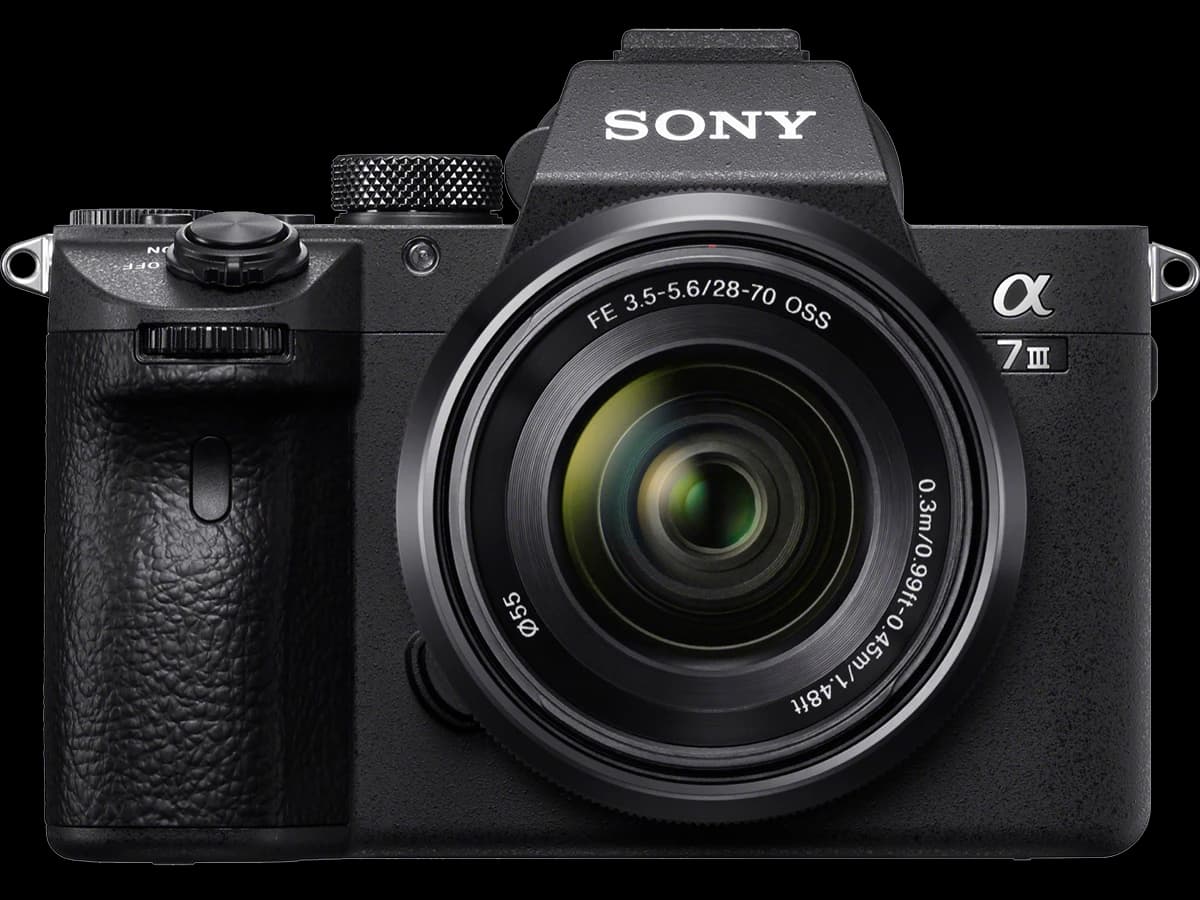
Review: Sony α7 III – Still Relevant in 2026?
The Sony α7 III remains an excellent used choice for weddings, portraits and travel thanks to its **710-shot CIPA battery life** and 693-point AF. Demanding videographers should look elsewhere.
Read the review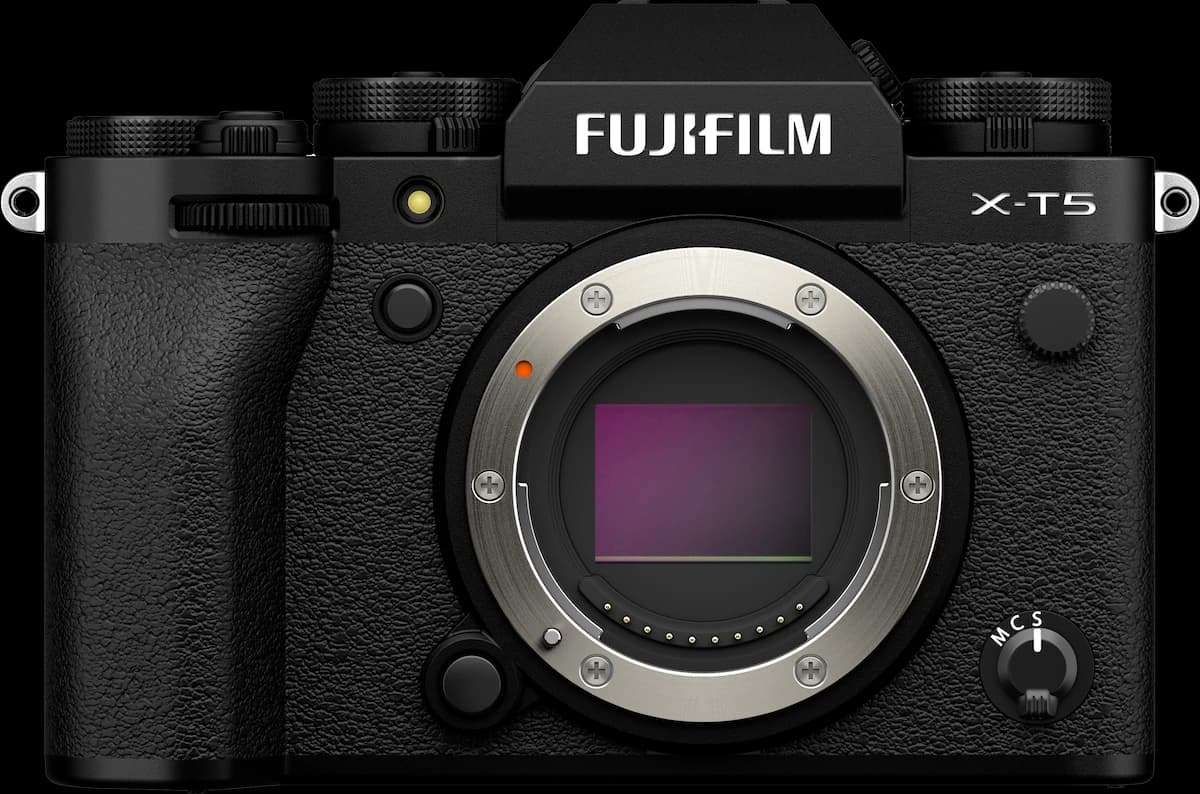
Fujifilm X-T5 Review: Pure Photography Before Video
The Fujifilm X-T5 suits landscape, portrait or travel photographers seeking 40.2 MP in a compact 557 g body. It is not a tool for intensive sport or professional video.
Read the review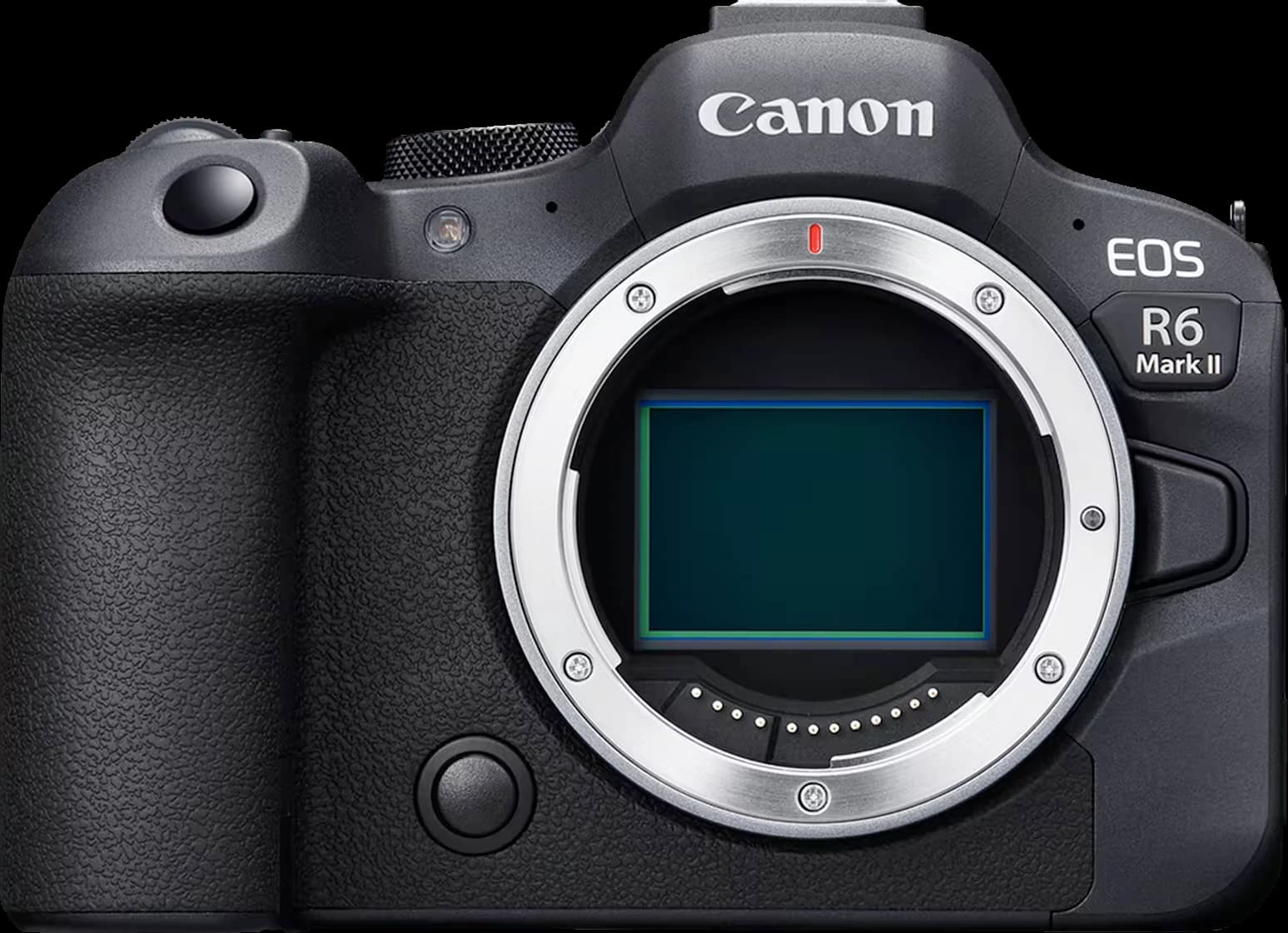
Review Canon EOS R6 Mark II: Still the Right Choice in 2026?
The Canon EOS R6 Mark II remains the most balanced general-purpose hybrid in its class for weddings, portraits and travel, provided you accept a RAW buffer limited to 75 images and video capped at 4K/60p.
Read the review