Review · Sigma · 2025
Review: Sigma BF – Does Radical Minimalism Come at a Price?
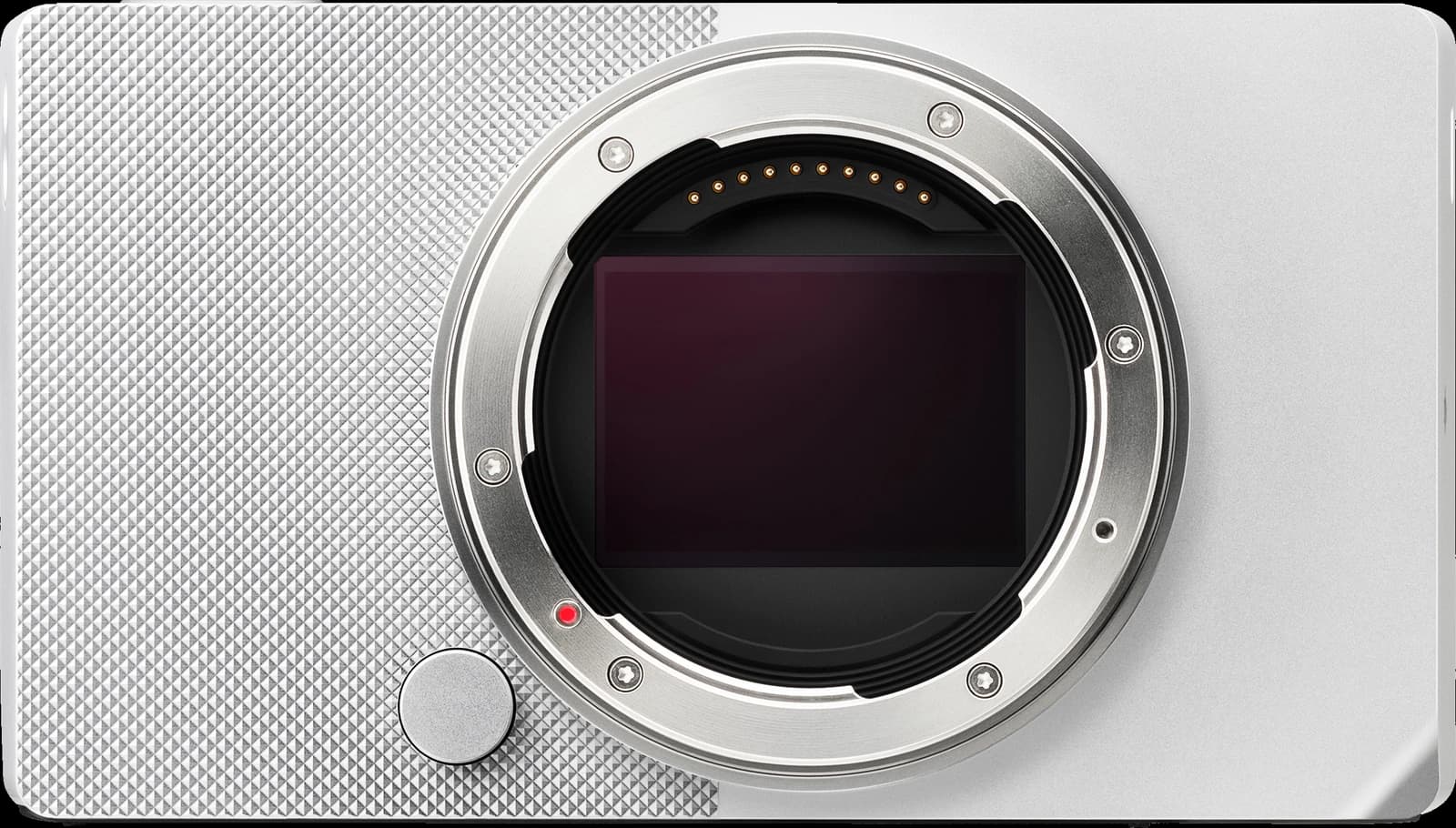
The Sigma BF targets the lightweight travel and reportage photographer willing to forgo IBIS, weather-sealing and a viewfinder for a discreet full-frame tool weighing 388 g. The compromises are real and deliberate.
Verdict
The Sigma BF is a radical exercise in style: 388 g, L-mount, 24.6 MP, 230 GB internal SSD and 6K video in a body without a viewfinder, IBIS, weather-sealing or Wi-Fi. Sigma does not aim to do everything. The intention is clear: an ultra-compact full-frame tool for travel and low light, with a native ISO range up to 102 400 and 1 215 AF points. The issue is not the philosophy but the partial execution. At 2 000 USD, the Panasonic Lumix S5 II offers 5-stop IBIS, weather-sealing, dual slots and 30 fps electronic shooting for 1 999 USD. The Sigma BF requires accepting major concessions on field reliability in exchange for lightness and design its direct rivals do not offer. For the exact profile targeted, it convinces. For everyone else, it frustrates.
Pros
- Weight of 388 g: the lightest full-frame in its price bracket
- Internal SSD 230 GB: no need for memory cards for a full day’s shooting
- Native ISO up to 102 400: extended native range without expanded mode
- 1 215 AF points with human and animal eye detection, threshold at -5 EV
- Internal 6K video in 10-bit with Log, H.265 and H.264 codecs
- USB-C 3.2 Gen2 (10 Gbps): fast SSD transfer without external reader
Cons
- No IBIS: deal-breaker for handheld low-light and video work
- No weather-sealing: real risk on rainy travel or coastal shoots
- No electronic viewfinder: unusable in bright sun without an accessory
- No Wi-Fi or Bluetooth: wireless transfer impossible natively
- Electronic burst limited to 8 fps: insufficient for sport or wildlife
- Fixed, non-articulating screen: limiting for vlogging or low-angle video
Who is it for?
- The minimalist travel photographer who shoots full-frame and wants a body that fits in a small bag without compromising image quality
- The nomadic videographer who records 6K to the internal SSD and does not need unlimited recording
- The street or low-light reportage photographer who exploits the native ISO range up to 102 400 and accepts working without a viewfinder
- The photographer already invested in L-mount (Leica, Panasonic, Sigma) seeking an ultra-light second body
On video
Phototrend · 7 min 43
Test Sigma BF au JAPON : un OVNI dans la photo ?
Presentation: a body that owns its choices
The Sigma BF is not a versatile body. It is a niche tool built around one precise idea: the most compact full-frame possible on L-mount.
Sigma built its reputation on lenses. With the BF, the Japanese brand enters a different logic: that of the manifesto body. The name BF stands for “Body Form”, and the intention leaves no ambiguity. Every design decision serves compactness and lightness, even if it means removing features the competition considers standard. 388 g on the scales, 130.1 x 72.8 x 36.8 mm in dimensions, and a profile that recalls a high-end compact more than a full-frame hybrid.
The L-mount is the first structuring point. It grants access to the shared Leica, Panasonic and Sigma ecosystem—several dozen native lenses. This is a real advantage for a photographer already invested in that system. For a buyer coming from another mount, the lens investment must be anticipated.
Sigma BF usage profile: strong for travel and low light, limited for sport and extended video.
The Sigma BF was released in 2025 at 2 000 USD. It sits between the Panasonic Lumix S5 II (1 999 USD) and the Panasonic Lumix S1 II (3 200 USD), two full-frame L-mount bodies with very different profiles. Comparison is inevitable and not flattering on paper. It becomes more favourable once weight is factored in.
| Sensor | Full Frame |
|---|---|
| Sensor size | 36 × 24 mm |
| Resolution | 24.6 MP |
| Sensor type | CMOS |
| Native ISO range | 100 – 102400 |
| Extended ISO | up to 102400 |
| In-body stabilization | No |
| AF points | 1215 |
| Eye detection (human / animal) | Yes / Yes |
| Electronic burst | 8 fps |
| RAW buffer | 350 frames |
| Max shutter speed | 1/8000 |
Design and ergonomics: minimalism taken to the limit
The Sigma BF pushes the concept of stripping back further than any direct rival. This has concrete consequences for everyday handling.
Build and size
The body weighs 388 g bare. That is 351 g less than the Panasonic Lumix S1 II (795 g) and 310 g less than the Leica SL3-S (768 g). On a day’s walk with a compact lens, the difference is physically noticeable. For lightweight travel, this is the BF’s number-one argument.
The finish is refined. The design is pared-back, almost brutalist in its geometry. Sigma has removed the pronounced grip in favour of a flat profile. This makes the body more discreet on the street but less stable with heavy lenses. With an 85 mm f/1.4 Art, balance becomes problematic. With a compact 45 mm f/2.8, the pairing is coherent.
Absence of viewfinder: the main deal-breaker
The lack of an electronic viewfinder is the BF’s most divisive choice. Sigma has not provided a standard hot shoe for adding one. In bright sun, the 3.2-inch screen with 2 100 000 dots becomes difficult to read. This is a real issue for outdoor travel. For indoor reportage or studio video, the impact is smaller.
The screen is touch-sensitive, which partially compensates for the missing viewfinder when navigating menus or using touch focus. However, it is fixed and non-articulating. It cannot be flipped for selfies, low-angle shots or vlogging. This is a serious limitation for the nomadic videographer Sigma claims to target.
Interface and controls
The interface follows the body’s minimalist philosophy. Controls are reduced to the essentials. Navigation is primarily touch-based. Sigma has chosen a clean interface that requires an adaptation period for photographers used to multi-dial bodies. It is not a poor interface; it is a different one, consistent with the product’s identity.
Image quality: the 24.6 MP full-frame sensor in practice
The Sigma BF carries a 24.6 MP full-frame CMOS sensor. This is the same resolution as the Panasonic Lumix S5 II and S1 II. The difference lies in architecture and processing.
Dynamic range and low-light performance
The sensor’s dynamic range is not stated in Sigma’s official data available to date. Independent measurements (DXOMark, Photons to Photos) have not yet been published in our database at the time of this article. We therefore cannot quantify dynamic range in EV at base ISO. What we do know: the native ISO range extends to 102 400 without using an expanded mode. This figure matches the Canon EOS R8 (102 400 native) and the Sony ZV-E1 (102 400 native), two bodies recognised for their low-light behaviour.
The AF threshold of -5 EV confirms the body is designed to operate in very low light. In practice, this means autofocus remains operational in near-dark conditions where many bodies lose lock. For night reportage or ambient interior photography, this is a tangible advantage.
The absence of IBIS weighs heavily here. Without sensor stabilisation, using high ISOs handheld below 1/50 s becomes risky. The photographer must compensate with shutter speed or rely on optical stabilisation in compatible L-mount lenses. Some Sigma and Panasonic lenses offer effective OIS, but it is not universal across the range.
Colour rendering and Sigma picture modes
Sigma is known for its refined colour profiles on previous bodies (fp, fp L). The BF inherits this tradition. Sigma colour modes offer renderings distinct from Panasonic or Canon profiles, with a signature closer to film in some presets. This is a qualitative argument that is hard to quantify but real for photographers sensitive to direct JPEG rendering.
Burst and buffer: the body’s limits
Electronic burst tops out at 8 fps. This is the BF’s most limiting figure for anyone photographing moving subjects. For comparison, the Canon EOS R6 Mark III reaches 40 fps electronically, the Panasonic Lumix S5 II 30 fps, and even the Canon EOS R8 (cheaper at 1 499 USD) offers 40 fps. The BF is clearly not designed for sport or wildlife.
However, the RAW buffer of 350 images is generous. At 8 fps, that represents more than 43 seconds of continuous burst before saturation. For reportage or travel work, this is more than adequate. The internal 230 GB SSD and USB-C 3.2 Gen2 port at 10 Gbps enable fast transfer without an external reader.
Autofocus: 1 215 points and subject detection
The Sigma BF’s AF system is one of the body’s positive surprises. Coverage density and detection capabilities exceed what the size and price suggested.
AF architecture and sensor coverage
The BF has 1 215 AF points. This is a high density for a body of this size. The Panasonic Lumix S5 II offers 779 points, the Leica SL3-S also 779 points. The Canon EOS R6 Mark III reaches 1 053 points. The BF therefore sits above most direct rivals on this criterion. Sensor coverage percentage is not stated in the official data available.
Both human eye detection and animal eye detection are active. The AF activation threshold is stated as -5 EV. This is a respectable sensitivity level, below the best in class (the Canon EOS R8 reaches -6.5 EV, the Nikon Zf -10 EV), but sufficient for the vast majority of reportage and travel situations.
Human eye detection: what works and what drops out
Human eye detection is operational and responsive under normal conditions. Independent tests (PetaPixel, Amateur Photographer) confirm solid behaviour on static or slowly moving subjects. On fast subjects, the 8 fps burst limit renders comparison with sports bodies irrelevant: the BF is not designed for that type of tracking.
Animal detection works on common mammals. Sigma has not published an exhaustive list of recognised species. For controlled wildlife (zoo, farm), the system is usable. For wild subjects moving quickly, the 8 fps burst remains the limiting factor, not the AF itself.
Video: 6K internal to SSD, but with limitations
Video is one of the BF’s selling points. Internal 6K recording to the integrated SSD is an original proposition. The concessions are real.
Resolution, codecs and colour depth
The Sigma BF records 6K internally in 10-bit with Log and H.265/H.264 codecs. This is a solid specification for a 2 000 USD body. The Panasonic Lumix S5 II offers the same level (6K, 10-bit, Log) for 1 999 USD, but adds 5-stop IBIS and weather-sealing. The BF distinguishes itself with its 230 GB internal SSD: no external memory card required, no risk of card error during recording.
The maximum frame rate announced is 120 fps. Sigma does not specify at which resolution this maximum is achieved. It is likely that 120 fps is available only at reduced resolution (1080p or 4K), not in 6K. This information is not confirmed in the official data available. We cannot settle the point without independent measurement.
| Max resolution | 6K |
|---|---|
| Max frame rate | 120 fps |
| Codecs | H.265, H.264 |
| Bit depth | 10 bit |
| Log profile | Yes |
| Unlimited recording | No |
| In-body stabilization | No |
| HDMI output | HDMI Micro (Type D) |
| USB connector | USB-C 3.2 Gen2 (10 Gbps) |
Integrated SSD: real operational advantage
The 230 GB internal SSD is an original idea in this category. At a typical H.265 bitrate in 6K (estimated 200–400 Mbps depending on profile), 230 GB represents between 77 and 154 minutes of recording. For a light day’s shooting, this is sufficient. For longer or intensive shoots, the USB-C 3.2 Gen2 port at 10 Gbps allows rapid offload to an external drive.
Video recording is not unlimited. Sigma does not state the maximum clip length. This is a limitation to verify according to use. For short vlogs or reportage it is generally not an issue. For long-form work (interviews, documentaries), it must be anticipated.
Absence of IBIS in video: the real problem
Without IBIS, handheld video from the BF depends entirely on lens optical stabilisation. Effective OIS L-mount lenses exist, but they add weight. Electronic stabilisation (digital crop) is an alternative, but it narrows the field of view and reduces effective resolution. For a body positioned as nomadic video, the lack of IBIS is the hardest concession to accept.
Connectivity and storage: radical choices
The Sigma BF’s connectivity mirrors the body: pared-back, sometimes to excess.
USB-C, HDMI and SSD: the functional trio
The USB-C 3.2 Gen2 port at 10 Gbps is the connectivity highlight. It allows rapid transfer of the 230 GB internal SSD to a computer or external drive. At a theoretical 10 Gbps, emptying 230 GB takes less than 3 minutes under optimal conditions. This is significantly faster than a standard SD card reader.
The HDMI output is Micro (Type D). This is the most fragile and cumbersome cable format. On a body positioned for video, this is a questionable choice. A full-size (Type A) or Mini (Type C) HDMI port would have been more robust for external monitor use.
Absence of Wi-Fi and Bluetooth: a real step backwards
The Sigma BF has neither Wi-Fi nor Bluetooth. This is the body’s most surprising choice. In 2026, the lack of wireless connectivity on a 2 000 USD hybrid is difficult to justify. Transfer to a smartphone for immediate sharing is impossible natively. Wireless remote control is unavailable. The travel photographer who wants to share images on the move must use a cable or adapter.
This absence is not an oversight: it is a deliberate Sigma choice, consistent with the “total stripping back” philosophy. Yet it directly penalises the travel profile, which is the primary announced use case. This is an internal contradiction in the product.
| Release year | 2025 |
|---|---|
| Weight (with battery) | 388 g |
| Dimensions | 130.1 x 72.8 x 36.8 |
| Weather sealing | No |
| Viewfinder | None |
| Screen | 3.2 inches |
| Screen articulation | fixed |
| Touchscreen | Yes |
| Battery (CIPA) | 260 frames |
| Dual SD slot | No |
| Wi-Fi / Bluetooth | No / No |
| Lens mount | Leica L |
Battery life: 260 CIPA actuations
Battery life is one of the BF’s weak quantified points. The CIPA figure is low, but must be contextualised.
Sigma states 260 actuations according to the CIPA standard. This is one of the lowest figures in the full-frame category. The Canon EOS R6 Mark III reaches 620 CIPA actuations, the Panasonic Lumix S5 II 370, and even the Leica SL3-P (383) performs better. Only the Leica SL3-S (315) comes close to this low level.
The CIPA standard is measured with the screen permanently on and flash enabled. In real use with the screen in standby between shots, effective endurance is typically 30–50 % higher than the CIPA figure. This brings estimated real-world endurance to roughly 340–390 actuations for stills. This remains low. For an intensive day, a spare battery is essential.
The USB-C port supports charging while in use (power-bank compatible). This is a viable emergency solution for travel. However, it requires carrying an external battery, which partially contradicts the body’s lightness argument.
Against the competition: what you lose and what you gain
The Sigma BF is positioned in a crowded full-frame market. Direct comparison with its rivals is necessary to judge its value-versus-concessions balance.
Against the Panasonic Lumix S5 II: same price, different philosophy
The Panasonic Lumix S5 II sells for 1 999 USD, one dollar less than the BF. It offers 24.2 MP full-frame, 779 AF points, 5-stop IBIS, weather-sealing, dual slots, 30 fps electronic and 6K 10-bit Log video. It weighs 740 g, 352 g more than the BF. The question is simple: do 352 g extra justify IBIS, weather-sealing, dual slots and 30 fps? For the majority of photographers, the answer is yes.
The BF wins on the 230 GB integrated SSD (the S5 II uses SD cards), on 1 215 AF points (versus 779) and on design. This is a real argument for the photographer who specifically values these three points.
Against the Leica SL3-S: same sensor, different budget
The Leica SL3-S carries the same 24.6 MP full-frame stacked CMOS sensor, with a native ISO range up to 200 000, 5-stop IBIS, weather-sealing, dual slots, 30 fps electronic and 6K video. It weighs 768 g and its price is not listed in our database, but it sits well above the BF. If budget is not a constraint, the SL3-S is superior on almost every functional criterion.
Against the Canon EOS R8: cheaper, more capable on some points
The Canon EOS R8 sells for 1 499 USD, 501 USD less than the BF. It offers 24 MP full-frame, 1 053 AF points with a -6.5 EV threshold, 40 fps electronic, weather-sealing and native ISO up to 102 400. It weighs 461 g. It also lacks IBIS, but it is weather-sealed, faster in burst and cheaper. For a travel photographer who does not value the integrated SSD or Sigma design, the R8 is a serious alternative to consider.
| Spec | Sigma BFTested here | Panasonic Lumix S5 II | Canon EOS R8 | Leica SL3-S |
|---|---|---|---|---|
| Released | 2025 | 2023 | 2023 | 2025 |
| Sensor | Full Frame | Full Frame | Full Frame | Full Frame |
| Resolution | 24.6 MP | 24.2 MP | 24 MP | 24.6 MP |
| Native ISO max | 102400 | 51200 | 102400 | 200000 |
| Dynamic range | — | 11.2 EV | 11.6 EV | 10.9 EV |
| AF points | 1215 | 779 | 1053 | 779 |
| Burst (elec.) | 8 fps | 30 fps | 40 fps | 30 fps |
| IBIS | No | 5 stops | No | 5 stops |
| Max video | 6K/120p | 6K/120p | 4K/180p | 6K/30p |
| Weather sealing | No | Yes | Yes | Yes |
| Dual SD slot | No | Yes | No | Yes |
| Weight | 388 g | 740 g | 461 g | 768 g |
| Launch price | 2000 USD | 1999 USD | 1499 USD | — |
Sigma BF versus its three closest rivals in the $2,000 full-frame segment. The BF wins on weight and AF, loses on almost everything else.
Critical analysis: the paradox of a travel body without Wi-Fi
An angle the rest of the editorial coverage has not explored in depth: the Sigma BF suffers from an internal contradiction between its positioning and its technical choices.
The travel body that penalises the traveller
Sigma positions the BF as a travel and low-light tool. This is coherent with the weight (388 g), native ISO range (102 400) and integrated SSD (230 GB). Yet three technical choices directly contradict this positioning: the absence of Wi-Fi, the absence of weather-sealing and the fixed screen.
A travel photographer in 2026 shares images in real time. They use their smartphone as a communication terminal. The lack of Wi-Fi and Bluetooth severs this chain. Sigma has not offered an official USB-C to Wi-Fi adapter. The only solution is a third-party USB-C hub with built-in Wi-Fi, which adds weight and complexity.
The lack of weather-sealing is even more problematic for a travel body. Rain, sea spray and desert dust are standard conditions for a photographer on the move. The Canon EOS R8, 501 USD cheaper, is weather-sealed. The Panasonic Lumix S5 II, at the same price, is weather-sealed. Sigma made a design choice at the expense of field robustness.
The integrated SSD: real innovation or gimmick?
The 230 GB internal SSD is presented as an innovation. It is indeed an original idea in the hybrid category. But it creates dependency: if the SSD fails, the body can no longer record. There is no backup card slot. On a long trip, this is a real operational risk. A dual SD slot (as on the Panasonic S5 II) provides redundancy the SSD alone cannot guarantee.
The 230 GB capacity is sufficient for a moderate day’s video or several thousand RAW files. But it is not expandable. Unlike a card slot, you cannot buy a larger SSD. This is a structural limit of the concept.
Historical perspective: the Sigma fp as precedent
The Sigma BF continues the lineage of the Sigma fp (2019) and fp L (2021). Both bodies already adopted radical minimalism: no viewfinder, no IBIS, ultra-compact full-frame. The fp weighed 370 g, the fp L 557 g. The BF at 388 g is in direct continuity with the original fp. Sigma is building a coherent brand identity around the concept of “the smallest full-frame possible”.
The difference from the fp is AF. The original fp had a limited AF system that was its main Achilles’ heel. The BF corrects this with 1 215 points and subject detection. This is the most significant evolution between the two generations. On this criterion alone, the BF is a genuine advance over its predecessors.
Price and value for money
At 2 000 USD, the Sigma BF sits in a segment where competition is dense and alternatives are solid.
The launch price of 2 000 USD is the BF’s main point of friction. At this tariff, the Panasonic Lumix S5 II (1 999 USD) offers more features for the same budget. The Canon EOS R8 (1 499 USD) offers superior AF performance (40 fps, -6.5 EV threshold) and weather-sealing for 501 USD less. The BF must justify its price with arguments its rivals cannot offer: the 388 g weight, the 230 GB integrated SSD and the design.
On the used market, the Sigma fp L (indirect predecessor) can be found for around 1 200 to 1 500 USD depending on condition. It offers a 61 MP sensor and the same minimalist concept. For a photographer who values resolution over lightness, the used fp L is a serious alternative to the new BF.
The BF is also the cheapest entry point into the Sigma full-frame L-mount ecosystem. For a photographer already equipped with L-mount lenses (Sigma Art, Panasonic S), the body-only investment is easier to justify. For a buyer starting from zero, the L-mount lens investment adds to the body price.


You'll find the best prices on the market here, updated daily — and by going through these partner links, you support Camera Duel without paying a cent more.
Verdict: for whom, and at what price?
The Sigma BF is an honest body in its intentions and coherent in its identity. Yet its compromises are numerous for its price.
The Sigma BF succeeds at what it promises on two fronts: lightness (388 g for full-frame) and low light (native ISO 102 400, AF at -5 EV). The 230 GB integrated SSD is an original idea that simplifies on-location workflow. The 1 215-point AF with subject detection is a genuine improvement over the fp predecessors.
But the BF fails to fully convince on its own territory. A travel body without Wi-Fi, without weather-sealing and without an articulating screen in 2026 demands a very specific buyer profile: someone who values design and lightness above all, who shoots mainly indoors or in dry weather, and who does not need instant sharing. This profile exists. It is a minority.
The score of 6.4/10 reflects a body that excels in its niche (ultra-light travel, low light, L-mount) but accumulates too many concessions for its price against more complete direct rivals. The Panasonic Lumix S5 II at the same price remains the rational choice for the majority of buyers in this segment.
- Buy the BF if you are already in L-mount, travel light and the 388 g weight is your number-one criterion.
- Avoid the BF if you shoot in the rain, share images in real time or need an articulating screen.
- Consider the Panasonic S5 II if you want the same budget with IBIS, weather-sealing and dual slots.
- Consider the Canon EOS R8 if you want cheaper with higher burst rate and weather-sealing.
Frequently asked questions
Does the Sigma BF have in-body image stabilisation (IBIS)?▾
No. The Sigma BF has no sensor stabilisation (IBIS). This is one of its most significant compromises. To compensate, you must use L-mount lenses with built-in optical stabilisation (OIS), or accept raising shutter speed in low light. Without IBIS, handheld video is difficult to stabilise without an OIS lens or external accessory.
Is the Sigma BF weather-sealed?▾
No. The Sigma BF is not weather-sealed. It offers no official protection against rain, dust or humidity. This is a deal-breaker for a body positioned for travel. For comparison, the Canon EOS R8 (1 499 USD) and the Panasonic Lumix S5 II (1 999 USD) are both weather-sealed at equal or lower prices.
Can a memory card be added to the Sigma BF?▾
No. The Sigma BF uses only an internal 230 GB SSD. There is no slot for SD, CFexpress or any other card. The SSD cannot be replaced or expanded by the user. Transfer is via the USB-C 3.2 Gen2 port at 10 Gbps, which is fast but requires a cable and a computer or external drive.
Is the Sigma BF good for video?▾
Partially. The BF records 6K internally in 10-bit with Log and H.265/H.264 codecs to the 230 GB integrated SSD. This is a solid technical base. However, the lack of IBIS makes handheld video difficult without a stabilised lens, recording is not unlimited, and the screen is fixed (non-articulating). For a nomadic videographer who shoots on a tripod or with an OIS lens, the BF is suitable. For vlogging or handheld video, the limitations are real.
What is the difference between the Sigma BF and the Sigma fp?▾
The Sigma fp (2019) and the BF share the same philosophy: ultra-compact full-frame on L-mount, without viewfinder or IBIS. The BF advances mainly on autofocus (1 215 points with subject detection versus a limited system on the fp), video (6K versus 12-bit Cinema DNG on the fp) and the integrated SSD. The fp weighed 370 g, the BF 388 g. The fundamental compromises remain identical.
Is the Sigma BF compatible with Leica and Panasonic lenses?▾
Yes. The Sigma BF uses the L-mount, the shared standard between Leica, Panasonic and Sigma since 2018. It is compatible with all native L-mount lenses from the three brands, as well as L-mount adapters to other mounts (Canon EF, Nikon F, etc.). This is a broad optical ecosystem, with several dozen lenses available new and used.
Related reviews
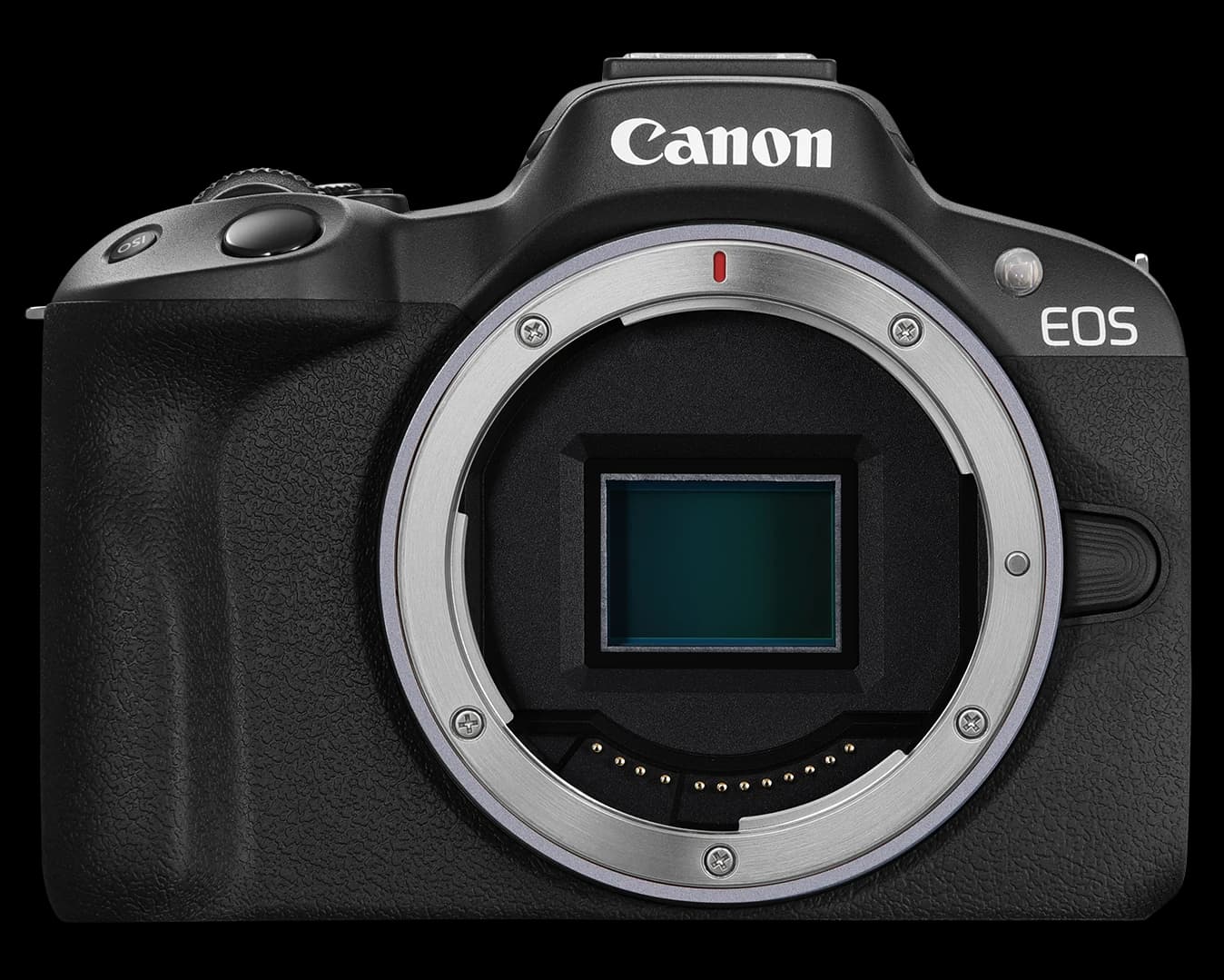
Canon EOS R50 Review: Still the Right Choice for Beginners in 2026?
The Canon EOS R50 targets beginners and light travellers with 651 AF points and 375 g on the scales. A sensible choice under 700 USD, provided you accept the lack of IBIS and a RAW buffer of only 7 frames.
Read the review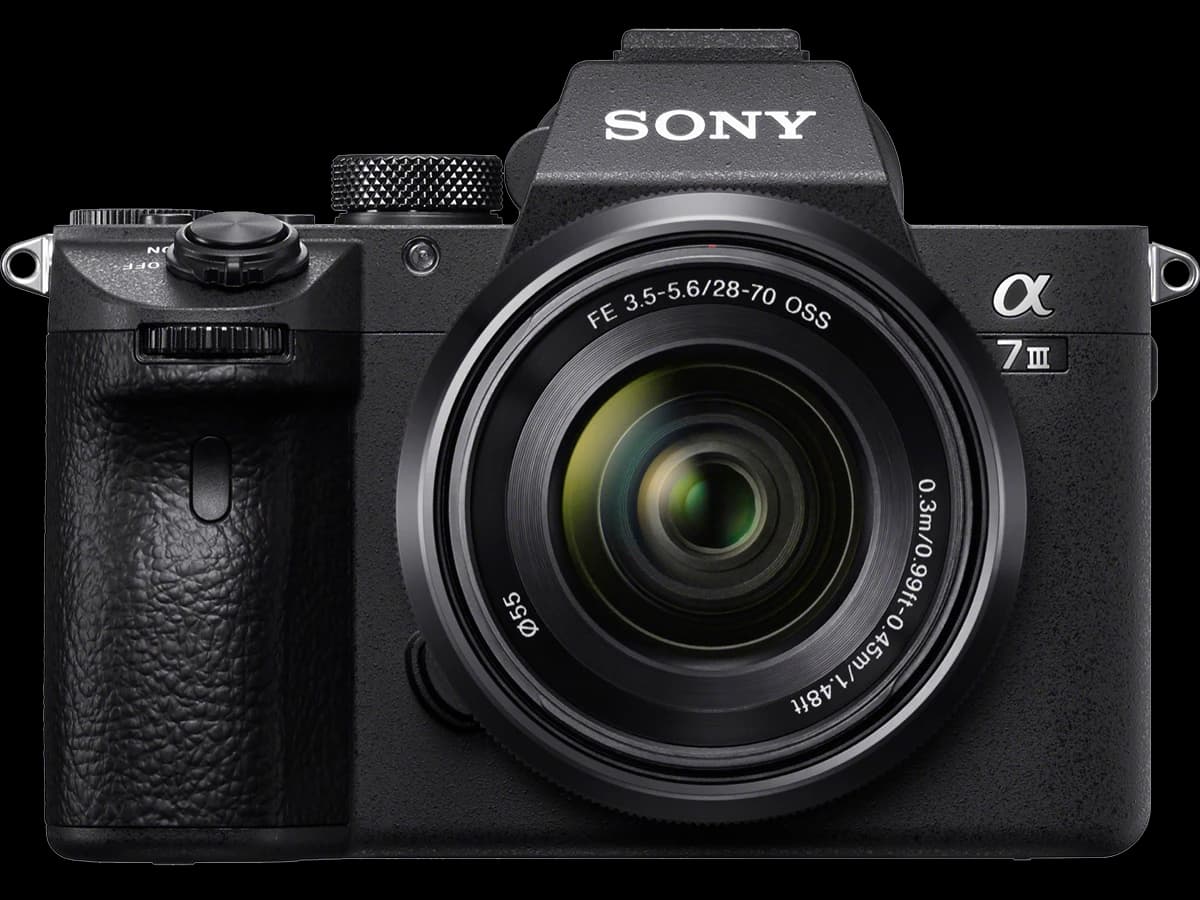
Review: Sony α7 III – Still Relevant in 2026?
The Sony α7 III remains an excellent used choice for weddings, portraits and travel thanks to its **710-shot CIPA battery life** and 693-point AF. Demanding videographers should look elsewhere.
Read the review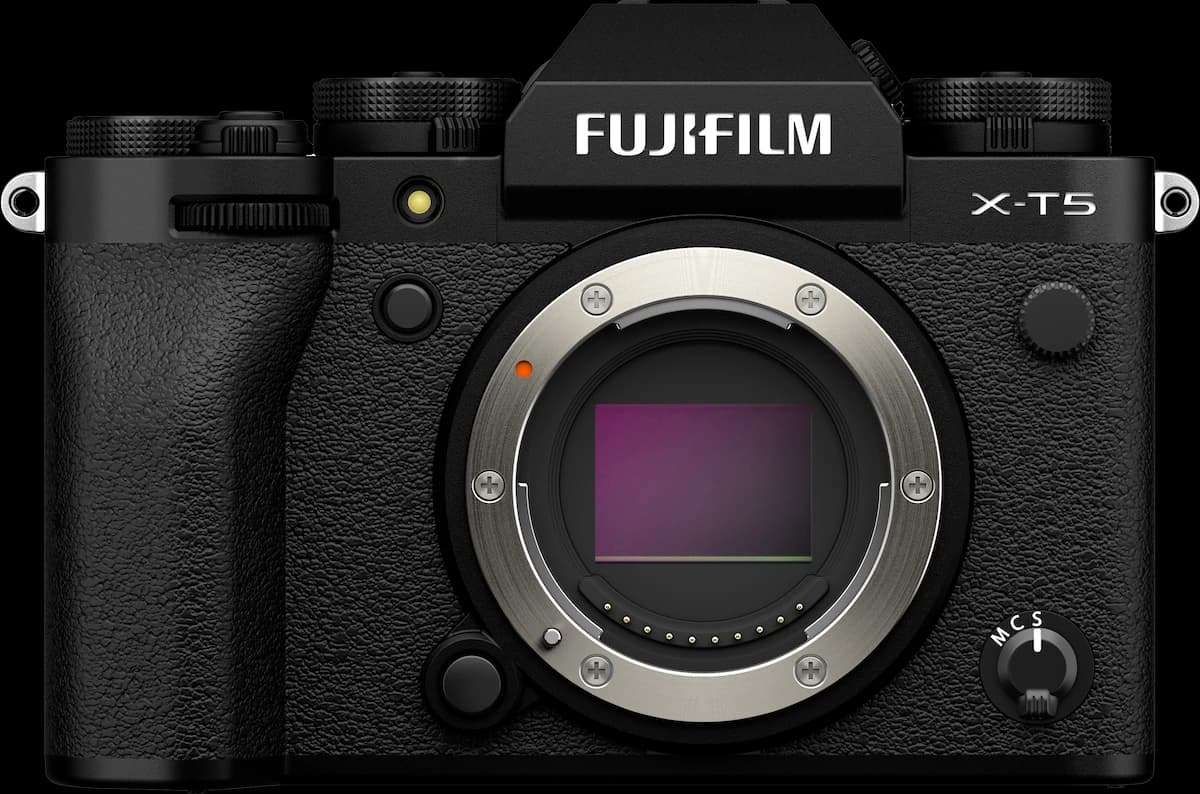
Fujifilm X-T5 Review: Pure Photography Before Video
The Fujifilm X-T5 suits landscape, portrait or travel photographers seeking 40.2 MP in a compact 557 g body. It is not a tool for intensive sport or professional video.
Read the review