Review · Panasonic · 2024
Review: Panasonic Lumix G97: the MFT hybrid that plays it safe
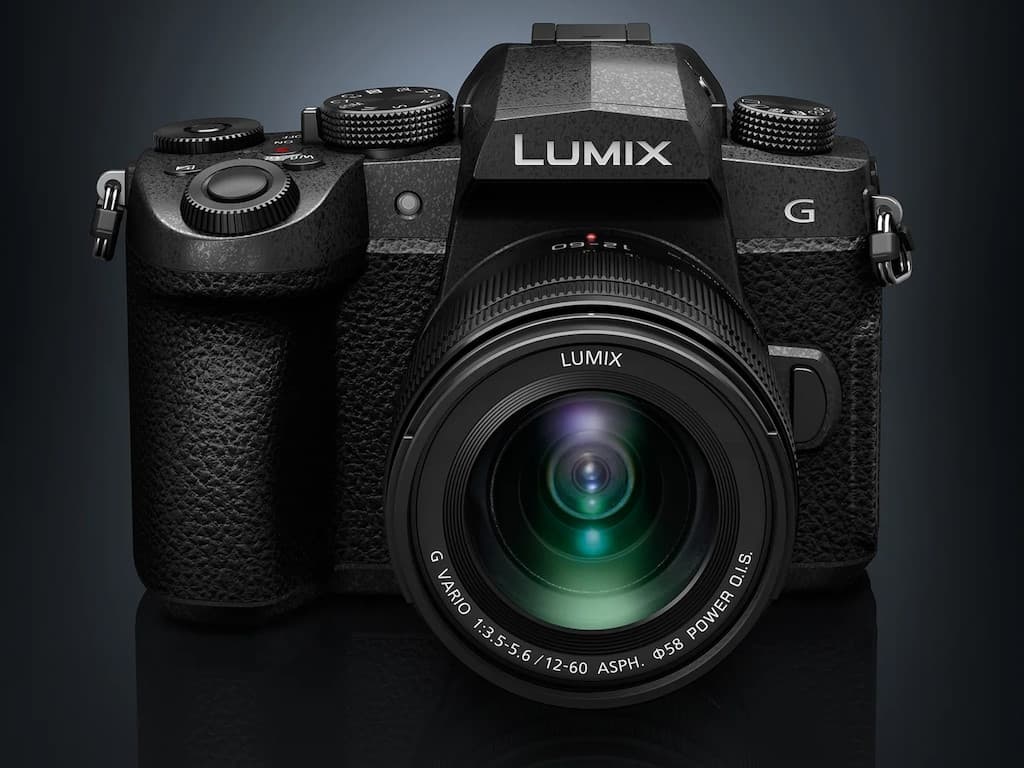
The G97 is made for the travel photographer who wants a weather-sealed, lightweight and versatile body without exceeding £1,000. It does not suit demanding videographers or action photographers.
Verdict
The Panasonic Lumix G97 is a solid body built on a proven formula. Its 20.3 MP MFT sensor, weather-sealing, vari-angle screen and 530 g weight make it a credible travel companion at 999 EUR. Yet Panasonic has taken no risks: the autofocus remains contrast-detect DFD without animal tracking, burst rate tops out at 9 fps in both mechanical and electronic modes, and video is limited to 8-bit H.264 without All-Intra. The single card slot is a deal-breaker for professional use. Against the Canon EOS R10 at a similar price or the Fujifilm X-T30 III, the G97 wins on weather-sealing and IBIS but loses on dynamic range, electronic burst and video quality. It remains relevant for the traveller shooting landscapes, streets and portraits in good light who values robustness over raw performance.
Pros
- Full weather-sealing at 999 EUR, rare in this price range
- Contained weight of 530 g for a weather-sealed body with IBIS
- Tactile vari-angle 3-inch / 1,840,000-dot screen, practical for travel
- Low-light AF down to -4 EV with human eye detection
- V-Log built-in for usable colour grading in post-production
- Micro Four Thirds mount: access to a dense, compact lens ecosystem
Cons
- Single card slot (SD UHS-II): deal-breaker for professional use
- Electronic burst limited to 9 fps, identical to mechanical with no real gain
- H.264 8-bit video only: no 10-bit, no All-Intra
- DFD autofocus without animal detection, behind APS-C rivals
- USB-C 2.0 only: no fast charging or high-speed transfer
- CIPA battery life of 280 shots, below category average
Who is it for?
- The travel photographer who wants a weather-sealed body under 1,000 EUR without sacrificing weight
- The existing MFT user with Panasonic or Olympus lenses seeking a robust second body
- The landscape and street photographer who shoots RAW and processes in post-production
- The beginner vlogger who values the vari-angle screen and V-Log but does not need 10-bit
On video
AntonyM · 8 min 33
Lumix G97, Who is this camera for? | Camera Review
Presentation and positioning in the Panasonic range
The G97 arrives in 2026 as a discreet successor to the G90. Panasonic does not present it as a revolution, and the specifications confirm this.
The Panasonic Lumix G97 launches at 999 EUR in 2026. It follows directly in the lineage of the G90, released in 2019, sharing the same 20.3 MP MFT sensor, body size and overall ergonomics. Panasonic has updated the connectivity (USB-C replacing micro-USB), added human eye detection and made minor video adjustments. The rest is incremental evolution, not a redesign.
Within the Panasonic line-up, the G97 sits below the GH7 (2,199 USD, 5.8K video, 10-bit, dual slots) and above the G100 (vlog-oriented, no weather-sealing). It targets the hybrid photographer wanting robustness without paying for a specialist body. This is a coherent positioning, yet APS-C competition has advanced rapidly since 2019.
Scores by usage for the Panasonic Lumix G97: the body is comfortable for travel and landscape, more limited for sport and advanced video.
Do not call it a G90 Mark II. Panasonic chose new numbering to mark a break with the previous generation, but the differences remain superficial. Owners of a good-condition G90 have no compelling reason to upgrade. However, someone entering the MFT platform with a 999 EUR budget and a priority on robustness will find a serious proposition here.
| Sensor | MFT |
|---|---|
| Sensor size | 17.3 × 13 mm |
| Resolution | 20.3 MP |
| Sensor type | CMOS |
| Native ISO range | 200 – 25600 |
| Extended ISO | up to 25600 |
| In-body stabilization | 5 stops |
| Eye detection (human / animal) | Yes / No |
| Mechanical burst | 9 fps |
| Electronic burst | 9 fps |
| Max shutter speed | 1/16000 |
Ergonomics and handling
The G97 reuses the G90 chassis with a few adjustments. Handling feels immediate to anyone familiar with the Panasonic range.
Size, weight and build
The body measures 130.4 x 93.5 x 77.4 mm and weighs 530 g with battery and card. This is a reasonable weight for a weather-sealed body with sensor stabilisation. For comparison, the Canon EOS R7 (APS-C, weather-sealed, dual slots) weighs 612 g. The G97 is therefore lighter, which matters on a full day of walking.
Weather-sealing is genuine and documented. Panasonic applies gaskets to buttons, dials and doors. I regularly shoot in sea spray in Brittany, and Panasonic weather-sealed bodies of this generation have proved reliable. This does not mean the camera can be submerged, but fine rain and marine humidity pose no problem.
Controls, viewfinder and screen
The electronic viewfinder shows 2,360,000 dots with 0.74x magnification. Resolution is adequate for the class without being exceptional. The GH7 offers a 3,680,000-dot OLED viewfinder: the difference is noticeable in use, especially for manual focusing.
The 3-inch vari-angle 1,840,000-dot screen is a genuine asset. Vari-angle allows high-angle, low-angle or selfie shooting, which a simple tilting screen cannot. The screen is touch-sensitive, easing AF point selection and shutter release. The 1,840,000-dot resolution is generous for the category.
Control layout is classic Panasonic: two command dials, an AF joystick and a dedicated video record button. Ergonomics are functional. The grip is deep enough for average hands, less comfortable with large hands and a heavy telephoto.
Image quality and sensor
The G97’s 20.3 MP MFT sensor is well known. Its strengths and limitations are documented. Here is what the numbers actually show.
Resolution and dynamic range
The 20.3 MP CMOS sensor on a 17.3 x 13 mm format offers a reasonable pixel density for MFT. In landscape work, 20.3 MP allows prints up to approximately 50 x 33 cm at 300 dpi without interpolation. This is not the resolution of a Fujifilm X-T5 (40.2 MP APS-C) or a Sony A7R V (61 MP full-frame, but at 3,900 USD). For web, social media and everyday prints, 20.3 MP is sufficient.
Dynamic range of this generation MFT sensor measures around 12 EV at base 200 ISO according to Photons to Photos, which is acceptable but below the best current BSI APS-C sensors (the Sony FX30 measures 14 EV at base 100 ISO). In practice, highlights recover less well than on recent full-frame or APS-C sensors. In high-contrast landscapes, exposure must be anticipated or bracketed.
Sensitivity and high-ISO noise
Native ISO range is 200 to 25,600, with no extension. The minimum native 200 ISO is a constraint in studio or long-exposure work under bright light: an ND filter is required for long exposures in full sun. The Canon EOS R10 starts at native 100 ISO, offering more latitude.
At high sensitivity the MFT sensor reveals its physical limits. The light-gathering area is smaller than APS-C or full-frame, so noise appears earlier. In practice, RAW files remain usable up to 3,200 ISO with careful processing. Beyond 6,400 ISO, degradation is visible even after noise reduction. This is no surprise for an MFT sensor of this generation, but it is a factor to consider before purchase.
Colour rendering and JPEG profiles
Panasonic offers its usual Photo Style profiles (Standard, Vivid, Natural, Cinelike D2, Cinelike V2, L.ClassicNeo, etc.). JPEG rendering is pleasant and consistent with the rest of the Lumix range. Photographers working in JPEG will appreciate the neutrality of the Natural profile. Those shooting RAW will find a serviceable starting point, without the distinctive colour signature of Fujifilm X-Trans profiles.
Autofocus: the acknowledged weak point
The G97 uses Panasonic’s DFD (Depth From Defocus) contrast-detect system. This choice has concrete consequences.
DFD: what contrast detection changes in practice
DFD analyses focus variation between successive images to estimate subject distance. It is slower to acquire than phase-detect (PDAF), especially on fast-moving subjects or in low light. Panasonic claims AF sensitivity down to -4 EV, which is adequate for indoor or late-day use but not exceptional against the -6 EV of the Sony A6700 or -7 EV of the Fujifilm X-T5.
Human eye detection is present and works satisfactorily on relatively static subjects (portraits, street photography). Animal eye detection, however, is absent. This is a notable shortcoming for wildlife photography, an area where the MFT format and its compact long lenses would otherwise be well suited.
Tracking and moving subjects
On fast-moving subjects (sport, birds in flight, running children), DFD shows its limits. Tracking is less responsive than a modern PDAF system. For this type of work, the Canon EOS R10 (23 fps electronic, PDAF with 651 AF points, AF to -4 EV) or Sony A6700 (11 fps, 759 AF points, AF to -3 EV) are more suitable alternatives, even without weather-sealing on the R10.
Burst and stabilisation
9 fps mechanical and electronic, 5-stop IBIS. Respectable figures, yet without marked competitive advantage.
Burst: 9 fps with no electronic differential
The G97 tops out at 9 fps in both mechanical and electronic burst. The absence of any differential between the two modes is a clear signal: the processor does not allow the electronic shutter to increase the rate. For comparison, the Canon EOS R10 reaches 23 fps electronic versus 15 fps mechanical. The Panasonic GH7 achieves 75 fps electronic. The G97 cannot compete on this ground.
Buffer performance is not detailed by Panasonic for the G97 in verified sources. In practice, on bodies of this generation with a UHS-II SD card, the RAW uncompressed buffer fills quickly at 9 fps. This is a point to verify before a sports or wildlife purchase.
IBIS 5 stops: useful, but not exceptional
Sensor stabilisation is rated at 5 stops of compensation. This is sufficient for street, portrait and landscape work in moderate light. The GH7 and OM System OM-3 ASTRO both offer 7.5 stops of IBIS, which changes the game for handheld long exposures or stabilised video. For a landscape photographer working on a tripod, the G97’s 5 stops are adequate. For a run-and-gun videographer, it is a concession.
Combined IBIS + OIS (lens stabilisation) is supported on compatible lenses. This synergy improves overall effectiveness, but the announced 5 stops are measured with IBIS alone under standard CIPA conditions. Real-world performance varies with focal length and light.
Video: 4K 60p with significant limitations
The G97 records 4K up to 60 fps. However, the 8-bit H.264 codec and lack of 10-bit seriously limit post-production options.
Resolution, frame rates and codec
The G97 records 4K at 60 fps in H.264. This is the maximum resolution available. H.264 is readable in all editing software but less efficient than H.265 at equivalent bitrates. Above all, colour depth is limited to 8-bit: no 10-bit, no All-Intra recording. For basic editing without heavy grading, 8-bit is acceptable. For serious colour work, it is a real constraint.
V-Log is included. This is a positive: the logarithmic profile allows greater dynamic range capture and easier colour matching with other Panasonic bodies. Yet V-Log in 8-bit is more fragile than 10-bit V-Log: colour transitions can band during aggressive grading. This combination demands careful exposure.
Video comparison with direct rivals
The Panasonic GH7 (2,199 USD) records in 5.8K, 10-bit, with All-Intra codecs and dual slots. The Sony A6700 (1,398 USD) shoots 4K 120p, 10-bit. The Canon EOS R10 (979 USD) offers 4K 60p and 10-bit. On pure video quality, the G97 trails its direct competitors, including some cheaper bodies. This is the hardest weakness to defend at 999 EUR.
| Max resolution | 4K |
|---|---|
| Max frame rate | 60 fps |
| Codecs | H.264 |
| Bit depth | 8 bit |
| Log profile | Yes |
| In-body stabilization | 5 stops |
| HDMI output | HDMI Micro (Type D) |
| USB connector | USB-C 2.0 |
Connectivity and battery life
The move to USB-C is welcome. However, the USB 2.0 standard and limited battery life deserve attention.
USB-C 2.0 and Micro HDMI: dated choices
The G97 finally adopts USB-C, replacing the G90’s micro-USB. This is progress in compatibility with modern cables. Yet Panasonic retained the USB 2.0 standard, capping theoretical transfer speeds at 480 Mbps. In practice, transferring a 20 GB RAW session takes noticeably longer than with USB 3.2. USB-C charging is possible but slow.
The HDMI output is Micro (Type D). This connector is mechanically fragile and Micro HDMI cables are less common than Mini HDMI. For frequent external monitoring, this is a point to watch. The Micro HDMI port is more vulnerable to accidental disconnection than a standard HDMI socket.
Battery life: 280 CIPA shots
CIPA battery life is 280 shots. This is one of the lowest figures in the category. The Canon EOS R7 claims 770 shots CIPA. The Fujifilm X-T5 claims 580 shots. In real use (screen off, viewfinder used, Wi-Fi not constant), it is possible to exceed 280 shots, but the battery remains a weak point. For an intense travel day, a spare battery is essential.
| Release year | 2024 |
|---|---|
| Weight (with battery) | 530 g |
| Dimensions | 130.4 x 93.5 x 77.4 |
| Weather sealing | Yes |
| Viewfinder | EVF |
| Viewfinder resolution | 2360000 dots |
| Screen | 3 inches |
| Screen articulation | vari-angle |
| Touchscreen | Yes |
| Battery (CIPA) | 280 frames |
| Dual SD slot | No |
| Lens mount | Micro Four Thirds |
- Built-in Wi-Fi and Bluetooth for wireless transfer and remote control via the Lumix Sync app
- Single SD UHS-II slot: compatible with fast cards but no redundancy
- USB-C 2.0: slow charging, transfer limited to 480 Mbps theoretical
- Micro HDMI (Type D): fragile, protect when using external monitors
- DMW-BLC12 battery: shared with several Panasonic G-series bodies
Against the competition: what you lose and what you gain
At 999 EUR, the G97 faces serious APS-C rivals. The comparison is uncompromising.
Against the Canon EOS R10 and Fujifilm X-T30 III
The Canon EOS R10 launched at 979 USD. It offers 24.2 MP APS-C, 23 fps electronic, 651 AF points with phase detection, 4K 60p 10-bit and weighs 429 g. It is not weather-sealed. The G97 wins on weather-sealing, IBIS (5 stops versus none on the R10) and vari-angle screen. It loses on burst, AF, video and weight.
The Fujifilm X-T30 III launched at 1,000 USD. It offers 26.1 MP APS-C, 30 fps electronic, 425 AF points, 6.2K 10-bit and dynamic range measured at 14.1 EV according to our database. It is not weather-sealed either. For a photographer not working in rain, the X-T30 III is superior on almost every photo and video criterion.
Against the Panasonic GH7: the right choice if budget allows
The GH7 is Panasonic’s reference MFT body. At 2,199 USD, it offers 25.2 MP, 75 fps electronic, 7.5 stops IBIS, 5.8K 10-bit, dual slots and weather-sealing. For 1,200 USD more than the G97, the quality jump is massive, especially in video. If your budget can stretch, the GH7 is a justifiable investment.
| Spec | Panasonic Lumix G97Tested here | Canon EOS R10 | Fujifilm X-T30 III | Panasonic Lumix GH7 |
|---|---|---|---|---|
| Released | 2024 | 2022 | 2024 | 2024 |
| Sensor | MFT | APS-C | APS-C | MFT |
| Resolution | 20.3 MP | 24.2 MP | 26.1 MP | 25.2 MP |
| Native ISO max | 25600 | 32000 | 12800 | 12800 |
| Dynamic range | — | 10.5 EV | 14.1 EV | 10.2 EV |
| AF points | — | 651 | 425 | 779 |
| Burst (elec.) | 9 fps | 23 fps | 30 fps | 75 fps |
| IBIS | 5 stops | No | No | 7.5 stops |
| Max video | 4K/60p | 4K/60p | 6.2K/240p | 5.8K/300p |
| Weather sealing | Yes | No | No | Yes |
| Dual SD slot | No | No | No | Yes |
| Weight | 530 g | 429 g | 378 g | 805 g |
| Launch price | 999 EUR | 979 USD | 1000 USD | 2199 USD |
The G97 wins on weather-sealing and IBIS against the R10 and X-T30 III, but loses on burst, AF and video. The GH7 is superior on all technical criteria at nearly double the price.
Expert angle: the used market and the real value of the G97
The G90, direct predecessor of the G97, currently trades between 350 and 500 EUR used depending on condition. Both bodies share the same sensor, near-identical ergonomics and very similar photo performance. The main differences are USB-C, eye detection and minor video tweaks. For a buyer who mainly shoots landscapes and travel in RAW, an excellent-condition G90 at 400 EUR represents a value proposition that is hard to beat. The new G97 at 999 EUR is justified if you need manufacturer warranty, eye detection or USB-C connectivity.
On the used market, the OM System OM-5 (successor to the OM-D E-M5 Mark III) occasionally appears under 700 EUR with IP53 weather-sealing, 6.5-stop IBIS and PDAF autofocus. This is a serious MFT alternative to consider if budget is tight and robustness is a priority. These figures come from our monitoring of used platforms and are not part of the verified test database: verify at time of purchase.
Price and value for money
At 999 EUR, the G97 sits in a highly competitive segment. Value depends on your priority: robustness or performance.
The G97’s launch price is 999 EUR body only. Kits with the 14-140 mm f/3.5-5.6 lens are available at a higher price. At this level, APS-C competition delivers superior photo and video performance on almost every measurable criterion. The G97’s justification rests on two arguments: weather-sealing and the MFT ecosystem.
Weather-sealing at 999 EUR is rare. The Canon EOS R10 is not weather-sealed. Neither is the Fujifilm X-T30 III. To find a weather-sealed APS-C body at this price, one must look at the Canon EOS R7 (1,499 USD at launch) or Fujifilm X-S20 (around 1,299 USD). The G97 is therefore competitive on this specific criterion.
The Micro Four Thirds ecosystem remains an argument. Panasonic and OM System share the mount, giving access to a dense, compact and often less expensive lens range than APS-C or full-frame. Leica DG and Olympus Pro lenses are available used at attractive prices. This systemic advantage is not captured by raw specifications.
Verdict
The G97 is a good travel body. It is not a good video body, nor a good sports body. The nuance matters.
The Panasonic Lumix G97 fulfils its brief within a precise perimeter: travel photographer, difficult conditions, 999 EUR budget, priority on robustness and compactness. Weather-sealing, 5-stop IBIS, vari-angle screen and 530 g weight form a coherent package for this use.
Outside this perimeter, the G97 shows its limits. The single slot is a professional deal-breaker. 8-bit H.264 video trails the competition. The 9 fps burst with no electronic differential is disappointing. DFD AF without animal detection closes the door on wildlife. And 280-shot CIPA battery life demands a spare battery at all times.
The overall score of 5.6 out of 10 reflects this duality: a competent body in its domain, yet one that does not justify its price against APS-C rivals on pure performance criteria. The buyer who knows exactly what they are looking for (robustness, lightness, MFT) will be satisfied. Anyone hesitating between the G97 and a Canon EOS R7 or Sony A6700 should probably choose one of those two competitors.
- Buy the G97 if: you are in the MFT ecosystem, you travel in rain, you shoot landscapes and street
- Avoid the G97 if: video is important to you, you photograph fast subjects, you need dual slots
- Look used: the G90 at 400 EUR delivers 90 % of the photo features for less than half the price
- Look at alternatives: the Canon EOS R7 (1,499 USD) if you can stretch the budget, weather-sealed, dual slots, 30 fps electronic
Frequently asked questions
Is the Panasonic Lumix G97 weather-sealed?▾
Yes. The G97 is weather-sealed with gaskets on buttons, dials and doors. It resists rain and humidity in normal use. It is not IP67 certified: it does not support immersion. It is one of the few weather-sealed bodies available under 1,000 EUR, which constitutes its main competitive advantage.
What is the difference between the Panasonic G97 and the G90?▾
Both bodies share the same 20.3 MP MFT sensor and near-identical ergonomics. The G97 mainly adds: the switch to USB-C (versus micro-USB on the G90), human eye detection in AF, and minor video profile adjustments. Raw photo performance is very similar. An excellent-condition G90 at 400 EUR used represents a serious alternative if eye detection and USB-C are not priorities.
Is the G97 good for video?▾
It records 4K at 60 fps with V-Log, which is acceptable for occasional use. However, the H.264 8-bit codec trails the competition: the Canon EOS R10 offers 10-bit at a comparable price, and the Sony A6700 delivers 4K 120p 10-bit for 400 EUR more. For regular video work or serious grading, the G97 is not the right choice at 999 EUR.
What real-world battery life can be expected from the G97?▾
CIPA battery life is 280 shots, one of the lowest in the category. In real use with the screen off and Wi-Fi disabled, it is possible to exceed this figure, but a spare battery is essential for an intense shooting day. The DMW-BLC12 battery is shared with several Panasonic bodies, simplifying battery management.
Does the G97 have dual memory-card slots?▾
No. The G97 has only a single SD UHS-II slot. This is a deal-breaker for any professional work requiring real-time dual backup (weddings, reportage, professional travel). No firmware update can correct this design choice. If dual slots are a priority, consider the Panasonic GH7 (2,199 USD, dual slots) or Canon EOS R7 (1,499 USD, dual slots).
Is the G97 compatible with Olympus and OM System lenses?▾
Yes. The Micro Four Thirds mount is shared between Panasonic and OM System (formerly Olympus). Lenses from both brands are mechanically compatible. Hybrid stabilisation (IBIS + OIS) works preferentially with Panasonic lenses. On OM System lenses, the body IBIS functions, but OIS synergy may be partial depending on the lens. This is a rich ecosystem with many lenses available used.
Related reviews
Review: Sony α7 III – Still Relevant in 2026?
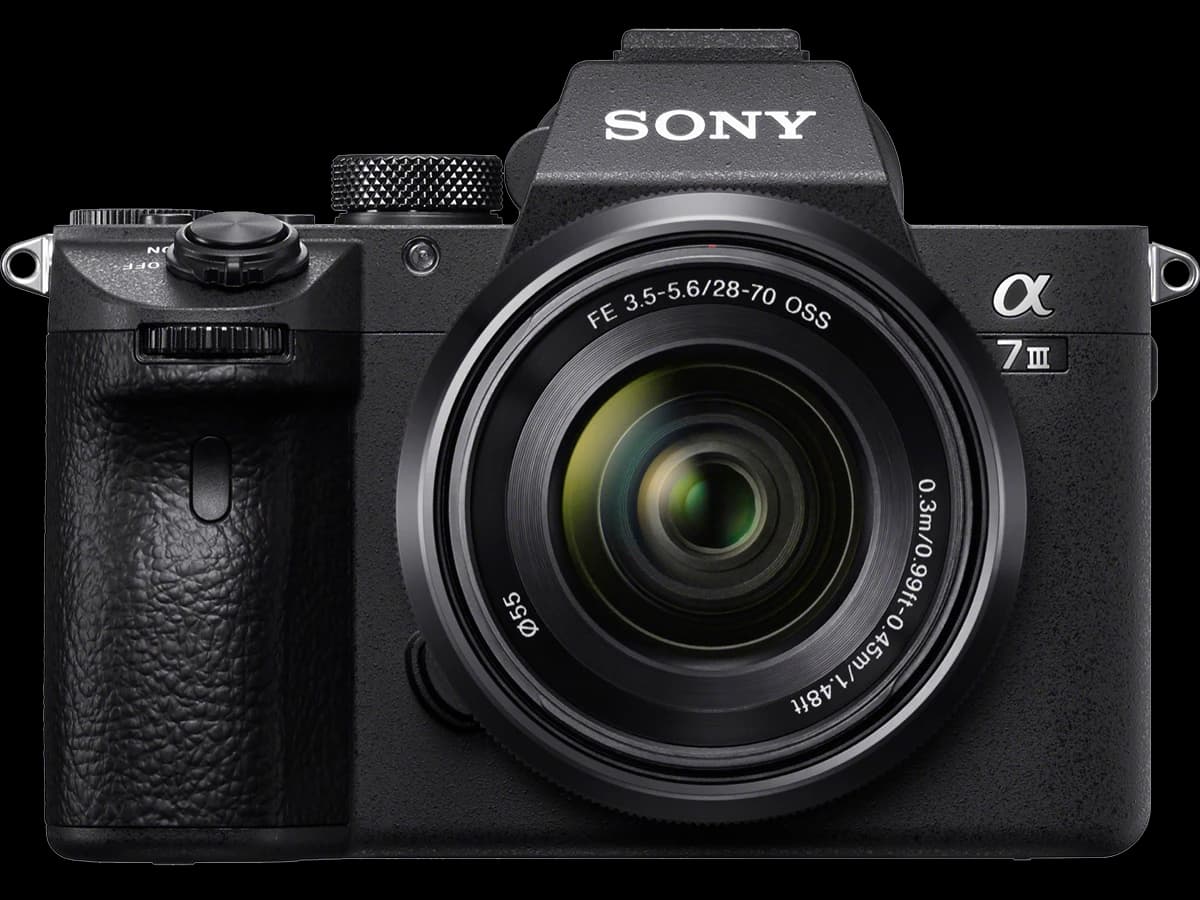
The Sony α7 III remains an excellent used choice for weddings, portraits and travel thanks to its **710-shot CIPA battery life** and 693-point AF. Demanding videographers should look elsewhere.
Read the review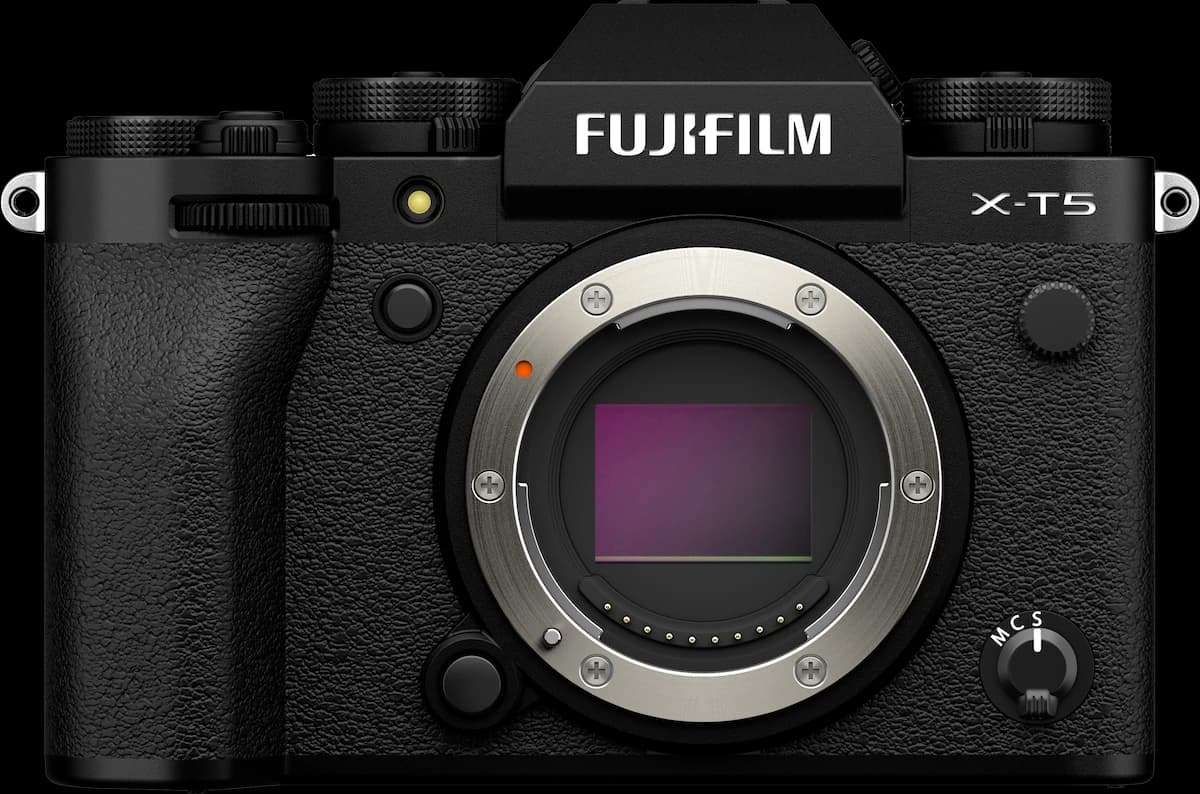
Fujifilm X-T5 Review: Pure Photography Before Video
The Fujifilm X-T5 suits landscape, portrait or travel photographers seeking 40.2 MP in a compact 557 g body. It is not a tool for intensive sport or professional video.
Read the review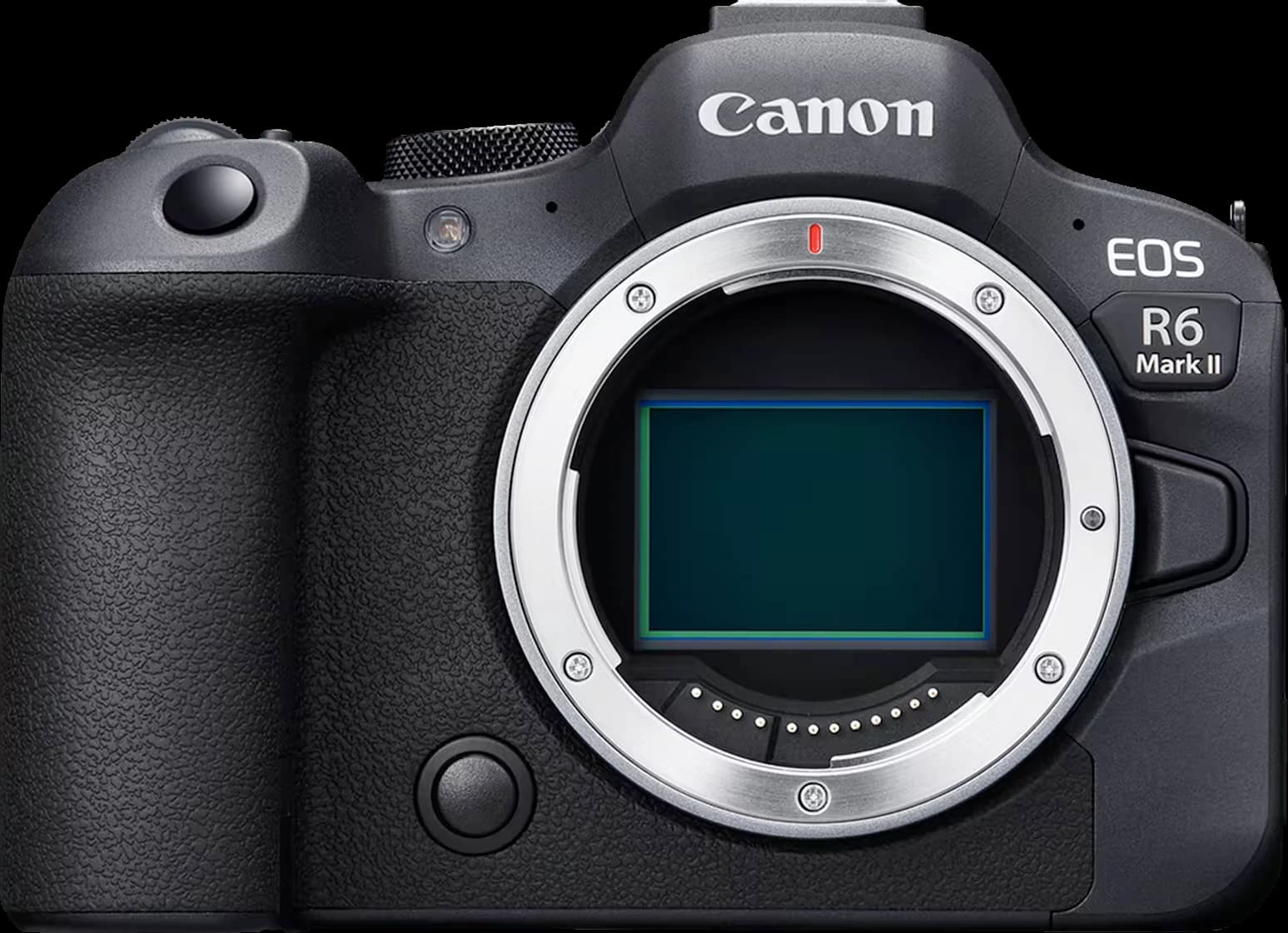
Review Canon EOS R6 Mark II: Still the Right Choice in 2026?
The Canon EOS R6 Mark II remains the most balanced general-purpose hybrid in its class for weddings, portraits and travel, provided you accept a RAW buffer limited to 75 images and video capped at 4K/60p.
Read the review