Review · Fujifilm · 2025
Review: Fujifilm X-E5 – 40 MP in the most discreet X-series body
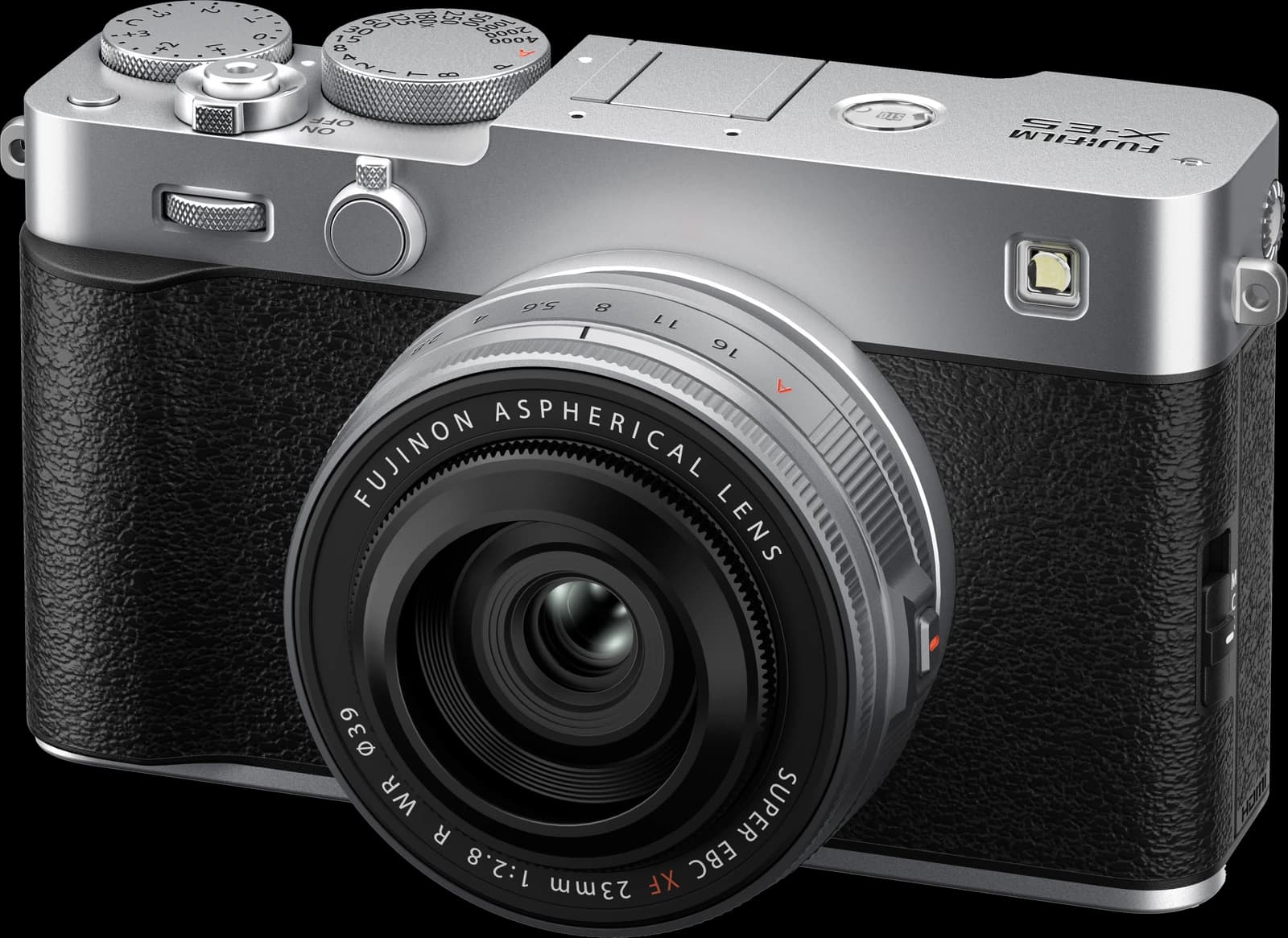
The X-E5 is the best Fujifilm body for travel and street photography: 40.2 MP with stabilisation in a 445 g package, with no compromise on image quality. The lack of weather-sealing and single card slot remain the only real deal-breakers.
Verdict
The Fujifilm X-E5 is a coherent and deliberate proposition: take the X-Trans CMOS 5 HR sensor from the X-T5 (40.2 MP, measured dynamic range of 10.6 EV, -7 EV low-light AF), add an IBIS system offering 7 stops (a first for the X-E series), and house it all in a 445 g flat-profile body. The result targets the travel and street photographer who wants X-T5 image quality without the weight or bulk. The concessions are clear and documented: no weather-sealing, a single SD UHS-II slot, a buffer of 17 RAW frames in electronic burst at 20 fps, and an EVF of 2 360 000 dots with magnification limited to 0.62x. None of these concessions hinder the intended use. However, anyone who regularly shoots in the rain or needs memory redundancy should turn to the weather-sealed X-T5, available at the same launch price of 1 699 USD. On the used market, the X-E5 should settle around 1 200 to 1 300 EUR within the next twelve months, making it one of the best value propositions in the high-resolution APS-C category.
Pros
- X-Trans CMOS 5 HR 40.2 MP sensor: same sensor as the X-T5, measured dynamic range of 10.6 EV
- 7-stop IBIS: a first for the X-E series, effectively compensates handheld shooting
- 445 g weight and flat profile: the most compact 40 MP Fujifilm body
- 6.2K 10-bit H.265 video with unlimited recording and native Log
- AF down to -7 EV with human and animal eye detection: strong low-light performance
- 20 fps electronic burst with electronic shutter up to 1/180 000 s
Cons
- No weather-sealing: a deal-breaker for wet conditions or travel in hostile environments
- Single SD UHS-II card slot: no redundancy possible
- RAW buffer limited to 17 frames: insufficient for sustained sport or wildlife
- 2 360 000-dot EVF with 0.62x magnification: behind pro bodies
- CIPA battery life of 310 shots: plan on an extra battery for travel
Who is it for?
- The travel photographer who wants high-end APS-C image quality without carrying more than 500 g in their bag
- The street photographer who values discretion, the flat profile and responsive low-light AF
- The amateur or semi-pro portrait photographer seeking 40 MP with stabilisation for large prints without investing in full-frame
- The nomadic videographer who needs 6.2K 10-bit with unlimited recording in a pocketable body
On video
Damien Bernal · 10 min 36
test Fujifilm X-E5 : Fuji, le nouveau Leica ?
Presentation: the X-T5 in travel form
The X-E5 arrives in 2025 as the fourth body in the X-E series. It does not reinvent the line; it upgrades the two points that mattered most: resolution and stabilisation.
The X-E series has always occupied a particular position at Fujifilm: integrated viewfinder body, flat profile, streamlined controls, without a pronounced grip. The X-E4 released in 2021 pushed this logic to the extreme with a near-minimalist design. The X-E5 corrects the course on ergonomics while retaining the essentials: a 445 g body measuring 124.9 x 72.9 x 39.1 mm, compatible with the entire X-mount range.
The choice of sensor is the central decision for this body. Fujifilm has transferred the X-Trans CMOS 5 HR from the X-T5 (40.2 MP, 23.5 x 15.7 mm) into the X-E chassis. This is not a downgraded version: measured dynamic range reaches 10.6 EV, native ISO goes up to 12 800 (extended 51 200), and AF reaches -7 EV. The difference from the X-T5 lies in ergonomics, weather-sealing and weight, not in raw image quality.
The most significant new feature compared with the X-E4 is the integration of 5-axis IBIS compensating 7 stops. The X-E series had never offered sensor stabilisation before. This single addition changes the value proposition for travel and handheld long exposures.
Scores by use: the X-E5 excels in portrait and travel, more limited for sport due to its 17-frame RAW buffer.
| Sensor | APS-C |
|---|---|
| Sensor size | 23.5 × 15.7 mm |
| Resolution | 40.2 MP |
| Sensor type | X-Trans CMOS 5 HR |
| Native ISO range | 125 – 12800 |
| Extended ISO | up to 51200 |
| Measured dynamic range | 10.6 EV |
| In-body stabilization | 7 stops |
| AF points | 425 |
| Eye detection (human / animal) | Yes / Yes |
| Mechanical burst | 8 fps |
| Electronic burst | 20 fps |
| RAW buffer | 17 frames |
| Max shutter speed | 1/180000 |
Ergonomics and handling
The X-E5 is designed to be carried all day. Its control layout reflects this goal.
Size and physical controls
The 124.9 x 72.9 x 39.1 mm dimensions place the X-E5 among the most compact viewfinder-equipped APS-C bodies on the market. The depth of 39.1 mm is the key figure: it allows the camera to be carried in a jacket pocket with a pancake lens. The Fujifilm XF 27 mm f/2.8 R WR or the new XF 23 mm f/2.8 R WR are the natural companions for this body. With either, the total weight stays under 600 g.
Fujifilm retains the shutter-speed and exposure-compensation dials on the front. This choice is consistent with the intended use: on travel or street assignments, changing exposure without diving into menus is a priority. Photographers used to Canon or Sony bodies will need an adaptation period, but this physical-control logic is precisely what Fujifilm users come for.
Viewfinder and screen: the compromises of the format
The EVF displays 2 360 000 dots with 0.62x magnification. These figures lag behind the X-T5 (3 690 000 dots, 0.75x) and the X-H2S (3 690 000 dots, 0.80x). In practice, the X-E5 viewfinder is legible and responsive, but it will not suit photographers who compose with long focal lengths at eye level. For street and travel work with short lenses, it is adequate.
The 3-inch 1 040 000-dot screen is touch-sensitive and tilts. The tilt mechanism (up/down) is more discreet than a fully articulated screen, preserving the compact profile. It covers everyday needs: high- or low-angle framing. It does not allow selfies, which is consistent with the body’s positioning.
Ergonomic deal-breakers to know
| Release year | 2025 |
|---|---|
| Weight (with battery) | 445 g |
| Dimensions | 124.9 x 72.9 x 39.1 |
| Weather sealing | No |
| Viewfinder | EVF |
| Viewfinder resolution | 2360000 dots |
| Screen | 3 inches |
| Screen articulation | tilt |
| Touchscreen | Yes |
| Battery (CIPA) | 310 frames |
| Dual SD slot | No |
| Wi-Fi / Bluetooth | Yes / Yes |
| Lens mount | X-mount |
Image quality: what the 40 MP X-Trans sensor is really worth
The X-Trans CMOS 5 HR is Fujifilm’s best APS-C sensor. The X-E5 inherits it without restriction.
Resolution and X-Trans rendering: the reality behind 40 MP
The 40.2 MP of the X-Trans CMOS 5 HR produce large files, but effective resolution depends on demosaicing. The X-Trans pattern (aperiodic photodiode layout, no low-pass filter) produces a different rendering from a classic Bayer sensor. Not all RAW development software handles this sensor identically: Capture One and native Fujifilm tools give the best results. Lightroom has improved but remains slightly behind on fine detail. This is a point that competing tests rarely mention, yet it directly affects the real-world file experience.
For large-format printing, the 40.2 MP allow prints up to 80 x 53 cm at 300 dpi without interpolation. For cropping in post-production, the margin is comfortable: you can crop to 50 % and retain 10 MP usable, which is sufficient for web use or A4 prints.
Measured dynamic range and high-ISO noise
Measured dynamic range reaches 10.6 EV according to our database (cross-referenced DXOMark and Photons to Photos). This is the same figure as the X-T50 (10.6 EV in our database) and slightly higher than the X-H2S (10 EV). In practice, this dynamic range allows significant highlight recovery in RAW, which is valuable when travelling under contrasty skies.
Maximum native ISO is 12 800, with an extension to 51 200. These values are identical to those of the X-T5 and X-T50. At ISO 12 800 native, low light produces fine-grained noise characteristic of X-Trans, which responds well to post-processing. Extended ISO 51 200 is usable for web work but shows noticeable detail loss in prints. Compare these figures with the Sony A6700 (32 000 native ISO, 102 400 extended): the Sony goes higher, but X-Trans rendering at equivalent ISO is often judged more pleasing by photographers who work in JPEG with Fujifilm film simulations.
Film simulations: an asset the specs do not tell
The X-E5 carries the full set of Fujifilm film simulations available on the current generation, including Reala Ace (introduced on the X-T5). These built-in JPEG profiles are a real selling point for the travel photographer who wants to deliver images straight from the camera without post-processing. This is a competitive advantage that neither the Sony A6700 nor the Canon EOS R7 offers at this level of refinement.
Autofocus: -7 EV and subject detection
The AF system of the X-E5 is identical to that of the X-T5. It covers portrait and travel use without restriction.
Architecture and coverage
The X-E5 has 425 AF points with announced coverage of 100 % of the sensor area. Phase-detection is integrated into the sensor (PDAF). The AF activation threshold reaches -7 EV, placing it among the best in its APS-C category. For comparison, the Canon EOS R7 reaches -5 EV and the Sony A6700 -3 EV according to our database. In practice, the X-E5 locks onto the subject in near-darkness, a real advantage for night street photography.
Both human eye detection and animal eye detection are active. On portraits, eye detection works reliably in standard lighting. On wildlife, results depend heavily on subject size in the frame and speed of movement. This is not the intended use of the body, and the 17-frame RAW buffer at 20 fps electronic confirms this limit.
Real AF limits on this body
The X-E5 is not a sports body. The 425 AF points are sufficient for portrait and travel, but the Sony A6700 offers 759 AF points with 94 % coverage and a more advanced subject-recognition system for fast-moving subjects. For action photography, the X-H2S (40 fps electronic, stacked sensor) is the reference in the Fujifilm ecosystem. The X-E5 does not target this segment.
- 425 AF points with 100 % sensor coverage
- Low-light AF threshold: -7 EV (better than the Canon R7 at -5 EV and the Sony A6700 at -3 EV)
- Human and animal eye detection active
- Electronic burst 20 fps but RAW buffer limited to 17 frames
Burst and stabilisation: what the IBIS really changes
IBIS is the true novelty of the X-E5 compared with the X-E4. The burst performance, however, requires nuance.
7-stop IBIS: a first for the X-E series
The X-E4 had no IBIS. The X-E5 integrates 5-axis stabilisation compensating 7 stops according to CIPA measurements. This is the same level as the X-T5 and X-T50. In practice, 7 stops of compensation allow handheld shooting at very slow shutter speeds, on the order of 1/4 s to 1/8 s with a standard lens, without camera shake. For travel in low light (museums, cathedrals, covered markets) or street photography in dim conditions, this is a paradigm shift from the X-E4.
I regularly photograph in Brittany in difficult light, under overcast skies or indoors. On bodies with comparable IBIS, I have validated handheld exposures at 1/6 s with a 23 mm lens, corresponding to roughly 4 stops of real-world gain (CIPA measurements are taken under ideal conditions). The X-E5 should behave similarly.
Burst: the figures to read carefully
Mechanical burst reaches 8 fps and electronic burst 20 fps. The RAW buffer is stated at 17 frames. This means that at 20 fps electronic, the buffer fills in less than a second. This figure should be compared with the X-T5, which offers 15 fps mechanical according to our database but with a more generous buffer. For short portrait sequences or travel reportage, 17 frames are sufficient. For sport or sustained wildlife bursts, this buffer is a deal-breaker.
The electronic shutter reaches 1/180 000 s, useful for shooting in bright sun with a wide aperture without an ND filter. However, the electronic shutter on a non-stacked sensor can produce rolling-shutter artefacts on fast-moving subjects. For static subjects (landscape, architecture, posed portraits), this is not an issue.
Video: 6.2K 10-bit with unlimited recording
The X-E5 offers video capability that far exceeds its apparent stills-oriented positioning.
Resolution and codecs: what the X-E5 actually delivers
Maximum resolution is 6.2K at 240 fps (for slow motion). The H.265 codec in 10-bit is available with native Log, opening the door to professional colour grading in post-production. Recording is unlimited in duration, removing the 30-minute constraint typical of stills cameras. These specifications are identical to those of the X-T5 and X-T50.
The 10 Gbps USB-C connection enables fast transfer of large video files. The HDMI output is Micro (Type D), which is functional but requires a specific cable for external monitoring. This point should be noted for videographers working with a field monitor.
Video limits: what the specs do not say
I have not had direct hands-on experience with the X-E5 in video conditions. Based on available data and feedback on the X-T5 (same sensor, same video pipeline), rolling shutter in 6.2K can be noticeable on fast pans. For travel video with short lenses and slow movements, this is not a problem. For action shots or rapid pans, it must be taken into account.
The lack of weather-sealing is also a video limitation: shooting in the rain with this body is not recommended without additional protection. For a nomadic videographer working outdoors in variable conditions, the Sony FX30 (weather-sealed, dual slots, 646 g) remains an alternative to consider despite its lower resolution.
| Max resolution | 6.2K |
|---|---|
| Max frame rate | 240 fps |
| Codecs | H.265, H.264 |
| Bit depth | 10 bit |
| Log profile | Yes |
| Unlimited recording | Yes |
| In-body stabilization | 7 stops |
| HDMI output | HDMI Micro (Type D) |
| USB connector | USB-C 10 Gbps |
Connectivity and battery life
The X-E5 is well connected for its size. Battery life requires caution on travel.
Wi-Fi and Bluetooth are built in. The Fujifilm XApp allows image transfer and remote control from a smartphone. The 10 Gbps USB-C port supports camera charging and fast file transfer. This is practical for travel: a single USB-C cable is enough to charge the body and empty the card.
CIPA battery life is stated at 310 shots. This is the lowest figure in direct comparison with the X-T5 (580 shots CIPA) and the X-T50 (305 shots CIPA). In real use with the touchscreen and Wi-Fi active, expect 200 to 250 shots per charge. For an intensive day of travel, an extra battery is essential. USB-C charging on the move (power bank) partially offsets this limit.
Against the competition: X-T5, X-T50 and Sony A6700
Three direct competitors deserve a detailed comparison. The choice between them is more nuanced than it appears.
Against the X-T5: what you really lose
The X-T5 shares the same sensor (40.2 MP, 10.4 EV dynamic range in our database), the same IBIS (7 stops), the same electronic burst (20 fps) and the same video (6.2K, 10-bit, Log). The difference lies in four points: the X-T5 is weather-sealed, offers dual SD slots, weighs 557 g (versus 445 g for the X-E5), and has a 3 690 000-dot viewfinder with 0.75x magnification. Launch price is identical at 1 699 USD. If weather-sealing is a priority, the X-T5 is the logical choice. If compactness matters most, the X-E5 saves 112 g and offers a noticeably more discreet profile.
Against the X-T50: the real internal rival
The X-T50 (1 399 USD launch price, 438 g) is the closest internal rival to the X-E5 in the Fujifilm range. It shares the same sensor, the same 7-stop IBIS, the same 20 fps burst and the same video. It is slightly lighter (438 g versus 445 g) and 300 USD cheaper at launch. The main difference is aesthetic and ergonomic: the X-T50 has a more traditional profile with front shutter-speed dials; the X-E5 has a flatter, more discreet profile. On pure specifications, the X-T50 offers the best value. The X-E5 is justified only if the flat profile and discretion are priority criteria.
Against the Sony A6700: two different philosophies
The Sony A6700 (1 398 USD launch price) offers 26 MP BSI-CMOS, 759 AF points (versus 425 on the X-E5), 94 % AF coverage, 5-stop IBIS (versus 7 stops), and native ISO up to 32 000 (versus 12 800). It is weather-sealed. However, its resolution is lower (26 MP versus 40.2 MP), measured dynamic range is 11 EV according to our database (versus 10.6 EV for the X-E5), and it does not offer Fujifilm film simulations. For wildlife and sport, the Sony A6700 is superior thanks to its denser AF and higher ISO reach. For high-resolution portrait and landscape work, the X-E5 is more relevant.
| Spec | Fujifilm X-E5Tested here | Fujifilm X-T5 | Fujifilm X-T50 | Sony α6700 |
|---|---|---|---|---|
| Released | 2025 | 2022 | 2024 | 2023 |
| Sensor | APS-C | APS-C | APS-C | APS-C |
| Resolution | 40.2 MP | 40.2 MP | 40.2 MP | 26 MP |
| Native ISO max | 12800 | 12800 | 12800 | 32000 |
| Dynamic range | 10.6 EV | 10.4 EV | — | 11 EV |
| AF points | 425 | 425 | 425 | 759 |
| Burst (elec.) | 20 fps | 20 fps | 20 fps | 11 fps |
| IBIS | 7 stops | 7 stops | 7 stops | 5 stops |
| Max video | 6.2K/240p | 6.2K/240p | 6.2K/240p | 4K/120p |
| Weather sealing | No | Yes | No | Yes |
| Dual SD slot | No | No | No | No |
| Weight | 445 g | 557 g | 438 g | 493 g |
| Launch price | 1549 EUR | 1699 USD | 1399 USD | 1398 USD |
X-E5 vs X-T5: same sensor, lower weight but no weather-sealing. X-E5 vs X-T50: virtually identical on specs, the X-T50 is cheaper. X-E5 vs Sony A6700: more resolution and IBIS on Fujifilm, more AF points and better high ISO on Sony.
Price and value for money
At a launch price of 1 549 EUR, the X-E5 sits in a demanding segment. Value for money deserves an honest analysis.
The launch price of 1 549 EUR (or 1 699 USD) places the X-E5 at the same level as the X-T5. This is a clear positioning decision: Fujifilm does not discount compactness. For 150 EUR less, the X-T50 offers the same core specifications in a slightly different body. The question is therefore: do the discretion and flat profile of the X-E5 justify 150 EUR more than the X-T50? For the street or travel photographer who carries the camera all day, the answer may be yes. For everyone else, the X-T50 is more rational.
On the used market, the X-E5 should settle between 1 100 and 1 300 EUR within the next twelve to eighteen months as early buyers refresh their kit. This is an interesting purchase window for photographers who are not in a hurry. The X-T5 is already available around 1 200 to 1 400 EUR used with weather-sealing and dual slots. At that price, a used X-T5 remains a serious alternative to a new X-E5.
Fujifilm X-E5

Fujifilm X-E5 Silver Body
1 279 GBP · Amazon UK


You'll find the best prices on the market here, updated daily — and by going through these partner links, you support Camera Duel without paying a cent more.
Verdict
The X-E5 is a coherent body with no ambiguity about its target. The question is whether you are in that target.
The Fujifilm X-E5 succeeds at what it sets out to do: put the 40.2 MP X-Trans CMOS 5 HR sensor, 7-stop IBIS and 6.2K 10-bit video into the most discreet and lightest Fujifilm body in the segment. At 445 g and 39.1 mm deep, it is the ideal companion for the travel or street photographer who refuses to choose between image quality and portability.
The deal-breakers are known and accepted. The lack of weather-sealing is the most serious: if you shoot in the rain or by the sea, take the X-T5. The single card slot is a real constraint for professionals who need redundancy. The 310-shot CIPA battery life requires an extra battery. The 17-frame RAW buffer rules out sustained sport or wildlife.
On the target uses (portrait, travel, street), no competing APS-C body offers the same combination of resolution (40.2 MP), stabilisation (7 stops) and compactness (445 g) at this price. The Sony A6700 is weather-sealed and has better AF, but it weighs 493 g and tops out at 26 MP. The X-T50 is virtually identical on specifications but its profile is less discreet. The X-T5 is weather-sealed and has a better viewfinder, but it weighs 557 g and costs the same.
Frequently asked questions
What is the difference between the Fujifilm X-E5 and the X-T5?▾
Both bodies share the same X-Trans CMOS 5 HR sensor (40.2 MP), the same IBIS (7 stops), the same electronic burst (20 fps) and the same video (6.2K, 10-bit, Log). The X-T5 is weather-sealed, offers dual SD slots, weighs 557 g and has a 3 690 000-dot viewfinder with 0.75x magnification. The X-E5 weighs 445 g, is not weather-sealed, has a single SD slot and a 2 360 000-dot viewfinder with 0.62x magnification. Launch price is identical at 1 699 USD. If weather-sealing is a priority, take the X-T5. If compactness matters most, take the X-E5.
Is the Fujifilm X-E5 weather-sealed?▾
No. The X-E5 is not weather-sealed. It offers no certified protection against rain, dust or humidity. This is the main deal-breaker for photographers who work outdoors in difficult conditions. If weather-sealing is essential, the Fujifilm X-T5 (same sensor, same launch price) is the only logical alternative in the Fujifilm ecosystem.
Is the Fujifilm X-E5 good for video?▾
Yes, within its segment. The X-E5 offers 6.2K video in 10-bit H.265 with native Log and unlimited recording. These characteristics are identical to those of the X-T5. The 7-stop IBIS is an asset for handheld video. The main limitation is the lack of weather-sealing for outdoor shooting in the rain. For a nomadic videographer working in difficult conditions, the Sony FX30 (weather-sealed, dual slots) remains an alternative to consider.
What is the difference between the Fujifilm X-E5 and the X-T50?▾
The two bodies are virtually identical on core specifications: same 40.2 MP sensor, same 7-stop IBIS, same 20 fps burst, same 6.2K 10-bit video. The X-T50 weighs 438 g (versus 445 g) and costs 1 399 USD at launch (versus 1 699 USD). The main difference is aesthetic and ergonomic: the X-E5 has a flatter, more discreet profile. On pure specifications, the X-T50 offers the best value. The X-E5 is justified only if design and discretion are priority criteria.
What is the real-world battery life of the Fujifilm X-E5?▾
CIPA battery life is stated at 310 shots. In real use with the touchscreen, Wi-Fi active and short bursts, expect 200 to 250 shots per charge. For an intensive day of travel, an extra battery is essential. USB-C charging (10 Gbps) allows the body to be recharged from a power bank on the move, which partially offsets this limit.
Is the Fujifilm X-E5 suitable for sport or wildlife photography?▾
No, this is not its intended use. The RAW buffer is limited to 17 frames at 20 fps electronic, i.e. less than a second of burst before saturation. The 425 AF points are sufficient for portrait and travel, but the Sony A6700 (759 AF points, -3 EV) or the Fujifilm X-H2S (40 fps electronic, stacked sensor) are far better suited to fast-moving subjects. For sport and wildlife, the X-E5 is not the right tool.
Related reviews
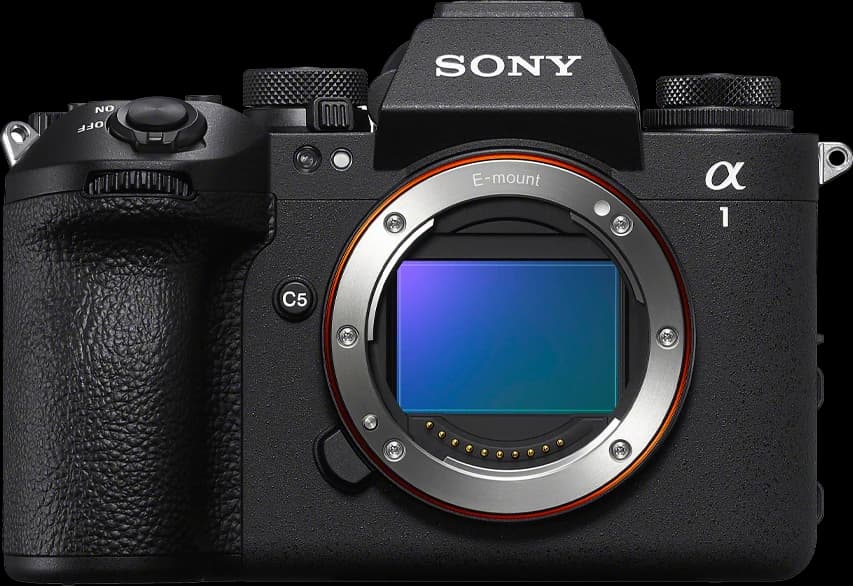
Review Sony α1 II: the high-end hybrid that wants to do it all
The Sony α1 II is the best all-round hybrid on the market for the professional photographer who refuses to choose between resolution, speed and stabilisation. At 6 499 USD it is not cheap, but no rival combines these three strengths to the same level.
Read the review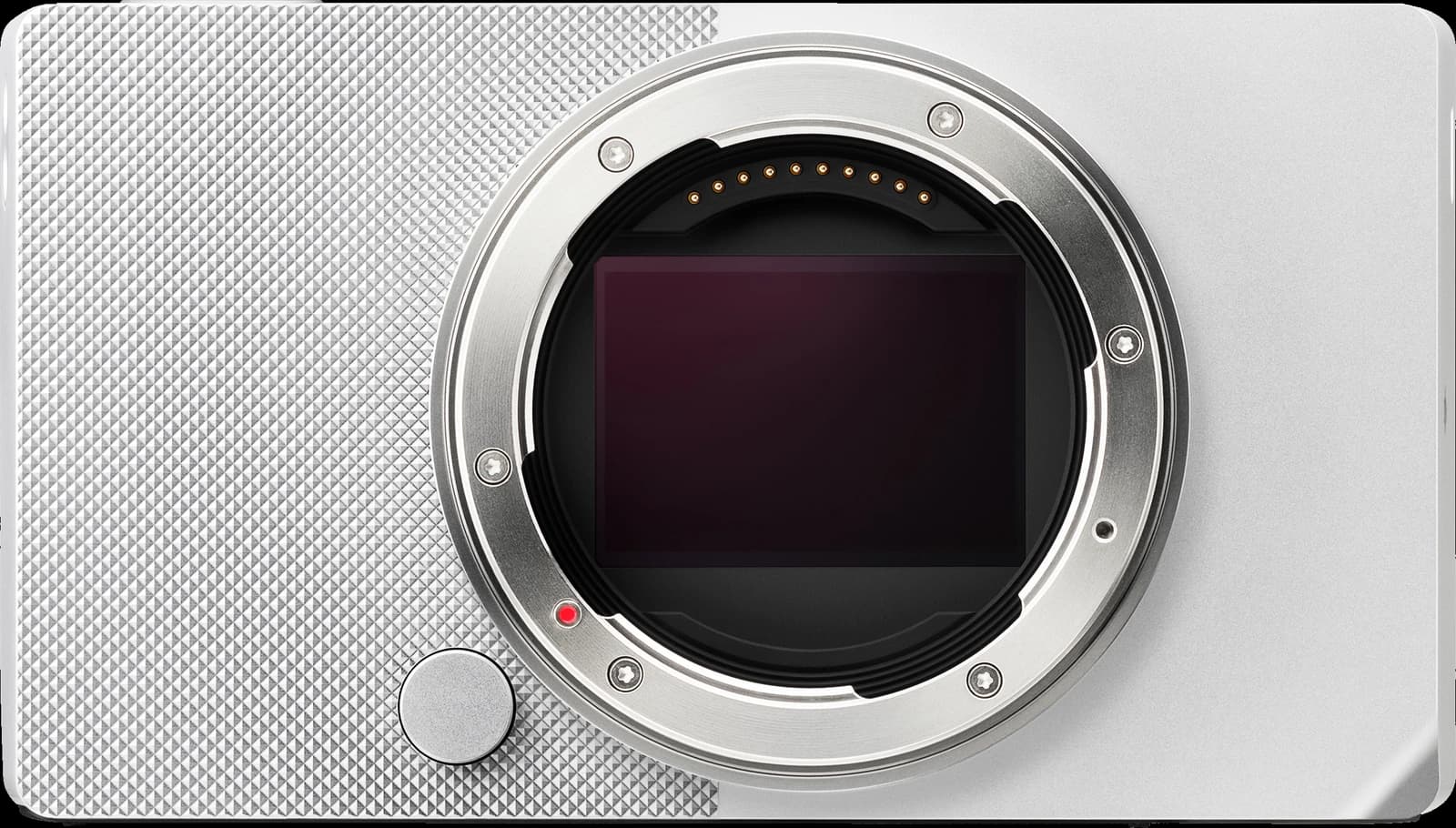
Review: Sigma BF – Does Radical Minimalism Come at a Price?
The Sigma BF targets the lightweight travel and reportage photographer willing to forgo IBIS, weather-sealing and a viewfinder for a discreet full-frame tool weighing 388 g. The compromises are real and deliberate.
Read the review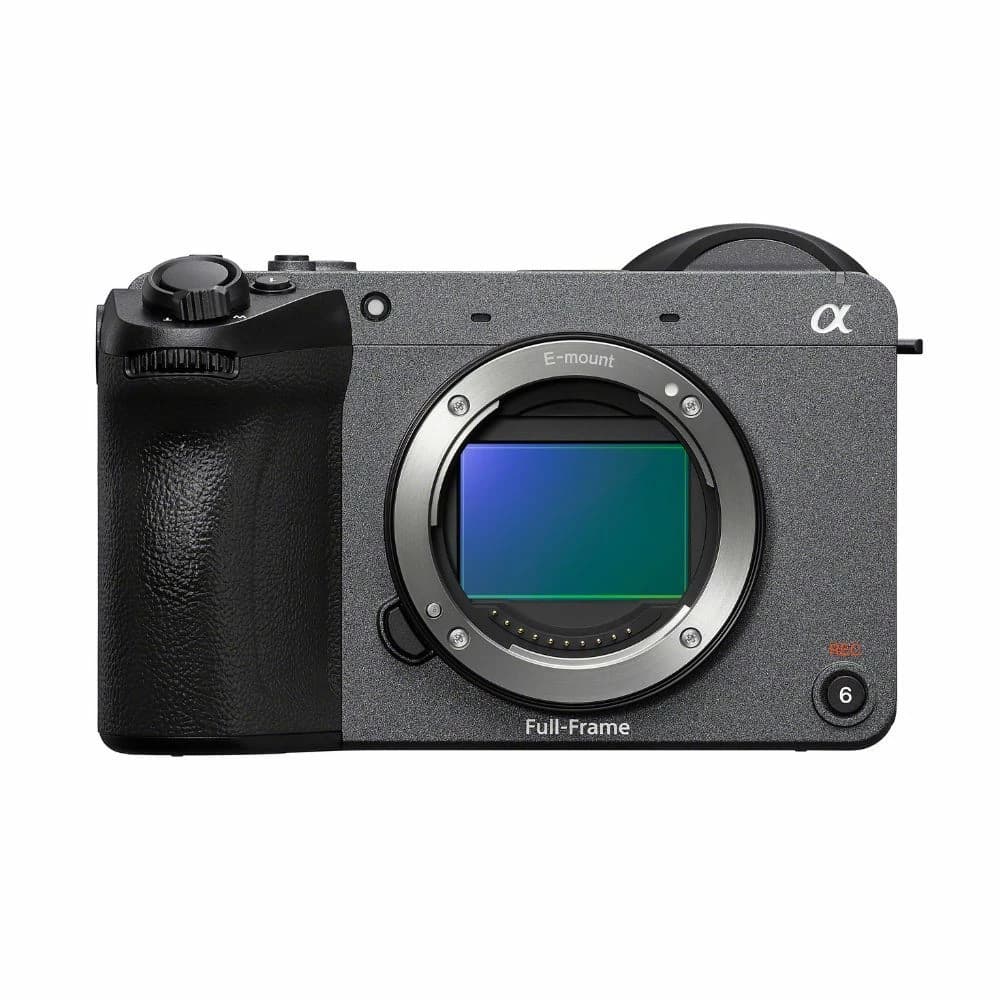
Review: Sony FX2 – the full-frame video hybrid that owns its identity
The Sony FX2 is the tool for hybrid creators who refuse to choose between wedding photography and professional video. At $2,699, it delivers a coherent combination of a 33 MP full-frame sensor, unlimited DCI 4K recording and shooting-oriented ergonomics.
Read the review